

Skills
Complete guide to skills in Crimson Desert, covering the three-branch Abyss Skill Tree (Stamina, Spirit, Health), all skill subcategories, Inner Skills, Watch and Learn observation learning, Abyss Artifacts, respec mechanics, build archetypes, and progression recommendations.
On This Page
Overview
Skills in Crimson Desert are acquired through a combination of Abyss Artifact spending, observation learning, NPC tutoring, and boss defeats. There is no traditional experience point system or numerical leveling. Instead, character growth is driven by exploration, combat achievements, and direct interaction with the world of Pywel. Pearl Abyss designed the system so that "no two players' Kliff will develop identically," with each player's skill loadout reflecting their personal playstyle and the order in which they explored the world.
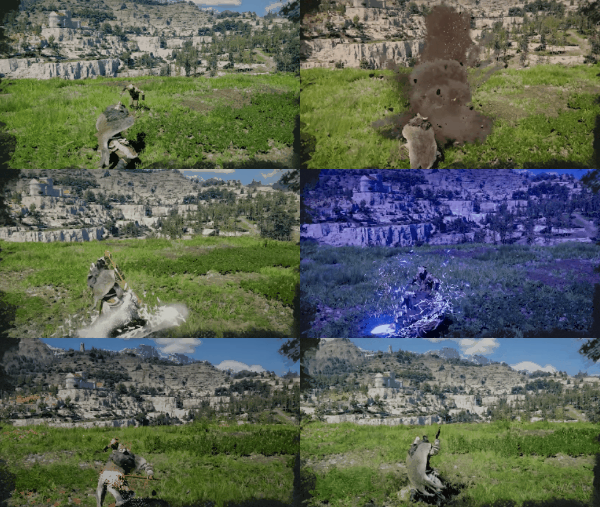
Each of the three playable characters (Kliff, Damiane, and Oongka) has a separate skill tree with unique abilities tailored to their combat identity. Switching between characters during gameplay means managing three distinct progression paths. For the complete breakdown of all 84 of Kliff's skills organized by branch, see Kliff Skills.
Skill Acquisition Methods
Method | Description |
|---|---|
Abyss Skill Tree | Spend Abyss Artifacts on core stat upgrades and branch skill nodes. Access: Start > Progression > Abyss Tree. |
Watch and Learn (Observation) | Witness NPCs, enemies, bosses, or spirit holograms perform unique techniques. The screen tints blue and a "Learning in Progress" bar appears in the top-left corner. Hold the observation button (L1 on PlayStation, LB on Xbox) while keeping your camera on the source. Once the counter fills, the skill is learned at no cost. |
NPC Tutors | Some NPCs teach skills directly through dialogue or training encounters. These may require completing prerequisite quests or reaching certain story milestones. |
Boss Defeats | Defeating bosses and equipping their dropped gear grants access to that boss's signature skill. This ties combat rewards directly to progression. |
Story Progression | Certain skills unlock automatically as part of the main story. For example, Flight is granted upon completing the Woman in White quest in Chapter 4. |
Environmental Interaction | Interacting with specific objects or locations may teach new abilities. Spirit holograms near Abyss Cressets and ancient ruins are a common source. The game encourages thorough exploration to discover all skill sources. |
Skill Acquisition in Detail
Unlike most RPGs that use a traditional experience point system, Crimson Desert ties skill progression to three distinct acquisition pathways. Understanding these pathways is critical for efficient character development, since each one has different costs and availability windows.
Observation Learning
The Watch and Learn system allows players to learn certain skills for free by watching enemies, NPCs, or spirit holograms perform them. When an observable technique is performed nearby, the screen shifts to a blue tint and a progress bar appears. Hold the observation button (L1 on PlayStation, LB on Xbox) while keeping your camera on the source. Most skills require watching the move performed multiple times before the counter fills completely.
This system applies to a significant portion of combat skills. Skills in the skill tree that can be observed are labeled "observe this skill in action to learn it." If you have already spent an Abyss Artifact on an observable skill and later learn it through observation, the previously spent Artifact is refunded. This makes observation learning the most efficient path for any skill that supports it.
Abyss Artifact Investment
Skills that cannot be learned through observation must be purchased with Abyss Artifacts. These items are found throughout Pywel from quest rewards, boss defeats, exploration caches, and the combat XP bar (a gold bar beside your minimap that yields one Artifact when filled). The same Artifacts are used for both skill unlocks and weapon refinement at levels 5 and above, creating a meaningful progression trade-off. Players must decide whether to invest Artifacts in new abilities or in strengthening their existing weapons.
Story and Quest Rewards
Certain abilities unlock automatically during the main story. Flight is granted after completing the Woman in White quest. Evasive Roll can be observed during the Chapter 2 Kailok fight. Focused Force Palm is taught by a spirit guide on the road to Scholastone in Chapter 4; this is missable if you skip past the hologram. These story-gated abilities ensure all players gain access to essential traversal and utility skills regardless of their build choices.
The Abyss Skill Tree
The skill tree is accessed through the game menu (Start > Progression > Abyss Tree). It is structured into three color-coded branches, each governing a different aspect of character development. The tree contains two types of nodes: core nodes (fundamental stat increases like Health, Stamina, and Spirit) and branch nodes (active combat and exploration techniques). The three branches converge at the center of the tree on a single ultimate ability: Falling Palm.
See Kliff Skills for the complete list of all skills with ranks, costs, and detailed descriptions.
Primary Stat Levels
Each branch of the Abyss Skill Tree is tied to a primary stat that can be upgraded to a fixed maximum level. Raising these stats increases the corresponding resource pool and unlocks deeper skill nodes within that branch.
Stat | Color | Max Level | Effect |
|---|---|---|---|
Stamina | Blue | Lv 16 | Increases maximum Stamina; governs physical combat skills, evasion, armed and unarmed techniques, archery, and grappling |
Health | Red | Lv 18 | Increases maximum Health; governs elemental enhancements, Axiom Force traversal, and Flight |
Green | Lv 14 | Increases maximum Spirit; governs supernatural abilities like Focus, Keen Senses, and Force Palm |
Active skills consume either Spirit or Stamina depending on their branch. Managing these resources during combat is essential, particularly during boss encounters where extended fights can drain both pools. Upgrading a stat increases the pool size and affects the power and efficiency of skills tied to that branch.
Blue Branch: Stamina (Up to Level 16)
The Blue branch covers physical combat skills: unarmed combat, kicks, grappling, archery, and armed weapon techniques (Forward Slash, Turning Slash, Stab, Sword Flurry, Shield Bash, Blinding Flash). This is the starting point for most players, offering 37 skills that form the foundation of Kliff's combat moveset.
Notable unarmed techniques include Pump Kick, Dropkick, Flying Kick, and Meteor Kick, many of which can be learned through the Watch and Learn system. The Blue branch is the most skill-dense branch in the tree and covers the widest range of combat situations, from close-range grapples to mid-range archery.
Unarmed Combat (Level 1 to 5)
Unarmed Combat skills form the core of Kliff's barehanded fighting style. These techniques are Stamina-intensive but offer strong crowd control and can be chained into grapple moves for devastating combos.
Skill | Level | Effect |
|---|---|---|
1 | Leap high and deliver a powerful double kick that sends enemies flying. Observable through Watch and Learn. | |
1 | Launch your body forward and strike an enemy with both feet, sending them flying. Observable from various enemies. | |
2 | Leap over an enemy to reposition behind them, opening backstab opportunities. Observable from various enemies. | |
3 | Lunging kick that covers distance quickly and can interrupt enemy actions. | |
5 | Powerful diving kick that slams downward onto enemies from above. One of the strongest unarmed finishers. | |
4 | Wrap your legs around an enemy and bring them to the ground. Effective against larger humanoid foes. | |
3 | Grab an enemy and spin them before launching. Requires Grappling Rank 3. High knockback distance. | |
Headstart II | 2 | Improved dash startup that reduces the recovery time between unarmed attacks. |
Headstart III | 3 | Further improved startup speed, allowing near-instant transitions between unarmed combos. |
Grappling (Level 1 to 5)
Grappling skills are close-range grab techniques that control enemies through throws and slams. These skills chain naturally from unarmed strikes and are particularly effective against humanoid enemies and some smaller bosses.
Skill | Level | Effect |
|---|---|---|
1 | Basic grab and throw. Tosses an enemy in the direction you are facing. | |
2 | Hold an enemy in place temporarily. Useful for setting up follow-up attacks from allies or repositioning. | |
2 | Charging clothesline attack that knocks enemies down on contact. Can be chained from sprinting. | |
3 | Jump onto an enemy's back and cling on, dealing continuous damage. Works on large enemies and some bosses. | |
4 | Perform multiple consecutive lariats after the initial hit. Extends the knockdown chain. | |
3 | Catch an enemy while running to slam them to the ground. Observable through Watch and Learn from various enemies. | |
5 | Mid-air weight slam that deals massive impact damage. Observable from Muskan in The Bonepit. |
Marksmanship (Level 1 to 5)
Marksmanship skills provide ranged options within the Stamina branch. These techniques complement melee combat by allowing players to deal damage at a distance and maintain spacing against aggressive enemies.
Skill | Level | Effect |
|---|---|---|
3 | Fires 10 arrows in a cone. One of the strongest AoE skills in the Blue branch, devastating against groups. | |
Evasive Shot Lv. 1 | 1 | Fire an arrow while dodging backward. Maintains distance from approaching enemies. |
Evasive Shot Lv. 2 | 2 | Increased firing speed during the evasive motion. Inner Skill: Evasive Shot Proficiency. |
Evasive Shot Lv. 3 | 3 | Fires two arrows simultaneously during the dodge. Inner Skill: Evasive Shot Expertise. |
4 | Hold to charge a more powerful arrow with increased damage and penetration. Essential for breaking shields. |
Armed Combat (Level 1 to 5)
Armed Combat skills govern weapon-based techniques. These are fundamental combat nodes that enhance how Kliff uses one-handed weapons, two-handed weapons, and shields.
Skill | Level | Effect |
|---|---|---|
1 | Perform a quick slash while dodging to the side. Combines offense and defense in a single motion. | |
2 | Sprint forward with weapon drawn, closing distance rapidly. Transitions into a heavy strike on contact. | |
3 | Faster and more powerful variant of Charge. Covers greater distance and staggers enemies on impact. | |
4 | Switch between equipped weapon sets instantly during combat. Eliminates the animation delay of normal weapon switching. |
Weapon Skills
Weapon Skills are specific techniques tied to individual weapon types. These form the core damage-dealing loops for armed combat builds.
Skill | Max Level | Effect |
|---|---|---|
Lv. 3 | Reliable gap-closer. Inner Skills: Forward Slash Proficiency (Lv. 2), Forward Slash Sure Hit (Lv. 3, cannot miss). | |
Lv. 1 | Strike with your shield to stagger enemies. Creates an opening for follow-up weapon attacks. | |
Lv. 3 | Sweeping blow that hurls enemies backward. Inner Skill: Turning Slash Rend Armor (Lv. 3, ignores Super Armor). | |
Lv. 3 + 4 upgrades | Highest DPS basic skill. Inner Skills: Swift Stab (Lv. 2), Aerial Stab (Lv. 3), Stab Rend Armor (max rank, ignores Super Armor). Also has a 4th upgrade that adds a final piercing thrust. | |
Lv. 2 | Leaping AoE spin slash. 2 ranks for increased coverage and damage. Strong against enemy clusters. | |
Lv. 1 + Finisher | Bright flash that blinds and temporarily incapacitates nearby enemies. The Finisher follow-up deals bonus damage to blinded targets. |
Green Branch: Spirit (Up to Level 14)
The Green branch focuses on supernatural abilities: Nature's Echo (phantom clones that replicate attacks), Keen Senses (parry, backstep, and counter), Focus (time slow), and Force Palm techniques. The 29 skills here reward a methodical, reactive combat style.
Keen Senses is one of the most important skills in the entire tree, as it unlocks the core defensive mechanics including Parry, Dodge, and Counter. Nature's Echo at Rank 3 is one of the strongest DPS multipliers in the game, summoning phantom clones that duplicate your attacks.
Nature's Echo (Level 1 to 3)
Nature's Echo skills summon phantom clones that replicate your attacks, effectively multiplying damage output. At Rank 3, this becomes one of the most powerful offensive tools in the game. Observable through the Watch and Learn system.
Skill | Level | Effect |
|---|---|---|
1 | Phantom clone automatically copies your Forward Slash. Adds a delayed second hit to every Forward Slash performed. | |
2 | Phantom clone replicates your Spinning Slash attack. The clone strikes half a second after you, extending the hit window. | |
3 | Phantom clone copies your charged Stab for doubled damage. At this rank, nearly all melee attacks are echoed by clones. |
Nature's Snare (Level 1 to 3)
Nature's Snare creates wind barriers that block incoming projectiles and punish attackers. Useful against ranged enemies and bosses with projectile phases.
Skill | Level | Effect |
|---|---|---|
Nature's Snare Lv. 1 | 1 | Create a small wind barrier that blocks incoming projectiles for a short duration. |
2 | Blocked projectiles are reflected back at the attacker, dealing damage based on the original projectile's power. | |
3 | Expanded barrier that also conceals your position, making enemies lose track of you temporarily. |
Keen Senses (Level 1 to 3)
Keen Senses unlocks the core defensive mechanics that define high-level play. This is widely considered the single most important skill investment for surviving boss fights throughout the game.
Skill | Level | Effect |
|---|---|---|
1 | Precisely timed block that deflects attacks and opens a counterattack window. Pressing the block button at the exact moment of impact negates all damage. | |
Backstep (Dodge) | 2 | Quick sidestep or backstep to evade incoming attacks. Has invincibility frames during the first portion of the animation. |
3 | Follow-up strike after a successful parry or dodge dealing bonus damage. Also observable through Watch and Learn from various enemies. |
Focus (Level 1 to 3)
Focus enhances perception by slowing time, allowing players to react more precisely to incoming threats and line up accurate ranged shots. The sub-skills provide additional combat utility.
Skill | Level | Effect |
|---|---|---|
Focus Lv. 1 | 1 | Slows time perception while active. Consumes Spirit continuously. Useful for reacting to fast attacks. |
2 | While Focus is active, enemy weak points are highlighted. Hitting highlighted spots deals increased damage. | |
3 | Release built-up focus energy in a burst that pushes all nearby enemies away. Good for breaking out of encirclement. |
Force Palm (Level 1 to 5)
Force Palm is one of the most versatile skill lines in the game, spanning combat, utility, and even healing applications. The base skill delivers an open-palm strike using Spirit energy. It can be learned from a spirit hologram during the Abyss Without Balance quest.
Skill | Level | Effect |
|---|---|---|
1 | Delivers a powerful open-palm strike using Spirit energy. Launches enemies backward and reduces their Defense on hit. | |
2 | Execute Force Palm while airborne, slamming downward with spirit energy. Good for aerial-to-ground transitions. | |
2 | A variant that converts Spirit energy into Health recovery. Consumes Spirit to heal a portion of your HP over a short duration. | |
Additional Palm Strikes I | 3 | Adds a second palm strike to the base combo. Increases total damage output and stagger buildup. |
Additional Palm Strikes II | 4 | Adds a third palm strike. The full three-hit Force Palm combo deals significantly more total damage. |
3 | Releases a shockwave after the palm strike that hits enemies in a radius around the target. | |
Focused Palm | 4 | Condenses energy into a more precise strike with higher single-target damage. Learned from a spirit guide on the road to Scholastone. |
Light Falling Palm | 4 | A lighter, faster version of the Falling Palm technique. Consumes less Stamina but deals reduced damage compared to the full ultimate. |
5 | Long-range pulse attack that builds stagger on enemies. Good for opening fights from a distance. |
Movement and Utility
The Green branch also contains several movement and utility skills that are essential for both combat and exploration.
Skill | Type | Effect |
|---|---|---|
Movement | Quick dodge roll after getting hit, preventing combo stun-locks. Observable from Kailok the Hornsplitter in Chapter 2. | |
Traversal | Jump again by stepping on air or an enemy. Consumes Spirit for a second mid-air jump. Essential for elevated platforms. | |
Utility | Telekinetically lift and move heavy objects. Also usable in combat to swing objects at enemies. Learned from a shadow in Meandering Hills ruins during the Reunion quest. | |
Focus Shot Lv. 1-3 | Ranged | Precision aiming mode with increasing zoom levels for accurate long-range shots at weak points. |
Red Branch: Health (Up to Level 18)
The Red branch covers elemental enhancements (Imbue Elements, Fist of Flame, Mantle of Frost, Surge of Sparks), Axiom Force traversal, and Flight. The 18 skills here expand combat versatility with elemental damage and provide key traversal abilities. Several (Axiom Force, Flight) unlock through the main story.
The Imbue Elements skill at Rank 4 cycles between fire, frost, lightning, and wind infusions, enabling elemental combos with the environment. This branch has the highest maximum level (18) and contains some of the most impactful late-game abilities.
Elemental Infusions (Level 1 to 4)
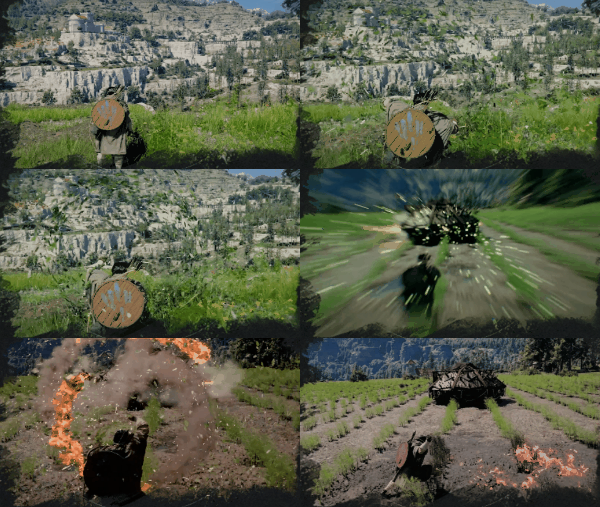
Elemental Infusion skills allow Kliff to imbue his attacks with elemental power through the Axiom Bracelet. Each rank adds a new element to the rotation, and at Rank 4 you can cycle between all four infusions freely.
Skill | Level | Effect |
|---|---|---|
Fist of Flame | 1 | Fire-imbued charging punch that incinerates enemies. High burst damage with a burning DoT (damage over time) effect. |
2 | Turning Slash infused with elemental energy. The element applied depends on your current Imbue Elements selection. | |
3 | Charged bow shot imbued with elemental power. Applies the current element as a status effect on the target. | |
3 | Force Palm infused with elemental energy. Combines the knockback of Force Palm with elemental damage and status effects. | |
4 | Meteor Kick imbued with elemental power. The ground impact creates an elemental AoE effect based on the active infusion. |
Environmental Defense
These defensive skills use elemental energy to create protective barriers and reactive effects, giving players survivability options tied to the Red branch.
Skill | Effect |
|---|---|
Mantle of Frost | Freezing barrier that blocks one incoming hit. Excellent as a safety net during boss fights. When the barrier absorbs a hit, it shatters and briefly freezes nearby enemies. |
Surge of Sparks | Releases a burst of lightning energy when you take damage, shocking nearby enemies and staggering them. Passive trigger that activates automatically. |
Axiom Force (Level 1 to 3)
Axiom Force skills use the Axiom Bracelet to enable advanced aerial mobility and combat. These skills bridge the gap between ground-based and aerial combat.
Skill | Level | Effect |
|---|---|---|
Axiom Force Lv. 1 | 1 | Unlocks basic Axiom-powered movement. Allows interaction with Axiom nodes in the environment for traversal. |
2 | Perform quick directional changes while airborne. Useful for repositioning during aerial combat and navigating tight spaces. | |
3 | Powerful weapon swing performed during aerial movement. Deals bonus damage to grounded enemies when striking from above. |
Flight (Level 1 to 2)
Flight is a traversal skill that allows gliding while airborne, covering large distances and accessing otherwise unreachable areas across Pywel. It is unlocked by completing the Woman in White main quest in the Abyss. Gliding consumes Stamina at approximately 25 points per second.
Skill | Level | Effect |
|---|---|---|
1 | Grants gliding ability. Hold Square (PlayStation) or X (Xbox) while airborne to begin gliding. | |
2 | Increased diving speed for faster descents and more control during steep glides. Useful for covering ground quickly. |
Advanced Movement and Utility
The Red branch includes several advanced movement and utility skills that round out the character's toolkit for both combat and exploration.
Skill | Type | Effect |
|---|---|---|
Movement | High-speed dash in mid-air. Requires Flight Lv. 1. Learnable through Watch and Learn from the Crowcaller boss in Chapter 5. | |
Utility | Pull enemies toward you and slam them. Good for crowd control and isolating priority targets from groups. | |
Utility | Seal objects in the Kuku Iron Pot for later use. Allows storing environmental objects and retrieving them in different locations. | |
Veil of Fog | Utility | Creates a fog cloud that breaks enemy line of sight. Useful for repositioning during difficult encounters or escaping overwhelming odds. |
Convergence Skill: Falling Palm
Falling Palm sits at the convergence of all three branches. Completing any single branch fully unlocks this ultimate ability, which consumes all remaining Stamina for a devastating ground-impact strike. The technique channels all of Kliff's energy into a single downward palm strike from the air, creating a massive shockwave on impact.
All three playable characters share access to Falling Palm. Since only one branch needs to be completed, players can access this ultimate by focusing entirely on a single stat line rather than spreading investments across all three branches. The choice of which branch to complete first significantly shapes your early-to-mid game playstyle, as each path offers different combat tools along the way.
Inner Skills
Inner Skills are enhanced versions of base skills that unlock when a player upgrades a base skill to a specific level. Rather than being entirely separate abilities, Inner Skills represent a deeper mastery of the original technique, typically adding extra hits, broader area coverage, or additional effects such as elemental infusions or status applications.
Inner Skills use the same resource pool (Spirit or Stamina) as their base versions but often cost slightly more to execute. The trade-off between using a reliable base skill and its more powerful but costlier Inner Skill variant is a key part of combat decision-making, especially during longer fights where resource management matters.
Inner Skill Examples
The following table shows verified examples of how base skills branch into their Inner Skill variants as ranks increase.
Base Skill | Inner Skill Variant | Unlock Requirement | Effect |
|---|---|---|---|
Stab Lv. 2 | Follow-up slash after a charged stab for extra damage | ||
Stab Lv. 3 | Mid-air forward stab that can be performed while airborne | ||
Stab max rank | Ignores boss and elite Super Armor on hit | ||
Forward Slash Lv. 2 | Follow-up lunge and slash after the initial strike | ||
Forward Slash Lv. 3 | The slash cannot miss the target | ||
Turning Slash Lv. 3 | Ignores Super Armor, allowing you to stagger armored foes | ||
Evasive Shot Lv. 2 | Increased firing speed during the evasive motion | ||
Evasive Shot Lv. 3 | Fires two arrows simultaneously during the dodge | ||
Force Palm Lv. 2 | Strikes twice in quick succession instead of once | ||
Force Palm Lv. 3 | Triple-strike variant with increased energy output | ||
Nature's Echo Lv. 1 | Phantom clone automatically copies your Forward Slash | ||
Nature's Echo Lv. 2 | Phantom clone replicates your Spinning Slash attack | ||
Nature's Echo Lv. 3 | Phantom clone copies your charged Stab for doubled damage | ||
Keen Senses Lv. 1 | Precisely timed block that deflects attacks and opens a counterattack window | ||
Keen Senses Lv. 2 | Quick sidestep or backstep to evade incoming attacks | ||
Keen Senses Lv. 3 | Follow-up strike after a successful parry or dodge dealing bonus damage |
The Watch and Learn System
The Watch and Learn system (also called Observation Learning) is one of Crimson Desert's most distinctive progression mechanics. Instead of unlocking every ability through the skill tree menu, players can learn certain skills by witnessing NPCs, enemies, bosses, or spirit holograms perform them in the world.
Skills in the skill tree that can be obtained this way are labeled "observe this skill in action to learn it." You can still unlock these skills by spending Abyss Artifacts if you prefer, but watching for them during gameplay saves those Artifacts for abilities that can only be purchased.
Visual Indicators
When an observable technique is performed nearby, several visual cues alert the player:
Blue screen tint: The screen shifts to a blue tone, signaling that an observable skill is being performed.
"Learning in Progress" bar: A progress indicator appears in the top-left corner of the screen. This shows the skill name and a counter (for example, 1/3 or 2/3).
Observation prompt: An observation prompt appears above the NPC, enemy, or hologram. Hold the observation button (L1 on PlayStation, LB on Xbox) while keeping your camera pointed at the source.
"Technique Observed" notification: Once the counter fills completely, a confirmation notification appears and the skill is added to your moveset.
How the Mechanic Works
The Watch and Learn system operates through three types of encounters, each with slightly different behavior.
Boss fights: Most major campaign bosses perform at least one learnable move during their fight. When the boss executes the technique, the screen darkens slightly and the learning bar appears. Many boss skills require watching the move performed multiple times (shown by the counter, such as 1/3). Do not rush the fight; let the boss cycle through its attacks so you have time to observe each repetition.
Regular enemies: Some common enemies and elite soldiers use moves that Kliff can learn. Because regular enemies die faster than bosses, it helps to slow-roll the encounter. Kill all other enemies first, then bait the remaining enemy into repeating its signature attack until the learning bar fills.
NPCs and spirit holograms: Certain skills are taught by peaceful NPCs going about their daily routines or by spirit holograms found near Abyss Cressets and ancient ruins. Walk up to the NPC or hologram, hold the Observe button, and watch until the learning bar fills. For peaceful observations, the process takes approximately two seconds per observation.
Key Rules
Line of sight required: Your camera must be pointed at the source performing the skill. If you turn away or run too far, the progress bar pauses.
Taking damage interrupts: Getting hit during observation resets the progress for that repetition. Stay at a safe distance and focus on dodging rather than attacking when you see the learning bar appear.
Banked observations persist: Partial progress and fully observed techniques remain banked across gaming sessions. You do not lose progress by leaving an area.
Observation-learned skills are permanent: Skills acquired through Watch and Learn are never removed by respec. Using a Faded Abyss Artifact to reset the skill tree only refunds skills purchased with Abyss Artifacts. Watch and Learn skills remain as a permanent foundation for any build.
Artifact refund on overlap: If you had already spent an Abyss Artifact on a skill and later observe it through Watch and Learn, the previously spent Artifact is refunded.
Multiple techniques from one source: You can observe multiple different techniques from the same enemy before spending any Artifacts. Each observed technique is banked independently.
Watch and Learn Skills: Kliff
The following table lists all confirmed skills that Kliff can learn through the Watch and Learn system. These skills are marked in the skill tree with the note "observe this skill in action to learn it."
Skill | Source | Location / Chapter | Effect |
|---|---|---|---|
Kailok the Hornsplitter (boss) | Chapter 2 boss fight | Perform a quick dodge roll after getting hit, preventing combo stun-locks. Activates even if you miss a parry. | |
Chapter 2, Hernand in Chaos | Leap high and deliver a powerful double kick that sends enemies flying. Hitting Matthias with his own Pump Kick leaves him completely vulnerable. | ||
Reed Devil (boss) | Chapter 3 | Execute an immediate follow-up slash after a successful stab, dealing extra damage. | |
Crowcaller (boss) | Chapter 5, Guest Unbidden | Instantly unleash Stamina to perform a high-speed dash in mid-air. Requires Flight Lv. 1. | |
Various enemies and bosses | Multiple chapters | Catch an enemy while running to slam them to the ground. A charging unarmed strike that knocks enemies down on contact. | |
Various enemies and bosses | Multiple chapters | Launch your body forward and strike an enemy with both feet, sending them flying. | |
Muskan (boss) | Mid-air weight slam that deals significantly more damage than the standard tree version. Let Muskan repeat his moves before finishing the fight. | ||
Various enemies | Observable during combat | Follow-up strike after a successful parry or dodge that deals bonus damage. Also unlockable via Keen Senses Lv. 3. | |
Observation / story progression | Mid-game | Jump again by stepping on air or an enemy. Consumes Spirit for a second mid-air jump. | |
Various enemies | Observable during combat | Fire an arrow while dodging backward to maintain distance from approaching enemies. | |
Various enemies | Observable during combat | Leap over an enemy to reposition behind them, opening up backstab opportunities. | |
Observation / Unarmed Combat Lv. 5 | Observable in the world | Powerful diving kick that slams downward onto enemies from above. | |
Observable in combat | Various encounters | Consecutive spinning slashes after the initial leap and spin. | |
Observable in combat | Various encounters | Mid-air forward stab that can be performed while airborne. Also unlockable via Stab Lv. 3. | |
Observable in combat | Various encounters | Follow-up lunge and slash after the initial Forward Slash. Also unlockable via Forward Slash Lv. 2. | |
Observable in the world | Various encounters | Wind barrier that blocks incoming projectiles. Up to 3 ranks. | |
Observable in the world | Various encounters | Summons phantom clones that replicate your attacks, effectively doubling damage output at Rank 3. |
Watch and Learn: NPCs and Holograms
Not all Watch and Learn skills come from combat. Some of the most important abilities in the game are taught by peaceful NPCs or by spirit holograms found at specific locations across Pywel. These observations use the same mechanic: hold the Observe button while facing the source.
Skill | Source | Location | How to Trigger | Effect |
|---|---|---|---|---|
Spirit hologram | Road to Scholastone, Hernand region | During Chapter 4 (The Price of Knowledge, Forbidden Knowledge), follow the road toward Scholastone. Near a blocked passageway you will see a blue spirit guide performing the move. Hold the Observe button. | Condense energy in your hands and release it in a powerful unarmed strike. One of the best utility skills, used for both combat and puzzle-solving. Can be missed if you skip the spirit guide. | |
Spirit hologram (shadow) | During the Reunion quest (Chapter 4), follow the black cat from Lioncrest Watchtower to the ruins. A shadow appears near the sealed gate. Observe the hologram. | Telekinetically lift and move heavy objects. Can also be used in combat to grab large objects and swing them at enemies. | ||
Spirit hologram | Meandering Hills, Abyss Cresset area | Found in the same Abyss Cresset area as Nature's Grasp. After learning Nature's Grasp, proceed further and observe the next hologram. | Enhance your concentration for improved precision during combat and ranged attacks. Slows time perception. | |
Fishing | Fisherman NPC | Walk up to any fisherman NPC along the riverbank and hold the Observe button (L1/LB). The screen turns blue and a learning bar fills. | Unlocks the ability to fish at any body of water. Also grants a basic Fishing Rod to your inventory. | |
Spirit hologram (blue ghost) | Abyss Without Balance quest area | During the Abyss Without Balance quest, you will see a blue ghost placing a power cell. Observe the ghost with the Observe button. | Press R3 / Right Stick when you have enough Spirit to deal damage and push back an enemy. Reduces enemy defense on hit. |
Watch and Learn Skills: Damiane and Oongka
Damiane and Oongka each have their own set of skills that can be learned through the Watch and Learn system. These are separate from Kliff's observable skills and tied to each character's unique combat identity.
Damiane Observable Skills
Skill | Notes |
|---|---|
Rapid multi-slash variant of Sword Flurry. Observable during combat. | |
Sprint forward with a skewered enemy. Requires Piercing Light Lv. 2. Observable in combat. | |
Evasion timing ability. Also unlockable via Keen Senses Lv. 2. Observable from enemies. | |
Increases firearm reload speed. Observable from enemies using firearms. | |
Sprint into a leg-wrap throw that spins the enemy. Requires Grappling. Observable in combat. |
Oongka Observable Skills
Skill | Notes |
|---|---|
Adds a downward strike and finishing attack to Rampage. Observable during combat. | |
Shield charge attack. Also unlockable via Armed Combat Lv. 3. Observable from enemies. | |
Perform multiple consecutive lariats. Requires Grappling Lv. 5. Observable in combat. | |
Targeted explosive landing. Requires Focus Lv. 3 and Marksmanship Lv. 3. Observable in combat. |
Abyss Artifact Progression Trade-Offs
Abyss Artifacts serve as the universal progression currency in Crimson Desert. They are used for both skill tree investments and weapon refinement starting at refinement level 5. This creates a meaningful resource tension: every Artifact spent on a skill is one fewer available for improving your equipment, and vice versa.
The total supply of Abyss Artifacts in the game is finite, though generous. With 76 bosses, hundreds of quests, the combat XP bar, and exploration caches, most players will have enough Artifacts to fill out their primary branch and a significant portion of a secondary branch. However, maxing all three branches on a single character requires careful Artifact management, heavy exploration, and strategic use of Watch and Learn to save Artifacts wherever possible.
The key trade-offs include:
Skills vs. Weapon Refinement: Weapon refinement from level 5 onward costs Abyss Artifacts. A fully refined weapon provides large stat bonuses, but the Artifact cost is significant. Players must balance between expanding their skill toolkit and strengthening their existing weapons.
Breadth vs. Depth: Investing deeply in one branch grants access to Falling Palm sooner and provides more powerful late-branch skills. Spreading investments across all three branches gives more versatility but delays access to end-tier abilities.
Purchased vs. Observed: Every skill learned through Watch and Learn effectively saves one or more Abyss Artifacts. Prioritizing observation-available skills first and spending Artifacts only on purchase-only skills is the most efficient approach.
Respec and Flexibility
Version 2.00.00 changed the scope of a reset. Skill progression is now reset per character rather than across every playable character at once, and each character draws on their own Abyss Link pool. All existing skill progression was reset once when the update first launched, with every previously spent resource refunded. See How to Respec Skills for the current procedure.
Players can reset their skill trees using Faded Abyss Artifacts, consumable items that refund all invested Abyss Artifacts from a given branch. This allows full experimentation with different builds without permanent commitment.
How to Respec Skills
The respec system revolves around Faded Abyss Artifacts. To initiate a respec, open the Skill Tree menu and look for the Reset Stats option displayed at the bottom right of the screen. Consuming a Faded Abyss Artifact returns every Abyss Artifact you have spent, allowing you to redistribute them freely.
Where to Find Faded Abyss Artifacts
Rare loot drops: Some enemies, particularly mini-bosses and elite mobs, can drop Faded Abyss Artifacts as rare loot.
Merchant purchases: Certain specialty merchants across Pywel sell Faded Abyss Artifacts, though the price increases with each purchase.
Quest rewards: Specific side quests and faction quests grant Faded Abyss Artifacts as completion rewards.
Exploration: Hidden chests in remote or hard-to-reach locations sometimes contain these items.
Respec Limitations
Resets are scoped to a single character. Since version 2.00.00, skill progression is reset individually for each character instead of for all characters at once.
Each character spends their own Abyss Link. Spending Abyss Artifacts on one character grants an equivalent number of Abyss Links to the other playable characters.
A reset refunds the Abyss Links that character used, so the investment is recoverable.
Observation-based skills are not reset. Skills learned through Watch and Learn remain unlocked permanently.
Stat upgrades tied to the primary branches (Stamina, Spirit, Health) are refunded alongside skill progression, so a full rebuild is possible.
A reset does not change your character level, equipment, or quest progress.
Skill Counts by Character
Each playable character has a unique set of skills spread across the three stat branches. The total skill count includes base skills and their Inner Skill variants. All three characters also share access to Falling Palm as a universal convergence ultimate.
Character | Total Skills | Stamina (Blue) | Health (Red) | Spirit (Green) |
|---|---|---|---|---|
84 | 37 | 18 | 29 | |
74 | 48 | 12 | 14 | |
70 | 41 | 12 | 17 |
For the complete breakdown of each character's skills organized by branch, see the dedicated pages: Kliff Skills, Damiane Skills, and Oongka Skills.
Shared Skills
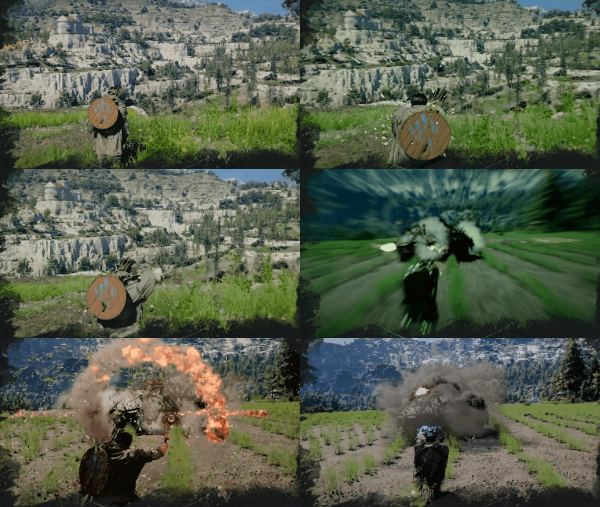
While each character has unique skills, a significant number of abilities are shared across all three playable characters. These shared skills form the common foundation of the combat system and are available regardless of which character you are currently controlling.
Skill | Category | Description |
|---|---|---|
Melee | Core weapon attack skill; the starting point for all armed combat | |
Melee | Bare-handed fighting techniques including punches and strikes | |
Melee | Grab-based techniques including throws, slams, and holds for close-range control | |
Ranged | Standard bow shooting skill for ranged attacks | |
Ranged | Hold to charge a more powerful arrow with increased damage and penetration | |
Ranged | Fire an arrow while dodging backward to maintain distance | |
Ranged | Precision aiming mode for accurate long-range shots at weak points | |
Slows time perception; allows precise targeting and reaction to incoming attacks | ||
Unlocks core defensive mechanics: parry, backstep, and counter | ||
Precisely timed block that deflects an attack and opens the enemy to a counterattack | ||
Quick sidestep or backstep to evade an incoming attack | ||
Follow-up strike after a successful parry or dodge that deals bonus damage | ||
Extended roll to create distance from dangerous area attacks or boss sweeps | ||
Traversal | Second jump in mid-air for reaching higher platforms and extending aerial combos | |
Traversal | Grants the ability to glide and fly using the Axiom Bracelet | |
Traversal | Increased flight speed for faster aerial traversal across Pywel | |
Elemental | Wraps the character in frost energy; blocks one incoming hit as a safety net | |
Elemental | Infuses weapon attacks with a chosen element via the Axiom Bracelet | |
Spirit-based ranged pull that draws enemies closer or interacts with environmental objects | ||
Melee | Powerful aerial kick that slams downward onto enemies from above | |
Melee | Lunging kick that covers distance quickly and can interrupt enemy actions | |
Utility | Leap over an enemy to reposition behind them, opening up backstab opportunities | |
Utility | Bright flash that blinds and temporarily incapacitates nearby enemies | |
Ultimate | Convergence ultimate shared by all characters; consumes all remaining Stamina for a devastating ground-impact strike |
The shared skill pool ensures that switching between characters never feels like starting from scratch. Core combat fundamentals like parrying, dodging, and ranged attacks work the same way on all three characters, while each character's unique skills build on top of this shared foundation to create distinct playstyles.
Abyss Artifacts
What They Are
Abyss Artifacts are items found throughout the game that function as skill points. Unlike traditional RPGs where you earn experience and level up, Crimson Desert ties character growth to these collectible items. Every Artifact you find represents a direct investment in your character's abilities.
Where to Find Them
Source | Details |
|---|---|
Main story missions and side quests frequently reward Abyss Artifacts upon completion. | |
Defeating bosses is one of the most reliable sources. With 76 bosses in the game, this is a significant supply. | |
Combat XP Bar | A gold bar appears to the left of your minimap. Defeating enemies fills the bar, and each full bar yields an Abyss Artifact. |
Hidden locations | Exploring off the beaten path reveals caches and hidden spots containing Artifacts. |
Sealed Abyss Artifact challenges | Special puzzle and combat challenges found throughout Pywel that reward Artifacts upon completion. |
The Observation-First Rule
Many skills can be learned for free through observation. When you observe an enemy or NPC performing a unique technique, the game slows down and a Learning bar appears. Hold L1 (PlayStation) or the observation button to learn the skill directly. If you had already spent an Abyss Artifact on that same skill, the artifact is refunded.
Since observation-learned skills are free, they save valuable Abyss Artifacts for abilities that can only be unlocked through the skill tree. A recommended early-game strategy is to prioritize spending Abyss Artifacts on Health and Stamina stat upgrades rather than on combat skills, because many combat skills can be obtained for free through Watch and Learn encounters.
Build Archetypes
While Crimson Desert does not enforce rigid character classes, the three-branch skill tree naturally lends itself to several distinct build archetypes. Each archetype prioritizes a different branch and stat, producing a unique combat feel.
Physical Brawler (Blue Focus)
Prioritize Stamina upgrades and invest heavily in Unarmed Combat, Grappling, and Armed Combat nodes. This build excels at close-range damage output with long combo chains. Key skills include Stab (maxed for Rend Armor), Sword Flurry, Giant Swing, and Multishot for ranged AoE coverage. The Physical Brawler reaches Falling Palm earliest through the Blue branch, which has the most skills and the broadest coverage of combat situations.
Spirit Duelist (Green Focus)
Prioritize Spirit upgrades and invest in Keen Senses, Nature's Echo, Focus, and Force Palm. This build rewards precise timing and reactive play, relying on Parry and Counter for defense while using Nature's Echo clones to multiply damage. The Spirit Duelist is the strongest single-target DPS archetype at high investment levels, since Echoing Stab at Rank 3 effectively doubles all melee damage output.
Elemental Vanguard (Red Focus)
Prioritize Health upgrades and invest in Imbue Elements, Axiom Force, and Flight. This build gains the most versatility through elemental infusions that exploit enemy weaknesses and environmental interactions. Mantle of Frost provides a safety net against one-shot attacks, while Flight and Swift Flight open up aerial combat options that other builds cannot access until later. The Red branch also includes Mystical Storage and Veil of Fog for utility in exploration and stealth situations.
Balanced Explorer
Spread investments across all three branches, prioritizing stat nodes and key skills from each. Take Keen Senses to Rank 3 from Green, core weapon combos from Blue, and Flight plus one elemental infusion from Red. This build sacrifices access to branch-end skills and delays Falling Palm, but gains the broadest toolkit for handling any situation the game presents. Best suited for players who want to experience all three playstyles without committing to a single path early.
Progression Recommendations
Early Game Priorities
Health and Stamina stat nodes: Expanding your Health and Stamina pools early makes both combat and exploration much easier. Many combat skills can be learned for free through Watch and Learn, but stat upgrades can only come from Abyss Artifacts.
Keen Senses to Rank 3: Unlocks Parry, Dodge, and Counter. The single most important early investment for surviving boss fights.
Core weapon combos: Invest in basic combo extensions for your primary weapon. Longer combos mean more damage per opening.
Watch for Evasive Roll: During the Chapter 2 Kailok fight, watch for the Evasive Roll observation prompt. This saves one Abyss Artifact.
Mid-Game Priorities
Nature's Echo: One of the strongest DPS multipliers in the game. At Rank 3, phantom clones duplicate your attacks for effectively doubled damage output.
Observation-learned skills: By mid-game, you should have encountered multiple Watch and Learn opportunities. These free skills form a permanent combat foundation.
Secondary weapon skills: Begin branching into a second weapon type for versatility against different enemy types.
Focused Force Palm: Learn this from the spirit guide on the road to Scholastone in Chapter 4. This is missable if you skip the hologram, and it is required for certain puzzle-solving barriers.
Late Game Priorities
Imbue Elements Rank 4: Cycles between fire, frost, lightning, and wind infusions. Enables elemental combos that exploit enemy weaknesses.
Scholarship perks: The Explorer perk is extremely valuable for completionists, revealing the entire map and all points of interest.
Advanced Inner Skills: Max out your primary combat skills to access their most powerful Inner Skill variants, like Stab Rend Armor (ignores Super Armor) and Echoing Stab.
Character-specific abilities: Fully develop the unique skill trees for Damiane and Oongka to access their full combat potential.
Key Skills Per Branch
While each branch contains dozens of skills, certain abilities stand out as essential investments that define combat effectiveness throughout the game.
Blue Branch Highlights (Stamina)
Skill | Type | Why It Matters |
|---|---|---|
Melee | Plunging stab from mid-air that deals heavy single-target damage. Excellent for opening boss fights and chaining into ground combos. Stamina cost increases with each consecutive use after the 1.01.00 patch. | |
Melee | Highest DPS basic skill. The Rend Armor perk at max rank ignores boss and elite Super Armor. | |
Melee | Reliable gap-closer. Upgradeable to 3 ranks; unlocks combo extensions at higher ranks. | |
Ranged | Fires 10 arrows in a cone, devastating against groups. One of the strongest AoE skills in the Blue branch. | |
Grapple | Grabs an enemy and spins them before launching. Requires Grappling Rank 3. | |
Melee | Leaping AoE spin slash. 2 ranks for increased coverage and damage. |
Green Branch Highlights (Spirit)
Skill | Type | Why It Matters |
|---|---|---|
Defensive | The cornerstone of Kliff's defense. Unlocks Parry, Dodge, and Counter at three ranks. Although it consumes Spirit and lives in the Green branch, it is widely considered the single most important defensive skill in the entire tree. | |
Summons phantom clones that replicate attacks, effectively doubling damage output. One of the strongest DPS multipliers. | ||
Perception | Slows time perception. Sub-skills Focused Repulsion and Focused Insight provide additional utility. | |
Energy strike that reduces enemy Defense. Chains into Aerial Force Palm, Healing Force Palm, and other variants. | ||
Traversal | Consumes Spirit for a second mid-air jump. Essential for reaching elevated platforms and extending aerial combos. | |
Nature's Snare (Rank 3) | Projectile-blocking barrier. Useful against ranged enemies and boss projectile attacks. | |
Long-range pulse attack that builds stagger on enemies. Good for opening fights from a distance. |
Red Branch Highlights (Health)
Skill | Type | Why It Matters |
|---|---|---|
Elemental | Cycles between fire, frost, lightning, and wind infusions. Enables elemental combos with the environment. | |
Fist of Flame | Elemental | Fire-imbued charging punch that incinerates enemies. High burst damage. |
Mantle of Frost | Elemental | Freezing barrier that blocks one incoming hit. Excellent for boss fights as a safety net. |
Traversal | Grants gliding ability. Unlocked through the Woman in White main quest. Swift Flight upgrade increases speed. | |
Veil of Fog | Utility | Creates fog that breaks enemy line of sight. Useful for repositioning during difficult encounters. |
Utility | Pulls enemies toward you and slams them. Good for crowd control and isolating priority targets. |
Skill Synergies
Skills are not isolated abilities; they interact with the broader combat system. Elemental effects can be layered on top of physical skills, grapple moves can chain into weapon attacks, and mounted abilities complement on-foot techniques. The Axiom Bracelet further expands skill utility by letting players imbue any physical attack with elemental power, turning a basic Flurry Slash into a fire or ice variant.
Each playable character has unique skills available only to them, so switching between Kliff, Damiane, and Oongka offers access to different toolkits rather than cosmetic variations of the same moves.
Tips
Check the skill tree before spending: Before buying a skill with an Abyss Artifact, open the skill tree and look for the "observe this skill in action to learn it" label. If a skill can be observed, save your Artifacts for abilities that can only be purchased.
Prioritize stat upgrades early: Many combat skills can be obtained for free through Watch and Learn. Spend your early Abyss Artifacts on Health and Stamina stat nodes instead, since those upgrades can only come from Artifacts.
Do not rush boss fights: Most bosses need to perform the learnable move multiple times before the counter fills. Drag the fight out and focus on dodging rather than dealing damage until you see the learning bar complete.
Always face the source: Your camera must be pointed at the enemy, NPC, or hologram performing the skill. If you turn away or dodge out of line of sight, the learning progress will pause.
Kill other enemies first: When learning from a regular enemy rather than a boss, clear out all other hostiles first. Then bait the remaining enemy into repeating its signature attack without interruption.
Observed skills survive respec: When you reset your skill tree using Faded Abyss Artifacts, all Watch and Learn skills remain unlocked. This means you can rebuild your character around different purchased skills while keeping every observed ability.
Explore thoroughly: Some NPC tutors and spirit holograms are tucked away in side paths, ruins, and Abyss Cresset areas. Thorough exploration directly increases your combat potential by giving you free abilities.
Interact with every NPC: Life skills like Fishing are unlocked by observing NPC craftspeople and workers in the world. When you see someone performing an activity, hold the Observe button to check if there is a skill to learn.
Focused Force Palm is missable: The spirit guide on the road to Scholastone in Chapter 4 teaches Focused Force Palm. If you skip past it, you may miss this important utility skill used for both combat and puzzle-solving.
Balance skills and weapon refinement: Since Abyss Artifacts are used for both skill unlocks and weapon refinement (level 5+), plan your spending carefully. A fully refined weapon can be as impactful as several new skills.
See Also
Kliff Skills
Damiane Skills
Oongka Skills
Watch and Learn Skill Locations
Abyss Artifacts
Faded Abyss Artifacts
Bosses
Combat
Axiom Bracelet
Weapons