
Overview
Crimson Desert takes a distinctive approach to difficulty that sets it apart from both Soulslike games and traditional RPGs. There are no difficulty settings, no experience-based leveling, and no enemy level scaling. Pearl Abyss has designed a single, fixed difficulty experience where player power comes from exploration, gear, and Abyss Artifacts rather than accumulated experience points.
Key Design Decisions
Design Choice | Details |
|---|---|
A single fixed difficulty for all players; no Easy, Normal, or Hard options | |
No experience-based leveling | Character growth comes from Abyss Artifacts, gear, and skill acquisition, not from an XP bar |
No enemy level scaling | Enemy difficulty is fixed by region; areas do not adjust to match your power |
Defeated bosses stay defeated | Once a boss is beaten, it does not respawn; cleared areas remain safe |
Revive items available | Unlike Soulslike games, you can carry and use revival items to recover from death mid-fight |
No stamina on light attacks | Stamina governs evasion, blocking, and heavy attacks only; light attacks (R1) are completely free |
Unlimited weapon durability | Combat weapons never break from use; only gathering tools like pickaxes degrade |
Not a Soulslike
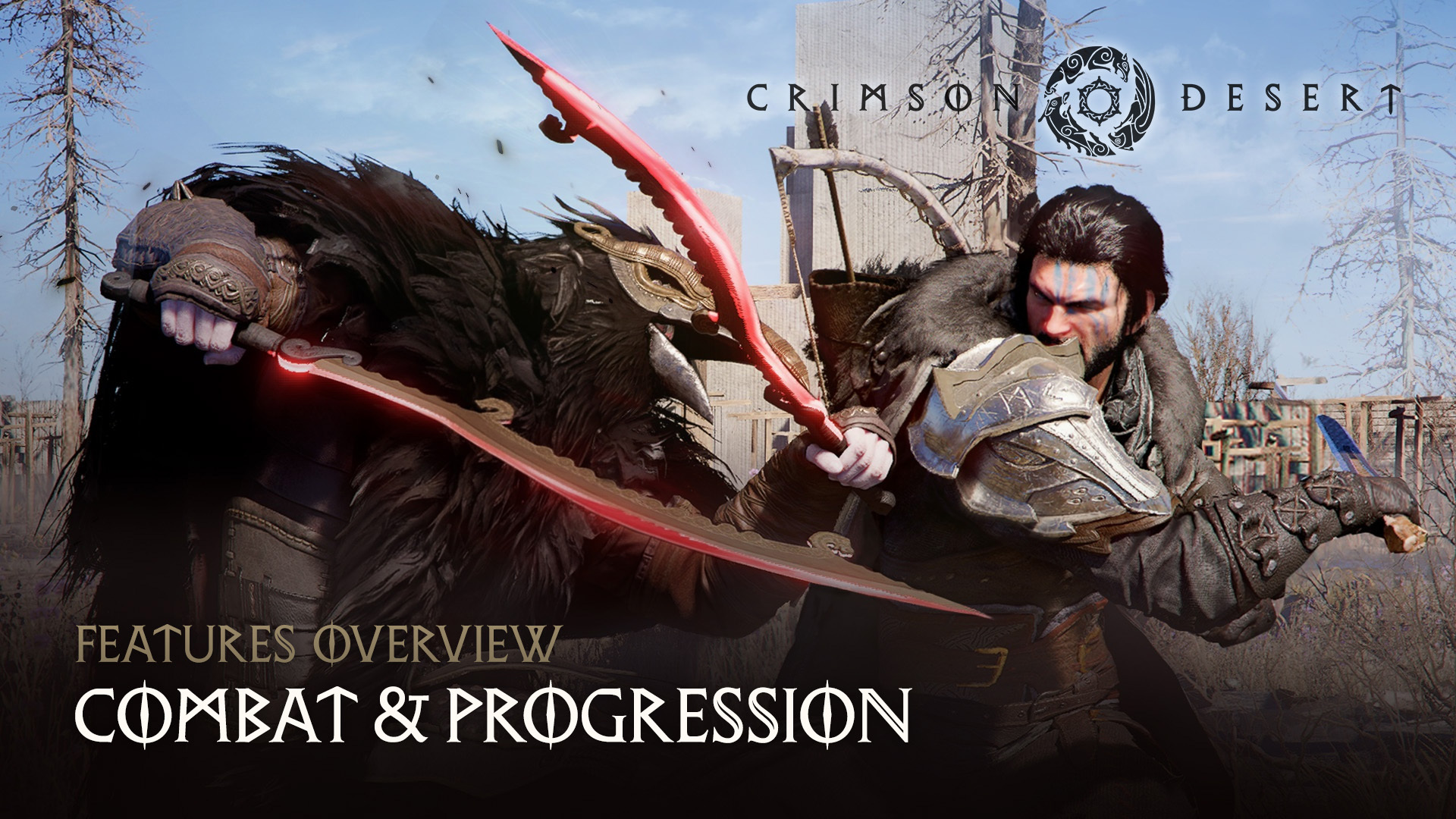
Pearl Abyss has explicitly stated that Crimson Desert is not a Soulslike game. The studio describes it as closer to a brawler with fighting game influences. While the combat system rewards timing and skill, several design pillars distinguish it from the Soulslike formula. Stamina does not restrict basic attacks, only evasion and blocking. There is no corpse run or currency loss on death. Revive items exist to soften the penalty of failure. The game is designed to be challenging but not punishing.
Fighting Game Influences
The combat draws direct inspiration from fighting games like Samurai Shodown and King of Fighters. Rather than relying on simple light and heavy attack chains, the combat requires players to memorize specific button combinations for different moves, much like inputting special moves in a 2D fighter. Pearl Abyss has stated there is "no single correct answer" in combat, encouraging players to develop their own combo creativity and attack patterns rather than following a single optimal rotation.
Enemy Behavior
Enemies in Crimson Desert do not take turns attacking the player. Multiple enemies will coordinate and attack simultaneously from different directions, creating pressure that requires spatial awareness and crowd management. This is a deliberate departure from Soulslike design, where enemies typically attack one at a time even in group encounters.
Enemy difficulty is fixed by region. Enemies in Hernand are designed for early-game encounters, while creatures in regions like Demeniss and the Crimson Desert present much greater challenges. This creates natural "walls" where players are encouraged to explore, gear up, and return rather than forcing their way through.
Stamina System
Stamina in Crimson Desert works differently from most action RPGs. Light attacks (R1) are completely free and do not consume stamina. Stamina is only consumed by blocking, dodging, sprinting, heavy attacks (R2), and certain spin attacks. This means players always have offensive options available even when stamina is depleted, but lose their defensive toolkit until stamina recovers.
This design creates a distinct rhythm in combat: players can always swing their weapons, but running out of stamina means being unable to dodge or block incoming attacks. Managing stamina becomes about choosing when to use expensive defensive moves rather than rationing basic attacks. Stamina can be increased through the Abyss Skill Tree and temporarily boosted through cooking.
How Difficulty Works in Practice
The open world of Pywel is entirely open from the start, but different regions have significantly different enemy difficulty levels. Wandering into a high-difficulty area early on means facing enemies that hit much harder and have much more health than your current gear can handle.
This creates a natural difficulty curve through exploration. If an area feels too tough, the game encourages you to leave, explore easier regions, collect better equipment and Abyss Artifacts, and return when you are stronger. There is no shame in retreating from a fight; the world is designed to support this pattern.
Progression as Difficulty Management
Because character power comes from gear and artifacts rather than a level number, difficulty management is directly tied to how thoroughly you explore and what resources you find. Players who invest time in crafting, gathering, and side content will find themselves better equipped for tougher encounters. The Greymane Camp provides permanent stat bonuses through facility upgrades, offering another avenue for building character strength.
Defeating bosses rewards players with boss-specific gear and the ability to learn the boss's signature moves through Observation Learning. This creates a positive feedback loop: the toughest fights yield the best rewards, which make subsequent tough fights more manageable.
World Design Philosophy
Pearl Abyss has said that the main campaign represents only "a small percentage" of the total content. The world is intentionally designed to distract players from the critical path with side activities, exploration rewards, and dynamic encounters. This design philosophy means that players who engage with the world's optional content will naturally become stronger, smoothing out the difficulty curve without requiring artificial difficulty settings.