

Overview
Non-player characters in Crimson Desert follow full daily routines tied to the game's persistent day-night cycle. Each region in the world of Pywel is governed by this cycle, and the NPCs populating these lands have schedules that include waking up, going about their daily tasks (such as farming, fishing, or guard duty), and then going back to bed. Pearl Abyss has stated that "all villagers going about their daily lives and every NPC, event, and side quest in the game were created for a purpose," emphasizing that these routines exist to make the world feel alive rather than serving as mere window dressing.
The Day-Night Cycle
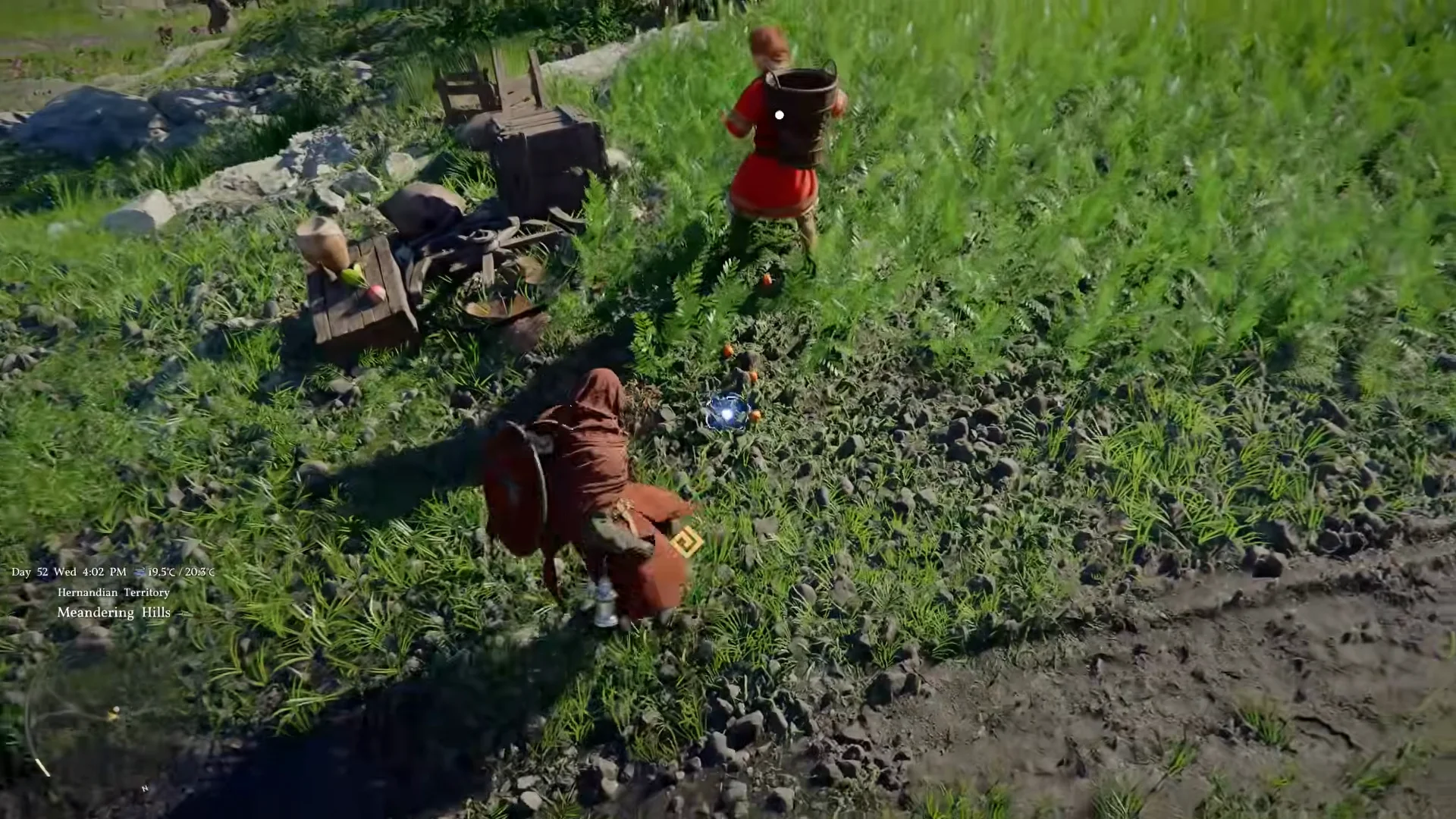
Crimson Desert has a persistent in-game calendar with a real-time day-night cycle. The HUD displays the current day number, weekday, exact time, and temperature. For example, players might see "Day 30 Wed 5:51 AM" alongside a temperature reading of 10.2 degrees. This system runs continuously as players explore the open world.
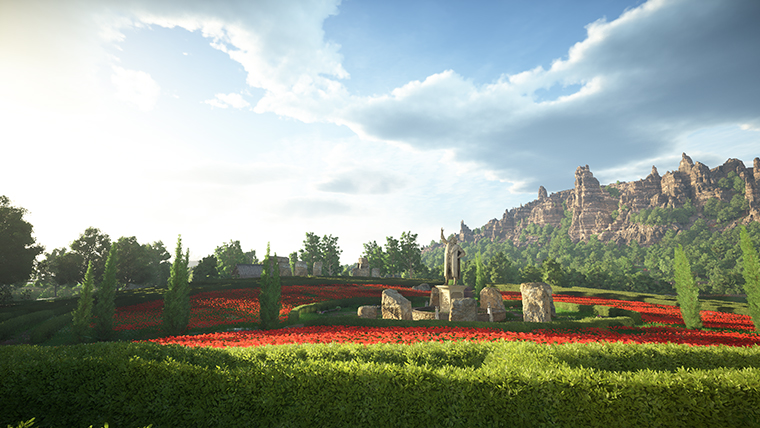
Weather is calculated dynamically based on elevation, weather patterns, wind, precipitation, and temperature. Pearl Abyss Director of Marketing and PR Will Powers confirmed that "it's all happening in real time." Heavy snowfall, downpours, and gentle breezes all occur dynamically based on the simulation. Cutscenes are rendered in real-time and affected by the current time of day and weather. One player may see a cutscene on a bright sunny day, while another sees the same scene at night in the rain.
How Time Affects NPC Behavior
The time of day directly influences what NPCs and threats players encounter in the open world. Weather conditions and time of day influence NPC behavior, quest availability, and environmental hazards. This means NPCs are not static; their behavior, availability, and the types of activities they perform change based on the in-game clock. Pearl Abyss has described this as incentivizing players to explore at different times.
Town and Settlement Life
Towns and villages in Crimson Desert are designed as living environments where NPCs carry out observable daily activities. Multiple hands-on previews have documented the range of NPC behaviors visible in settlements.
Merchant and Trade Activity
Merchants talk to one another and appear to haggle over prices. Shopkeepers barter based on the local economy. When a player purchases a specific item from a blacksmith, the blacksmith's forging animation changes to match. Buying a sword causes the blacksmith to forge a sword; buying armor causes them to switch to armor crafting.
Guard Patrols
Guards patrol towns and respond to crimes in real time. They are tied into the wanted system, turning hostile when the player commits criminal acts such as theft or assault. After players liberate areas from hostile factions, guards and residents return to maintain order.
Civilian Behavior
Children mimic fights in alleyways, creating organic social moments. NPCs talk to each other as the player passes by. Some NPCs look at the player in awe, while others make disparaging comments. Physical collision is implemented, so running into an NPC will physically shove them aside. NPCs keep pace with the player during escort sequences, avoiding the common problem of slow-walking companions.
NPC Activities Throughout the Day
NPCs across Pywel perform a variety of activities as part of their daily schedules. The following activities have been confirmed through official trailers and developer communications.
Activity | Description |
|---|---|
NPCs work fields and tend crops; players can also manage farms at the Greymane Camp | |
NPCs fish at rivers and lakes; players can learn the fishing skill by watching them | |
Guard Duty | NPCs patrol settlements, respond to crimes, and defend against threats |
NPCs work mining sites using hammers, pickaxes, or explosives | |
NPCs hand-gather mushrooms, flowers, and insects from the environment | |
Sleeping | NPCs retire to bed at night and wake up in the morning to resume their schedules |
Skill Learning Through Observation
NPC daily activities are directly connected to player progression through the skill system. Players can learn certain skills by observing NPCs performing them. To learn a skill this way, the player approaches an NPC or enemy using a technique and holds the observation button for about two seconds. The skill then appears in the menu but remains grayed out until the player assigns an Artifact to activate it.
For example, watching a passive NPC perform a palm strike teaches the player that combat move. Fishing is one of the skills learned by watching an NPC fish. Players can also mimic enemy attacks observed during combat, such as body slams. Some skills "cannot be learned from Artifacts alone," meaning observation of NPCs performing them is the only way to unlock them.
NPC Reactions to Player Actions
Crime and Consequences
Pickpocketing NPCs or stealing items triggers a "Crime" notification. Criminal actions can cause an entire town to become hostile, including guards and residents. A Wanted Poster with the character's face and bounty amount appears on-screen. Each crime reduces Hernandian Contribution, a reputation metric tracking standing with regional factions. Penalties range from negative five points for minor offenses to negative thirty for serious crimes. Consequences include forced combat, fines, or jail time in a wooden holding cell.
Positive Interactions
NPCs also initiate positive interactions with the player. They offer commissions ranging from delivering goods to tracking missing persons to providing protection against bandits. Some NPCs challenge the player to duels. Pickpockets attempt theft against the player. Beggars can be recruited by giving them coins. Soldiers under attack can be rescued. NPCs also have a "Threaten" dialogue option where the player can threaten violence to extract information.
Camp Life at the Greymane Camp
The Greymane Camp functions as the player's personal settlement and is a show for NPC routines. Companions can be seen eating, resting, and preparing for the next quest. Scattered Greymane members rejoin the camp over time, with some recruited by players and others arriving on their own.
Companions actively contribute to the war effort even when the player is exploring elsewhere. Players can dispatch companions on missions through the Freesword Dispatch System to acquire resources like timber and ore. Camp structures are upgradable and include food shops, trading centers, farms, and workshops. Upgrading the camp directly improves character stats, unlocks new skills, and expands the roster of available companions.
Dynamic World Events
Beyond scheduled routines, the world features emergent, unscripted events. Bandit ambushes, wildlife encounters, and faction skirmishes occur without warning. Traveling merchants appear dynamically. Stampedes of wild animals can cross the player's path. Pearl Abyss has described these as "not scripted events, but emergent behaviors tied to the game's day-night cycle and ecosystem."
After players liberate settlements from hostile factions, residents return, structures are rebuilt, new vendors become available, and trade routes unlock. People "reappear to retake their homes, going back to their daily lives and chores as it's now safe." This creates a tangible sense of the player's actions having lasting consequences on the world.
Settlement Activities and Mini-Games
NPCs participate in and facilitate various social activities within settlements. These mini-games give players reasons to linger in towns and interact with NPCs beyond questing.
Activity | Description |
|---|---|
Dice and Board Games | |
One-on-one strength contests against NPCs | |
Fighting Arena | Organized one-on-one brawls for prizes |
Ranged accuracy challenges | |
Competitive races against NPC riders | |
Coin Gambling | Wagering coins on outcomes |
Paper-Rock-Scissors | Casual game played with NPC children |
Sheep Wrangling | Herding sheep within a time limit |
Street Brawls | Impromptu fistfights in town squares |
Faction Influence on NPC Behavior
The game features "dozens and dozens" of factions. Faction relationships influence the world state, and progressing faction questlines can change relationships from "at war" to "neutral" to "alliance." Aligning with specific houses unlocks reputation that gives access to additional vendors and resource nodes in a region. Completing side quests can recruit new faction members into the Greymanes.
Voice Acting
All main NPCs and side quest NPCs are voiced by human actors across multiple languages including Korean, English, and Chinese, with text localization for over thirteen languages. Pearl Abyss has confirmed that no AI-generated voice acting was used for the game's NPC dialogue.
Design Philosophy
Will Powers stated in an interview that "the world is living and breathing, and it's made to feel like that," emphasizing this as "really important" to the game's design. One of the design goals was described as creating "a world full of distractions" where the developers want players to get sidetracked on the way to their next quest objective. The NPC daily routine system is a core part of achieving this vision, making sure that every corner of Pywel feels inhabited and purposeful.