

Overview
Consumables in Crimson Desert are single-use items that provide immediate benefits to Kliff, including health restoration, spirit restoration, stamina restoration, temporary stat buffs, and ailment cures. They are obtained through cooking, alchemypurchasing from merchants and looting during exploration. The game's Knowledge Library includes 355 crafting manuals as discoverable entries, confirming a substantial number of recipes for players to find across Pywel.

Consumables play a major role in Crimson Desert's progression system. The game has no character leveling; gear and consumables are the primary means of improving Kliff's effectiveness. During boss fight previews at Gamescom 2024, Pearl Abyss pre-loaded demo characters with "healthy stocks" of restorative items, and journalists reported relying on them heavily to survive encounters like the Staglord and Hexe Marie.
Consumable Types
Type | Source | Effects |
|---|---|---|
Cooked Meals | Cooking at bonfires or camp cauldrons | Restore health, spirit, and/or stamina. Many also provide temporary combat buffs (increased damage, defense, health regeneration). |
Medicine and Salves | Alchemy (using plants and insects) | Heal ailments, cure status effects, and restore health. |
Potions and Concoctions | Alchemy (using plants and insects) | Provide temporary combat buffs and stat enhancements. |
Raw Provisions | Purchased from merchants or camp vendors | Basic food items with simple restorative effects. |
Dyes | Alchemy (using flowers) | Cosmetic customization for outfits, armor, weapons and mounts. Not combat-relevant. |
Confirmed Consumable Items
The following specific consumable items have been confirmed by name in preview coverage and official materials. The full game will contain many more recipes and items; this list reflects what has been documented before launch.
Item | Type | Source |
|---|---|---|
Veal Burger | Restorative food | confirmed by current community data. Pre-loaded in demo builds for boss encounters. |
Meat on Toast | Recovery food | confirmed by current community data. Players consumed "lots of meat on toast" while fighting Goldleaf soldiers. |
Food / trading commodity | Available through the camp trading system. | |
Meat Jerky | Food | Available through the camp trading system. |
Salt-Grilled Fish | Cooked food | Available through the camp trading system. Likely produced via the cooking system using fish from rivers and lakes. |
Drink | Available through the camp trading system. |
Preview sessions also referenced Spirit-restoring food and Stamina-restoring food as distinct categories, indicating that different meals target different resources. Journalists had to swap between health food and spirit food depending on which resource was depleted.
The Cooking System
Cooking can be done at any bonfire encountered throughout the open world or at cauldrons within the Greymane Camp. Multiple outlets compared the system to "Breath of the Wild-style cooking." Players physically stir ingredients in cauldrons during the cooking process, and the results depend on the recipe being followed.
Recipes
Recipes are key items that contain the techniques and ingredient lists for crafting specific meals. They can be found scattered around towns in Pywel, purchased from merchants, or discovered through the Knowledge system (355 crafting manuals are tracked as discoverable entries). Each recipe lists its required ingredients and the resulting meal's effects.
Recipes can also be "used to craft a new meal for the people of the Camp," suggesting a social or camp-wide cooking function beyond Kliff's personal consumption. This ties cooking into the broader Greymane Camp development system.

Ingredients
Cooking ingredients are gathered through the game's life skill systems: hunting provides meatfishing provides fish, farming provides crops, ranching provides livestock products (milk, meat), and foraging provides herbs and plants. Ingredients can also be purchased from the camp's Food Shop, run by the NPC Ronnie, or from merchants in towns across Pywel.
The Alchemy System
Alchemy produces medicines, salves, potions, concoctions, and dyes using flowers, herbs, and insects gathered from the world. Alchemy requires a Cauldron station found in settlements like Hernandat the Greymane Camp Alchemy Lab, and in other locations across Pywel. Prepare alchemical items before venturing out, as you will need to visit a Cauldron to craft them.
Flowers and insects gathered during exploration serve as alchemy ingredients. Plants for alchemy can also be grown on the camp farm once farming is unlocked, providing a renewable source of ingredients.
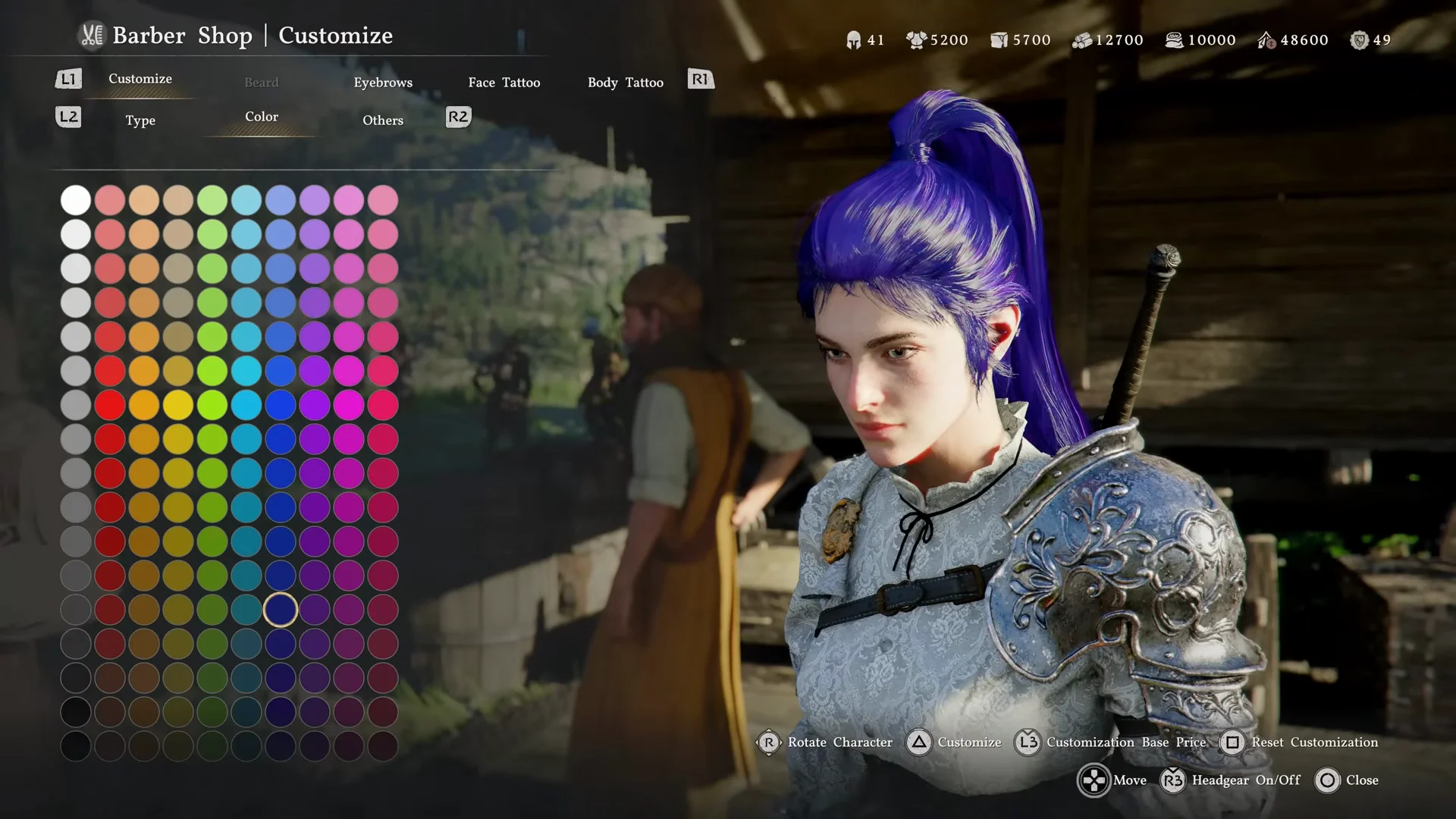
Dyes are a secondary alchemy output. They provide cosmetic customization for outfits, hairstyles, tattoos, armor, weapons, mounts, and even the War Robot. The full color palette is available from the start of the game once the player has the required flower and insect ingredients. Dyes are applied at the Dyehouse within the Greymane Camp.
Using Consumables in Combat
Consumables can be accessed during gameplay. Players can switch equipped consumables and other items without pausing the game, but navigating menus while under attack requires practice. Different food types must be swapped depending on which resource needs restoring (health food, spirit food, or stamina food), and arrows occupy a separate slot.
Consuming food involves an eating animation with a time commitment; it is not instant. The game's AI does not pause or slow down while Kliff eats, so choosing when to heal is a tactical decision during boss fights. Multiple preview journalists found the menu system frustrating during intense combat, noting that cycling between spirit-restoring food, health-restoring food, and arrows required navigating multiple layers while dodging attacks. Learning the menu layout before difficult encounters helps.
Greymane Camp Integration
The Greymane Camp is the central hub for consumable production. Several camp facilities directly support the consumable pipeline.
Feature | Details |
|---|---|
Food Shop (Ronnie): | An NPC vendor at camp who buys and sells food items, rations, and cooking provisions. |
Camp Cauldrons: | Dedicated cooking stations where Kliff can prepare meals from gathered ingredients. |
Farm: | Cultivate crops for cooking ingredients and alchemy plants. Requires physically watering plants and tending the field. |
Livestock Pens: | Raise cows, pigs, goats, and chickens for meat, milk, and other cooking ingredients. |
Trading Center: | Exchange goods including food items like barley, meat jerky, salt-grilled fish and fruit juice. |
Companion Dispatch | Send recruited Greymane members on resource-gathering missions that return with cooking materials and other supplies. |
Recipe Quality Tiers

Cooking recipes in Crimson Desert come in four quality tiers. Each recipe starts at the lowest tier, and players can improve recipes by adding more ingredients during cooking. Higher tiers provide greater restoration values and longer buff durations.
Tier | Description |
|---|---|
Modest | Basic version with minimal restoration; uses the fewest ingredients |
Basic | Slightly improved effects; requires one additional ingredient |
Filling | Good restoration values and moderate buff durations |
Hearty | Maximum restoration and longest buff durations; requires the most ingredients |
For example, the basic recipe Toasted Grains requires three of any grain, while Hearty Toasted Grains requires seven grains total. Some recipes are known from the start of the game, but the majority must be found while exploring the world or by completing quests.
Cooking Recipes and Effects
The following table lists specific cooking recipes confirmed in the game, along with their ingredients and effects. The game contains hundreds of cooking recipes; this table covers the most commonly referenced ones.
Recipe | Ingredients | Effects |
|---|---|---|
1 Fish (or 2 Fish Fillet), 1 Lentils (or Beans/Barley/Wheat/Peas), 1 Salt, 3 Water | Health +240 Ice Resistance Lv 4 (1 min) | |
4 Meat, 2 Onion (or Flax/Cucumber/Turnip/Beet), 2 Berry, 3 Water | Health +260, Spirit +24 Ice Resistance Lv 4 (1 min) | |
4 Onion (or Flax/Cucumber/Turnip/Beet), 2 Berry, 1 Egg2 Salt | Health +240, Spirit +22 Fire Resistance Lv 4 (1 min) | |
3 of any grain | Basic health restoration | |
7 of any grain | Improved health restoration | |
Grapes and fermentation ingredients | Moderate Stamina restoration | |
Rice-based ingredients | ||
Fish and skewer materials (found in Beighen drinking hall) | Health restoration, provides small containers |
Alchemy Recipes and Effects
Alchemy is performed at Cauldron stations, which must first be unlocked at the Greymane Camp through the base upgrade system. Alchemy produces combat consumables, healing items, and cosmetic dyes. Key alchemy recipes include:
Recipe | Ingredients | Effects |
|---|---|---|
2 Water 15 of any single herb variety (31 types accepted; all must be the same) | Restores Health can be crafted at any Cauldron | |
Attack Speed Potion | Alchemy reagents (unlock early) | Increases attack speed; useful from early game through endgame |
Specialized alchemy ingredients | 4 seconds of zero Stamina consumption | |
Spirit Restoration Potion | Abyss Dewdrop, Silver Dust | Restores a portion of Kliff's Spirit gauge |
The Attack Speed Potion is worth unlocking as early as possible. It remains useful throughout the entire game and provides a noticeable combat advantage during boss encounters where attack windows are narrow.
Consumable Strategy
Since Crimson Desert has no character leveling systemgear and consumables are the primary means of improving Kliff's effectiveness. Managing your consumable inventory is critical, especially for boss fights where damage output and survivability depend heavily on food buffs and healing items.
Always eat a meal before entering a boss encounter. The stat buffs from food (such as increased Max HP, Stamina Regeneration, or elemental resistance) persist for 30 minutes and stack on top of your base stats.
Carry a mix of quick-restore items (like Palmar Pills) for emergencies and slower, high-value meals for sustained healing between combat phases.
Elemental resistance food is situationally powerful. Before fighting White Horn eat food with Ice Resistance. Before fire-themed encounters, cook meals with Fire Resistance.
Unlock the Alchemy station at Greymane Camp as early as possible to begin producing Attack Speed Potions and other combat-boosting elixirs.
The in-game Knowledge Library tracks 355 crafting manuals. Exploring thoroughly and completing side quests unlocks the best recipes progressively.
Tips
Tip | Details |
|---|---|
Stock up before bosses. | Boss fights in Crimson Desert are long. The Gamescom demos came pre-loaded with hundreds of healing items for a reason. Bring more than you think you need. |
Carry both health and spirit food. | Spirit is consumed by elemental abilities and magic skills. Running out of spirit food mid-fight means losing access to your strongest abilities. |
Learn the radial menu layout. | Practice swapping between consumable types before entering difficult content. Fumbling through menus during a boss combo is a common cause of death in previews. |
Cook at every bonfire. | Bonfires are scattered throughout the open world. Use them to cook meals from ingredients you have gathered during exploration rather than hoarding ingredients unused. |
Grow alchemy plants at camp. | Once farming is unlocked, plant flowers and herbs at the Greymane Camp farm to create a renewable alchemy ingredient supply. |