

Overview
The Knowledge System in Crimson Desert is a comprehensive codex that automatically tracks the player's discoveries across the continent of Pywel. It records information about people, locations, creatures, crafting recipes, bosses, factions, and other collectibles encountered during gameplay. The system contains 2,921 total knowledge entries, making it both a lore compendium and a completionist tracking tool.
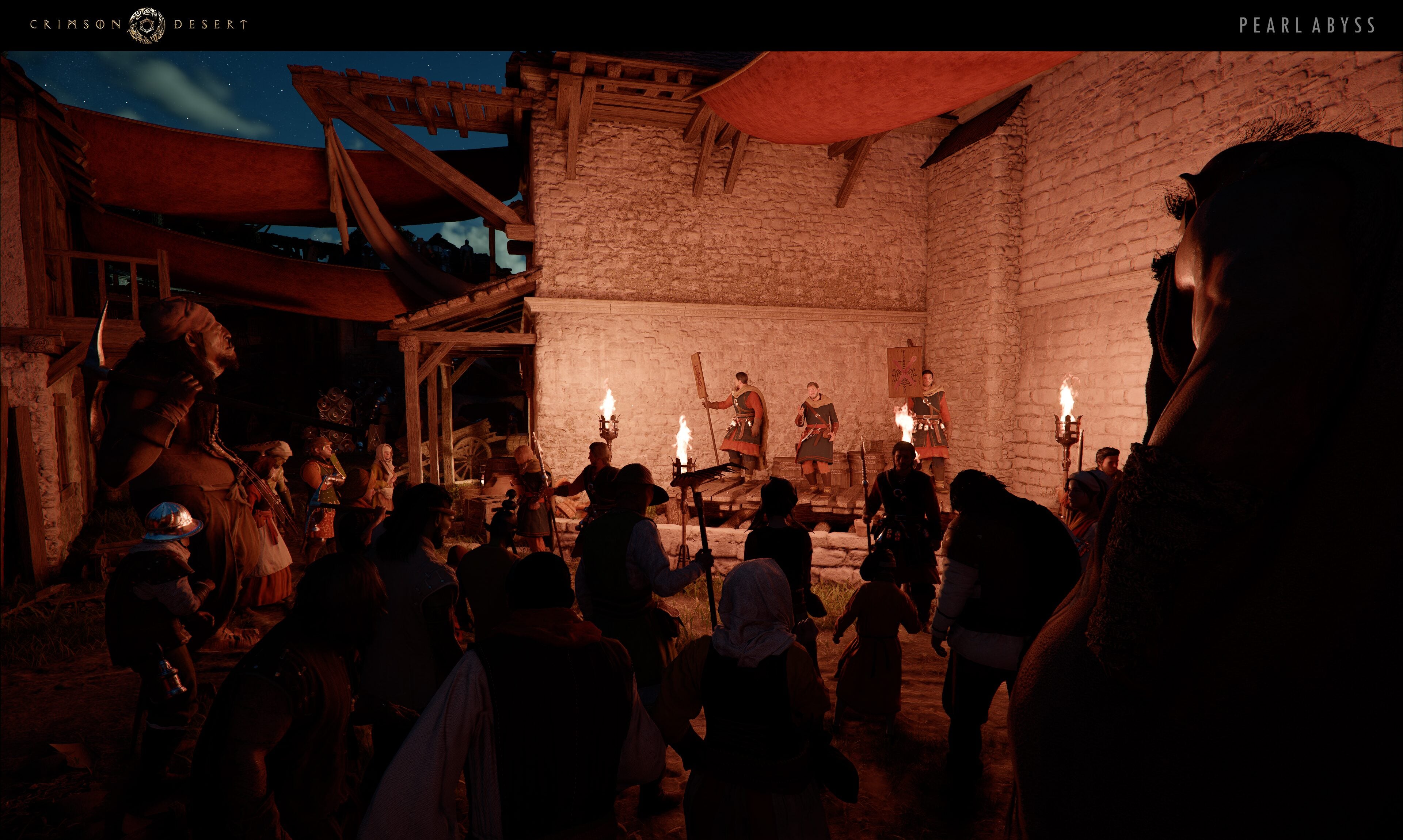
When the player first opens the Knowledge menu, a progress counter displays "0/2921" and fills in as discoveries are made. The codex auto-updates as the player explores, fights, talks to NPCs, and interacts with the world. No manual logging is required. Every conversation, every new territory visited, every boss defeated, and every item inspected contributes to the running total.
The Knowledge system in Crimson Desert is a massive compendium that records virtually everything you encounter, discover, and learn while exploring the continent of Pywel. With 2,921 total entries spread across multiple categories, the Knowledge system is both a lore encyclopedia and a completionist tracking tool. Every NPC you speak to, every territory you visit, every boss you defeat, and every item you inspect contributes to your Knowledge progress.
Accessing the Knowledge Menu
The Knowledge menu is accessible from the main pause menu. It displays progress across all categories and highlights entries that have not yet been discovered. Each category shows a completion counter (e.g., 45/110 Factions) so the player can track exactly how far along they are.
The Knowledge tab also provides contextual information about NPCs, factions, creatures, and collectibles that have been encountered. Reading Knowledge entries is one of the best ways to learn about the lore and history of Pywel without relying on external sources.
Undiscovered entries within each category appear as question marks. Once the player encounters the relevant subject, the question mark is replaced with the actual entry, revealing its name and description.
The Knowledge menu is accessible from the main pause menu. It shows your progress across all categories and highlights which entries you have not yet discovered. Each category displays a completion counter (e.g., 45/110 Factions) so you can track exactly how far along you are.
The Knowledge tab also provides contextual information about NPCs, factions, creatures, and collectibles that you have encountered. Reading Knowledge entries is one of the best ways to learn about the lore and history of Pywel without relying on external sources.
Knowledge Categories
The Knowledge Codex is divided into distinct categories. During hands-on preview events, journalists confirmed the following category totals:
Entry Count | Description | |
|---|---|---|
Territories | 573 | Distinct regions, sub-regions, and explorable zones across all five regions of Pywel. Entries are added automatically when the player visits a location for the first time. |
People | 467 | NPCs, named characters, faction members, merchants, and quest-givers. Entries unlock through conversations and quest interactions. |
Adventures | 430 | Quests and explorable content including regions, secret places, and caves (see subcategories below). Both main story and side content contribute to this category. |
401 | Wildlife, monsters, hostile animals, and tameable beasts. Includes subcategories such as Creatures of Mysteries, which tracks rare creatures like Chimeras. | |
355 | Recipes for cooking, alchemy, weapon crafting, armor crafting, and tool creation. Entries are added when the player discovers or purchases a new crafting manual. | |
Resources | 150 | Gatherable raw materials found throughout the world, including ores, herbs, wood, and other gatherables. |
110 | Major and minor political, military, and commercial organizations across Pywel. Entries unlock through story progression, NPC conversations, and discovering faction-related locations. | |
94 | Discoverable collectible items scattered throughout the world, including ceramic containers, wooden vessels, candles and lamps, dolls, decorative art pieces, and special trophies. | |
76 | Named boss enemies including story bosses, optional overworld bosses, dungeon bosses, and Abyss-related encounters. | |
29 | Rideable creatures including horses, bears, raptors, camels, elephants, and wyverns. | |
Other | 236+ | Lore entries, historical notes, item descriptions, memory fragments, and miscellaneous discoveries. |
Total | 2,921 | All knowledge entries combined. |
The 2,921 Knowledge entries are organized into the following categories:
Total Entries | Description | |
|---|---|---|
Territories | 573 | Locations, regions, towns, landmarks, and named areas across Pywel. Entries are added automatically when you visit a location for the first time. |
People | 467 | NPCs, quest givers, merchants, story characters, and background townspeople. Entries unlock through conversations and quest interactions. |
Adventures | 430 | Quests, side stories, encounters, and events you have completed or participated in. Both main story and side content contribute to this category. |
355 | Recipes and blueprints for crafting. Entries are added when you discover or purchase a new crafting manual. | |
Factions | 110 | Information about the various factions, guilds, and organizations throughout Pywel. Entries unlock through story progression, NPC conversations, and discovering faction-related locations. |
76 | Records of all bosses you have defeated, including story bosses, optional overworld bosses, dungeon bosses, and Abyss-related encounters. | |
29 | All mount types you have collected, tamed, or ridden. Includes horses, wyverns, and other rideable creatures. | |
Other | 881+ | The remaining entries cover items, collectibles, creature types, world lore, environmental discoveries, and miscellaneous facts learned through exploration. |
Quests Knowledge Category
Patch 1.18.00, released August 15, 2026, added "Quests" as a knowledge category in its own right. It is split into eight sub-categories: Main Quests, Faction Quests, Investigation Quests, Research Quests, Daily Life Quests, Guide, Archive Records, and Constellations. Entries are granted retroactively for quests already completed on an existing save, so a long-running file picks up a batch of entries the first time it loads after the patch rather than requiring replays.
The same patch loosened how creature knowledge is earned: knowledge of certain animals can now be gained by picking them up rather than killing them, which matters for the small-animal species that double as pets. Boss knowledge entries also had their wording improved, and the "Mysterious Invitation" entry became obtainable after completing "Read the memory beneath Delesyia Castle." See Patch Notes for the full list.
Adventures Subcategories
The 430 Adventures entries break down into several subcategories that track different types of explorable content:
Subcategory | Count | Description |
|---|---|---|
Regions | 173 | Named regions and sub-regions discovered through exploration. |
133 | Underground areas, caverns, mines, and other subterranean zones entered by the player. | |
Secret Places | 34 | Hidden locations that require off-the-beaten-path exploration to discover. |
Other Adventures | 90 | Miscellaneous adventure entries that do not fall into the above subcategories. |
How Knowledge is Acquired
Knowledge entries are collected through various gameplay activities. Most entries unlock automatically when the player encounters the relevant subject, but some require specific actions.
Method | Examples |
|---|---|
Looking at Items | Viewing food in a shop's inventory, examining objects in the environment, browsing a merchant's stock (even without purchasing). |
Speaking to Characters | Talking to NPCs, quest-givers, merchants, and named characters. Even casual merchants and background townspeople can yield new entries. |
Entering Locations | Walking into a new town, cave, ruin, or landmark for the first time. The 573 territory entries cover every named place on the continent. |
Defeating Enemies | Killing new creature types or defeating bosses. Each unique enemy type contributes to the Creatures or Bosses categories. |
Taming Mounts | Successfully taming a new horse breed or creature type. Riding a new mount type for the first time also counts. |
Discovering Recipes | Finding cooking recipes, alchemy formulas, or crafting blueprints through exploration, merchants, or quest rewards. |
Reading Notes | Finding and reading in-world documents, letters, and inscriptions left throughout the world. |
Observing NPCs | Watching NPCs perform activities. Observing a fisherman teaches fishing techniques. Watching an enemy's combat style can reveal new skills. See the Learning by Observation section below. |
Collecting Items | Picking up collectibles such as ceramic containers, wooden vessels, candles and lamps, dolls, and decorative art pieces. |
Gathering Resources | Harvesting raw materials like ores, herbs, and wood. Gathering a new resource type for the first time registers it in the Resources category. |
Knowledge entries are earned through a wide variety of gameplay activities. Here are all the known methods:
Speaking to NPCs
Conversations with NPCs are one of the most common sources of Knowledge entries. Even casual merchants, background townspeople, and minor characters can yield new entries when spoken to. Quest givers and story characters unlock entries in the People category. Do not skip NPC conversations if you are aiming for high Knowledge completion.
Visiting Locations
Simply arriving at a named location or territory for the first time adds it to the Knowledge codex. This includes towns, dungeons, landmarks, points of interest, and remote areas. The 573 territory entries cover every named place on the continent.
Examining Items and Objects
Looking at items in a shop's inventory (even without buying them), inspecting interactable objects in the world, and reading documents or signs all register Knowledge entries. Browse every merchant's inventory when you visit a new town, even if you have no intention of purchasing anything.
Defeating Enemies and Bosses
Killing bosses and unique creatures adds them to the bestiary section of the Knowledge system. The 76 boss entries cover all story bosses, optional overworld bosses, dungeon bosses, and Abyss encounters. Defeating each boss typically also rewards Abyss Artifacts, rare equipment, or crafting materials in addition to the Knowledge entry.
Completing Quests and Events
Many main quests and side quests yield Knowledge entries as part of their completion rewards. Story milestones, event participation, and quest chains all contribute to the Adventures category.
Collecting Mounts
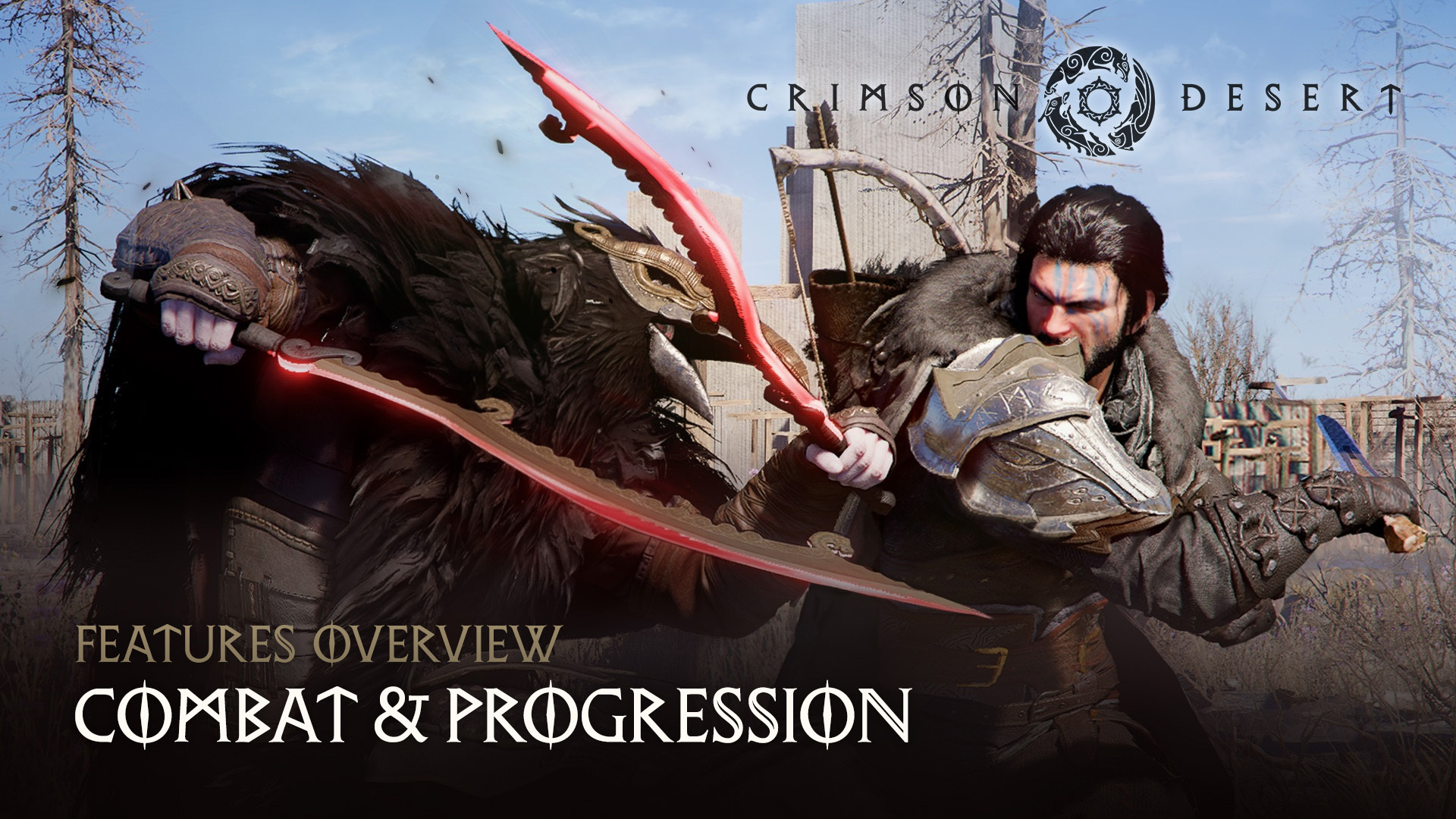
Taming wild horses, acquiring unique mounts, and riding new mount types for the first time all register Knowledge entries in the Mounts category. There are 29 mount types to collect.
Discovering Collectibles
Collectibles such as ceramic containers, wooden vessels, candles and lamps, dolls, decorative art pieces, and special trophies all contribute Knowledge entries. These are found through exploration, purchased from vendors, or earned by winning competitions such as the Spear Duel tournament.
Learning by Observation
One of the more distinctive aspects of the Knowledge System is its connection to observation learning. Rather than acquiring all skills from skill trees or quest rewards, players can learn certain abilities by watching NPCs and enemies perform them.
How Observation Works
When an enemy or NPC performs a unique technique that Kliff does not yet know, an observation prompt appears above their head. Holding the designated observation button for two to three seconds while within visual range banks the observation. A "Technique Observed" notification confirms the observation has been recorded. The player can then open the skill menu and spend one Abyss Artifact to permanently unlock the observed technique.
Observation extends beyond combat. Approaching an NPC fisherman and holding the observation button for about two seconds teaches the fishing skill. Watching crafters, performers, and other NPCs going about their daily routines can yield additional techniques. Players can also discover holographic echoes of past warriors that serve as observation targets.
If the player has already spent an Abyss Artifact on a skill that can also be learned through observation, the Artifact is refunded when the observation is completed. This makes observation learning a way to save valuable Abyss Artifacts for skills that can only be unlocked through the perk tree.
Notification System
With so many activities and discoveries happening at once, it is easy to lose track of completed objectives or newly acquired Knowledge entries. The Notifications section in the main menu lists everything that has appeared during gameplay. Selecting a notification redirects the player to the specific part of the Knowledge menu where that entry is stored.
This makes the Notification system a useful organizational tool for completionists. Rather than manually searching through all categories to find what changed, the player can simply open Notifications and jump directly to the relevant entry.
Gameplay Integration
The Knowledge System integrates with several gameplay systems beyond simple collection tracking:
Feature | Details |
|---|---|
Progress Tracking: | The codex shows completion percentages per category, helping players identify unexplored areas and undiscovered content. Each category and subcategory displays its own counter. |
Faction Awareness: | Knowledge entries for the 110 factions reveal political relationships, territorial control, and potential quest opportunities. |
Combat Preparation: | Creature and boss entries may reveal weaknesses, attack patterns, or loot tables for previously encountered enemies. |
Crafting Discovery: | The 355 crafting manuals include recipes for cooking, alchemy, and equipment, providing a complete checklist for crafters. |
Skill Acquisition: | Certain Knowledge entries (particularly observation-based ones) directly unlock new player skills and abilities through the observation learning mechanic. |
Collectible Tracking: | The 94 collectible entries help players track which items they have found and which remain undiscovered. Collectibles can be displayed in the player's home at Greymane Camp or gifted to NPCs to build relationships. |
Mount Collection: | The 29 mount entries serve as a checklist for players seeking to tame or acquire every rideable creature in the game. |
Connection to the Axiom Archive
The Axiom Archive is a major landmark located on one of the Abyss islands. It is a large domed building at the end of a walkway surrounded by garden trees and foliage. The Archive plays a central role in the Abyss Without Balance main quest, where players must solve the Polar Opposites puzzle to gain entry.
To open the Axiom Archive, the player must find the two wheels to the right of the building (among the hedges near the entrance steps) and use the Axiom Force ability to grab and turn the wheels, directing energy from the top pipe to the bottom pipe. The Lantern item reveals beam directions and highlights which pipe is currently active, so players should use it to check the flow before turning anything.
Inside the Axiom Archive, players discover significant lore about the Abyss and the nature of the world. The Archive is a physical manifestation of accumulated knowledge and connects directly to the game's overarching themes of discovery and understanding.
Scope and Scale
The 2,921 Knowledge entries provide a clear sense of the game's scale. With 573 territories alone, the world contains more distinct explorable zones than most open-world games. For comparison, Red Dead Redemption 2's compendium tracks roughly 150 species; Crimson Desert's creature category alone has 401 entries, and its total codex is nearly 20 times larger.
The 76 boss entries suggest a massive roster of named enemies beyond the 13 story bosses confirmed in preview materials. And 63 bounties were counted in just the first town of Hernand, indicating the total side content across all 573 territories is substantial. Pearl Abyss has stated that the main story represents only a "small percentage" of overall content, and the Knowledge System's scope confirms this.
The system shares thematic similarities with the knowledge system in Black Desert Online, Pearl Abyss's prior MMO. Crimson Desert adapts this concept for a single-player action RPG, where completionism is driven by exploration rewards rather than MMO energy systems.
Helm of Knowledge
The Helm of Knowledge is a unique headpiece that dramatically accelerates knowledge acquisition. When equipped, it provides a scanning ability that lets Kliff identify and learn about objects, creatures, and interactive elements from a distance without needing to approach them directly. It is one of the best early-game exploration tools available.
Where to Find It
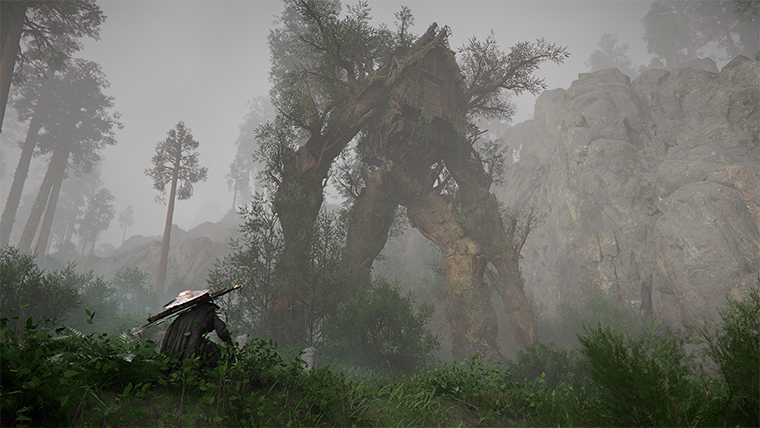
The Helm of Knowledge is located at the Scholastone Institute near the Witchwoods. Travel to the institute's library, ascend the stairs to the second floor, and find the helmet sitting on a bench at the far end of the right side balcony area. There are no combat challenges or puzzles required. Simply walk up and pick it up.
How to Equip and Use It
To equip the Helm of Knowledge, open the Food quick-use menu wheel (hold Right on the D-Pad) and equip the helm in the right side of the wheel. Once equipped, aim at a target and activate the scan. Objects that can be scanned are highlighted with a purple glow. The helmet works at range, so you can scan animals, documents, mechanical objects, puzzle mechanisms, and quest-related items from a safe distance.
Stats and Properties
Property | Value |
|---|---|
5 | |
Acquire Knowledge | Scan objects remotely to gain knowledge entries without approaching |
Daze Immunity | Prevents interruptions during exploration while scanning |
Tradeable | No (cannot be sold) |
Patch 1.01.00 Improvements
Patch 1.01.00 significantly improved the Helm of Knowledge so that all obtainable knowledge visible on the screen can be acquired at once. Before this patch, players had to scan each individual target separately, which was time-consuming in areas with many scannable objects. The updated behavior lets you sweep an area and collect every available entry in a single activation, making knowledge farming far more efficient.
Shop Knowledge Acquisition
Browsing a merchant's inventory is one of the easiest ways to collect Knowledge entries. Every item displayed in a shop's stock can register a new entry, even if you never purchase anything. This applies to weapons, armor, consumables, crafting materials, and specialty goods. Visiting every merchant in a new town and scrolling through their full inventory is a reliable habit for completionists.
Patch 1.01.00 Quality-of-Life Change
Patch 1.01.00 improved shop item knowledge acquisition so that knowledge for all items sold in a shop can now be learned at once, with the learning time set to 3 seconds. Before this update, players had to hover over each individual item in the merchant's stock to register it, which was tedious in shops with large inventories. The updated behavior condenses the entire process into a single 3-second interaction per shop.
Additionally, wholesale grocer shop NPCs were added to regional farms across Pywel in the same patch. These new vendors carry bulk food and ingredient stocks, and their inventories contribute additional Knowledge entries. The total Knowledge entry count was adjusted accordingly to account for these new shop items.
Knowledge Menu UI Improvements
Patch 1.01.00 also improved the Knowledge menu UI so that both main categories and subcategories can be viewed at once. Before this change, players had to navigate into a main category to see its subcategories, then back out to switch to a different main category. The updated layout displays the full category hierarchy on a single screen, making it faster to check progress across all 11 categories and identify which areas need attention.
Combined with the improved Helm of Knowledge and the streamlined shop knowledge acquisition, these UI changes represent a significant quality-of-life overhaul for the knowledge system. Players pursuing full completion can now track, acquire, and manage their 2,921 entries with considerably less friction than at launch.
Tips for Knowledge Completion
Tip | Details |
|---|---|
Talk to everyone. | Even background NPCs who seem unimportant can yield Knowledge entries. Make a habit of speaking to every character encountered, including shopkeepers, townspeople, and unnamed figures. |
Browse shop inventories. | Examining items in a shop (without buying) registers Knowledge entries. Visit every merchant and scroll through their full stock, especially when arriving in a new town. |
Explore off the beaten path. | Back alleys, rooftops, cave systems, and remote areas often contain unique Knowledge entries that are not available anywhere else. The 34 Secret Places in the Adventures category reward thorough exploration. |
Check the Knowledge menu regularly. | The menu shows exactly how many entries remain in each category. Use this to identify which types of activities to prioritize next. |
Use the Notification system. | Open the Notifications section from the main menu to see all recently acquired entries. Selecting a notification jumps directly to its location in the Knowledge codex. |
Revisit areas after story progress. | Some Knowledge entries only become available after certain story milestones. Returning to previously visited locations can reveal new entries that were not present before. |
Defeat every boss type. | The 76 boss entries require defeating each unique boss at least once. This includes optional bosses that the player might otherwise skip. |
Observe NPCs and enemies. | Watching characters perform activities adds both Knowledge entries and unlocks skills through the observation learning mechanic. Pay attention to observation prompts that appear during combat and while exploring towns. |
Collect every mount type. | Taming or riding all 29 mount types fills out the Mounts category. Seek out unusual mounts like bears, raptors, and wyverns in addition to the standard horse breeds. |
Gather every resource type. | The 150 resource entries track all gatherable materials. Use tools like the pickaxe and the Mining Knuckledrill to access ore deposits, and forage herbs and wood throughout all five regions. |
Patch History
Patch | Date | Change |
|---|---|---|
1.01.00 | March 29, 2026 | Improved the Helm of Knowledge so that all obtainable knowledge visible on the screen can be acquired at once. |
1.01.00 | March 29, 2026 | Improved shop item knowledge acquisition so that knowledge for all items sold in shops can be learned at once (3-second learning time). |
1.01.00 | March 29, 2026 | Added wholesale grocer shop NPCs to regional farms with corresponding Knowledge entry adjustments. |
1.01.00 | March 29, 2026 | Improved the Knowledge menu UI so that both main categories and subcategories can be viewed at once. |
Patch 1.16.00 (August 1, 2026) fixed 421 quest-related knowledge entries that did not appear in the knowledge list. The same patch added knowledge for harpies, obtained after defeating Karanda, and for the Raging Tempest, obtained after defeating him.
Related Pages
Axiom Archive for details on the Abyss location.
Exploration and Traversal for navigating Pywel's world.
Collectibles for a list of all collectible items.
Bosses for a list of all 76 boss encounters.
Observation Learning for details on the Watch and Learn skill mechanic.
Skills for the full skill tree and progression system.
Mounts for all 29 rideable creatures.
Crafting Manuals for all 355 crafting recipes.
Helm of Knowledge for the exploration headpiece that accelerates knowledge acquisition.
Stronghold Liberation for liberating enemy strongholds to gain territory knowledge.