

Overview
Liberation is one of Crimson Desert's core open-world progression mechanics. It involves clearing enemy-occupied territories across the continent of Pywel by defeating hostile forces and their leaders. Once an area is liberated, the world state changes visibly: residents move back in, structures are rebuilt, new vendors appear, and trade routes open up. The system ties directly into the game's central narrative, as Kliff and the Greymanes were driven from their homeland of Pailune by the Black Bears, and Kliff's journey involves reclaiming occupied territories as he works to rebuild the band and eventually retake Pailune.
How Liberation Works
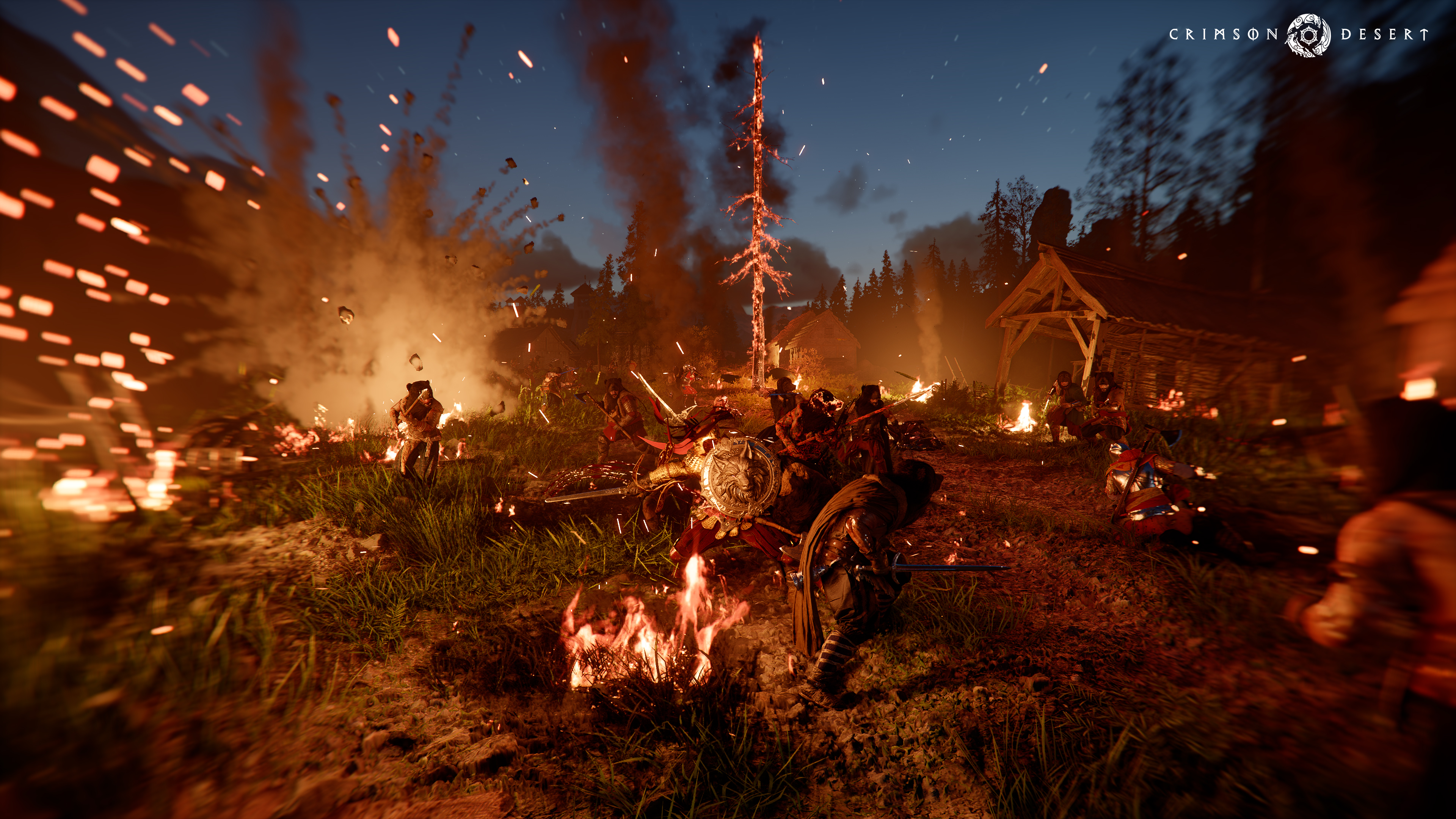
The core liberation loop, as described by preview coverage: "After taking down all the enemies and the big boss in charge of the area, it's officially liberated. You'll score contributions to the factions and see residents moving back in."
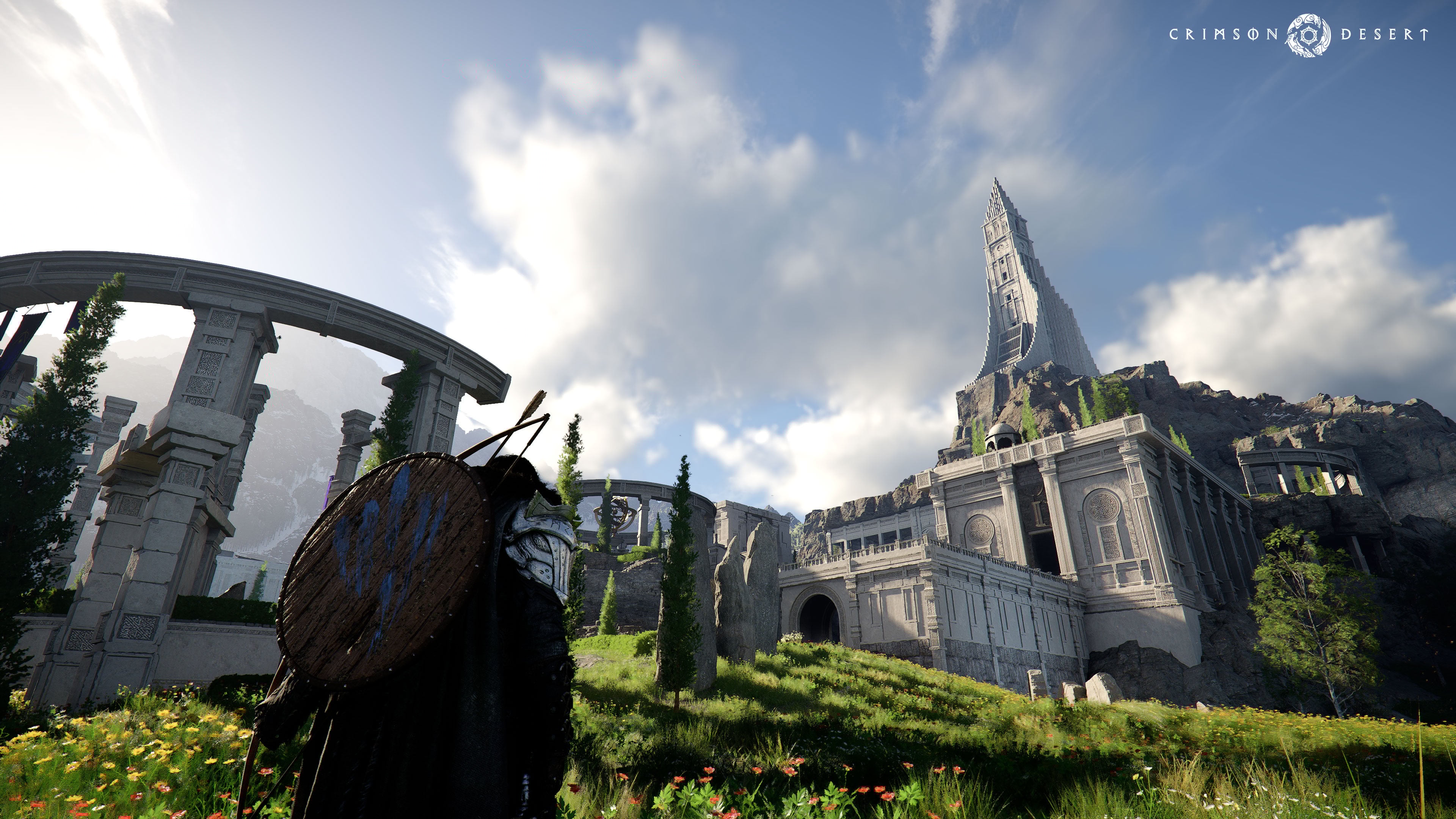
Liberation can occur through several pathways:
Method | Description |
|---|---|
Factions send Kliff to liberate areas held by their enemies. Example: the House of Wells faction includes a questline where its Duke tasks Kliff to retake a fortress, battling rebels throughout and culminating in a boss fight against Fortain, the Cursed Knight. | |
A major story questline where Kliff fights alongside Calphadean soldiers to defeat the traitor Cassius Morten and liberate the territory of Calphade. | |
Pre-emptive Clearing | Players can attack and clear bandit or faction camps before receiving a quest to do so. |
Freesword Dispatch | Companions can be sent on dispatch missions to thin enemy ranks in blockaded regions before the player arrives, reducing hostile resistance. |
World-State Changes
When an area is successfully liberated, multiple changes take effect across the world:
Change | Description |
|---|---|
Residents Return | NPCs move back into the liberated settlement, populating previously hostile or abandoned areas |
Structures Rebuilt | Destroyed or damaged buildings are physically reconstructed, transforming the area from war-torn to restored |
New Vendors Appear | Merchants and vendors set up shop in the liberated area, offering goods and services |
Trade Routes Unlock | New trade routes open to and from the settlement, connecting it to the broader economy |
Safer Travel | The surrounding roads and pathways become safer, with reduced hostile encounters |
Faction Contribution | Players earn Contribution and Contribution EXP for the regional faction (e.g., "Hernandian Contribution"), which unlocks further quests and vendors |
Resources earned from liberation contribute toward rebuilding the Greymane homeland of Pailune | |
Gear Rewards | Liberation may award equipment or grant access to new crafting materials |
Abyss Fragments | The game's core progression currency is awarded from liberating locations, alongside quests, boss victories, and exploration |
Types of Liberatable Areas
Several types of enemy-occupied locations have been shown in preview footage and described by journalists:
Location | Description |
|---|---|
Fortresses and Castles | : Major strongholds held by hostile factions. The a pre-release show gameplay showcased "The Captured Fortress," a faction quest where players help Duke Wells reclaim his castle from rebel forces. The Calphade siege is another example, involving a full-scale battlefield assault. |
Blockaded Forts | : The Freesword Dispatch mission system specifically lists "recapturing blockaded forts" as a mission type. |
Bandit and Faction Camps | : Smaller enemy encampments scattered across the open world that players can clear. |
Blockaded Regions | : The game map shows restricted areas with icons like "Blockaded: The Wolf Trackers," indicating faction-controlled territory that may be gated by story progression or blockade status. |
Faction Contribution System
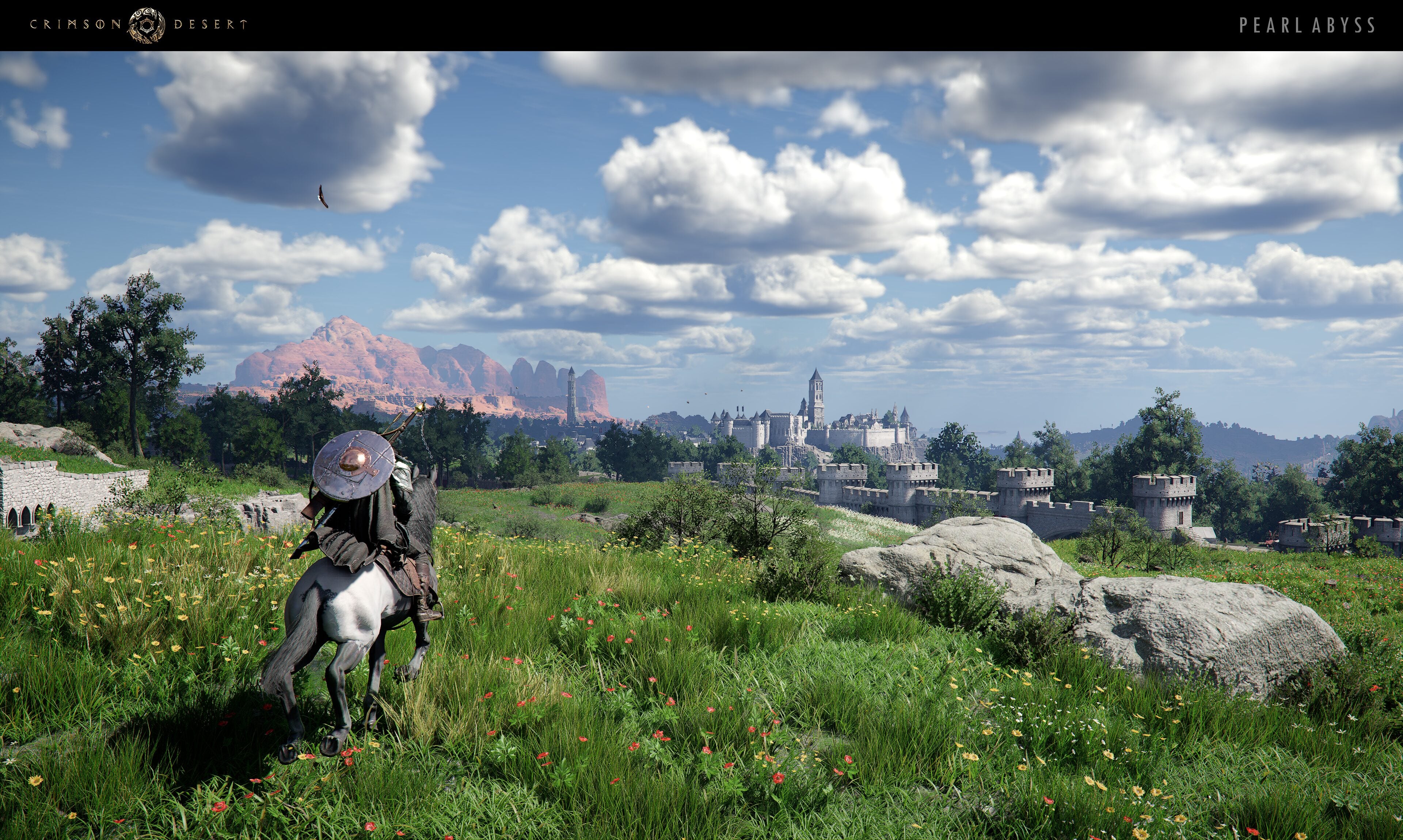
Liberation feeds directly into the faction contribution system. Each region of Pywel has its own faction, and liberating territory within that region earns Contribution and Contribution EXP displayed on the HUD. Increasing faction standing unlocks:
New vendors and merchants in the region
Additional quests and story branches
Access to resource nodes tied to that faction's territory
Deeper relationships with regional power structures
Pearl Abyss has confirmed that the game features "dozens and dozens" of factions. Faction choices do not affect the main story or ending, meaning players can engage with liberation content as side progression without altering the narrative outcome.
Connection to the Freesword Dispatch
The Freesword Dispatch system integrates directly with liberation. Players can send Greymane companions to blockaded or hostile locations to engage enemies before personally visiting those areas. preview coverage described this interaction: "Upon finally heading there to clean things up, Kliff should encounter less hostile resistance."
This creates a strategic layer where players can soften up a region through dispatch missions before launching a full liberation assault. The dispatch system uses the Steinfell Fortress management interface at the Greymane Camp, and missions to blockaded regions require specific companion teams with matching specializations.
Connection to the Greymane Camp
Liberation feeds resources and materials back into the Greymane Camp in Hernand. The camp starts as a modest tent settlement and can be upgraded into a fortified base using resources earned through liberation, exploration, and dispatch missions. As the camp grows, it unlocks new shops, equipment, Life Skill stations, and additional companions who become available for dispatch.
The official Pearl Abyss press release describes this cycle: "These systems allow players to actively shape the camp's growth." Life skills such as farming, fishing, hunting, logging, mining, and ranching produce resources that fuel both camp upgrades and the Freesword Dispatch system, creating a self-reinforcing progression loop.
Connection to the Wanted System
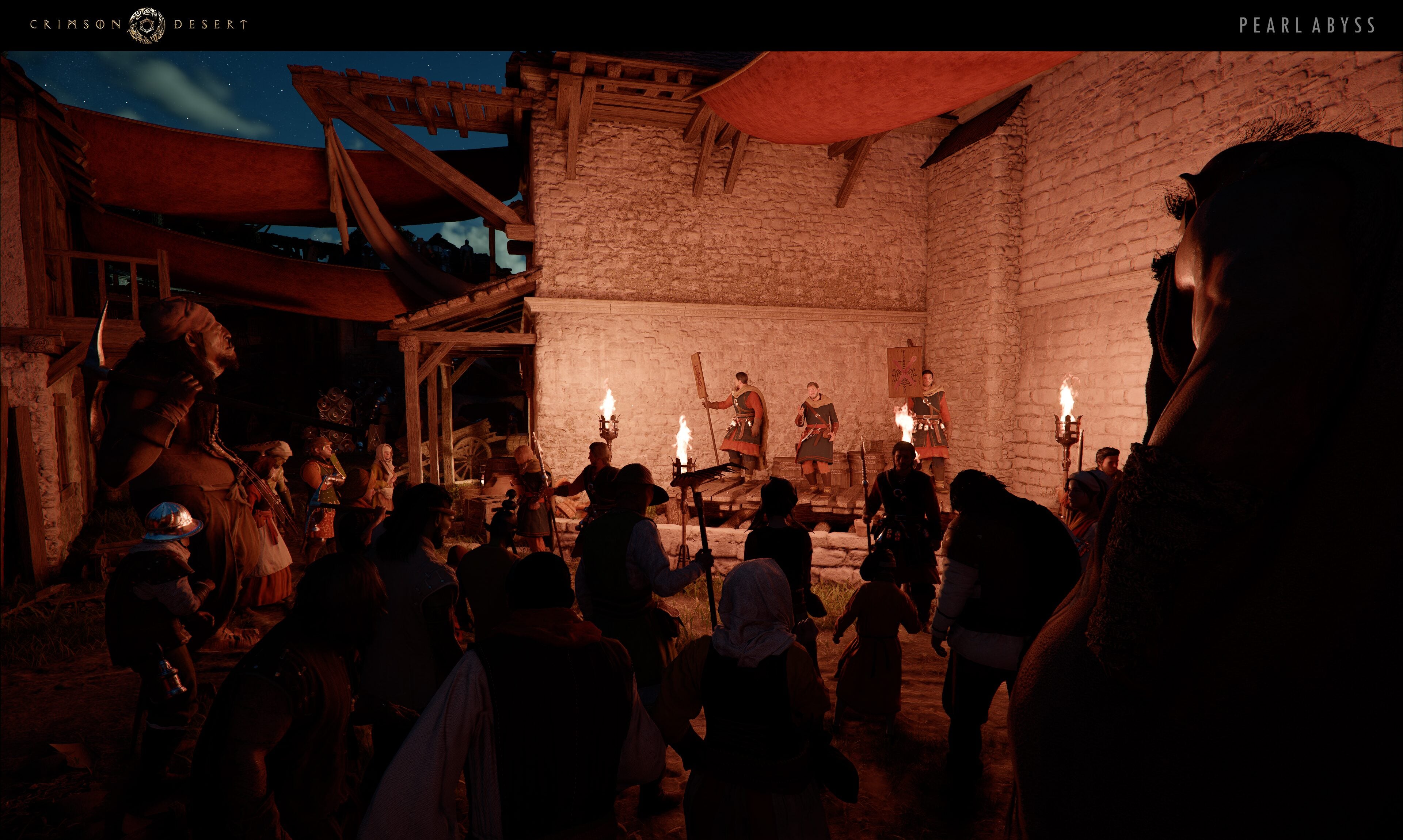
The Wanted System operates alongside the faction contribution system. Crimes committed in settlements reduce regional contribution (e.g., Hernandian Contribution), with penalties ranging from -5 for minor offenses to -30 for serious crimes. Since liberation and criminal activity share the same faction contribution currency, criminal behavior could impact a player's standing with factions whose territories they are trying to liberate.
Permanence
Based on available pre-launch information, liberation appears to be permanent. Community analysis suggests that faction relationships progress through three states (war, neutral, alliance) with no reversal. Once an area is freed, enemies do not retake it. This is consistent with Crimson Desert being a single-player narrative experience with a definitive ending rather than a live-service game with dynamic faction warfare.
Updated in Patch 1.05.00: Permanence is now configurable for a subset of strongholds. The Re-Blockading system added in May 2026 lets enemy factions retake 23 forts and quarries spanning 13 factions, repopulating cleared strongholds based on the Re-Blockade Frequency setting (Stable, Conflict, or War). Set Stable to preserve the launch permanence behavior; set Conflict or War to opt into the new repeatable-stronghold loop. See Re-Blockading for the complete system documentation.
Re-Blockading: Permanence Reconsidered
The launch version of liberation treated cleared locations as permanent: defeating a camp's defenders flipped the location into a forever-liberated state. Patch 1.05.00 on May 2, 2026 reversed that design for a subset of strongholds. The new Re-Blockading system covers 23 forts and quarries spanning 13 factions, letting enemy factions reclaim previously liberated strongholds and repopulating them with hostile garrisons over time. The system pairs with Boss Rematches as the two flagship endgame loops shipped together in 1.05.
Frequency Toggle
A new Re-Blockade Frequency option appears under Settings, then Gameplay. Three values are available; the choice can be changed at any time and applies on the next loading screen. The toggle lets the player decide how much of the launch 'permanent liberation' behavior to keep.
Setting | Behavior | Use Case |
|---|---|---|
Stable | Re-blockades will not occur. Liberated strongholds remain liberated. | Players who prefer the launch behavior or who need a stronghold to stay clear for an active questline. |
Conflict | Default. Re-blockades occur intermittently. | Most players progressing the main story; keeps the world alive without overwhelming non-endgame builds. |
War | Re-blockades occur frequently. | Endgame players hunting Abyss Gear or Abyss Artifacts drops, or anyone who wants the highest density of repeat open-world combat. |
How Re-Blockades Interact With Liberation
Re-clearing rewards. Re-clearing a re-blockaded stronghold grants standard stronghold rewards, including the regional Faction Reputation contribution that the original liberation awarded. The loop is repeatable.
Abyss Gear blueprint odds. In Patch 1.06.00, selected strongholds had their Abyss Gear blueprint drop rates increased. Re-blockaded clears at those locations are the most efficient blueprint route currently in the game.
Dispatch pre-softening still applies. If a stronghold has re-blockaded, sending a Freesword Dispatch System team to weaken the garrison before the player arrives works the same as it did for first-time liberations.
Trigger is condition-driven. Re-blockades roll at a set probability when a stronghold meets internal time and condition requirements; the new state is applied after a transition screen (save and reload, or sleep in a bed).
World-state changes reverse. On a successful re-blockade, residents who had returned withdraw, vendors who set up shop pack up, and the icon on the minimap and world map reverts to the hostile-faction marker.
What Liberation Now Looks Like in Endgame
With Re-Blockading toggled on, liberation reads less like a one-time campaign goal and more like an ongoing rhythm. Endgame players who have completed the main story can use the system as a stable source of repeat combat content. The choice is still entirely player-driven: a Stable setting preserves the launch experience for completionists who want a permanently cleared map, while a War setting turns the country into a constantly resetting playground for combat-focused builds. The difficulty selector under Difficulty Settings remains independent; Re-Blockade Frequency only governs whether liberated strongholds revert, not the baseline combat difficulty.
Cross-References
Re-Blockading: full documentation of the Patch 1.05 re-blockade system, including the frequency-setting tips, detection cues, and farming use cases.
Boss Rematches: the companion endgame system shipped alongside Re-Blockading; independent toggle for boss replay.
Stronghold Liberation and Base Liberation Guide: liberation flows the re-blockade system targets.
Story-Locked Content: some liberation targets unlock only after specific main-story beats; certain liberated regions cannot be re-blockaded until the relevant chapter completes.
Demonstrated Liberation Encounters
Two major demos showcased liberation-adjacent content at press events:
Demo | Event | Details |
|---|---|---|
The Calphade Siege | Summer Game Fest 2025 | Large-scale battlefield combat alongside dozens of allied NPCs, with cannon fire and environmental destruction. Culminates in defeating Cassius Morten atop the castle. |
The Captured Fortress | a pre-release show (October 2025) | Faction quest helping Duke Wells retake his castle from rebels. Kliff used sword light-reflection to find an infiltration route, fought through the fortress, and faced the boss Fortain, the Cursed Knight. |
Related Articles
Topic | Connection |
|---|---|
Dispatch missions can weaken enemy positions before liberation | |
Liberation provides resources for camp upgrades | |
The mercenary band whose homeland rebuilding is funded by liberation | |
Shares the faction contribution currency with liberation | |
Major story location featuring a liberation questline | |
Progression currency awarded from successful liberation | |
Open World Exploration | The broader world that liberation shapes and transforms |