

Traces of the Abyss
Traces of the Abyss are mystical waypoints scattered across Pywel in Crimson Desert that unlock fast travel locations when discovered. These markers are remnants of the Abyss, the supernatural floating realm above Pywel, and connect the fast travel system to the game's larger supernatural narrative.
On This Page
Overview
Traces of the Abyss are mystical waypoints scattered throughout the continent of Pywel in Crimson Desert. These markers are remnants of the Abyss's influence on the mortal world, and discovering them unlocks fast travel points. The system ties a core quality-of-life feature directly into the game's supernatural lore: rather than arbitrary teleport points, fast travel nodes are physical anchors where the boundary between Pywel and the Abyss is thin enough to allow instantaneous traversal.
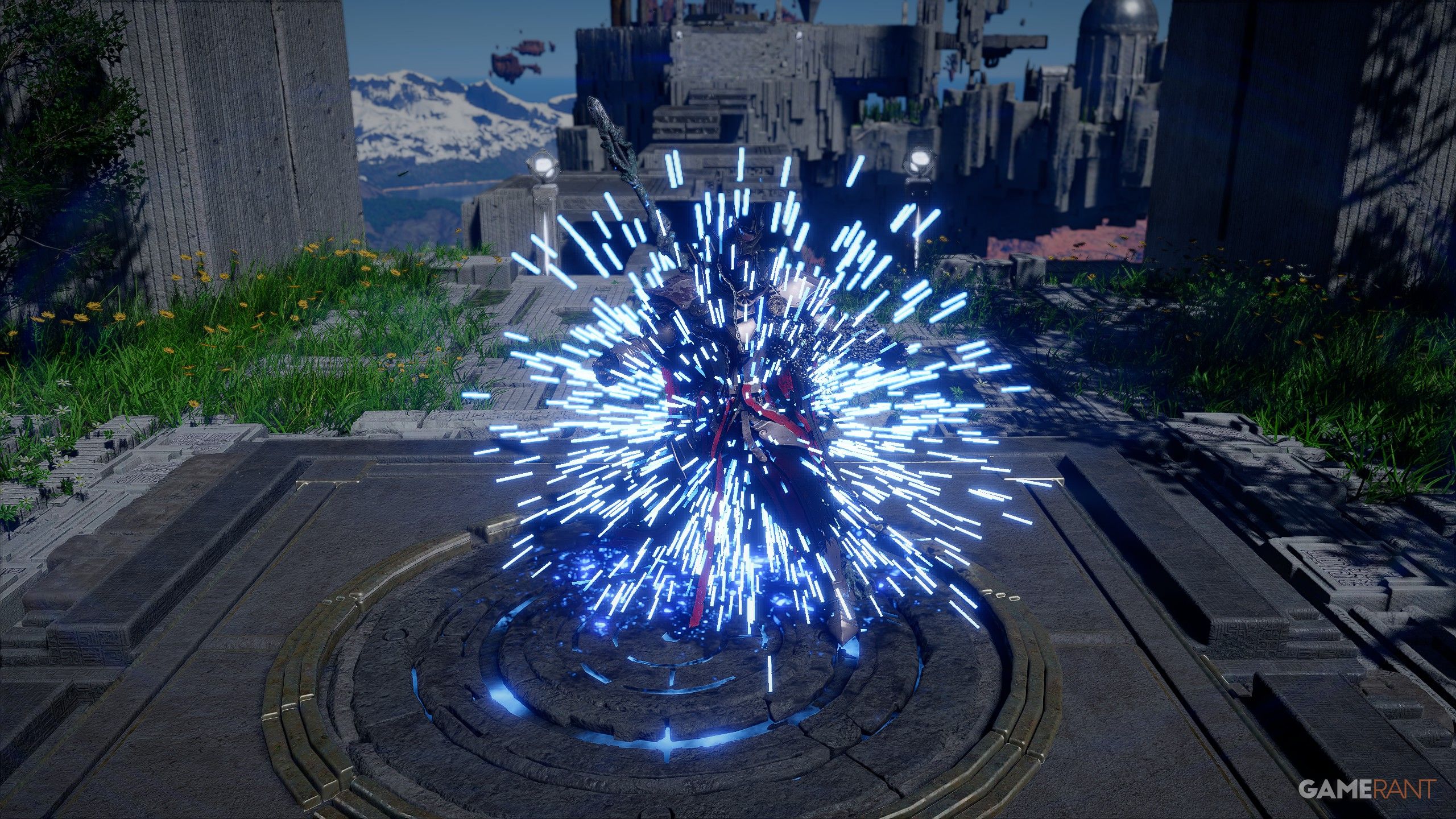
Traces are found across all five regions of Pywel and reward players who explore thoroughly. Each discovered Trace opens a new fast travel destination, gradually building a network of waypoints that makes navigating the open world increasingly convenient as the adventure progresses.
Fast Travel Mechanics
When a player discovers a Trace of the Abyss, it becomes permanently available as a fast travel destination. Players can teleport between any previously discovered Traces, cutting down on travel time across the vast open world. Given that Pywel is larger than the worlds of Red Dead Redemption 2 and roughly twice the size of Skyrim, fast travel becomes a practical necessity for revisiting distant regions.
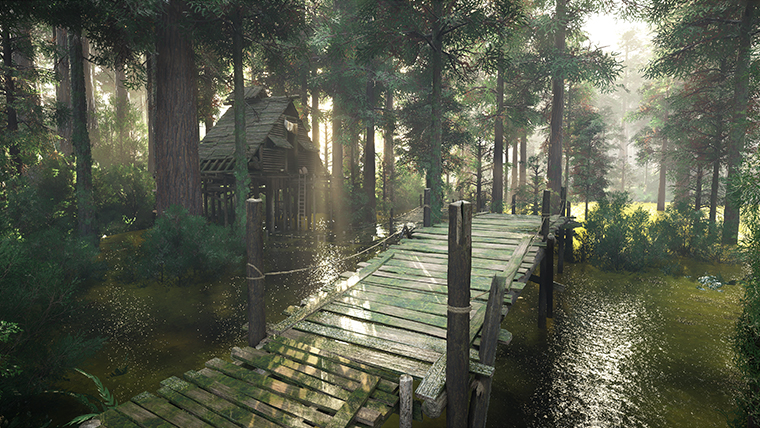
The system is designed as an opt-in convenience rather than a requirement. Players can still traverse the entire world on foot, by horseback, or using the Crow's Wing glider. Fast travel simply provides an efficient alternative for returning to previously explored areas. Traces do not replace organic exploration; they complement it by removing the tedium of long backtracking trips.
Discovery and Placement
Traces of the Abyss are positioned to reward exploration rather than handed out automatically along main quest paths. They can be found in a variety of locations.
Location Type | Examples |
|---|---|
Elevated vantage points | Mountain peaks, cliff edges, and tower summits that overlook the surrounding landscape |
Hidden corners | Tucked-away alcoves, cave entrances, and forest clearings off the beaten path |
Settlements and camps | Near major towns, the Greymane Camp, and other population centers |
Landmark structures | Ancient ruins, bridges, and notable geographic features across Pywel's five regions |
Dungeon entrances | Near the entrances to significant underground areas and boss arenas |
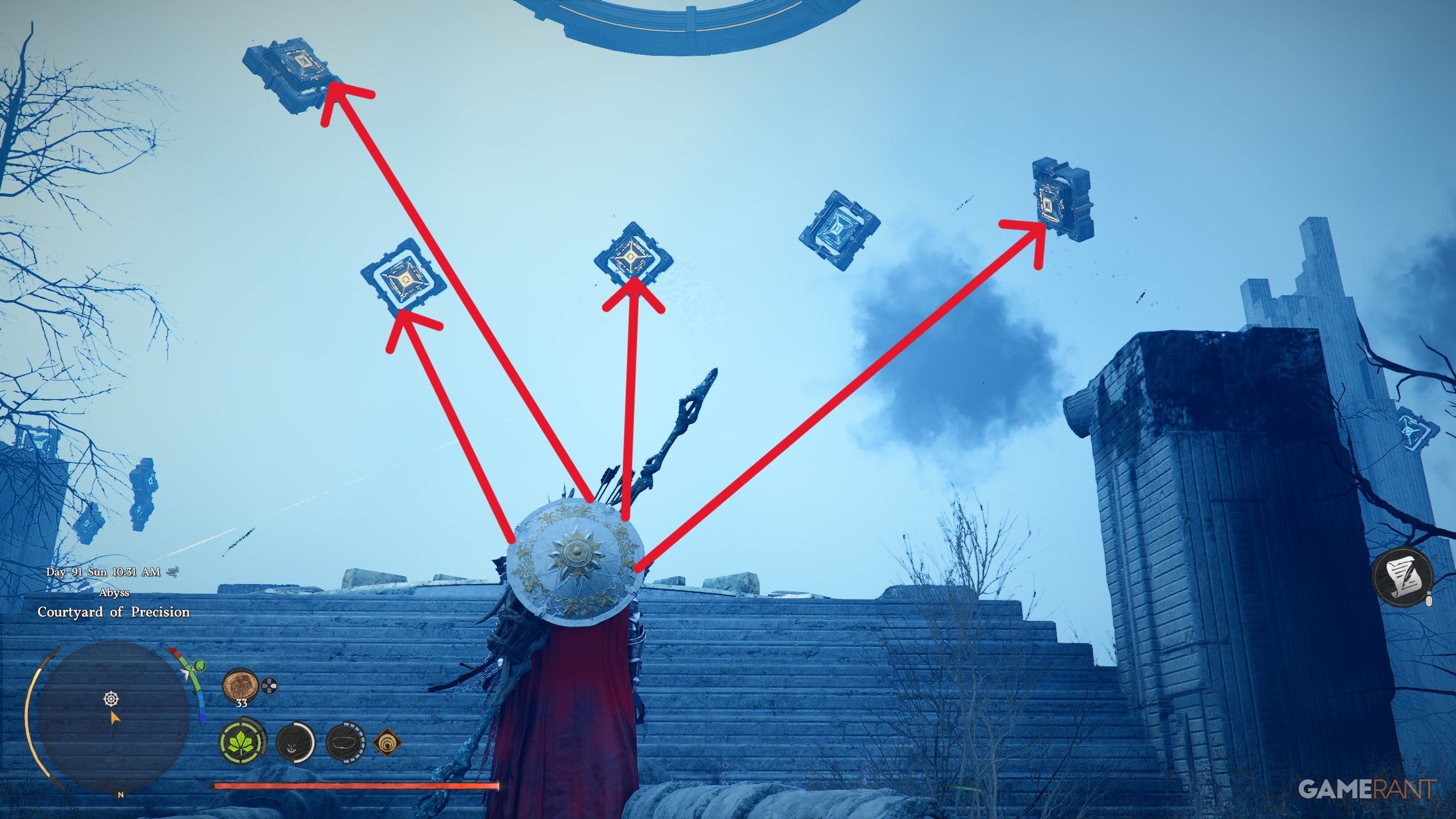
The placement means players who stick exclusively to main roads and quest markers will miss many Traces. Side paths, elevated terrain, and out-of-the-way locations tend to have the most useful fast travel points, creating a natural incentive to explore every corner of each region.
The Abyss: Lore Context
The Abyss is a supernatural floating realm suspended above Pywel, described in the game's lore as the "cradle of providence." It is a place of mysterious power that exists in a separate plane from the mortal world below. The Library of Providence, a vast repository of knowledge kept by the scholar Alustin, is located within the Abyss and is a hub for understanding the realm's history and mechanics.
The Abyss has been growing increasingly unstable, and this imbalance sends fragments of itself crashing down into Pywel. These fallen pieces manifest in various forms. Some become Traces that serve as beneficial waypoints for travelers. Others become dangerous Abyss Artifacts and Abyss Remnants that dark forces seek to exploit. The distinction between helpful Traces and dangerous fragments is a recurring theme in Crimson Desert's world-building.
Abyss Powers and Abilities
The supernatural energy emanating from the Abyss is not limited to fast travel. The same force that creates Traces also grants several abilities that Kliff and other characters can harness throughout the game.
Ability | Description |
|---|---|
A glider that allows aerial traversal across Pywel's terrain, activated by leaping from elevated positions | |
A telekinetic push ability used in both combat and environmental puzzle solving | |
Object Manipulation | The ability to lift and move objects using Abyss energy, often required for solving puzzles on floating islands |
Weightlessness | Gravity-defying movement on Abyss-influenced floating islands, allowing traversal of otherwise impossible terrain |
A wearable device that channels elemental Abyss power, enabling elemental attacks and environmental interactions |
These abilities tie back to the same energy source as the Traces, reinforcing the idea that the Abyss is not just a narrative backdrop but an active force shaping gameplay mechanics across exploration, combat, and puzzle-solving.
Floating Island Puzzles
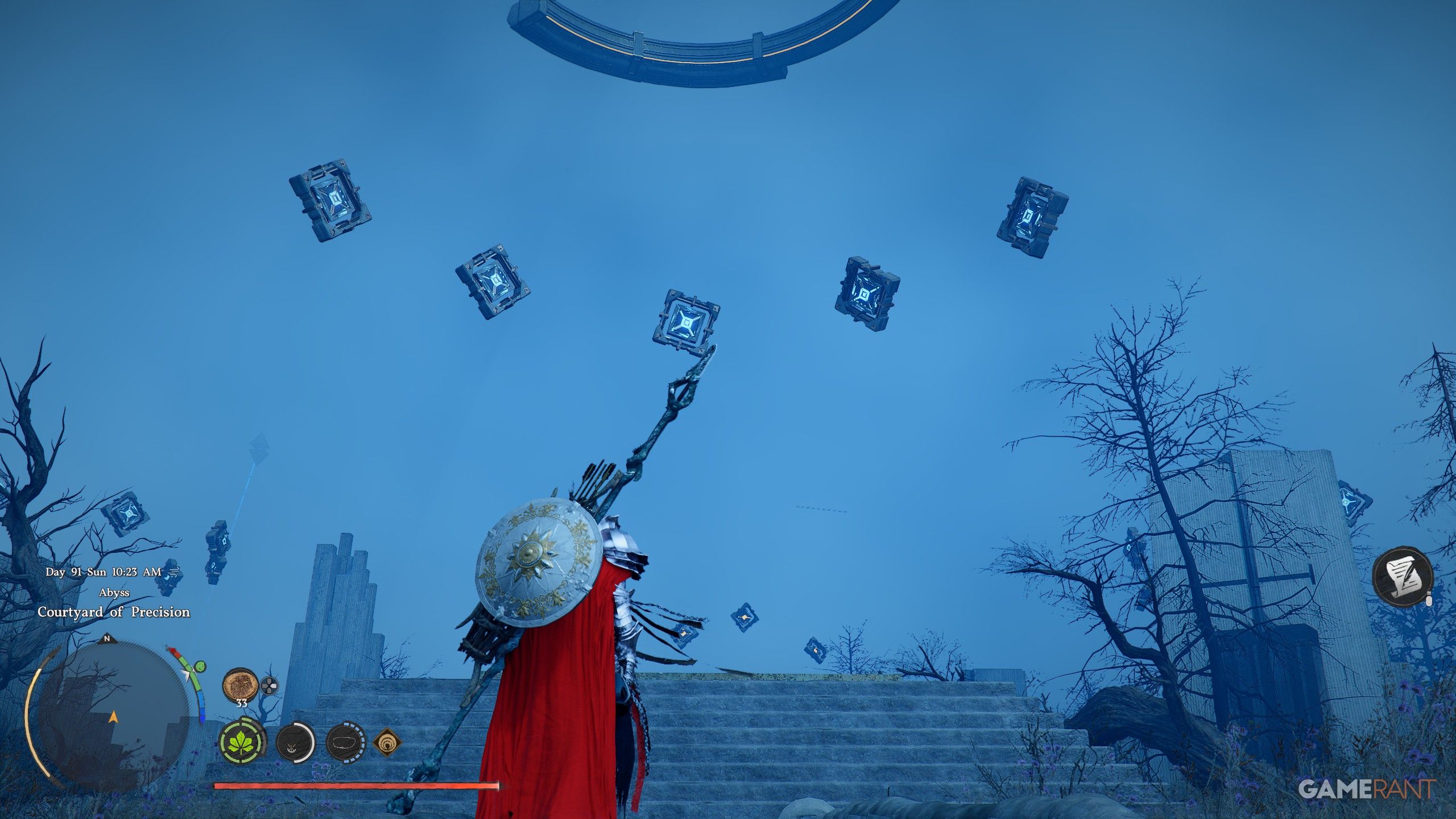
Fragments of the Abyss that fall to Pywel sometimes create floating island formations: suspended landmasses where normal physics are altered. These areas feature environmental puzzles that require creative use of Abyss abilities like object manipulation and weightlessness. Comparisons have been drawn to the sky island mechanics in The Legend of Zelda: Tears of the Kingdom, though Crimson Desert grounds these segments in its own lore about the collapsing boundary between Pywel and the Abyss.
Within these floating sections, players encounter platforms that shift, objects that must be repositioned to create paths, and gravity-defying jumps that leverage the Crow's Wing glider. Solving these puzzles often rewards the player with Sealed Abyss Artifacts, rare items that can be unlocked for significant stat investments.
Narrative Significance
The Traces of the Abyss are more than a gameplay convenience. They are a visible reminder of the central tension in Crimson Desert's story: the growing instability of the Abyss and its impact on the world below. Kliff's personal quest involves seeking a way to use Abyss power to resurrect a fallen companion, which drives him deeper into understanding the Abyss and its mechanisms.
On a global scale, the Abyss's fragments falling to Pywel create both opportunity and danger. Traces provide safe waypoints, but the same instability also produces hostile creatures, environmental hazards, and the Abyss Remnants that antagonistic forces seek to collect. The fast travel system, then, is a constant narrative touchpoint: every time a player teleports between Traces, they are using the same supernatural force that threatens to tear the world apart.
Relationship to Other Systems
Traces of the Abyss connect to several other progression and exploration systems in Crimson Desert.
System | Details |
|---|---|
: The core progression currency. Spent to increase Health, Stamina, and Spirit, unlock new skills, and extend combo chains. Can be refunded and redistributed at any time. | |
Knowledge Library | : Discovering Traces may contribute to the Knowledge Library, a comprehensive record of the player's exploration and discoveries across Pywel. |
: Traces complement other traversal methods including horseback riding, the Crow's Wing glider, swimming, climbing, and on-foot hiking. | |
: The supernatural realm from which Traces originate. Understanding the Abyss's lore provides context for why these markers exist and what they represent. |