

Overview
Foraging is the practice of gathering wild items from the environment in Pokemon Pokopia. Unlike farming (which involves planting seeds and growing crops), foraging covers everything you pick up directly from the world: berries from trees, leaves from plants, mushrooms from caves, seaweed from beaches, and raw materials like stones, sturdy sticks, and small logs scattered across the landscape. Foraged items feed into cooking, crafting, and building. Several Pokemon specialties also automate gathering through the Litter, Gather, Gather Honey, Collect, and Search systems.
How to Pick up Items
Items scattered on the ground can be collected in two ways:
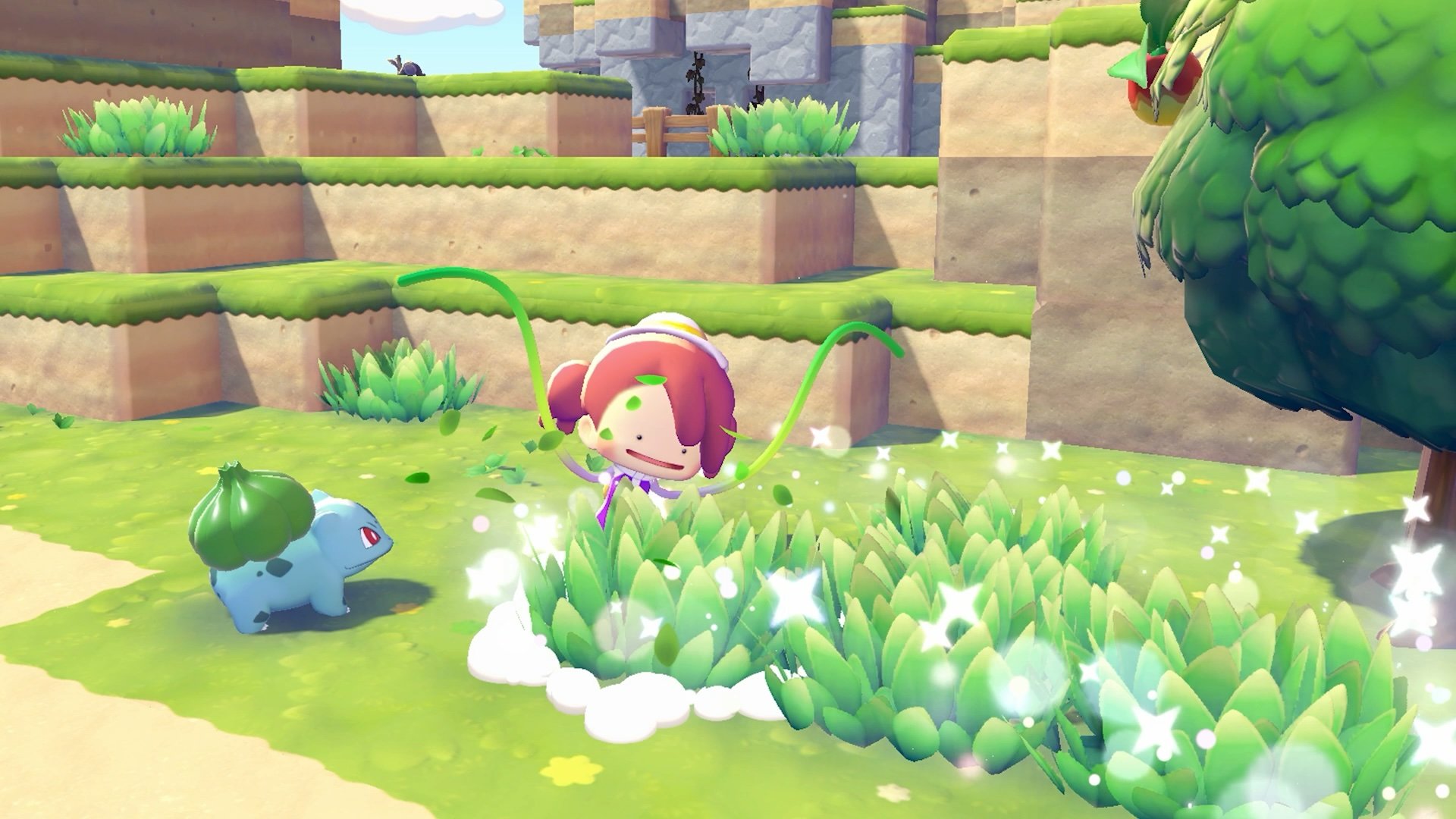
Press Y to pick up a single item directly in front of your Ditto.
Hold Y to activate the Inhale ability. Ditto vacuums up all loose items in a cone in front of it, similar to Kirby's inhale. This is far faster than picking items up one at a time and is the recommended method when clearing an area of dropped materials.
Ditto also has the Stockpile ability, which lets you use Ditto's mouth as temporary extra storage. Combined with Inhale, you can quickly sweep up large batches of resources and carry them back to a Storage Box or Workbench.
Your inventory has limited space. Increase your bag capacity by raising your Trainer Rank and purchasing bag upgrades from the Pokemon Center PC Shop.
Forageable Food Items
These ingredients are gathered directly from the world and used primarily in cooking recipes. They are distinct from farmed crops (Beans, Wheat, Tomatoes, Potatoes), which require planting seeds in tilled soil.
Item | How to Gather | Where to Find | Cooking Use |
|---|---|---|---|
Pull from plants; use Cut on tall grass or trees | All regions | Base ingredient for all Salad recipes (powers up Leafage) | |
Carrot | Pull from leaves sticking out of the ground | Various areas across all regions | Carrot Bread; better PP restoration than berries when eaten raw |
Mushroom (Cave Mushroom) | Pick up from cave floors and damp shaded areas | Caves in Rocky Ridges and Withered Wasteland | |
Gather from beaches and shallow coastal water | Bleak Beach coastline | ||
Obtained from Gather Honey specialty Pokemon (Vespiquen) or Litter specialty Pokemon (Combee) | Near Vespiquen/Combee habitats | Ingredient in select recipes; needed for "Time to Party" (5 jars) | |
Purchase from PC Shop; occasionally found in bottles lying around; some Pokemon gift them | Rebuilt Pokemon Centers; rare world drops | Base ingredient for all Soup recipes (powers up Water Gun) | |
Glowing Mushroom | Pick up from underground areas with bioluminescent growth | Rocky Ridges mines, deep caves | Decorative item; crafting ingredient |
Berries
Berries are the most common forageable food in Pokopia. They restore PP when eaten raw, making them essential for sustaining your moves during exploration. Berries grow on trees found across all five regions.
How to harvest berries: Approach a berry tree and press A to headbutt it. Berries fall to the ground and can be picked up with Y or inhaled by holding Y. Some trees in the Withered Wasteland start withered and dry; water them first with Water Gun to revive them before headbutting.
Berry | Effect When Eaten | Cooking Use | Other Uses |
|---|---|---|---|
Leppa Berry | Restores PP | Required to recruit Smearguru; crushed into Red Dye; needed for Ditto Flag craft | |
Chesto Berry | Restores PP | Crushed Berry Salad (with Crush specialty nearby) | Crushed into dye for Paint Balloons |
Pecha Berry | Restores PP | Various recipes | General-purpose cooking ingredient |
Aspear Berry | Restores PP | Various recipes | Aspear Seeds available for farming |
Always carry a stack of Leppa Berries. They are the primary PP restoration method before unlocking cooking in Rocky Ridges, and remain useful throughout the entire game.
Raw Materials
Raw materials are gathered from the environment using Ditto's moves or simply picked up from the ground. They feed into the crafting and building systems.
Material | How to Gather | Where Found | Primary Use |
|---|---|---|---|
Rock Smash on terrain blocks; pick up loose stones | All regions | Workbenches, Campfires, Smelting Furnaces, Stone Tiling, Utility Poles | |
Pick up from the ground | All regions (common near trees) | Campfires, Ditto Flag, basic crafting recipes | |
Cut trees with Cut (Scyther); found in sparkling water ripples | All regions | Log furniture; processed into Lumber (x10 logs = x50 Lumber via Chop specialty) | |
Dropped by Bellsprout (Litter specialty); found in the wild | Near Bellsprout habitats; all regions | Pokemon Center rebuild; rope-based crafting | |
Dropped by Mareep (Litter specialty) | Near Mareep habitats in Bleak Beach | Soft furnishings, Beds, cushions | |
Dropped by Spinarak (Litter specialty); picked up from ground | Near Spinarak habitats; Bleak Beach area | Windmills, crafting recipes, Ditto Flag | |
Pick up from beach shores | Bleak Beach coastline | Decorative crafting | |
Sea Glass Fragment | Pick up from beach areas; Rock Smash on coastal blocks | Decorative crafting | |
Rock Smash on brown terrain cubes; Paldean Wooper drops via Litter | Bleak Beach (abundant) | Processed into Bricks (x10 clay = x20 bricks via Burn specialty) | |
Pick up from debris; found at abandoned sites | Bleak Beach, various areas | Recycled into Iron Ore via Recycle specialty | |
Pick up from abandoned buildings and debris | Various areas | Recycled into Paper via Recycle specialty |
Ore and Mining Materials
Ores require Rock Smash to extract from ore-bearing blocks. For a full breakdown of all mining materials, locations, and smelting processes, see the dedicated Mining article.
Pokemon Gathering Specialties
Several specialties let Pokemon gather, produce, or locate items automatically. Setting up these Pokemon near Community Boxes or crafting hubs creates passive resource pipelines that run without manual effort.
Litter Specialty
Pokemon with the Litter specialty periodically drop materials on the ground near their habitat. These items accumulate over time and can be collected by the player or automatically by nearby Gather-specialty Pokemon using a Community Box.
Pokemon | Materials Dropped | Region |
|---|---|---|
Various organic materials | Various regions | |
Various waste materials | Various regions | |
Various materials | ||
Various materials |
Gather Specialty
Pokemon with the Gather specialty pick up loose items from the environment and deposit them in a nearby Community Box. Craft a Community Box and place it in the open near a Gather-specialty Pokemon's habitat. The Pokemon will periodically sweep the area for materials dropped by Litter-specialty Pokemon and other loose items, storing them for later collection.
Pokemon | Region |
|---|---|
Mime Jr., Mr. Mime | |
Palette Town (daytime) | |
Place Litter-specialty Pokemon and Gather-specialty Pokemon near each other with a Community Box between them. The Litter Pokemon drops resources, the Gather Pokemon collects them, and you empty the Community Box whenever convenient. This is the most efficient passive resource pipeline in the game.
Gather Honey Specialty
The Gather Honey specialty is exclusive to Vespiquen. Vespiquen produces Honey over time, which can be collected directly from the Pokemon or deposited into a Community Box. Honey is a valuable cooking ingredient and is needed in bulk for the "Time to Party" Important Request in Rocky Ridges (5 jars required). Honey can also be used to lure Pokemon out of hiding by using it near a habitat.
Collect Specialty
The Collect specialty is exclusive to the Gimmighoul and Gholdengo line. Gimmighoul collects coins and trinkets and deposits them near its habitat. These items can be sold for Life Coins at the Pokemon Center PC Shop.
Search Specialty
Pokemon with the Search specialty help locate hidden treasure blocks when paired with the Dowsing Machine. While this is more about finding buried Lost Relics, fossils, and Mystery Slates than standard foraging, Search-specialty Pokemon are essential for locating rare underground resources. See the Lost Relics and Fossils article for details.
Sparkling Water Ripples
Bodies of water throughout Pokopia periodically produce sparkling ripples on the surface. These come in two varieties:
Ripple Type | Rarity | Possible Rewards |
|---|---|---|
White ripples | Common | Small Logs, Sturdy Sticks, basic materials, recipe scrolls |
Gold ripples | Rare | Lost Relics, rare recipes, Building Kits, valuable items |
Interact with ripples by pressing A. Some prompt you to keep pressing A repeatedly for better loot. Sparkling ripples appear more frequently on Sundays (Lucky Days), making it worth dedicating time to water exploration on those days. Ripples reset daily.
Dream Island Foraging
Dream Islands are daily-accessible side areas that provide concentrated foraging opportunities. Each island type offers different materials:
Dream Island Type | Doll Required | Key Materials |
|---|---|---|
Volcanic Island | Arcanine Doll | |
Sky Island | Dragonite Doll | Pokemetal Fragments, Crystal Fragments |
Crystal Island | Clefairy Doll |
Dream Island resources respawn after each visit, making them excellent daily farming destinations. You can visit one Dream Island per day, so rotate between types based on what materials you need most.
Foraging by Region
Each of the five regions has different forageable items available. Planning your gathering routes by region helps you collect specific materials efficiently.
Region | Key Forageable Items |
|---|---|
Stones, Sturdy Sticks, Small Logs, Leppa Berries, Leaves, Beans (wild), Vine Rope (from Bellsprout) | |
Seaweed, Seashells, Sea Glass, Squishy Clay, Nonburnable Garbage, Twine (from Spinarak), Fluff (from Mareep), Carrots | |
Copper Ore, Iron Ore, Gold Ore, Volcanic Ash, Limestone, Glowing Stone, Cave Mushrooms, Wheat (wild) | |
Pokemetal Fragments, Crystal Fragments, Sandstone, Copper Ore, Limestone | |
Sand, Stones, basic materials; sandbox region with flexible placement |
Tips
Hold Y to inhale. Never pick items up one at a time. The Inhale ability sweeps everything in front of you into your inventory instantly.
Headbutt every berry tree you pass. Leppa Berries are your primary PP source throughout the entire game. Keep a large stockpile at all times.
Water dry trees with Water Gun. Withered trees in the Withered Wasteland produce no berries until you revive them by spraying water on them first.
Set up Litter + Gather pipelines early. Station a Litter-specialty Pokemon (like Mareep or Spinarak) near a Gather-specialty Pokemon (like Machop or Gastly) with a Community Box between them for passive resource income.
Check Dream Islands daily. Each island provides concentrated resources you can collect once per day. Rotate between island types for a steady supply of rare materials.
Explore caves for mushrooms. Cave Mushrooms are easy to miss in dark underground areas. They are the primary ingredient for Mushroom Soup and Mushroom Hamburger Steak.
Carrots beat berries for PP. Pull carrots from leaves sticking out of the ground whenever you spot them. They restore more PP than berries when eaten raw.
Visit Bleak Beach for seaweed and clay. Bleak Beach has the highest concentration of unique forageable items including Seaweed, Squishy Clay, Nonburnable Garbage, and coastal materials.
Sparkling ripples on Sundays. Water ripples appear more often on Lucky Days (Sundays). Dedicate time to exploring waterways on those days for rare items and recipe scrolls.