
Loading...
Crafting
March 31, 2026 at 06:30 AM
Fix inaccuracies: recipe quality tier names, soften armor set bonus claim
Crafting in Crimson Desert is a core gameplay pillar that encompasses equipment forging, consumable creation, resource gathering, and camp development. Pearl Abyss showcased these systems in their official Features Overview #3 video (February 12, 2026), titled "Life in Pywel," which detailed the full range of life skills available to Kliff and the Greymanes.
The crafting system is tightly connected to the Greymane Camp in Hernand, which serves as the player's home base. Resources gathered through exploration feed into camp workshops and vendors, while camp upgrades in turn unlock new crafting capabilities and improve character statistics. Crafting is not optional window dressing; weapons crafted at blacksmiths provide bonuses to core stats and skill enhancements that make them functionally different from standard loot drops.
The game's Knowledge System tracks 355 crafting manuals in total. These manuals cover the full range of craftable items from weapons and armor to consumables, dyes, and camp structures. Discovering new manuals through exploration, quest rewards, and vendor purchases expands the player's crafting repertoire throughout the game.
Blueprints function as permanent recipes that, once obtained, remain in the player's crafting knowledge. To create equipment from a blueprint, players must:
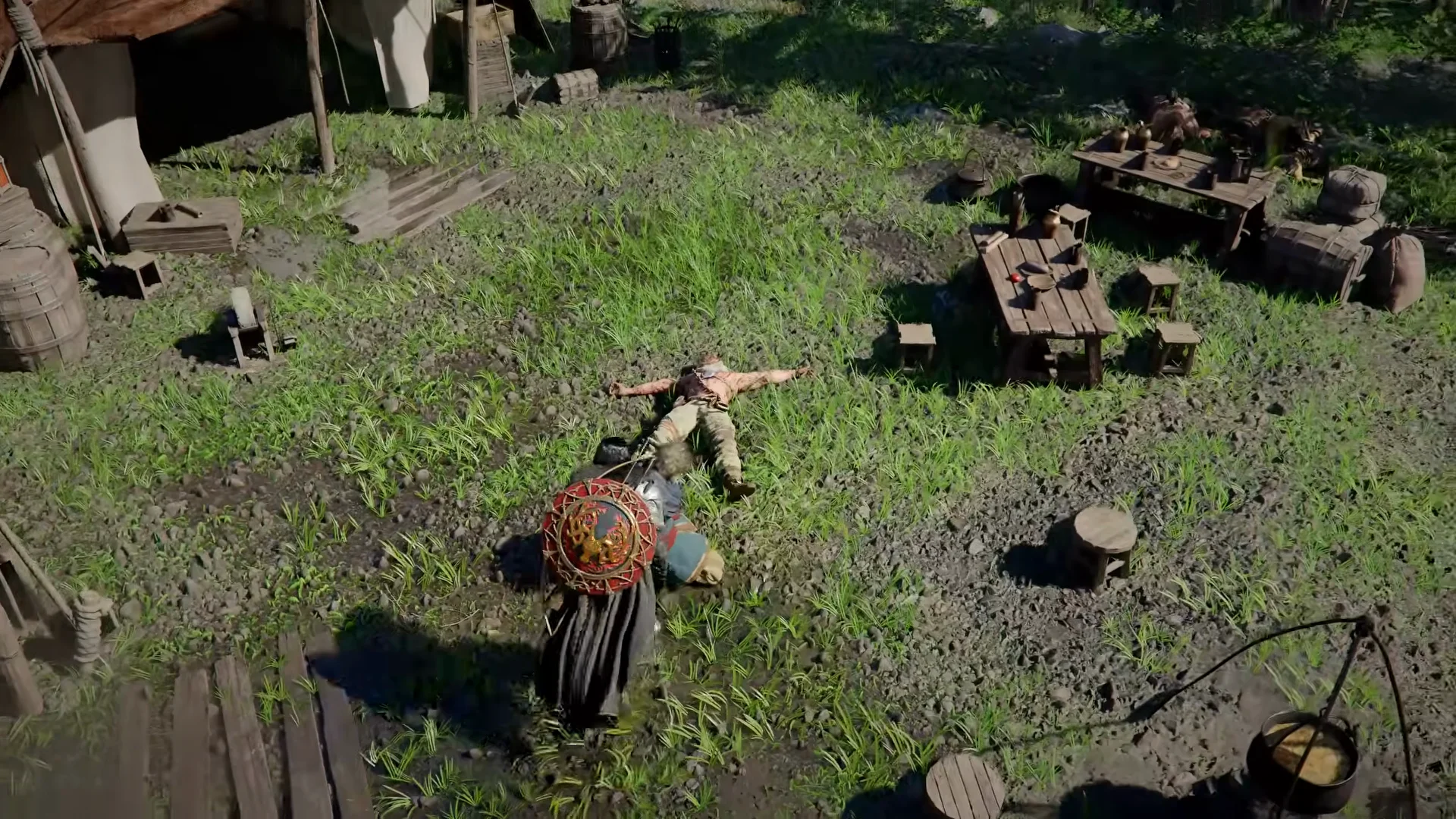
Obtain the blueprint (boss drop, dungeon reward, exploration discovery, or quest completion)
Gather the required materials (ore, hides, wood, herbs, and other resources from the open world)
Visit the appropriate crafting station (blacksmith forge for weapons and armor, cooking station for food, alchemy table for potions)
Craft the item, which produces a consistent result every time
Higher-tier blueprints come from more challenging content. Boss gear blueprints drop from powerful bosses and create equipment with unique properties, including signature skills tied to the boss the blueprint came from. For example, defeating a specific boss may yield a weapon blueprint that grants a special combat technique when the forged weapon is equipped.
The Knowledge System tracks 355 crafting manuals in total. These manuals function as permanent recipes that, once obtained, remain in the player's crafting knowledge forever. Manuals cover the full range of craftable items: weapons, armor, consumables, dyes, and camp structures.
How to find crafting manuals:
Exploration: Manuals are hidden in chests, bookshelves, and loot drops throughout the world. Check ruins, dungeons, and abandoned buildings.
Quest Rewards: Many faction quests and side quests reward crafting manuals upon completion.
Vendor Purchases: Merchants in towns and settlements sell crafting manuals. The Goldleaf Merchant Guild is a reliable source.
Boss Drops: Defeating major bosses can drop unique manuals for high-tier equipment that cannot be obtained elsewhere.
Manuals can also be read for lore entries in the Knowledge System. Some manuals have a sell value if the player already knows the recipe, but selling unique boss drop manuals is not recommended since they cannot be repurchased.
There are three primary ways to permanently learn crafting recipes in Crimson Desert. Once a recipe is learned, it stays in the Knowledge System forever and does not need to be relearned.
Recipe books and scrolls are scattered throughout Pywel in chests, on bookshelves, and as loot drops. To learn a recipe from a book, equip the book in your inventory and then shine your lantern on the pages. The recipe registers automatically in the Knowledge menu. After learning it, the book can be safely sold or discarded since the recipe is permanently yours. The mini-map displays a small book icon when a crafting book is nearby, making them easier to spot during exploration.
Players can select the Improvise option at any cauldron to experiment with ingredient combinations. This works similarly to the cooking system in Breath of the Wild: throw ingredients into the pot and see what comes out. If the combination produces a valid recipe, cooking that same combination three times permanently adds it to the recipe list, just as if the player had found the recipe book. This is especially useful for dye recipes, where experimentation with flowers and insects can unlock colors without ever finding the written formula.
Merchants in towns and settlements sell crafting manuals directly. The Goldleaf Merchant Guild is one of the most reliable sources for cooking and alchemy manuals. Additionally, many faction quests and side quests reward crafting manuals on completion. Boss encounters can also drop unique manuals for high-tier equipment that cannot be purchased elsewhere.
Crimson Desert's crafting spans four main categories, each tied to different crafting stations and materials:
Category | Station | Products | Notes |
|---|---|---|---|
Weapon and Armor Forging | Blacksmith Forge | Primary gear crafting; uses ore, hides, and specialty materials | |
Bonfire / Camp Kitchen | Meals and food buffs | Cookable at bonfires in the open world and at the Greymane Camp kitchen | |
Alchemy Table | Potions, dyes, elemental coatings | Potions can be used in the field during combat; dyes customize equipment appearance | |
Camp Construction | Structures, stations, upgrades | Building new facilities at the camp using gathered resources |
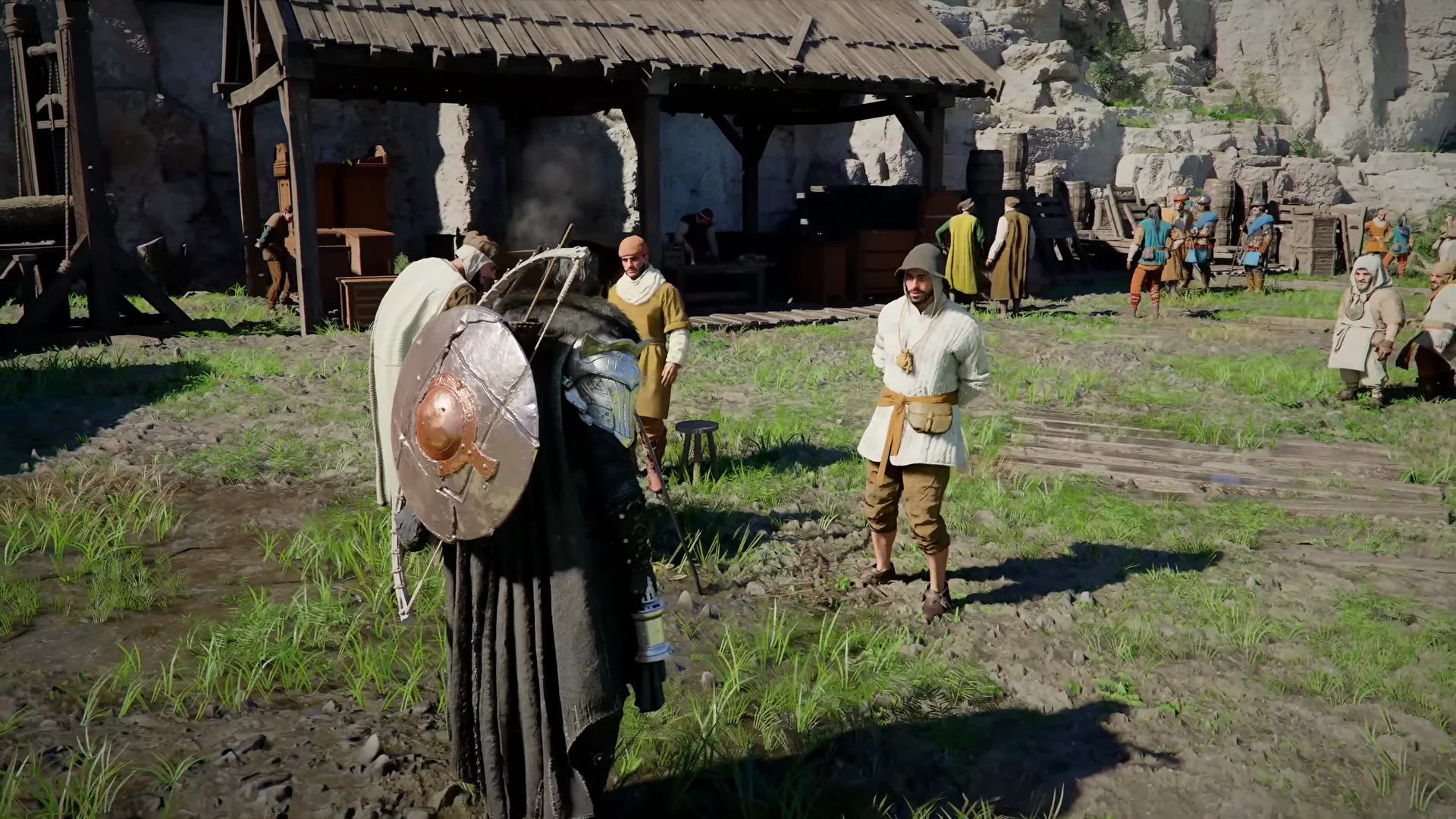
Crimson Desert features a Valheim-style gathering system where players directly interact with the environment to harvest materials. Gathering tools (axes, pickaxes, blacksmith hammers) have durability and will wear out with use, unlike weapons, which degrade through combat use and must be repaired at a blacksmith when broken. Will Powers, Director of Marketing and PR at Pearl Abyss, noted that gathering tools are easy to "discover and craft" so running out is never a major setback.
Activity | Tool | Resources |
|---|---|---|
Axe | Wood from trees | |
Ore and minerals from rock deposits | ||
Bow | Meat and fur from wildlife | |
Fish from rivers and lakes | ||
Foraging | By hand | Flowers, herbs, and insects for alchemy |
Farming | By hand | Crops cultivated at the Greymane Camp |
Ranching | N/A | Products from livestock (cows, pigs, goats, chickens) raised at camp |
Farming involves physically cultivating crops at the Greymane Camp, including watering plants by hand. Ranching provides a steady supply of ingredients from livestock kept in camp pens. Both systems produce ingredients used in cooking, alchemy, and equipment upgrading.
Pearl Abyss has confirmed nine Life Skills that serve as the raw material pipeline for the entire crafting system. Life Skills are learned by observing NPCs performing them in the world (the observational learning system) or through quest completion.
Life Skill | Description |
|---|---|
Farming | Growing crops at the Greymane Camp for cooking ingredients and trade goods |
Catching fish from rivers, lakes, and the coast for food and alchemy ingredients | |
Tracking and killing wildlife for hides, meat, and crafting materials | |
Chopping trees for wood used in camp construction and equipment crafting | |
Extracting ore and minerals from deposits for blacksmith forging | |
Ranching | Raising livestock at the camp for animal products |
Preparing meals from gathered ingredients at bonfires and the camp kitchen | |
Brewing potions, creating dyes, and producing elemental coatings | |
Buying and selling goods between settlements; profits fund camp upgrades |
Life Skill resources serve multiple purposes: they fuel crafting, support Greymane Camp upgrades, and supply the Freesword Dispatch system with provisions for companion missions. This creates a self-reinforcing loop where Life Skill activities feed back into all other progression systems.
Weapons and armor can be crafted from scratch at blacksmiths located in towns and at the Greymane Camp. Crafting requires gold, raw materials gathered through exploration, and sometimes a base item to upgrade. Crafted weapons provide bonuses to core stats and skill enhancements that differentiate them from standard loot drops found in the world.
Armor can also be repaired and upgraded when it wears out. The crafting system ensures that players who invest time in gathering and camp development have access to consistently strong equipment throughout the game.
Equipment upgrading uses Abyss Remnants, artifacts obtained from defeating enemies and bosses, completing quests, and exploration throughout Pywel. These remnants serve as the primary currency for enhancing gear beyond its base stats.
The Abyss Gear system allows weapons to be customized with augments that provide specific combat effects. Augments can increase attack speed, critical hit chance, or add bonus damage against stronger foes. The most powerful Abyss Gear comes from the most challenging enemies and bosses, creating a natural progression loop where harder content yields better augmentation materials.
Defeating major bosses drops unique equipment with "Signature Abilities" tied to that boss's fighting style. These are special effects that cannot be obtained through regular crafting. For example, a weapon dropped by a boss known for rapid strikes might grant increased attack speed, while gear from a defensive boss could boost blocking efficiency. Boss gear represents some of the strongest equipment available and incentivizes taking on optional encounters.
Some armor sets may provide bonuses when wearing matching pieces, though the extent of set bonuses varies. Players can mix and match armor pieces freely for stats while maintaining their preferred look through the Dye System.
Beyond initial crafting, Crimson Desert offers several systems for upgrading and modifying equipment after it is forged:
Enhancement Method | Description |
|---|---|
Blacksmith Refinement | Upgrading base stats of forged equipment through additional materials at the blacksmith |
Abyss Gear Sockets | Inserting Abyss Fragments into gear sockets to add special properties |
Applying magical enhancements to weapons and armor | |
Elemental Alchemy | Coating weapons with elemental properties (fire, ice, lightning) that interact with the environment |
Abyss Artifacts play a central role in gear enhancement. These progression items, earned through exploration, boss kills, and liberation, can be socketed into equipment to grant additional abilities or stat boosts. The Abyss Gear system represents the endgame tier of equipment customization.
The primary method of upgrading equipment stats is Refinement at the blacksmith. Each weapon, armor piece, and accessory can be refined up to level 10. Levels 1 through 4 use standard materials (ores, hides, wood) and are inexpensive. Starting at level 5, the blacksmith requires Abyss Artifacts in addition to standard materials, making higher refinement levels a significant resource commitment. Players must decide whether to spend Abyss Artifacts on refinement or save them for Axiom Force skill unlocks. For a complete breakdown of refinement materials and costs, see the Gear Refinement article.
Cooking can be done at any bonfire encountered in the open world or at cauldrons in the Greymane Camp. Recipes are obtained through exploration or purchased from merchants. Each recipe lists its required ingredients, and players physically stir ingredients in cauldrons during the cooking process.

Meals restore health, spirit, and stamina, and many also provide combat buffs such as increased damage, defense, or health regeneration for a limited duration. Ingredients come from hunting, fishing, farming, and ranching. The camp's Food Shop, run by the NPC Ronie, sells provisions and basic ingredients.
Known food items from preview materials include barley, meat jerky, salt-grilled fish, and fruit juice, suggesting a range of recipes that use different ingredient types and provide varied buffs.
The tables below list individual recipes and craftable items. Each item has its own dedicated page with full ingredient lists, effects, and tips. See the Cooking and Alchemy pages for broader system overviews.
Drinks are brewed at cauldrons. They primarily restore spirit and grant temporary buffs.
Drink | Key Effect | Crafting Station |
|---|---|---|
Stamina +64, Ice Resistance Lv 1 (3 mins) | Cauldron | |
Cauldron | ||
Cauldron |
Grilled foods are cooked at a Cooking Field Tool (portable grill) at bonfires. These are the simplest recipes, requiring one or two ingredients.
Food | Key Effect | Main Ingredient |
|---|---|---|
Health +80 | Tough Meat x1 | |
Spirit +4 | Onion x1 | |
Health +100 |
Pot cooking produces advanced meals with multiple effects, including elemental resistance buffs. These require more ingredients.
Food | Key Effect | Main Ingredients |
|---|---|---|
Health +240, Fire Resist Lv 4 (1 min) | Onion, Fish Fillet, Egg, Cooking Oil | |
Tough Meat, Raspberry, Egg, Cooking Oil | ||
Alchemy items can be crafted in the field without a fixed station. They provide combat-oriented buffs.
Item | Key Effect | Main Ingredients |
|---|---|---|
No Spirit Consumption (4s) | Medicinal Herb, Luminous Moss, Purified Water |
Ammunition is crafted at Blacksmith stations and consumed on each ranged attack.
Ammo | Weapon | Ingredients | Buy Price |
|---|---|---|---|
2 | |||
3 |
During the first several chapters, food resources are limited and players need efficient recipes that use commonly available ingredients. The following recipes are recommended priorities for early progression:
Recipe | Type | Key Ingredients | Effect | Why It Matters |
|---|---|---|---|---|
Grilled Food | Tough Meat x2, Salt x1 | Health +120 | Upgraded version of basic Grilled Meat. Deer and boar are plentiful in Hernand, making this the most reliable early healing option. | |
Basic Toasted Grains | Grilled Food | Lentils x2 | Cheap stamina sustain. Lentils are gathered from Greymane Camp farms or purchased from Ronie. Can be upgraded to Hearty Toasted Grains with additional grain. | |
Grilled Food | Meat x1, Fruit or Vegetable x1 | Dual recovery from one recipe. Good for exploration when carrying light. | ||
Water x2, any single herb x15 | Revival; restores small HP when downed | The single most important early alchemy recipe. Found in Shadow's Whisper Cave north of Hernand. | ||
Salt-Roasted Fish | Grilled Food | Fish x1, Salt x3 | Health +100 | Easy to prepare at bonfires near rivers. Northern Pike is a common catch in Hernand waterways. |
Recipe quality tiers determine the strength of the resulting meal. The four tiers are Modest, Basic, Filling, and Hearty. Adding extra portions of the main ingredient during cooking upgrades the tier. For example, Basic Toasted Grains becomes Hearty Toasted Grains when extra grain is included. Higher tiers provide stronger healing and longer buff durations, so it is worth investing a few extra materials per cook.
Alchemy allows crafting potions, medicines, and dyes using flowers and insects gathered during exploration. Unlike cooking, alchemy can be performed on the fly during gameplay without returning to a bonfire or camp. This makes it particularly useful for crafting quick remedies during exploration or before boss encounters.
Potions provide temporary combat buffs, while medicines heal ailments and restore health. Both are consumable and stack in inventory for use during combat.
Alchemy recipes are records of brewing techniques that guide players in crafting elixirs, potions, and dyes. Each formula has its own set of ingredients and requires a cauldron to brew. Unlike blacksmithing, alchemy recipes can be crafted on the fly in the field, making it especially valuable when far from civilization. Recipes are obtained by purchasing from vendors or by exploring Pywel. Some formulas must be discovered in the world through exploration before they can be produced.
The most important early alchemy recipe is the Palmar Pill, which functions as a revival item. When knocked down, consuming a Palmar Pill lets the player get back on their feet and replenishes a small amount of health. The Palmar Pill recipe is found inside Shadow's Whisper Cave, north of Hernand city. The cave entrance is a very thin crack in a cliff face, easy to miss during casual exploration. Once inside, the recipe is on a ledge near the back of the cave.
Recipe | Effect | Key Ingredients | Location Found |
|---|---|---|---|
Revival; restores small HP when downed | Water x2, any single herb variety x15 (31 types accepted; all 15 must be the same) | ||
No Spirit consumption for 4 seconds | Medicinal Herb, Luminous Moss, Purified Water | Vendor / Exploration | |
Significant health restoration | Rare herbs, Purified Water | House Roberts questline reward | |
Temporary defense boost | Medicinal Herb, Butterfly, Purified Water | Vendor / Quest reward | |
Temporary attack power boost | Vendor / Quest reward |
The Scholastone Institute's Research Projects can reveal gathering locations for rare alchemy materials. One project reveals the location of Rosemary gathering areas for 9 Silver and takes 6 hours to complete.
Another valuable early potion is Meliara's Elixir, which increases maximum health by 150 and improves attack speed for 10 minutes. The Lesser version requires Medicinal Herb, Beetle, and Purified Water, and the formula is located in Mudridge Cabin north of the Porrorin woods in Hernand. For defensive play, Apollonia's Lesser Elixir provides a temporary defense boost using Medicinal Herb, Butterfly, and Purified Water.
Dyes are crafted through alchemy using flowers and insects. They provide cosmetic customization for outfits, armor, weapons, mounts, and even the War Robot (mech). The full color palette is available from the start of the game once the player has the required ingredients, with no progression gating on which colors can be crafted. Dyes are applied at the Dyehouse within the Greymane Camp.
Even without a recipe, players can select the Improvise option at any cauldron and experiment with different combinations of flowers and insects to discover new dye colors. Successful experiments are permanently added to the recipe list.
Dye | Ingredients | Source Type |
|---|---|---|
10 Dunbaria, 3 Beetle, 3 Longhorn Beetle | Recipe / Improvise | |
10 Dunbaria, 3 Beetle, 1 Longhorn Beetle, 2 Stag Beetle | Recipe / Improvise | |
10 Peony, 3 Rhinoceros Beetle, 1 Longhorn Beetle, 1 Stag Beetle | Recipe / Improvise | |
10 Peony, 3 Rhinoceros Beetle, 1 Longhorn Beetle, 2 Stag Beetle | Recipe / Improvise | |
10 Peony, 3 Rhinoceros Beetle, 3 Stag Beetle | Recipe / Improvise | |
15 Lavender, 5 Blue Lavender, 2 Longhorn Beetle, 1 Stag Beetle | Recipe / Improvise |
Flower ingredients like Dunbaria, Peony, and Lavender are gathered from wildflower patches across Hernand and other regions. Insects such as Beetles, Longhorn Beetles, Rhinoceros Beetles, and Stag Beetles are caught by hand in grassy and wooded areas throughout Pywel.
The Greymane Camp in Hernand is the central hub for crafting activity. It starts as a small tent settlement and grows into a fortified base as players invest gathered resources into construction. The camp contains functional buildings that support every aspect of the crafting system.
Facility | Function |
|---|---|
Blacksmith | Weapon and armor crafting, upgrading, and repair |
Food Shop (Ronie) | Buy and sell provisions, basic ingredients |
Trading Center | Exchange goods between players and merchants |
Farms | Cultivate crops for cooking and alchemy ingredients |
Livestock Pens | Raise cows, pigs, goats, chickens for crafting materials |
Dyehouse | Apply crafted dyes to equipment and cosmetic items |
Character appearance customization |
Camp upgrades directly improve character statistics, unlock new abilities, and expand companion rosters. Construction happens in real-time as players physically place furniture and buildings. Players can also construct and customize personal housing within the camp.
The Freesword system allows players to send recruited Greymane members on resource-gathering missions. Dispatched companions go out to gather timber, ore, and other raw materials. Missions take anywhere from hours to days of in-game time and yield both currency and crafting materials upon completion.
This system supplements personal gathering by providing a passive income of resources. As the camp grows and more companions are recruited, more dispatch missions become available simultaneously, creating a scaling resource pipeline that supports increasingly ambitious crafting projects.
Crafting materials come from multiple sources across Pywel:
Source | |
|---|---|
Mining Deposits | Ore, minerals, gemstones for forging |
Wood for camp construction and equipment handles | |
Hunting Wildlife | Hides, sinew, bones for armor and accessories |
Fish for cooking; certain fish yield alchemy ingredients | |
Farming (Camp) | Crops for cooking and trade |
Ranching (Camp) | Animal products for cooking and crafting |
Foraging | Herbs and plants for alchemy |
Boss Drops | Rare materials and blueprints for high-tier gear |
Dungeon Chests | Blueprints and specialty materials |
Trade Merchants | Purchased materials available in settlements |
Different regions of Pywel yield different materials, encouraging players to explore the full continent rather than farming a single area. The five regions of Pywel each feature unique ecosystems with region-specific resources.
Weapons in Crimson Desert have durability that depletes through combat use. When a weapon reaches 0% durability, it becomes "broken" and suffers approximately a 90% damage penalty, making it nearly useless in combat. Broken weapons can be repaired at a blacksmith to restore full effectiveness. Gathering tools (axes, pickaxes, etc.) also have durability and will wear out with use. Replacement tools are easy to craft or purchase, so running out of a gathering tool is a minor inconvenience rather than a progression blocker. The durability system encourages players to keep spare weapons and tools on hand or to visit blacksmiths regularly for repairs.
For detailed farming locations and routes, see the Materials hub page and these individual guides:
Category | |
|---|---|
Ores and Gems | Iron Ore, Copper Ore, Bloodstone, Scolecite Ore, Azurite, Garnet, Epidote, Diamond |
Wood | |
Hides | Thin Hide, Thick Hide, Short Hair Hide, Long Hair Hide, Sturdy Hide |
Miscellaneous |
See also: Refinement and Upgrade Materials for information on processing raw materials into refined components, and Mining, Logging, Hunting, and Gathering for gathering technique details.
Cauldrons are crafting stations used for cooking and alchemy. They are found at fixed locations across Pywel and cannot be moved or constructed. Players can use any cauldron they discover, regardless of faction standing or story progression.
Location | Region | Notes |
|---|---|---|
Available after establishing the camp in Chapter 3 | ||
Hernand City | In the building just north of the rock-paper-scissors minigame location | |
North of Hernand city, west of Three Saints' Falls; also contains the Palmar Pill recipe | ||
Witch of Wisdom's House | Near the Witch's residence in the hills above Hernand | |
Various Bonfires | All regions | Portable cooking is available at bonfires using Cooking Field Tools |
Topic | Connection |
|---|---|
Boss drops provide high-tier blueprints and rare materials | |
Central hub for crafting stations and camp upgrades | |
Socketed into gear for enhancement; earned through exploration | |
Provides resources for crafting and camp progression | |
Crafted provisions supply dispatch missions | |
Cooking at bonfires ties into the temperature mechanic | |
Elemental alchemy coatings interact with the environment | |
Cosmetic skins are visual-only; crafting provides actual gear |