

Overview
Equipment is the primary driver of character progression in Crimson Desert. There is no experience bar or level-up system; what you wear and wield determines how strong your character is. This page covers the shared equipment systems: slots, blacksmith refinement, Abyss Gear augments, extraction, accessories, and customization. For specific weapon types, see Weapons. For armor slots and weight classes, see Armor.
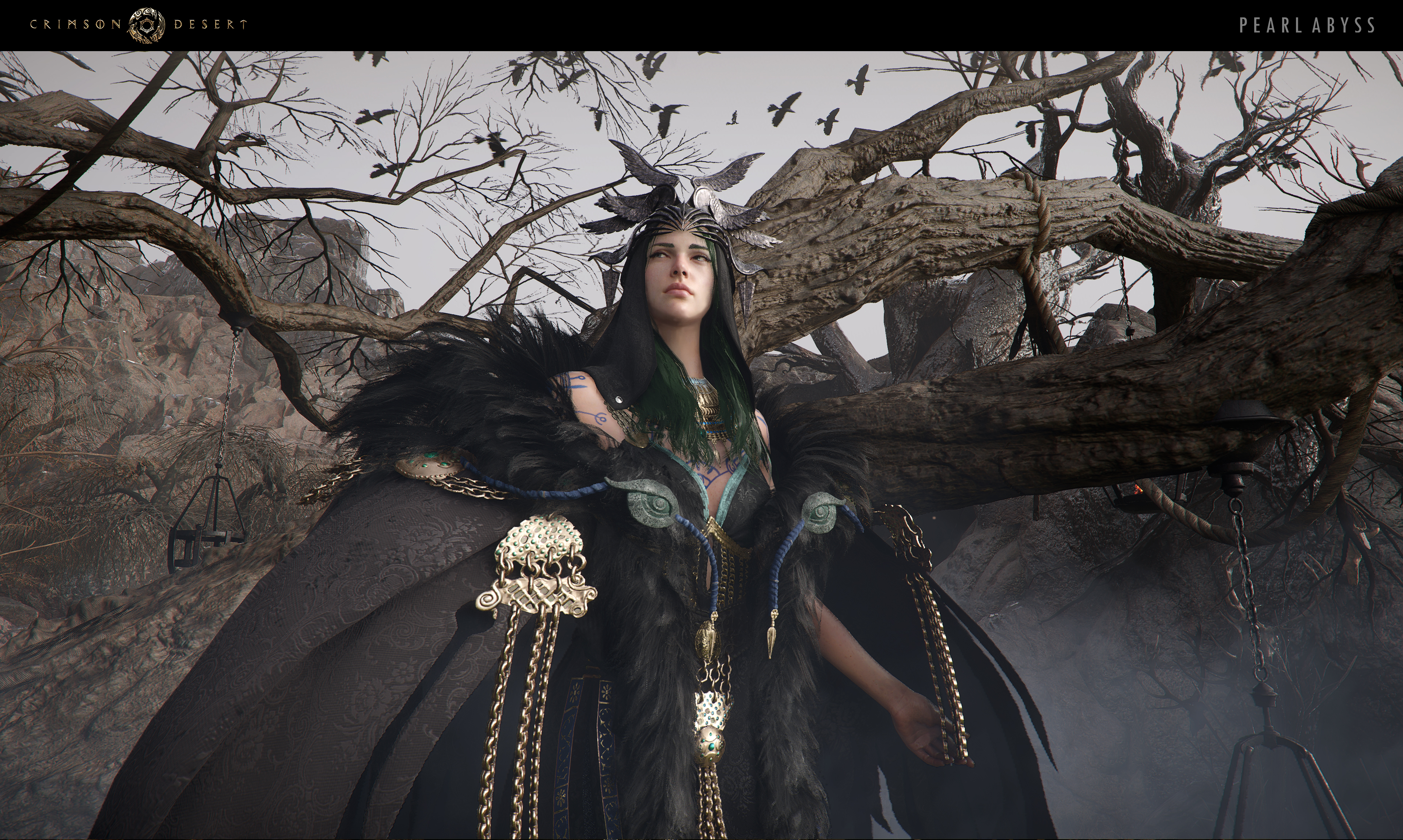
Crimson Desert uses a gear-driven power model. Every piece of equipment you put on contributes directly to your combat effectiveness, from the weapon in your hand to the rings on your fingers. Because there is no traditional leveling, finding or crafting a better piece of gear is the most immediate way to gain power. Understanding how each slot works, how to refine your gear, and how Abyss Gear augments interact with different equipment types is essential for any build.
Equipment Slots
The inventory screen displays two active weapon slots (main hand and swap). An equipment wheel allows seamless mid-combat switching between equipped weapons without breaking a combo chain. Kliff can parry an attack with sword and shield, then instantly switch to the spear for a follow-up thrust, all in one fluid motion.

Armor occupies four slots: chest, gloves, boots, and helmet. Each slot affects the character's appearance independently and contributes to overall defense. A cloak slot sits alongside the armor pieces, adding another layer of defense and visual flair. All equipped armor pieces can be customized at the Barber Shop and Dyehouse, with each piece offering multiple dyeable layers (main surface, cloth details, accent trim).
Beyond weapons and armor, Kliff has a full set of accessory slots: one necklace, two earring slots, and two ring slots. Accessories provide flat stat bonuses and, in some cases, unique passive effects. Filling every accessory slot as early as possible is one of the simplest ways to boost your stats. Even low-tier accessories from early vendors or quest rewards add up quickly when you have all five slots occupied.
Complete Slot Breakdown
Slot | Details | |
|---|---|---|
Weapon | Main hand | One-handed (sword, dagger, mace) or two-handed (greatsword, spear, halberd). Two-handed weapons occupy the main hand and prevent off-hand use. |
Weapon | Swap slot | Second weapon accessible via the equipment wheel. Allows mid-combo weapon switching. |
Off-hand | Shield | Available only when a one-handed weapon is in the main hand. Enables blocking and shield-based skills. |
Helmet | Head protection. Contributes to overall defense and visual appearance. | |
Chest | Core armor piece with the highest defense contribution. Multiple dyeable layers. | |
Cloak | Back slot covering the shoulders and back. Provides minor defense and significant visual impact. | |
Hand armor. Also affects unarmed combat damage. Unique Abyss Gear restriction (see below). | ||
Boots | Footwear. Also affects kick damage. Unique Abyss Gear restriction (see below). | |
Accessory | Necklace | One slot. Provides flat stat bonuses (HP, defense, or mixed stats). |
Accessory | Earring (x2) | Two slots. Each earring provides independent stat bonuses. Can equip two different earrings. |
Accessory | Ring (x2) | Two slots. Each ring provides independent stat bonuses or passive effects. Can equip two different rings. |
Mount | Horse-specific gear. Affects mount stats and appearance. |
In total, Kliff can have up to 13 pieces of character equipment active at once (main-hand weapon, swap weapon, shield, helmet, chest, cloak, gloves, boots, necklace, two earrings, two rings), plus four mount equipment slots. Every slot matters for maximizing your power.
Equipment Rarity and Quality Tiers
Gear in Crimson Desert follows a color-coded rarity system that indicates both the item's base stats and its potential for upgrades. Higher-rarity items have stronger base values, more Abyss Gear sockets, and sometimes carry unique passive effects that lower-rarity versions lack.
Rarity | Color | Characteristics |
|---|---|---|
Common | White | Basic gear found from regular enemies and early vendors. Lowest base stats. Suitable for the first hours of play. |
Uncommon | Green | Improved base stats over common. Frequently available from mid-game vendors, quest rewards, and dungeon chests. |
Rare | Blue | Noticeably stronger stats. Drops from mini-bosses, found in waterfall caves and hidden locations. May carry a minor passive bonus. |
Epic | Purple | High base stats with guaranteed passive effects. Drops from major bosses and difficult content. Harder to find but worth the effort. |
Unique | Gold/Orange | The strongest items in the game. Unique weapons and armor pieces with powerful signature effects. Found from the toughest encounters and special quest lines. |
Rarity also influences refinement potential. Higher-rarity gear benefits more from each refinement level and tends to have more Abyss Gear sockets available. When deciding where to invest your materials, prioritizing upgrades on rare or better equipment gives you the most return.
Refinement and Upgrades
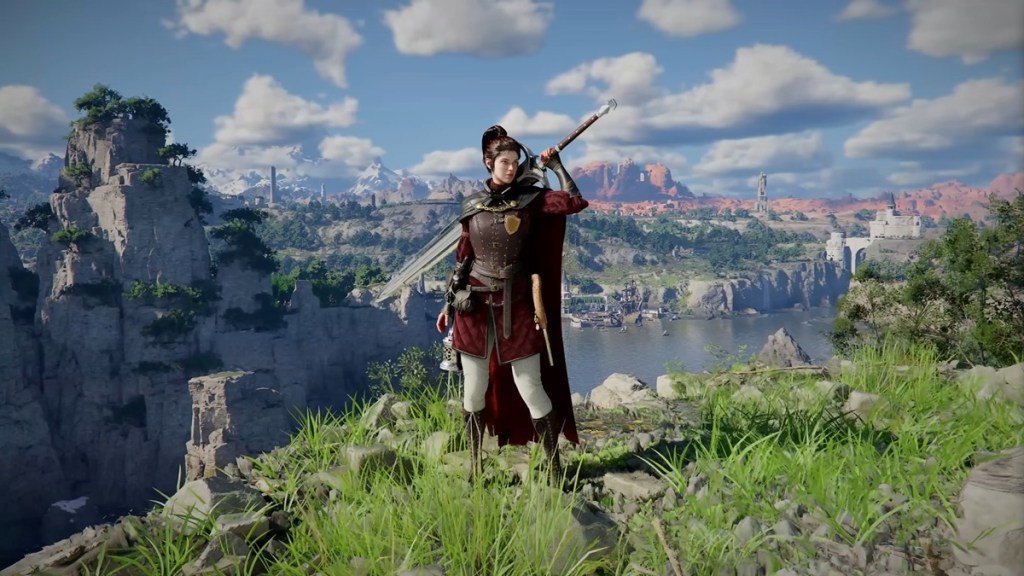
Weapons purchased or found can be taken to a blacksmith for refinement, which increases their base attack stats. This creates a two-step loop: acquire a weapon, then invest materials to upgrade it. Refinement costs increase with each tier, and higher tiers require rarer materials.
Refinement Level Cap
Every piece of equipment can be refined up to level 4 using standard materials gathered from the world. At level 4, standard refinement hits a hard cap. To push a piece of gear beyond this point, you need Abyss artifacts, rare items obtained from the most dangerous encounters in the game. This two-stage refinement system means that casual upgrades are accessible to everyone, while pushing gear to maximum power requires dedicated endgame farming.
The materials needed for each refinement level scale in rarity. Levels 1 and 2 use commonly available ores and pelts. Level 3 starts requiring region-specific drops. Level 4 demands boss-only materials. Beyond level 4, only Abyss artifacts (dropped by Abyss bosses and found in the deepest dungeons) will further improve the item.
Upgrade Material Sources
Upgrade materials come from multiple sources throughout Pywel:
Source | Description |
|---|---|
Extract ores and minerals from deposits scattered across the world. Different regions yield different ore types. | |
Animal materials from wildlife encounters. Pelts, bones, and sinew used in weapon crafting. | |
Boss Encounters | Some upgrade materials only drop from specific bosses, gating certain refinement tiers behind combat challenges. |
Quest Rewards | Side quests and faction quests can reward refinement materials. |
Exploration | Hidden deposits and secret caches in remote locations hold rare materials. |
Materials are partially region-locked at certain progression thresholds. A weapon upgrade might require ores found only in the area you are currently exploring, naturally gating advancement speed.
Abyss Gear Sockets
Weapons and armor can be customized with Abyss Gear augments that slot into modification sockets at a dedicated NPC. The number of Abyss Gear sockets varies by equipment type, and the rules governing which augments can go into which slots are strict.
Abyss Gear Slots by Equipment Type
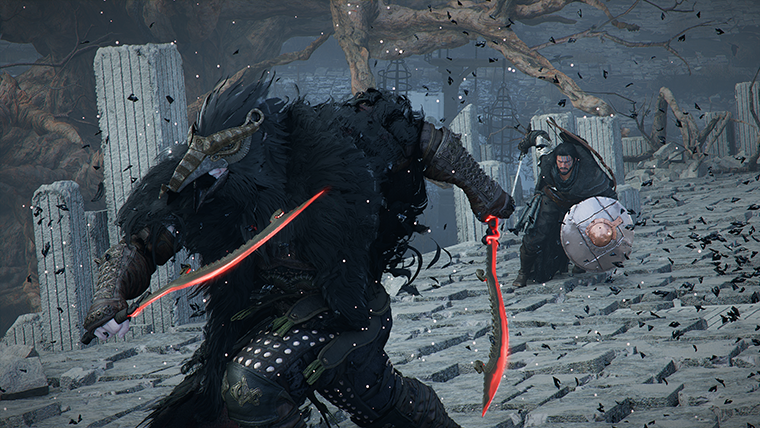
Each equipment category has a fixed number of Abyss Gear sockets. Two-handed weapons have the most. This reflects their role as primary damage dealers. Armor slots have fewer sockets but their defensive augments are still critical for survivability.
Equipment Type | Notes | |
|---|---|---|
Two-Handed Weapon | 5 | Highest socket count. Greatswords, spears, halberds, and other two-handed weapons. |
One-Handed Weapon | 3 | Swords, daggers, maces. Fewer sockets than two-handed, but offset by the ability to use a shield. |
Shield | 2 | Defense-only augments. Contributes to blocking power and passive defense. |
Helmet | 1 | Single socket for a defensive augment. |
Chest Armor | 3 | Largest armor socket count. Defense-only augments for maximum survivability. |
2 | Augments here affect unarmed combat only. Defense augments still apply globally. | |
Boots | 2 | Augments here affect kick attacks only. Defense augments still apply globally. |
Abyss Gear Equipping Rules
Not every Abyss Gear augment can go into every socket. The system enforces strict category restrictions to maintain balance:
Rule | Details |
|---|---|
Weapons only: | Attack power, critical hit chance, critical hit damage, and attack speed augments can ONLY be socketed into weapon slots (main hand, swap, or two-handed). You cannot put offensive augments into armor. |
Armor only: | Defense, HP, and damage reduction augments can ONLY be socketed into armor slots (helmet, chest, gloves, boots). You cannot put defensive augments into weapons. |
Gloves restriction: | Offensive augments placed in glove sockets only apply to unarmed combat attacks (punches, grapples). They do not boost weapon damage. |
Boots restriction: | Offensive augments placed in boot sockets only apply to kick attacks. They do not boost weapon damage. |
Shield restriction: | Shield sockets accept only defense-oriented augments. No offensive stats can be placed on shields. |
These restrictions mean that builds need to be thoughtful about socket allocation. A two-handed weapon build gets five offensive sockets on the weapon alone, while a sword-and-shield setup splits between three weapon sockets and two shield sockets. Players focusing on unarmed combat can use glove sockets for offensive bonuses to their fists, and kick-heavy styles benefit from boot socket augments. For a complete breakdown, see the Abyss Gear Guide.
Common Augment Effects
Augment Effect | Description |
|---|---|
Increases weapon swing or fire rate, allowing faster combo execution. Weapon sockets only. | |
Critical Hit Chance | Higher probability of landing critical strikes for bonus damage. Weapon sockets only. |
Bonus vs. Strong Foes | Extra damage scaling against tougher enemies and elite targets. Weapon sockets only. |
Elemental Damage | Adds flat elemental damage to each hit, stacking with Axiom Bracelet enhancements. Weapon sockets only. |
Flat defense increase. Armor and shield sockets only. | |
HP Bonus | |
Passive Stat Jewels | Gear sockets can also hold passive stat gems for stacking various bonuses. Slot restrictions still apply. |
The strongest Abyss Gear augments are obtained from the toughest enemies in the game, creating a reward loop: defeat challenging bosses to earn augments that make your weapons more effective against the next tier. For full details, see the Abyss Gear article.
Gear Extraction
One of the most powerful systems tied to equipment is gear extraction. When you defeat a major boss, their weapon often drops with a unique signature effect: a special passive ability tied to that boss encounter. Extraction allows you to pull that unique effect out of the boss weapon and transfer it into a different weapon of your choosing.
This is important because boss weapons do not always match your preferred playstyle. You might prefer using a greatsword but the boss dropped a mace with an incredible passive effect. Through extraction, you remove the passive from the mace and apply it to your greatsword, keeping both your weapon preference and the boss reward.
Extraction is performed at a specialized NPC (separate from the standard blacksmith). The process consumes the source weapon, so you cannot keep both the original boss weapon and the transferred effect. Plan carefully before extracting, because the decision is permanent.
Accessories
Accessories occupy five dedicated slots: one necklace, two earrings, and two rings. Unlike weapons and armor, accessories do not have a visual impact on your character model. Their value is entirely in the stats they provide.
Every accessory slot gives flat stat bonuses. Even the simplest common-tier ring from a vendor adds attack or defense that applies at all times. Because five slots are available, the total stat contribution from accessories is substantial. Fill all five slots as soon as possible. Even if the items are low rarity, having something in every slot is always better than leaving slots empty.
Higher-rarity accessories can carry passive effects beyond flat stats: increased stamina recovery, resistance to specific status effects, bonus damage against certain enemy types, and more. Rings in particular sometimes carry unique passives tied to specific quest lines. Two notable examples are the rings found in the Dark Ring Leader Set and the Fallen Kingdom Set, both of which provide set bonuses when multiple pieces from the same collection are equipped.
Equipment Sources
Gear can be acquired through many different activities across Pywel. The strongest items tend to come from the most dangerous content, but viable upgrades are available from almost every type of gameplay.
Source | Details |
|---|---|
Enemy Drops | Regular enemies drop common and uncommon gear. Mini-bosses and elite enemies drop rare items. Major bosses drop epic and unique equipment with signature effects. |
Crafting | Blacksmiths can craft equipment from gathered materials. Crafted gear tends to be consistent in quality and can be refined immediately. |
Main story quests, side quests, and faction quests frequently reward equipment. Quest rewards are often tailored to the region and difficulty. | |
Hidden waterfall caves scattered across the world contain chests with rare and epic gear. These are optional exploration rewards that encourage thorough map exploration. | |
Vendors | NPC vendors in towns and camps sell equipment for silver. Stock varies by region and progresses with the story. Some vendors require permits to access premium inventory. |
Chests and Caches | World chests, locked containers, and secret caches found during exploration contain equipment. Higher-elevation or harder-to-reach caches tend to have better loot. |
Dungeons | Structured dungeon encounters with guaranteed loot at the end. Dungeon difficulty scales with the region. |
Named Vendor Equipment
Shops across Pywel stock specific named equipment lines. Confirmed items available from vendor purchases include:
Item | Type |
|---|---|
Dekare Dagger | Weapon |
Dekare Sword | Weapon |
Dekare Shield | Shield |
Weapon | |
Palkanese Musket | Ranged Weapon |

Notable Equipment Sets
Certain pieces of equipment belong to named sets. Equipping multiple pieces from the same set grants cumulative set bonuses that can significantly shape your build. Two of the most sought-after sets are:
Dark Ring Leader Set
The Dark Ring Leader Set is a collection of equipment tied to the Dark Ring faction storyline. Its pieces are spread across multiple acquisition methods: some drop from faction-related bosses, others are quest rewards, and a few are found in hidden locations within faction territory. The set emphasizes offensive power and critical strikes, making it a strong choice for aggressive melee builds. Equipping three or more pieces activates a set bonus that increases critical hit damage and attack speed.
Fallen Kingdom Set
The Fallen Kingdom Set draws from the remnants of a collapsed dynasty within Pywel. Its armor pieces prioritize durability and damage reduction, making it a natural fit for defensive or tank-style builds. The full set bonus provides a significant HP boost and a passive that reduces incoming damage when health drops below a threshold. Pieces are obtained primarily through exploration of ruins and completion of story quests tied to the fallen kingdom's lore.
Tactical and Narrative Equipment
Not all equipment is purely combat-focused. Outfit changes can serve tactical and narrative purposes beyond stat bonuses. The Hernandian Banquet Attire is elegant clothing used during the Hernand Castle infiltration sequence, allowing Kliff to disguise himself and walk past guards unnoticed. This demonstrates how equipment interacts with stealth and story progression.
Customization
All armor and weapons can be recolored at the Barber Shop and Dyehouse in the Greymane Camp. Each armor piece has multiple dyeable layers: main surface, cloth details, and accent trim can each receive different colors. Gloves and boots have their own independent dye channels separate from the chest piece. Some pieces also allow material finish changes, altering the surface texture beyond just color.
Dyes are obtained through world exploration or crafted via the alchemy system using flowers, insects, and other gathered materials. The dye system extends to horse barding and War Robot paint. All customization is purely cosmetic with no gameplay effect. See Character Customization for full details.
Visual Customization Through Extraction
Extraction also has a visual dimension. Since boss weapons often have distinctive appearances, extracting their effect into your preferred weapon means you keep the look of the weapon you actually want to use rather than being forced into a visual style dictated by whichever boss weapon has the best stats. This complements the dye system and gives players significant control over their character's appearance without sacrificing power.
Combined with armor dyeing at the Barber Shop and Dyehouse and mount tack customization, extraction ensures that endgame Kliff can look exactly how you want while still running an optimized build.
Edition-Exclusive Equipment
Several armor sets and weapons are included with the various pre-order and edition packs.
Item | Source | Pieces |
|---|---|---|
Pre-order bonus (all editions) | 1 (shield) | |
Grotevant Plate Set | PS5 exclusive (all editions) | 5 (helm, armor, cloak, gloves, boots) |
Kairos Plate Set | Deluxe Pack | 5 (helm, armor, cloak, gloves, boots) |
Deluxe Pack | 1 (shield) | |
Exclaire Horse Tack | Deluxe Pack | 4 (champron, barding, saddle, stirrups) |
Ultimate Pack | 1 (ranged weapon) | |
Ultimate Pack | 1 (melee weapon) | |
Ultimate Pack | 1 (melee weapon) | |
Ultimate Pack | 1 (accessory) | |
Hyperion Horse Tack | Ultimate Pack | 4 (champron, barding, saddle, stirrups) |
The Deluxe Pack becomes available for separate purchase after launch for players who bought the Standard Edition.
Equipment Tips
Item | Details |
|---|---|
Fill all accessory slots early. | Even common-tier necklaces, earrings, and rings provide meaningful stat bonuses. Do not leave slots empty. |
Refine before you socket. | Get your weapon to refinement level 4 before spending Abyss Gear augments. Refinement boosts the base stats that augments then multiply. |
Two-handed weapons have the most sockets. | If you want maximum offensive Abyss Gear potential, two-handed weapons (5 sockets) outpace one-handed (3 sockets) significantly. |
Check waterfall caves. | These hidden locations are some of the best sources of rare and epic gear in the early and mid game. |
Extract boss effects into your main weapon. | Do not feel locked into using a boss weapon just because it dropped with a great passive. Extraction lets you keep your preferred weapon type. |
Match Abyss Gear to your playstyle. | Remember that glove augments only affect unarmed attacks and boot augments only affect kicks. Only invest in those if your build uses them. |
Upgrade armor chest pieces first. | Chest armor has 3 Abyss Gear sockets and the highest base defense. It gives the most defensive value per refinement level. |