

Vendors
Complete guide to vendors, merchants, and shops in Crimson Desert. Covers all named NPCs across Hernand, Greymane Camp, and Goldleaf Trading Posts, plus currencies, buying and selling mechanics, the repurchase system, Street Vendors, faction-gated shops, horse equipment vendors, weapon refinement, inventory expansion, and money-making tips.
On This Page
Overview
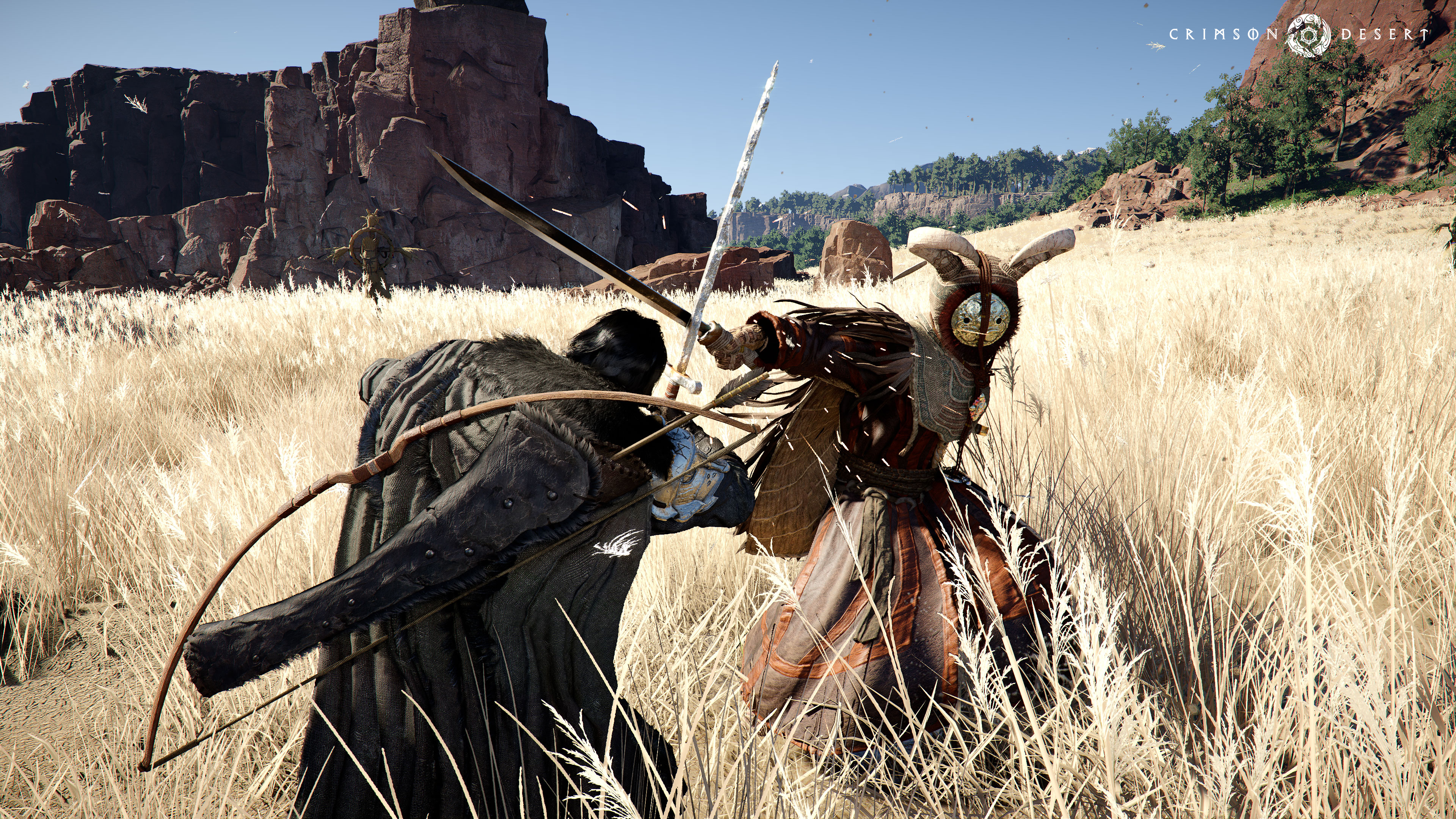
Vendors are NPCs spread across Pywel who sell consumables, resources, equipment, clothing, horse gear, and specialty goods. Players run into their first vendors shortly after arriving in the Hernand region and setting up the Greymane Camp. Every major town and settlement has its own cluster of shops, and wandering Street Vendors appear at landmarks throughout the open world. As the story progresses and players liberate territory through faction quests, new vendors unlock in previously occupied settlements.
For a complete region-by-region listing of all vendors and their inventory, see the Vendor Directory page.
Vendor inventories vary by region, so visiting shops in different towns is worth the trip. Each settlement stocks region-themed equipment, armor, and horse tack tied to local factions and cultures. The NPC Vendors article covers the broader vendor type system, blacksmith services, and faction liberation mechanics in more detail.
NPC vendors in Crimson Desert provide weapons, armor, food, crafting materials, and cosmetic services across the towns and settlements of Pywel. Vendor inventory varies by location and region, encouraging exploration to find specific gear and resources. Liberating territory from hostile factions through faction quests unlocks new vendors in previously occupied settlements. Cities and villages across Pywel are populated by blacksmiths, tailors, merchants, and residents in need of assistance.
Buying and Selling
Interacting with any vendor opens a trade window where you can buy their stock or sell items from your inventory. Sales pay out in copper or silver depending on the item's value. A few important rules govern every transaction:
Uniform sale prices. You receive the same amount of currency for a given item regardless of which merchant you sell it to. There is no benefit to shopping around for a better offer.
Repurchase tab. If you sell an item and later want it back, open the vendor's Repurchase menu. Vendors hold sold items for approximately seven in-game days before their inventory resets and the items are permanently deleted. The buyback price equals the original sale price, so you do not lose money on the transaction. Use this as a short-term storage workaround, but do not rely on it for long-term safekeeping.
Vendor-specific buyback. Items can only be repurchased from the same vendor you sold them to. Selling a sword to Rhett and visiting another merchant will not show that sword in their repurchase tab.
Temporary storage trick. Because Crimson Desert has no dedicated storage chests, you can use the repurchase system as makeshift storage. Sell items you want to keep safe, then buy them back within a few days when you have more inventory space. Only use this for short-term emergencies, not long-term storage.
Street Vendors have no buyback. Wandering Street Vendors do not have a repurchase tab. Be certain about any sale at a street stall before confirming the transaction.
Midnight restock. Vendor inventories restock every in-game midnight (0:00). This is especially useful at the Butchery for food and the Provisioner's Shop for crafting materials. See the Vendor Restock Timing section below for full details.
Vendor Restock Timing
Every vendor in Pywel restocks their inventory at in-game midnight (0:00). When the clock ticks past midnight, consumables, crafting materials, food ingredients, and bags that were previously sold out become available for purchase again. This applies to all fixed-location vendors in towns, settlements, and the Greymane Camp.
What Restocks
Most vendor stock refreshes at midnight. The following categories restock reliably:
Food and provisions. Renee's Butchery, Ronnie's Food Shop, and similar food vendors refill their meat, grains, and prepared meals. This is critical for stocking up on cooking ingredients before boss fights.
Crafting materials. Alden's Provisioner's Shop, Bran's Tannery, and other general goods vendors restock crafting materials like leather, ore, and timber.
Small Bags. Vendors that sell Small Bags (50 copper coins each, +1 inventory slot per bag) restock after midnight. You can return to the same vendor on consecutive days to buy additional bags and steadily expand your carrying capacity.
Consumables. Recovery items, ammunition, and other expendable supplies are refreshed nightly.
How to Trigger a Restock
The fastest way to trigger a vendor restock is to rest until past midnight. There are several methods:
Beds. Find an unoccupied bed in a settlement, campsite, or player home and interact with it. You can choose to advance time by 3 hours, 6 hours, or 12 hours.
Campfires and cooking pots. Use Focus (L1/LB on controller, CTRL on keyboard) to lock onto a campfire, then select Wait and pick a time increment. A short cutscene plays before the game resumes at the new time.
Quest prompts. Certain quest triggers automatically advance time when a quest giver has not yet arrived, though this is situational.
There is a cooldown on resting. You cannot sleep or wait at campfires back to back. The game does not display an explicit timer, so plan your rest increments carefully to avoid overshooting midnight or wasting time. If you are near a vendor and it is late evening, a single 3-hour rest may be enough to push past midnight.
Restock Strategy for Boss Preparation
Before a major boss fight, consider visiting a food vendor and buying out their entire stock of healing items. Rest at a nearby campfire until just past midnight, then return and buy the restocked inventory. Stacking up on grilled meat and cooked meals this way can make a significant difference in survivability during long encounters.
Currencies
The economy in Crimson Desert runs on three forms of currency. Copper (bronze coins) and silver are the standard coins earned from selling loot, completing quests, and winning minigames. The exchange rate is 100 copper to 1 silver. Contribution Points are a separate regional currency earned by completing faction quests, finishing requests, and doing good deeds. They can only be spent at regional Contribution Shops.
Currency | How to Earn | Primary Use |
|---|---|---|
Selling items, quest rewards, minigames, bounty missions | Buying common goods, bags, food ingredients, basic gear | |
Selling valuable loot, trade goods, high-tier quest rewards | ||
Exchange 500 silver at the bank; investment returns | Bank deposits for passive income (100 silver per deposit box) | |
Faction quests, regional requests, good deeds | Regional Contribution Shops for exclusive gear and rewards |
Hernand City Vendors
The city of Hernand Town contains the largest concentration of vendors in the early game. These shops cluster around the town square and surrounding streets, and most are available as soon as you arrive in the region.
Vendor | Shop | Location | Goods and Services |
|---|---|---|---|
North Hernand | Banking and financial services. Exchange 500 silver for gold bars; invest in deposit boxes for passive income at 100 silver each. | ||
Equipment Shop | Town square | Forged weapons, armor, and shields. Known as 'The Artist of Iron,' Rhett constantly searches for high-quality minerals. Stocks the Canta Armor Set, useful for early boss fights. | |
Blacksmith (House Celeste) | Behind Equipment Shop | Weapon and armor refinement. His first quest requires 10 Timber and rewards an upgraded Bekker Shield. Also sells Copper Ore and Iron Ore. | |
Tailor's Shop | Hernand city | Traditional and modern clothing styles. | |
Provisioner's Shop | Hernand city | General goods and supplies. Sells the Pickaxe and Logging Axe (essential for mining and logging). Also stocks Small Bags for inventory expansion. Restocks at midnight. | |
Tannery | Hernand city | Leather goods crafted using ancient techniques. Also sells crafting materials; restocks at midnight. | |
Grocer's Shop | Hernand city | Fresh produce sourced from the surrounding fields and plains of Hernand. | |
Butchery | Hernand city | High-quality meat products. Sells Tough Meat at affordable prices; useful for cooking recipes that grant combat buffs. Restocks daily at midnight. | |
Inn | Hernand city | Lodging and traveler services for mercenaries passing through. | |
Hernand city | Official trade goods. Bentley is the royal trading manager who handles regulated commerce through the trading system. | ||
Saddlery | Hernand city | Sturdy horse tack and battlefield equipment for mounts. Specializes in champrons, barding, saddles, and stirrups. | |
Stable | Hernand city | Horse boarding and services. Merton is a former House Celeste courier. |
Hernand Region Vendors
Beyond the city walls, the broader Hernand region houses specialty vendors at farms, religious sites, trading posts, and fishing docks. Several of these merchants deal in goods that cannot be found at standard city shops.
Vendor | Shop | Location | Goods and Services |
|---|---|---|---|
Contribution Shop | Contribution Points exchange for exclusive gear and rewards. Stocks items like the Bolton Armor Set that cannot be purchased with copper or silver. | ||
Church Confessional | Religious and confessional services. | ||
Livestock Black Market | Black market livestock trades. Mysterious background; useful for offloading stolen livestock. | ||
Discreet specialty items including masks and keys. Supplies items to farmers that cannot be found through legitimate channels. | |||
Dyehouse | Hernand region | Dyes for gear customization using traditional methods. See Barber Shop and Dyehouse for more on cosmetic services. | |
Fishing Shop | Rods, bait, and fishing tackle. Finley is a former master rod craftsman. | ||
Southeast of Hernand (Serkis lands) | Comfort-focused horse tack. Players can mix Bruna's pieces with Annabella's battlefield gear for unique combinations. | ||
East of Hernand | Director of the Goldleaf Merchant Guild. Manages trade goods that can be purchased, packed, and transported by wagon for profit. | ||
Goldleaf Black Market | Veteran guild member handling both legal and black-market trade goods. | ||
Black-market merchant balancing legitimate and illicit trade at a remote location. | |||
Greymane Camp Vendors
The Greymane Camp near Hernand is the player's home base and primary hub. It starts as a small tent settlement and expands into a full base with multiple vendor NPCs and service providers as you invest resources into rebuilding it.
Vendor / Facility | Shop | Goods and Services |
|---|---|---|
Base Camp Equipment Shop | The Greymane blacksmith. Sells weapons, provides weapon refinement, and crafts gear from player-gathered materials. Useful for field repairs between town visits. | |
Base Camp Food Shop | The Greymane cook. Sells prepared meals and provisions including barley, meat jerky, salt-grilled fish, and fruit juice. The primary food vendor at the base camp. | |
Camp Merchant | Trading Center | General supplies, resources, and goods trading. Regional price variation means the same item can sell for different amounts at different settlements. |
Dyehouse NPC | Dyehouse | Changes the color and material finish of armor, weapons, horse caparison, and War Robot paint. Purely cosmetic with no stat impact. |
Barber NPC | Barber Shop | Hairstyle changes, hair and eyebrow color, beard modifications, and face and body tattoos for all three playable characters. Purely cosmetic. |
Wagon / Provisions | Manages camp provisions and trade good packing. Speak with Carl near the wagon to pack trade goods (100 Alms each) for transport to Goldleaf Trading Posts. |
The Greymane Camp in Hernand is the player's primary hub and home base. It houses several vendor NPCs and service providers that expand as the camp is rebuilt and upgraded.
Service | NPC / Facility | Function |
|---|---|---|
Food Shop | Buys and sells food and rations. The primary food vendor at the base camp. | |
Blacksmith | Camp Blacksmith | Sells weapons, provides weapon refinement, and crafts weapons from player-gathered materials. |
Trading Center | Camp Merchant | General supplies, resources, and goods trading. |
Dyehouse | Dyehouse NPC | Changes color and appearance of armor, weapons, horse caparison, and War Robot paint. Purely cosmetic. |
Barber Shop | Barber NPC | Changes hairstyles, hair color, beard, eyebrows, face tattoos, and body tattoos. Purely cosmetic. |
The camp also includes farms for livestock and crops, workshops for crafting, and building construction facilities as part of the camp building system.
Goldleaf Trading Posts
After completing Chapter 2 of the main story, players unlock access to the Goldleaf Trading Post network. These posts buy and sell trade goods, both packaged and unpackaged, for copper and silver. The trading system revolves around buying low at one location and selling high at another.
Trade goods are high-value items with a blue background in your inventory. They include calligraphic paintings, tobacco, red ginseng, and ceramics. Most come from stealing, chest looting, or direct purchase at the Goldleaf Guildhouse. To sell packed goods, you need to transport them by horse or wagon to a trading post. The Goldleaf Guildhouse will only buy a minimum of 25 stacks of an item, and only items they have listed as buying. Watch the value trend indicators on the trading post map screen to time your sales for maximum profit.
Street Vendors
Wandering Street Vendors run stalls at landmarks across southern Pywel, serving the Hernand, Demeniss, and Delesyia regions. They carry rotating stock of consumables and common goods, which makes them useful rest stops when you are far from a town.
Known Street Vendor locations include:
Street Vendor inventory rotates, so the selection changes each time you visit. They do not have a repurchase tab, so be sure about any sale before confirming.
Faction Liberation and Vendor Access
The Liberation System ties directly into which vendors are available. Settlements controlled by hostile factions have limited or no vendor access. Liberating these areas through faction quests triggers several visible changes: new vendors set up shop, residents return and daily life resumes, structures get rebuilt including shops and market stalls, and trade routes open that may improve vendor inventory.
Reaching Alliance reputation with a faction unlocks exclusive vendors and additional quests tied to that faction's territory. Shakatu, the goblin merchant, is one example. After completing a specific Goldleaf quest line, Shakatu takes over the Goldleaf Merchant Guild and becomes available as a specialty vendor with rare items not found elsewhere.
Shakatu, the goblin merchant, is one example of a specialty vendor whose services become available after completing a specific quest line. See Faction Quests for details on the reputation system.
Horse Equipment Vendors
Horses have four equipment slots that affect mount stats and appearance:
Slot | Description |
|---|---|
Champron | Head armor for the horse |
Barding | Body armor covering the horse's torso |
Saddle | Seat piece affecting rider stability |
Stirrups | Foot supports for the rider |
Each settlement's saddlery and blacksmith offer horse equipment that matches the region's aesthetic. Players can mix and match pieces from different settlements for unique combinations. For example, a horse could wear a Hernandian champron from Annabella, Delesyian barding, and Serkis stirrups from Bruna if the player has visited vendors in all three regions. Dyes from the Dyehouse can be applied to horse caparison for further customization. See Horse Items and the Horse Guide for complete equipment lists.
Each settlement's blacksmith and tailor offer horse equipment that matches the region's aesthetic. Players can mix and match pieces from different settlements for unique combinations, then apply dyes at the Dye Station for further customization. This means a horse could wear a Hernandian champron, Delesyian barding, and Kweiden stirrups if the player has visited vendors in all three regions.
Weapon Refinement at Blacksmiths
Blacksmiths across Pywel sell weapons, and their displayed work changes based on what you buy. When a player purchases a sword, the blacksmith animates forging a sword at their anvil; buy armor instead, and they switch to crafting armor. This is purely cosmetic but adds texture to vendor interactions.
Beyond selling finished gear, blacksmiths offer weapon refinement. This increases a weapon's base attack stats incrementally, creating a two-step loop: acquire a weapon, then invest materials to upgrade it. Refinement costs escalate with each tier, and higher tiers require rarer materials obtained from mining, gathering, and boss drops. Players can also bring raw materials to a blacksmith for crafting instead of buying finished equipment, giving flexibility in how you build your loadout. See Equipment Sockets and Enchanting for the full upgrade system.
Weapons purchased or found can be taken to a blacksmith for refinement, which increases their base attack stats incrementally. This creates a two-step loop: acquire a weapon, then invest materials to upgrade it. The escalating cost curve ensures that refining top-tier weapons requires significant investment in life skills and exploration.
Inventory and Bags
Your base inventory space is limited, and managing it carefully matters, especially before long expeditions away from vendor access. There are two ways to expand it:
Bags from merchants. Small Bags cost about 50 bronze coins each and grant one extra inventory slot. Medium and Large Bags are available as rewards from faction quests and are worth prioritizing.
Faction requests. Completing requests posted on Hernand's request board rewards copper, items, and up to 3 additional inventory slots per quest.
Small Bags are limited stock per vendor, but they restock at midnight like other items. Buy them from every merchant you visit to steadily expand your carrying capacity.
Money-Making Tips
Earning currency quickly is useful for better gear and inventory expansion. Once you hit about 100 silver, money pressure eases significantly, but getting there takes some effort. See the Gold and Currency Guide for a full breakdown. Here are some reliable early methods:
Bounty missions. House Celeste in Hernand Town offers consistent income for combat-oriented players. Capture targets and deliver them to the Guard Station.
Red Croton flowers. About 1,000 meters southwest of Hernand, fields of red flowers can be collected in bulk and sold to any vendor for quick profit.
Goblin farming. Fundamentalist Goblins drop Crude Devil Masks that sell to any merchant for a good price.
Archery Contest. Located at Lioncrest Manor (House Alfonso), northwest of Hernand City. Pays around 80 coins per round and can be repeated.
Mining. Scolecite and azurite deposits yield about 6 silver each. Diamonds sell for over 2 silver per piece, with 6 to 8 per deposit.
Trade goods. After Chapter 2, buy low at the Goldleaf Guildhouse and sell at Trading Posts for profit. Watch value trends to time your sales.
Bank investment. At Grover's bank in north Hernand, exchange 500 silver for 1 gold bar. Invest in deposit boxes (100 silver each) for passive income over time.
Armor flipping. Buy or loot leather armor, upgrade it at a blacksmith, and resell the refined version for a higher price than the combined cost of the base item and upgrade materials.
Vendor Trust and Greeting
Every vendor in Pywel has an NPC trust level that tracks your relationship with them. Trust is measured by a gauge visible on the interaction screen. The gauge shifts from red (low trust, disliked actions) toward green (high trust, liked actions). Building trust with merchants unlocks tangible gameplay benefits, including lower prices on their inventory, new dialogue options and side quests, and expanded shop inventories through Trade Agreements. Trust is tracked individually per vendor, so raising your reputation with one merchant does not affect your standing with another.
How to Build Trust with Vendors
There are three primary methods for raising trust with merchants in Crimson Desert:
Daily Greeting
When you approach a vendor, you can trigger the interaction buttons by either standing directly in front of them or by hovering your lantern over them. Select the Greet option to earn +5 Trust. You can greet each vendor once per in-game day. Building trust through greetings alone takes roughly 20 consecutive days of visits to reach maximum trust with a given merchant. This method is free and reliable, but slow.
Gifting Items
You can also give items to vendors as gifts to raise trust more quickly. The trust gain depends on the item's value, and you can preview how much trust a gift will provide in the information box on the left side of the gifting interface. Recipes and books provide decent trust gains but are limited in supply. The most practical and repeatable gift is pouches dropped by bandits. You can collect these regularly while clearing bandit camps and completing bounty missions, then gift them to your preferred merchants whenever you visit. Since bandit encounters are renewable through exploration, pouches are the most sustainable long-term method for building vendor trust.
Completing Requests
Requests are a type of side quest in Crimson Desert where an NPC asks for help with a specific task. Completing a request rewards trust with the NPC who gave it. After finishing a request, a pop-up displays how much trust increased for that particular NPC. If a vendor posts a request on the Hernand request board or asks you directly, completing it is one of the fastest ways to build trust with that specific merchant.
Benefits of High Vendor Trust
As your trust increases with a merchant, you unlock several benefits:
Lower prices on all items in that vendor's shop.
New dialogue options and potential side quests from the merchant.
Trade Agreements and Supply Contracts become available for purchase once you reach maximum trust.
Trade Agreements and Supply Contracts
At maximum trust, vendors offer Trade Agreements and Supply Contracts for purchase. These are special items that, when activated from your inventory, expand the corresponding shop at Greymane Camp. To use a Supply Contract, open your inventory, find the contract, and select Use. The expansion applies automatically to the relevant camp vendor.
For example, purchasing and activating Dahlia's Hernandian Cooking Supply Contract (obtained from Dahlia at the Hernand Inn) adds Pickled Vegetables, Braised Fish, and Pan-Fried Rice Cakes to Ronnie's food shop at camp. Before activation, Ronnie only sells Chewy Rice Cakes and Meat and Vegetable Porridge. After using the contract, his expanded inventory saves you from traveling back to Hernand every time you need those ingredients.
Source Vendor | Contract / Agreement | Camp Vendor Expanded | Items Added |
|---|---|---|---|
Hernandian Cooking Supply Contract | Ronnie (Food Shop) |
Trade Agreements are entirely optional. You can always visit merchants in town manually. However, having key supplies available at your home base is a significant quality-of-life improvement, especially in the late game when you want to stock up on cooking ingredients or alchemy materials without riding across the map. Prioritize building trust with food and crafting material vendors first, as their Supply Contracts provide the most day-to-day convenience.
Trust-Building Strategy
The most efficient approach to vendor trust combines all three methods. Greet every merchant you visit during your daily travels for passive +5 Trust. Gift surplus pouches from bandit clearing whenever your inventory gets heavy. Complete vendor requests when they appear on request boards. Focusing on one or two key vendors at a time (such as Ronnie's food supplier and your primary blacksmith) lets you reach maximum trust and unlock their Supply Contracts faster than trying to raise all vendors simultaneously.
Cosmetic Services
The Dyehouse and Barber Shop at the Greymane Camp provide purely cosmetic customization with no gameplay or stat impact. The Dyehouse allows players to change the color and material finish of armor, weapons, horse caparison, and the late-game War Robot's paint. The Barber Shop offers hairstyle changes, hair and eyebrow color, beard modifications, and both face and body tattoos for all three playable characters.
Tips for Shopping
Visit every vendor you pass. Each settlement has region-specific inventory. You might find equipment, materials, or bags that aren't available elsewhere.
Check Contribution Shops early. The Bolton Armor Set from Haldwin's shop is one of the best early-game armor options, and it only costs Contribution Points.
Stock up on food before bosses. Renee's Butchery and Ronnie's Food Shop sell meat and provisions that fuel cooking recipes with combat buffs.
Buy gathering tools immediately. The Pickaxe and Logging Axe from Alden's Provisioner's Shop unlock mining and logging right away. These tools pay for themselves quickly through material sales.
Don't sleep on the Back Alley Shop. Grimrak sells masks and keys that are hard to find otherwise. Masks can also be looted from bandits, but buying is faster.
Use the repurchase window wisely. You have roughly two to three in-game days to buy back sold items. After that, they are gone permanently.
Watch for Shakatu. After the Goldleaf quest line, Shakatu's specialty inventory includes rare items not stocked by any other vendor in the game.
Vendor Types
Vendor | Goods / Services | |
|---|---|---|
Weapons, weapon refinement (stat upgrades), weapon crafting from gathered materials | Most major towns; Greymane Camp | |
Tailor | Armor and protective gear. Regional armor sets vary by settlement. | Settlements throughout Pywel |
General Merchant | Consumables, resources, equipment, clothing. Wide variety of everyday items. | Greymane Camp; nearby towns and villages |
Food Vendor | Food and rations for purchase. Trading center also lists items like barley, meat jerky, salt-grilled fish, and fruit juice. | Ronnie's Food Shop at Greymane Camp; other settlements |
Trading Center | Facilitates buying and selling of goods. Regional price variation means the same item sells for different amounts at different settlements. | Greymane Camp; settlement marketplaces |
Specialty Merchants | Uncommon and rare items not available from standard vendors. Limited availability. | Shakatu (after completing Goldleaf quest); faction-specific vendors at Alliance tier |
Forging and Purchasing
When a player purchases a sword, the blacksmith is shown forging a sword at their anvil. If the player buys armor instead, the blacksmith switches to crafting armor. This animation detail is cosmetic but adds immersion to the vendor interaction.
Players can either purchase finished equipment from vendors or gather raw materials and bring them to a blacksmith for crafting. Both approaches produce usable gear, giving players flexibility in how they acquire their loadout.
Regional Equipment
Blacksmith and tailor inventory varies by location and region. Each settlement offers region-themed equipment including weapons, armor, and horse equipment. This means players are rewarded for visiting vendors in different towns rather than relying on a single shop.
Greymane Camp services
The Greymane Camp in Hernand serves as the player's primary hub and home base.
Service | NPC / Facility | Function |
|---|---|---|
Food Shop | Buys and sells food and rations. The primary food vendor at the base camp. | |
Blacksmith | Camp Blacksmith | Sells weapons, provides weapon refinement, and crafts weapons from player-gathered materials. |
Trading Center | Camp Merchant | General supplies, resources, and goods trading. |
Dyehouse | Dyehouse NPC | Changes color and appearance of armor, weapons, horse caparison, and War Robot paint. Purely cosmetic. |
Barber Shop | Barber NPC | Changes hairstyles, hair color, beard, eyebrows, face tattoos, and body tattoos. Purely cosmetic. |