

Overview
Farming is one of the core life systems available at the Greymane Camp in Crimson Desert. Once unlocked, the farm provides dedicated crop plots where players grow grains, vegetables, fruits, and even Abyss-touched plants. The resources produced by farming feed directly into the cooking and alchemy systems, making it a self-sustaining alternative to buying ingredients from vendors or spending time gathering in the open world.
Unlike many RPGs with instant resource collection, Crimson Desert requires players to physically interact with the farm. Planting seeds, watering crops, and harvesting produce are all performed by hand. This hands-on approach is consistent with the game's broader design philosophy, where logging involves chopping trees and ranch animals must be managed directly. Pearl Abyss showcased these farming mechanics in the Features Overview #3: Life in Pywel trailer.
The initial farm build provides 16 crop plots, giving players plenty of room to diversify between grains, vegetables, fruits, and Abyss Cell seeds from the start. Crops grow on an in-game timer and continue maturing while Kliff is away from camp pursuing quests, combat, or exploration, making farming one of the best passive income sources in the game.
Unlocking the Farm
The farm is unlocked through the Grounds of the Sunrise faction questline. After progressing to the "A Rumor in Goldleaf Trading Post" quest, players meet an NPC named Kamu who introduces the farming system. The unlock process requires completing several steps in sequence:
Accept Kamu's request to perform the Apple Picking Mission at Glenbright Farm.
Complete the Apple Harvest Mission (also at Glenbright Farm). This dispatch mission takes approximately 16 in-game hours to finish.
Dispatch a construction mission at Howling Hill to build the farm facility. This construction mission takes approximately 18 in-game hours.
Once the dispatch mission completes, the farm becomes a permanent fixture at the camp with dedicated crop plots.
Builder Prerequisite
Constructing the farm requires recruits with the Builder skill in your companion roster. Without a Builder, the farm construction dispatch mission at Howling Hill remains locked. Only one construction mission can run at camp at a time, so if you are building both the farm and the ranch, you must wait for one to finish before starting the other.
A recommended approach is to build the farm first. Apple trees take real in-game time to mature, so starting the farm early lets your first batch of crops grow while you complete the ranch tutorial missions. By the time the ranch construction finishes, your crops will be close to the first harvest.
How Farming Works
Planting
Walk up to any open land parcel on the farm and select "Plant Seed" from the interaction prompt. A list of available seeds appears based on your inventory and farm tier. Select the seed you want to plant and it goes into the ground. Each plot holds one plant at a time.
You cannot plant over an existing crop or uproot a growing plant early. To swap crops on an occupied plot, let the current plant finish its growth cycle, harvest the produce, then chop the plant stump down before the plot becomes available again. Seeds must be explicitly equipped from your inventory before planting; simply having them is not enough. Position yourself next to an open plot and hold the interaction button until the planting animation completes.
Obtaining Seeds
There are three main ways to acquire seeds for your farm:
Extract from fruit in your inventory. When you pick up a fruit during exploration, open your inventory, select the fruit, choose Inspect, then Extract Seed. This converts the fruit into a plantable seed at the cost of one fruit.
Buy directly from Kamu. Kamu sells a selection of seeds at the Greymane Camp. Apple and grape seeds are typically available from the start, with more varieties unlocked as you progress.
Unlock Seed Supply Contracts through Grocer trust. Reaching 100 trust with a town grocer unlocks a regional Seed Supply Contract. Using the contract from your inventory adds that town's native seed varieties to Kamu's shop at camp, centralizing all seed purchases at your home base.
Trust with grocers is built through daily greetings (+5 per visit), giving gifts such as recipes, books, or pouches looted from bandits, and completing vendor requests from town notice boards. Prioritize grocers in different regions to unlock the widest seed variety as early as possible.
Watering
Crops need to be watered by hand. After planting, approach each crop and use the watering interaction to speed its growth. Crops that are not watered regularly take longer to reach maturity. Plan your watering around other camp activities and dispatch mission timers so that multiple systems produce results at roughly the same pace.
The Field Sprayer is a craftable tool that speeds up plant growth significantly when used on crops. The sprayer is a permanent tool with unlimited uses. The Field Sprayer is obtained from the Vellua Fisherman's Guild quest chain. Using the sprayer on every visit to the farm is worthwhile because it can cut growth time substantially.
Rain and Weather Effects
Watering crops during rain provides a hidden growth speed bonus. If it starts raining while you are at camp, take the opportunity to water your plants for faster results. Rain on its own does not count as watering; you still need to physically spray each crop, but the combination of manual watering plus rainfall accelerates growth beyond what manual watering alone achieves.
Harvesting
Once crops reach maturity (typically three to four in-game days for trees and standard crops), they are ready to harvest. Kliff physically picks each plant rather than collecting through a menu. Harvested crops go directly into your inventory as ingredients for cooking recipes and crafting materials.
After harvesting, you can immediately replant in the cleared plot to keep the cycle going. Maintaining a consistent planting and harvesting rhythm is the key to keeping a steady supply of ingredients flowing without having to venture out into the world.
Available Crops
The farm supports a variety of grains, vegetables, and fruits. What you can plant depends on your current farm expansion tier. Harvested crops supply the cooking and alchemy systems at camp.
Grains
Grains are edible seeds used as core ingredients in many cooking recipes. The following grains can be grown at the farm:
Grain | Notes |
|---|---|
Also available for purchase from a Grocer. Tradeable at the camp trading center. | |
Used in various cooking recipes. | |
Used in various cooking recipes. | |
Doubles as horse feed. Used in cooking recipes. | |
Provides Health recovery when used in cooked meals. | |
Doubles as horse feed. Used in cooking recipes. | |
Used in various cooking recipes. | |
Used in various cooking recipes. |
Vegetables
Vegetables are harvested from dedicated patches on the farm. For a complete list of all vegetables and their uses, see the Fruits and Vegetables page. Confirmed farmable vegetables include:
Vegetable | Notes |
|---|---|
May not work in all plot types. Check plot compatibility before planting. | |
Common cooking ingredient. Available from early farm tiers. | |
Used in cooking and alchemy recipes. | |
Frequently required ingredient in many cooking recipes. | |
May have plot restrictions. Not all parcels accept potato seeds. | |
Used in cooking recipes. | |
Used in cooking recipes. | |
Used in cooking and alchemy recipes. | |
Available in later farm tiers. | |
Used as a cooking herb. |
Note that some crop types cannot be planted in every plot. Certain parcels have compatibility restrictions that prevent specific seeds from being placed there. If a seed does not appear in the planting menu for a given plot, try a different parcel.
Fruits
Fruit trees are unlocked at higher farm expansion tiers and take longer to mature than grain or vegetable crops. Once mature, fruit trees produce harvests on a recurring cycle.
Fruit | Notes |
|---|---|
First fruit introduced through the Kamu questline. Apple trees are among the earliest plantable fruit crops. | |
Grows on vines. Used in cooking and alchemy recipes. | |
Only obtainable through farming. Pears do not grow in the wild and cannot be purchased from vendors, making the farm the sole source. |
Farm Expansion
The farm starts with a small number of crop plots but expands as you complete camp upgrades. Each expansion tier adds more plots and unlocks new crop varieties.
Tier | Plots | Unlocked Crops |
|---|---|---|
Tier 1 | Starting plots | Basic grains and vegetables |
Tier 2 | Additional plots | Fruit trees (apple, grape, pear) added |
Tier 3 | Full farm capacity | Rare herb garden and Abyss-touched crops |
By the third expansion, the farm supports enough plots to maintain a self-sufficient food supply for the entire camp operation, including dispatch mission costs. Expanding the farm early is a strong investment because the passive ingredient generation saves time that would otherwise be spent gathering materials in the wilderness.
Abyss Cell Seed Planting
Abyss Cells collected from enemies throughout the world can be converted into seeds and planted at the camp farm. This is one of the most efficient passive resource multipliers in the game, turning every single Abyss Cell you bring home into roughly five more.
How to Plant Abyss Seeds
Open your inventory and select an Abyss Cell.
Choose "Use" to convert it into an Abyss Seed.
Plant the seed in an available farm plot.
Water and apply fertilizer for maximum yield.
Harvest the mature Abyss tree after three to four in-game days.
Growth Timeline and Yields
Each Abyss Seed grows into a full tree in approximately three to four in-game days. Once mature, each tree yields about five Abyss Cells when harvested, but only if fertilizer has been applied. Without fertilizer, trees may return only one Abyss Cell, effectively wasting the seed you planted.
Getting the Fertilizer
Fertilizer is obtained by completing the Queen of Spiders and Restore Factory quests in Hernand. The fertilizer item has unlimited uses, so once obtained, apply it every time you visit the farm. This single item transforms the Abyss Cell farming loop from marginal to extremely productive.
Maximizing Abyss Cell Production
If you dedicate all eight available plots to Abyss Seeds, each harvest cycle produces approximately 40 Abyss Cells (8 plots multiplied by 5 cells per tree). After harvesting, replant immediately to keep the cycle going. The surplus cells can be used to craft Abyss Cores at a Witch NPC or to enhance Health past Level 11 on the skill tree.
For a full breakdown of all top Abyss Cell acquisition methods, including farming, combat, and exploration sources, see the Best Farming Locations guide.
Farming Tools
Several tools are available to improve farming efficiency. These range from basic harvesting aids to advanced equipment that dramatically reduces the time spent on farm chores.
Tool | Effect | How to Obtain |
|---|---|---|
Speeds up crop growth when sprayed on plants. Permanent tool with unlimited uses. | Obtained via the Vellua Fisherman's Guild quest chain in Hernand. Can also be crafted at the Blacksmith at the highest-level camp. Requires Rubber, 20 Water (available from grocers), and a few ores to craft replacements. | |
Fertilizer | Maximizes crop yields. Essential for getting 5 Abyss Cells per Abyss tree instead of 1. Unlimited uses. | Found in the Abandoned Factory during the House Celeste quest chain in Hernand. You must complete the Queen of Spiders quest before the factory quest unlocks. Alternatively, available from the Blacksmith at the highest-level camp under Everyday Items. |
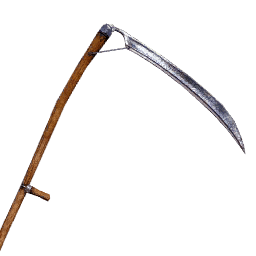
Magic Sickle | Cuts an entire row of crops in a single swing. Dramatically reduces harvesting time. | Crafted through a dispatch mission after completing the Secret Tools of Life research project at the Pororin Institute. |
Improves harvesting speed. Complements the Magic Sickle for efficient crop clearing. | Purchased from Provisioner vendors. |
The Magic Sickle and Large Farming Scythe together transform farming from a slow, plant-by-plant chore into a quick routine. Neither tool automates watering or planting, but they remove the most tedious part of the farming loop: the harvest itself.
Connection to Other Systems
Farming does not exist in isolation. The crops and resources produced at the farm tie into nearly every other system at the Greymane Camp and beyond.
System | How Farming Connects |
|---|---|
Farm-grown grains, vegetables, and fruits are primary ingredients in cooking recipes that grant Health, Spirit, and Stamina buffs. | |
Certain herbs and vegetables grown at the farm are used in alchemy recipes for consumables and dyes. | |
Some farm produce is crafting material for gear and equipment upgrades. | |
Farm crops can be used as animal feed. Combined with ranch products (milk, eggs, meat), the farm creates a self-sufficient food supply. | |
Camp Donations | Surplus crops can be donated to Carl at the Supply Management office, converting them into Food resources for camp upgrades. |
Food resources from farming help fund dispatch missions. Maintaining a good crop output keeps dispatches running smoothly. |
Known Issues
Some players have reported a bug where trees fail to appear after waiting the required three in-game days for growth. If your crops seem stuck or invisible after the expected growth period, try the following workaround:
Manually save your game.
Exit to the main menu.
Reload your save file.
In most cases, the trees appear fully grown upon re-entering the game world. This is a known state-refresh issue, and the save-reload workaround is currently the most reliable fix. Pearl Abyss has acknowledged the problem and may address it in a future patch.
Best Crops to Farm
Not all crops are created equal. The following four items represent the highest-value targets for dedicated farm plots, offering buffs and resources that are difficult or impossible to obtain elsewhere.
Wild Jinseng
Wild Ginseng is arguably the single most important crop in the game. When consumed, it grants 1 minute of increased Defense and 4 seconds of zero Spirit cost. The no-spirit-cost window is vital for boss DPS builds, allowing players to unload their most spirit-heavy attacks without restriction during damage windows. Wild Ginseng is also a required material for the spirit cap upgrade, which demands 10 Wild Ginseng along with abyss artifacts. Planting multiple plots of Wild Ginseng and applying the Fertilizer Sprayer to maximize yields is one of the strongest mid-to-late game strategies.
Skyroot
Skyroot grants 4 seconds of zero Stamina cost and 2 minutes of reduced Stamina consumption when eaten. This makes it ideal for stamina-dumping DPS builds and general open world movement. Skyroot requires completion of a research chain at the Scholastone Research Institute before seeds become available. Once the cultivation research is finished, Skyroot can be farmed indefinitely at camp.
Rubber Trees
Rubber is a rare crafting resource used for Kuku Pot crafting, the Field Sprayer, and other advanced recipes. Rubber tree seeds are sold by Kamu once you unlock a merchant contract with Khaled, a grocer in Vania. Reaching 100 reputation with Khaled by giving copper pouches (the cheapest ones work) unlocks the contract. Purchase and consume the contract, and Kamu will begin selling rubber tree seeds alongside wild jinseng seeds and tarot seeds. After harvesting rubber from a mature tree, remember to also collect the seeds from the top of the tree, since rubber does not regenerate seeds on its own. Trees must be manually cut down after gathering before you can replant in that plot.
Abyss Cells
Abyss Cells can be converted into seeds and planted on the farm. Each mature tree yields approximately 5 Abyss Cells when the Fertilizer Sprayer has been applied. Like rubber trees, Abyss trees must be manually cut down after harvesting before replanting. Dedicating a portion of your farm plots to Abyss Seeds creates a powerful passive resource loop that feeds directly into Abyss Gear crafting and Health upgrades.
Ranch Overview
The ranch is the companion facility to the farm at Greymane Camp. While the farm handles crops and trees, the ranch is where players raise livestock for meat, hides, bones, milk, and fleece. Ben is the ranch master and gives a side quest involving dispatch missions to set up the initial pen. Like the farm, the ranch requires the camp to be upgraded to level 3 before it becomes available.
Available Livestock
Four types of animals can be raised at the ranch. Each provides different resources and must be purchased from specific vendors:
Animal | Vendor | Resources |
|---|---|---|
Pigs | Ben (at camp) | Small Bone, Thin Hide, Marbled Meat (slaughter only) |
Cows | Tender Meat, Large Bones, Milk | |
Sheep | William at Bloomwood Ranch | Fleece (difficult to obtain elsewhere) |
Goats |
Ranch Mechanics
The ranch supports a maximum of 35 animals. Players need both a male and a female of the same species to enable breeding, which produces offspring over time. Livestock quality ranges from 1 to 5, with higher quality animals producing better results when slaughtered or milked.
Feeding can be done in two ways. The feed bin allows slow, passive maintenance using oats or barley. For faster leveling and quality improvement, players can manually drop individual items like carrots, sweet potatoes, or apples directly to their animals. Manual feeding is more hands-on but produces faster results, making it worth the effort for your highest-quality breeding pairs.
Seed Extraction
Any crop material found in the open world (apples, corn, ginseng, and others) can be converted into plantable seeds. Open your inventory, hold down X (PlayStation) or A (Xbox) on the crop item, and select "Obtain Seeds." This extracts seeds from that material, which you can then plant in any available field.
This technique is especially useful for rare crops like Ginseng. If you find even one or two Ginseng plants growing in the wild, you can extract seeds from them and grow an unlimited supply at your farm. Check fields, forests, and hillsides throughout Pywel and Delesyia for wild crops worth extracting.
Maximizing Harvest Yields
After planting seeds, use the Field Sprayer and Fertilizer Sprayer on the patch of ground where you planted. Apply 3 to 4 ticks of each sprayer to the crop patch. Without sprayers, a typical harvest yields only 2 to 3 crops per plant. With proper sprayer application, yields increase dramatically to 5 to 10 or even dozens of crops per plant.
The amount of water and fertilizer needed varies by crop type. Experiment with different crops to find the right balance. The Field Sprayer can be used more frequently than the Fertilizer Sprayer, so prioritize watering if you run into cooldown issues with the fertilizer.
For a complete list of plantable crops, see the All Seeds article.
Tips
Start the farm as early as possible. Crops take real in-game time to grow, so starting early means you have ingredients ready when you need them for cooking and alchemy later.
Always apply fertilizer. The difference between 1 Abyss Cell and 5 Abyss Cells per tree is enormous over time. Never skip fertilizer on Abyss Seeds.
Use the Field Sprayer on every visit. The growth speed boost is well worth the effort of obtaining it.
Replant immediately after harvesting. Empty plots are wasted time. Get seeds back into the ground as soon as you clear a crop.
Grow Pears for profit. Since Pears cannot be obtained any other way, they hold consistent value for cooking recipes and vendor sales.
Coordinate with dispatch timers. Plan farming cycles around your dispatch missions so that both systems produce results at roughly the same pace. Use the bed in your house to advance time while waiting.
Dedicate plots to Abyss Seeds in the late game. The cell multiplication effect (1 seed to 5 cells) outpaces most other Abyss Cell acquisition methods.
Check plot compatibility. Not all seeds work in every parcel. If a seed does not appear in the planting menu, try a different plot.
Extract seeds from wild fruit. Any fruit picked up during exploration can be converted into a plantable seed through the Inspect menu. This is free and saves you the cost of buying from Kamu.
Water during rain for a hidden growth bonus. Manually watering crops while it is raining stacks with the weather effect, speeding up growth beyond what either method provides on its own.
Unlock Seed Supply Contracts early. Building trust with grocers in different towns gives you access to regional seed varieties at Kamu's shop, expanding what you can grow without having to travel back to each town.
Use the bed to advance time. Sleeping in your house at camp advances the in-game clock, letting you skip ahead to harvest time instead of waiting through the full growth period in real time.
Patch 1.09.00 (May 29, 2026) improved farming so that seeds can be assigned to and used directly from quickslots, letting you plant without opening the inventory each time. The same patch also fixed an issue where the "Magic Scythe" could not be used when the inventory was full and where the "Scythe" could not be used in safe zones.
See Also
Article | Description |
|---|---|
Comprehensive guide covering camp housing, farming, ranching, cooking, and the full resource loop. | |
The camp hub, including all facilities, NPCs, and the dispatch system. | |
Recipes, bonfire buffs, and named consumables that use farm ingredients. | |
Field gathering as an alternative to farming for ingredients. | |
Brewing dyes and consumables using farm-grown herbs and vegetables. | |
How to upgrade the camp, including farm expansion tiers. | |
All top farming methods for Abyss Cells, materials, and resources. | |
Full item list of all meats and grains in the game. | |
Full item list of all fruits and vegetables in the game. | |
The faction questline that unlocks both the farm and the ranch. | |
Complete list of every plantable seed in the game, including sources and growth details. |