
Loading...
Loading...
Pet Taming Guide
April 25, 2026 at 10:33 AM
Correct Patch 1.04 entity names (Kuku Cooler, Sotdae, Heuklang, Pororin, Baltheon, Rekhia, Pailunese)
The pet system in Crimson Desert lets you turn stray dogs and cats into permanent companions. Pets are found roaming towns and settlements throughout Pywel, and taming them revolves around a trust mechanic. Each animal starts at 0 trust, and you must reach 100 trust before you can register it as your pet. Once registered, your companion follows you on your travels, automatically loots items from defeated enemies during combat, and stays with you permanently for the rest of the game.
There are 18 pet breeds in total: 10 dog breeds and 8 cat breeds, with 112 individual variants. You can register up to 30 pets, though only one can be actively summoned at any given time. The pet system becomes available early in the game, and the Fang Without a Master faction quest serves as a tutorial that walks you through the process of befriending your first animal companion.
The earliest pet most players will encounter is a white dog standing near the center square in Hernand, right by the bulletin board. Since Hernand is where Kliff wakes up at the start of the game, this dog is available almost immediately. Buy three Fine Meat from the nearby Grocer's Shop or Butchery (located south of the inn), feed the dog three times, pet it five times, and you can register it as a companion in a single in-game day.
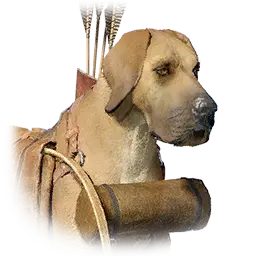
Hernand also has a military dog further up the path from the center square. This breed has a stockier build and carries what looks like a small quiver on its back. Both dogs accept the same food types and have identical abilities once tamed, so pick whichever one you like the look of.
In general, dogs are more common than cats during the early hours of the game. You will spot stray dogs in most settlements you visit across Hernand, while cats tend to show up more frequently as you move into later regions of Pywel. If your goal is to grab a companion as soon as possible, target the dogs in Hernand before heading out.
Trust is the core currency of the pet system. Every stray animal you encounter has its own trust meter, which you can view in the top-left corner of the screen when interacting with it. Trust increases through two daily actions: petting and feeding. Both actions have per-day caps tied to the in-game clock, which resets at midnight.

Petting an animal grants +5 trust per interaction, and you can pet an animal up to five times per in-game day for a maximum of +25 trust from petting alone. Petting is free and requires no items. For dogs, simply approach the animal and hold the interaction button. Cats work differently: you must first hold the button to physically pick the cat up, and then press the button again to pet it while carrying it.
Feeding is the fastest way to build trust. You can feed an animal up to 3 times per in-game day. To feed a stray, open your inventory, find a food item (such as meat or fish), hold the use button on it, and select "Take Out" from the context menu. Your character drops the food on the ground in front of you. If the target animal is nearby and hungry, it walks over and eats the dropped item within a few seconds.
Be careful where you drop food. In busy settlements, other stray dogs will rush over and eat it before your target gets there. Homeless NPCs wandering the streets can also pick up dropped food items. Your own summoned pet is the worst offender: if you forget to unsummon your current companion before dropping food for a stray, your active pet grabs the item immediately. The safest approach is to unsummon your pet first, then try to lure the stray animal away from crowds to a quiet corner or side alley before you start dropping food on the ground.
Once an animal reaches 100 trust, a new prompt appears when you interact with it. Hold the button to select "Take In" and the animal is permanently registered as your pet. For cats, set the cat down first before claiming it. After registration, the pet appears in your inventory under the Pets tab and can be summoned at any time.
The in-game day cycle limits how much trust you can earn per visit, but you can rest at campfires and cooking pots to skip forward in 12-hour increments, resetting your daily interaction counters. This lets you build trust with the same animal across multiple "days" in a single real-world sitting.
If you rely on petting alone without any food, it takes a minimum of four in-game days to tame any animal (4 days x 25 trust = 100). That is a lot of campfire resting. Bringing food cuts the process down considerably: a dog can be registered in one day with Fine Meat, and even a cat can be done in two days with any cat food plus petting.
Dogs and cats accept different foods, and the trust gained per feeding varies based on the type and quality of food offered. The table below lists every confirmed food type and its trust value.
Food Item | Accepted By | Trust per Feed | Max Daily Trust (3 Feeds) | Where to Get |
|---|---|---|---|---|
Dogs | +10 | +30 | Grocer's Shop, Butchery | |
Dogs | +35 | +105 | Grocer's Shop, Butchery | |
Cats | +10 | +30 | Hunting birds, Grocer's Shop | |
Fish | Cats | +10 | +30 | |
Cats | +10 | +30 | Grocer's Shop | |
Cats | +10 | +30 | Buckets near Naz River buildings |
Fine Meat is by far the most efficient food for taming dogs. Three feeds of Fine Meat in a single day provide +105 trust, which exceeds the 100 trust threshold on its own. Combined with petting (+25), you can register a dog in a single in-game day with a total of +130 trust. Meat and milk can be purchased from the Grocer's Shop or Butchery in Hernand, located south of the inn.
Cats are slower to tame because all their food options grant only +10 trust per feeding. With three feeds (+30) and five pets (+25), you earn a maximum of +55 trust per in-game day for a cat. This means it takes a minimum of two in-game days to fully tame a cat.
The trust system is the gate between a wild stray and a registered companion. Here is a summary of the daily interaction limits and how quickly each pet type can be tamed.

Action | Trust per Use | Daily Limit | Max Daily Trust |
|---|---|---|---|
Petting | +5 | 5 times | +25 |
Feeding (Tough Meat) | +10 | 3 times | +30 |
Feeding (Fine Meat) | +35 | 3 times | +105 |
Feeding (Cat food) | +10 | 3 times | +30 |
Best case for dogs: 5 pets (+25) + 3 Fine Meat feeds (+105) = +130 trust in one day. A dog can be tamed in a single in-game day.
Best case for cats: 5 pets (+25) + 3 feeds of Bird Meat, Fish, or Milk (+30) = +55 trust per day. A cat requires at least two in-game days to reach 100 trust.
There are seven confirmed pet breeds in Crimson Desert. Five are dog breeds and two are cat breeds. All breeds share the same core abilities (auto-looting, following), but each has a distinct appearance. Dogs and cats can be found roaming settlements across Pywel, particularly in larger towns and cities. Animals appear in different spots depending on the time of day, so visit settlements at various hours to find specific breeds.
Pet Name | Species | Location Found | Favorite Food | Special Ability |
|---|---|---|---|---|
Dog | Settlements across Pywel | Auto-loot | ||
Dog | Settlements across Pywel | Auto-loot | ||
Dog | Settlements across Pywel | Auto-loot | ||
Dog | Settlements across Pywel | Auto-loot | ||
Dog | Settlements across Pywel | Auto-loot | ||
Settlements across Pywel | Auto-loot | |||
Settlements across Pywel | Auto-loot | |||
Bird | Throughout Pywel | Apples (small birds); meat slabs (eagles and birds of prey) | Tamed with the Sotdae of Bond at 15 trust instead of 100. | |
Abyss Creature | Lush, greenery-covered starting Abyss areas | Standard pet feeding and petting mechanics apply. | Previously listed only as a special creature; Patch 1.04 made it a registerable pet. |
Collecting all 30 unique pets across Pywel completes the Natural Collector life challenge, which contributes to achievement and trophy progress.
All registered pets share the same set of abilities regardless of breed. Pets do not fight enemies or deal damage. Instead, they provide passive utility during exploration and combat.
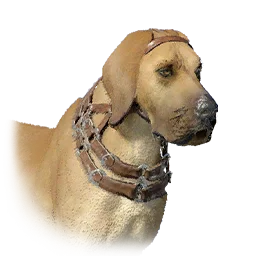
The primary benefit of having a pet summoned is automatic item collection. Your pet runs around the battlefield during and after fights, picking up loot dropped by defeated enemies. This includes equipment, materials, and consumables. Pets also gather resources from destructible objects and can collect refining materials from ores and trees while you harvest. This saves significant time during extended combat encounters and dungeon runs.
One important caveat: pets do not have a loot filter. They will pick up every item they find, including low-value gear like rusted swords and cheap boots. This means your inventory can fill up quickly if you do not manage it regularly.
Pets are untouchable during combat. Enemies cannot target or damage your active pet, so you never need to worry about your companion dying in a fight. This makes it safe to summon your pet during boss encounters and high-difficulty areas without risk.
Your summoned pet follows you as you travel across Pywel on foot. Pets provide a sense of companionship during long exploration sessions. Note that pets disappear temporarily when you mount a horse and reappear when you dismount.
Cats have a unique idle animation that dogs do not share. If you stand still long enough with a cat summoned, it climbs up your character's arm and perches on your shoulder. The cat stays there until you start moving again. This is purely cosmetic and does not affect gameplay, but it is one of the more charming details in the pet system and a nice reward for players who chose a feline over a canine companion.
All registered pets are accessed through the Pets tab in your Inventory. From this tab you can summon, unsummon, and release pets.
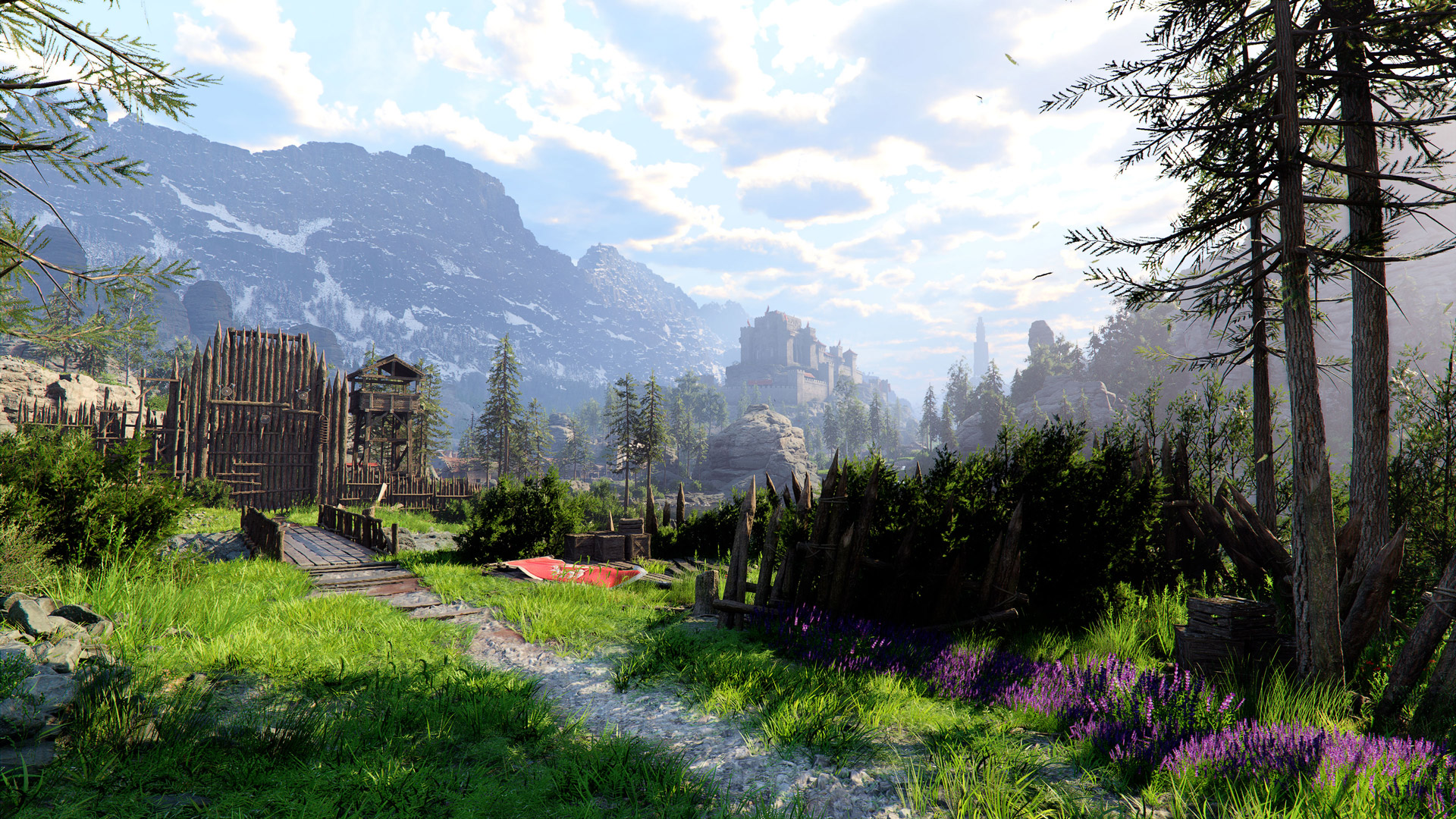
Open your inventory, navigate to the Pets section, and click on any registered pet to summon it beside you. Only one pet can be active at a time. To switch companions, unsummon your current pet first, then summon the one you want. Your active pet will follow you on foot until you unsummon it or mount a horse.
You can register up to 30 pets in total. This matches the number of unique animals scattered across Pywel's settlements and is tied to the Natural Collector life challenge. If you want to collect them all, visit different towns at various times of day to find every breed.
If you want to remove a pet from your roster, open the Pets tab in your inventory and select the "Untie" option on the pet you wish to release. Released pets return to the wild and can potentially be tamed again if you find them in the future.
Pets can be dressed in outfits purchased from specialized tailor shops. These outfits are purely cosmetic and do not affect your pet's abilities or stats. Available outfits include musketeer attire, helmets, and armor sets. Each outfit costs approximately 2.40 silver coins.
Milou's Shop, Pororin Village: Located in the Pororin Forest area. This shop becomes accessible after completing the Unreachable Village and Authorised Access quests, which unlock entry to Pororin Village.
Demeniss Tailor's Shop: Located southwest of Demeniss Castle. This shop has a more limited selection compared to Milou's Shop.
To equip an outfit, purchase it from a tailor shop, then open your inventory and apply it to your active pet. Each pet can wear one outfit at a time.
The Fat Cat is a distinct cat variant that can be found in different color variations near the Naz River. It follows the same trust-based taming system as other cats, but its remote spawn location and a couple of quirks make the process worth covering separately.
Fat Cats spawn near the Naz River area. Multiple color variations exist, so you may see different-looking Fat Cats across visits. If no Fat Cat is present when you arrive, simply run far enough away that the area is out of render distance, then turn around and come back. The cat should respawn when the area reloads.
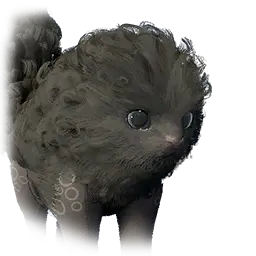
Taming a Fat Cat takes two in-game days at minimum, following the same daily caps that apply to all cats. Here is the recommended sequence:
Pet the cat 5 times to bring trust from 0 to 25. Remember to pick the cat up first, then press the interaction button to pet it.
Feed 3 Dried Fish to gain +10 trust each, raising the total to 55. Drop the fish from your inventory near the cat and let it walk over to eat.
You have now hit the daily cap. Wait until midnight (rest at a campfire or cooking pot to skip time) for the counters to reset.
Pet the cat 5 more times (+25 trust, bringing the total to 80).
Feed 2 more Dried Fish (+20 trust, reaching 100).
Put the cat down and select "Take In" to register it as your pet.
Dried Fish can be purchased from buckets inside a building near the Naz River spawn area. Stock up before you start the taming process so you do not have to leave mid-session and risk the cat despawning. Like other cat foods, each Dried Fish grants +10 trust per feeding.
The Fat Cat has a couple of behavioral quirks that are worth knowing about before you begin the taming process:
Cats cannot pass through doors. If you need to move through a doorway while carrying a cat, put the cat down first, open the door and walk through it, then go back and pick the cat up again on the other side.
Disappearing cat bug. There is a known bug where the Fat Cat can vanish after you select "Take In." If this happens, jump into the nearby water (the Naz River itself works). This forces the game to reload certain assets, and the cat should reappear in your pet roster.
Once registered, the Fat Cat functions like all other Pets in the game. When summoned, it follows you during exploration and automatically picks up harvested resources while you gather from ore nodes, trees, and other material sources. It also auto-loots items dropped by defeated enemies during combat, just like every other pet breed.
Patch 1.04 added birds as a brand-new pet category alongside dogs and cats. Unlike strays, you do not befriend a bird by walking up and petting it. You need a dedicated feeding tool called the Sotdae of Bond, which is obtained through a new quest that unlocks automatically once you meet the prerequisites. If you have already completed the quest, the Sotdae of Bond will be waiting in your inventory the next time you log in.
Wild birds are scattered throughout Pywel and come in two broad sizes. Small songbirds perch on fences, low walls, and trees near towns, while larger raptors such as eagles and other birds of prey circle over the hill country and the desert approaches. Both sizes use the same taming mechanic but prefer different foods.
The Sotdae of Bond is an inventory item that doubles as a small feeder. When you take it out, it appears as a dish you can place on the ground. You then place a suitable piece of food onto the Sotdae of Bond, step back, and wait. Nearby birds notice the food, fly down, and land on the dish to eat. Each successful feed raises the target bird's trust toward you.
Unlike dogs and cats, birds do not need to reach 100 trust to be registered. Once a bird reaches 15 trust, the usual Take In prompt appears and you can add it to your roster. The smaller threshold reflects how hands-off bird taming is: you are not petting or carrying the bird, so trust accrues only from feedings on the Sadhu.
Different birds prefer different foods, and placing the wrong food on the Sadhu will either attract nothing or attract the wrong species. The two core food types confirmed so far are listed below.
Food | Attracts | Notes |
|---|---|---|
Small songbirds and perching birds | Buy from any Grocer or pick from fruit trees near Hernand. Cheap, stacks well, and is the default starter food for bird taming. | |
Meat Slab | Eagles, hawks, and other birds of prey | Raw meat slabs from butcher stalls and livestock farms. Only the larger raptors will accept meat slabs; small birds ignore them. |
The basic loop is simple once the Sotdae of Bond is in your inventory:
Find a bird you want to tame. Note whether it is a small bird or a large bird of prey, because that dictates which food you need.
Move to a calm patch of ground within sight of the bird but not close enough to scare it off. Place the Sotdae of Bond.
Put an Apple on the Sadhu for small birds, or a meat slab for eagles and other raptors. The feed item is consumed each time a bird eats.
Wait for the bird to land and eat. Each feed raises trust. Repeat until the bird reaches 15 trust, then interact with it to register it as a pet.
Birds count toward the pet roster cap, so plan around the 30-pet limit shared with dogs and cats.
Before Patch 1.04, the Abyss Heuklang appeared in the pet database as a special creature that could not be registered through normal taming. Patch 1.04 lifted that restriction, and the Abyss Heuklang now joins the standard pet roster.
You will find wild Abyss Heuklang wandering the lush, greenery-covered starting Abyss areas. These are the cleaner, more overgrown Abyss zones you encounter early rather than the ruined or corrupted deep-Abyss regions. If you are running an Abyss-gear farm in the first tier of Abyss rifts, you are already in the right biome.
Taming uses the same trust loop as other pets: approach the creature, begin feeding and petting interactions, and register it once you reach the trust threshold. Because the Abyss Heuklang is not a dog, cat, or bird, it does not appear in the standard pet-category feeding tables above; treat it as a unique pet with its own dedicated article for the complete list of preferred foods.
Patch 1.04 added a function that lets you change the name of your horses and pets at any point after registration. Previously, every creature kept whatever default name was assigned to it the moment you completed taming, which meant a wall of similarly named dogs and cats in your roster. The rename option is surfaced directly from the Pets and Stable tabs in the inventory, and you can edit the name as many times as you like.
If you tamed a full roster before Patch 1.04, every existing pet and horse is eligible for renaming; the feature applies retroactively to old saves and is not locked behind a new quest.
Patch 1.04 introduced an accessory slot for every pet. Equipping an accessory changes pet behavior, letting pets take on a wider variety of roles rather than defaulting to the single auto-loot behavior of earlier versions. Only one accessory can be equipped per pet at a time, and accessories can be swapped freely from the pet menu.
The first confirmed accessory is the Sigil of Bonding, which is cat-specific. When equipped, it extends how long a cat stays perched on the player's shoulder after its idle shoulder animation triggers. This was added alongside a fix that stopped cats from remaining on the shoulder indefinitely, which was the unintended pre-patch behavior. Cats without the Sigil of Bonding now step back down after the intended shorter duration, so equip the Sigil on any cat you want to keep as a long-term shoulder companion.
Full accessory and gear details live on the dedicated Pet Equipment page, including stock information for the existing Pet Shop and the Patch 1.04 secret shop that sells additional pet equipment.
Stock up on Fine Meat early. Buy Fine Meat from the Butchery in Hernand before visiting settlements. Three Fine Meat feeds provide +105 trust, enough to register a dog in a single day without even petting it.
Combine petting and feeding. Five pets (+25) plus three Fine Meat feeds (+105) yield +130 trust in one in-game day, guaranteeing a same-day dog registration.
Use campfire resting to speed up cat taming. Since cats max out at +55 trust per day, rest at a campfire to skip to the next day and continue building trust without waiting in real time.
Unsummon your pet before feeding strays. Your active pet will steal food dropped for wild animals if you forget to unsummon it first.
Watch out for other animals nearby. When discarding food from your inventory, a different stray or NPC might grab it before your target animal. Drop food only when your target is close and facing you.
Visit towns at different times. Animals roam to different spots depending on the time of day. If you cannot find a specific breed, return at a different hour.
Manage your inventory regularly. Pets loot everything without filtering, so your bags will fill up fast. Sell unwanted items at vendors frequently to keep space open for valuable drops.
Pick up cats before petting. Unlike dogs, cats cannot be petted on the ground. You must hold the interaction button to carry the cat first, then press it again to pet.
Tame in Hernand first. The white dog near the center square is the most accessible pet in the game. Buy three Fine Meat from the Butchery south of the inn, combine feeding with petting, and you can walk out of Hernand with a loyal companion in under five minutes of real time.
Lure strays to quiet areas before feeding. In busy towns, other animals and homeless NPCs grab dropped food before your target reaches it. Walk the stray to a side alley or empty courtyard before using "Take Out" on your food items.
Let your cat idle for a surprise. If you stand still long enough with a summoned cat, it climbs onto your character's shoulder and sits there. It hops off when you move again.
Patch 1.04 was the largest update to the pet and taming system since launch. The headline additions are the bird pet category, the Sotdae of Bond taming item, five new cat types, the ability to tame the Abyss Heuklang, a rename function for horses and pets, and a pet accessory slot with the Sigil of Bonding as the first accessory. Related pet equipment updates land in the same patch, including a new secret shop in a port town that sells additional pet gear.
Change | What It Does | Where to Learn More |
|---|---|---|
Birds as pets | Entirely new pet category with its own taming tool and a lower trust threshold of 15. | See the Taming Birds section above. |
New inventory feeder that attracts and feeds wild birds; obtained through a new quest. | See the Taming Birds section above. | |
Five new cat types | Added to the existing cat roster; tamed the same way as launch cats using fish, bird meat, eggs, or dairy. | See the main Pets article for the expanded breed list. |
Now tameable; wanders the lush, greenery-covered starting Abyss areas. | See the Taming the Abyss Heuklang section above. | |
Rename function | Change the name of horses and pets from the Pets and Stable tabs. Retroactive for existing saves. | See the Renaming Horses and Pets section above. |
Pet accessory slot | Every pet can equip one accessory. Accessories change pet behavior. | See the Pet Accessory Slot section above and the Pet Equipment article. |
First pet accessory. Cat-only. Extends how long the cat stays on the player's shoulder. | See the Pet Equipment article for stock locations. | |
Cat shoulder fix | Cats no longer remain on the shoulder indefinitely by default. The Sigil of Bonding is the opt-in way to restore the long-stay behavior. | See the Pet Accessory Slot section above. |
Secret pet-equipment shop | New hidden shop in a port town sells additional pet equipment beyond the regular Pet Shop inventory. | See the Pet Equipment and Pet Shop articles. Outfit stock is listed on All Pet Outfits and All Pet Helms. |
Back alley outfit additions | Additional pet and character outfits arrive in the Back Alley Shop rotation alongside the new pet content. | See the Back Alley Shop article. |
Full patch information is maintained on the Patch Notes article.
Pets (overview of the pet system and all breeds)
Fang Without a Master (faction quest introducing pet mechanics)
Pets (dogs and cats) use a slightly different trust system than other NPCs. You cannot greet them or give them a generic gift; instead, you pet them and feed them, each with a daily cap.
Each pet can be petted up to five times per day for +5 trust each, worth 25 trust per day if you remember to top up every in-game day. The counter resets when the game day rolls over, so this is the low-effort baseline for any pet you are trying to adopt.
On top of petting, you can feed each pet up to three times per day for +10 trust per feeding, adding up to 30 more trust per day if you have the right food. Most edible items have a takeout option in the menu, which drops the food on the ground near the animal.
Cats like regular and lean bird meats, raw fish, and milk.
Dogs like the various raw meats (the same red-meat drops that sell to butchers).
Raw fish do not have a takeout option. You have to discard the fish near the cat and it will flop on the ground until the cat grabs it. This is a deliberate mechanic, not a bug, so keep one or two raw fish in your inventory specifically for cat feeding runs.
There is a hidden preference layer where a specific pet really loves one specific food and the feeding returns +35 trust instead of the usual +10. The transcript source confirmed the system exists but the exact per-pet favourites are not yet documented, so in practice most players brute-force taming with standard petting and feeding across two in-game days (5 pets x5 + 3 feeds x10 is 55 per day, so two days clears the 100 cap with margin).
Once a pet hits 100 trust you can adopt it to live at the Gray Main Camp. From there, one pet can be summoned to help in combat and pick up items dropped on the ground. Adopted pets can wear pet equipment bought from the Pet Shop, and cats ride your shoulder when you are standing still.
Separately from the general trust-gain affix, some abyss gears roll a pet trust gain affix that only multiplies pet interactions. Combined with the Rabbit Leather Mask, it shortens a two-day tame to effectively one day.
If none of the strays visible in a town are breeds or colors you want, fast travel to any other point on the map and then fast travel back. The pet spawn pool for that settlement reshuffles on reload, so you will usually see a completely different set of dogs and cats on return. This is far faster than waiting for the in-game day to turn over. Repeat the travel-out, travel-back loop until the breed you are hunting appears, then start the trust grind on the one you want.
Unsummon your current companion before arriving, otherwise your active pet will immediately grab any Fine Meat, fish, or bones you drop for the new stray.
Breeds and coat variants are weighted toward certain settlements. The list below is what the pet pool at each location tends to roll toward. You may still see breeds outside this list, and the fast-travel respawn trick above is the fastest way to cycle the pool.
Pororin Village: the densest cluster of cat breeds in Pywel, including Kitten and Slim Cat spawns. Access requires completing The Unreachable Village and Authorized Access first.
Tariv (the mountain city north of Demeniss): strong spawn pool for rare cats, including Kitten and Slim Cat variants that are hard to find elsewhere.
Delesyia: common late-game source of Floppy-Eared Bulldog, Pointy-Eared Bulldog, Beagle, and Saluki spawns. Saluki variants in particular show up here more reliably than in smaller towns.
Hernand: the default starter city for pet taming, with common Boarhound and White Dog variants right by the central blacksmith square. Safe for first-time players and documented above in the Your First Pet section.
The small hunter camp north of Hernand near Haunted Hill: mixed pool of Husky and Greyhound spawns alongside occasional Dalmatian-pattern variants. A quick loop here plus fast-travel resets covers several dog breeds at once.
Demeniss: covers the opposite end of the cat pool from Pororin. Useful when you are already passing through for the pet tailor and want to top up stray-cat taming attempts on the way.
Four fish count as a top-tier cat food and grant +100 trust on a single feed. Because the feeding cap is three per in-game day and each top food already slams the cat straight to 100 trust on the first bite, one of these fish is enough to skip the usual two-day cat taming grind entirely. Drop one near any stray cat at 0 trust, let it eat, then pick up and take it in on the spot.
Golden Carp (Pailune lake; grabbable without fishing)
Dogs do not have an equivalent instant-tame food. The fastest dog method remains three Fine Meat feeds plus five pettings in the same day, or the Small Bones trick documented in the Companions overview.
The bird pet category introduced in the pet patch uses a dedicated placeable feeder called the Sigil of Bond, sometimes surfaced in older notes as a bird-feeder or bird catcher. The Sigil is the only way to attract wild birds onto a feed spot so you can build their trust from a safe distance. The item itself is unlocked through a short quest; usage from there is a simple place-food-and-wait loop.
The Sigil of Bond is granted as a completion reward for the faction-style side quest Authorized Access, which triggers the first time you approach Pororin Village through the Trembling Woods. After the final step of that quest, a tree ent NPC inside the village hands the Sigil over directly.
If you completed Authorized Access before the pet patch dropped, you still get the Sigil retroactively. A pop-up notice fires on the next login confirming the item has been added, and from that point on you can use it exactly like someone who received it through normal questing.
The Sigil lives in your private storage box by default, so the first step after the pop-up is to pull it out of storage at any camp or inn. If the Sigil is ever lost, discarded, or otherwise missing from your inventory, the camp provisioner at Greymane Camp has a Recover Items tab that lets you pull it back at no cost. Treat the Sigil as recoverable, not consumable; there is never a reason to re-run the quest for a second copy.
The Sigil uses the standard placeable-item flow. Open the inventory, use the Sigil to take it out of the bag, then hold the drop input to set it on the ground at your feet. Once placed, you can interact with it to open the feeder and load food into its slot. To pick the Sigil back up, walk up to the placed feeder and hold the lantern or interact button; the Sigil returns to your inventory.
Placement terrain matters. Birds circle along fixed flight paths over each region, and the Sigil needs to sit roughly on that line for them to notice. The rule of thumb is to put it on high ground: cliff tops, hill crests, rooftops, and exposed ledges all work well, while placing it down in a canyon floor or inside a village courtyard will usually produce zero landings. Scouting the sky for a minute or two before you commit to a spot almost always pays off.
Birds split into two food categories, and the per-feed trust value depends on how well the food matches the species rather than the food's raw cost.
Small birds (pigeons, sparrows, geese, crows, parrots) eat bugs, vegetables, and grains. Barley is a strong stockpile option for this tier, granting +25 trust per feed.
Predator birds (eagles, hawks, owls, falcons) eat meat. Lean Meat is the top option, giving +35 trust per feed, and is worth routing through any butcher shop stock for.
Birds still tame at 100 trust like dogs and cats, not at a lower threshold; every bite from the Sigil simply chips away at that 100-trust bar. Mixing food tiers is fine in a single Sigil placement, so it is common to stock the feeder with bugs, fish, lean meat, and barley at the same time so that whichever species arrives first has something it recognises.
After food is loaded, expect to wait roughly 2 to 6 minutes of real time for a bird to glide in and start eating. Most diurnal species (hawks, eagles, crows, small perching birds) land whenever a stocked Sigil is on their flight path.
Owls are the exception. They are nocturnal and will not approach a Sigil during day hours no matter how well the spot is placed. The most reliable owl window is around 04:00 in-game; camp at a fire near the placed Sigil and sleep forward to the small hours if your world clock is running in daylight. Outside that pre-dawn window, owls simply skip even a perfect spot.
When a bird's trust hits 100, the usual Take In prompt surfaces on direct interaction. Walk up to the bird (do not sprint; a jog or slow walk avoids spooking it off) and hold the prompt to add it to the pet roster. From there it behaves like any other registered companion: summon from the pet tab, auto-loot, and equip pet accessories via the pet inventory.
Species distribution is regional. The spots below are the most consistent in testing, organised by which birds tend to land when a Sigil is stocked with the right food.
The cliff line around Howling Hill is the best all-rounder for early bird farming. Place the Sigil on the exposed cliff top for hawks and Crow landings, or shift it over the ledge toward the water line when you are farming geese and want grain to do the work. Because Howling Hill sits near Greymane Camp you can restock the feeder from camp storage between attempts without a long fast-travel loop.
The cliffside path that skirts Pororin Village in the Hernand region is the most consistent place to farm the white owl variant. Approach from the village side, climb the rock formation near the fast-travel pad, and drop the Sigil on the highest flat ledge you can reach. The owl is nocturnal, so plan the run for the small hours of the in-game morning and bring lean meat. Reports put the landing window at around 04:00 in-game; before midnight the Sigil will sit untouched even with perfect food.
For variety in a single trip, Five-Finger Mountain is the deepest draw. The ridge hosts bald eagles, steppe eagles, owls, pigeons, hawks, crows, and falcons, and a well-placed Sigil on the highest rock platforms frequently pulls multiple species across one stock-up. The region is a cold biome, so pack cold-resistance armour or hot-spiced stews before camping there, otherwise the cold tick will chew into your stamina bar while you wait for landings.
The Hernand countryside is where parrots most reliably appear. Use small-bird food (bugs, grains, vegetables) and place the Sigil on elevated ground along the outer approach roads rather than inside the city walls. Barley works as a fallback for any small-bird feed here when specific parrot food is not on hand.
For a dedicated crow farm, use the fast-travel point on the road just north of Demeniss. Place the Sigil right on the pad itself; the fast-travel spot is always safe even if the surrounding zone is hostile, and the circling crow flock overhead will begin landing within a couple of minutes. Stock the feeder with a mix of meat, bugs, and fish to cover any species that happens to glide in alongside the crows.
The Phoenix is not a Sigil-taming target. It is a flying boss that must be defeated first, after which its feather is brought to a witch and crafted into a summon item that adds the Phoenix to the pet roster as a shoulder companion. See Sighting of the Phoenix for the full encounter walkthrough; do not waste Sigil stocks trying to bait it in like a regular bird.
These details round out the high-level Patch 1.04 Changes table above with information gathered after launch of the patch. Existing sections on renaming pets, the Sigil of Bonding accessory, and the secret pet-equipment shop still apply; the points below are additive.
Pre-patch, the pet roster was roughly 18 breeds split between dogs and cats. The patch takes that number to approximately 60 tameable pets in total. The headline additions are five new cat variants slotted into the existing cat pool and a full bird roster (small perching birds plus predator birds) introduced alongside the Sigil of Bond. Dogs largely stay as they were, with the bulk of the variety growth landing on cats and birds.
Because the roster cap scales to match the new content, completionists aiming for the Natural Collector challenge should plan for a considerably longer grind than the pre-patch 30-pet goal. Expect multiple in-game weeks of settlement loops, Sigil placements, and fast-travel respawn cycling to close out the full list.
The rename feature covered in the Renaming Horses and Pets section above applies to every pet in the expanded roster, including every new cat variant and every bird species. If you have duplicate breed names cluttering your pet tab from a pre-patch save, the rename button is the fastest way to sort them out.
A new merchant named Lacey begins circuiting the main road of Pororin Village after the patch. She is identifiable by a large backpack and does not hold a fixed stall position; instead, she walks the ring road and can be caught at different points along it depending on the time of day. Two items on her stock list matter directly for pet taming and upkeep:
Sigil of Bonding (a cat shoulder-grip accessory, distinct from the Sigil of Bond bird feeder despite the similar name). When equipped on a cat pet, it locks the cat permanently onto the player's shoulder during running, sprinting, and combat, with only brief dismounts to grab loot.
Palmar Pill, a stamina-restoration consumable that is handy to keep stocked while Sigil camping out in the cold biomes near Five-Finger Mountain and Howling Hill.
The Sigil of Bonding is specifically the cat accessory, not the bird feeder. The bird feeder is the Sigil of Bond (no -ing), handed out by Authorized Access as described above. Mixing the two up is the single most common naming mistake around Patch 1.04 pet content.
The Pororin Petal Hat is the only headgear in the game with a direct pet-behaviour interaction. When worn, smaller flying companions such as crows, sparrows, and pigeons perch on the hat itself instead of the usual shoulder or hand position. The effect is cosmetic but it sits the bird right in your field of view, which is a nice quality-of-life change for bird-only runs.
Larger flying companions such as the Phoenix do not respect the hat interaction. They continue to perch on the player's outstretched arm regardless of what headgear is equipped, matching their pre-patch idle behaviour.
Tamed pets that are not currently summoned no longer disappear into storage between sessions. Instead they roam the grounds of Greymane Camp on their own patrol paths. You can walk past the camp tents and spot any of your registered cats, dogs, and birds going about their idle animations, which is a clean visual confirmation that the pet is safely stored and did not get left behind at a tame site.
Pets keep the armour and accessories last equipped on them when wandering. A husky slotted into a full Pet Armor set, for example, still wears that set while patrolling camp; re-summoning it does not reset the loadout. The inventory stays exactly where you left it, so you can cycle which pet is active without re-dressing each one every trip.
Pet positioning inside the camp also reacts to weather cues: cats drift toward sheltered corners during rain, while dogs tend to hold near the main fire. Treat the camp grid as a passive idle display for the full roster rather than an empty clearing between active summons.
