

Overview
Crimson Desert does not use a traditional experience-point leveling system. Instead, character power is determined by three interconnected layers: primary resource stats (Health, Stamina, and Spirit), equipment stats provided by weapons and armor, and passive modifiers from Abyss Cores slotted into gear. Primary stats are upgraded by spending Abyss Artifacts on dedicated dials in the skill tree, while secondary stats come from equipment refinement, core socketing, and certain passive skills.

All primary stat upgrades are shared across all playable characters. Increasing Health, Stamina, or Spirit on Kliff's skill tree also applies those upgrades to Oongka and Damiane. This means players only need to invest once per stat level regardless of which character they are currently controlling.
Primary Stats
The three primary stats function as resource pools that are consumed during combat and exploration. Each stat is displayed on the HUD near the minimap and has its own upgrade track within the skill tree.
Health
Health represents the total hit points a character can sustain before being defeated. The Health bar is displayed as a red gauge at the bottom-left corner of the screen near the minimap. When Health reaches zero, the character dies and must respawn at the nearest checkpoint or campsite.
Health is restored primarily through food. Cooked meals provide significantly more healing than raw ingredients. For example, Grilled Meat restores roughly 80 Health per use, and players can consume food freely during combat without a cooldown restriction. For extended boss encounters, carrying a large supply of cooked food (100 or more servings) is strongly recommended. Resting at a campfire also fully restores Health.
Health can be upgraded up to 18 times through the red dial (marked with a cube icon) on the right edge of the skill tree. Each upgrade costs Abyss Artifacts, with the cost increasing progressively at higher levels. Reaching Health Level 4 early in the game is a commonly recommended benchmark because it provides enough survivability to handle the first major boss encounters.
Stamina
Stamina is the most versatile resource in the game. It governs a wide range of actions: sprinting, dodging, climbing, swimming, blocking, gliding with the Crow's Wing, performing heavy attacks (R2/RT), and executing most melee skills. The Stamina gauge appears next to the character model during activities that consume it.
Normal light attacks do not consume Stamina, which is an important distinction. Only heavy strikes, special skills, and movement actions drain the bar. Blocking incoming attacks drains Stamina proportional to the damage absorbed, and if Stamina is fully depleted while blocking, the character staggers and becomes momentarily vulnerable.
Stamina regenerates passively over time when not performing stamina-consuming actions. Certain Abyss Cores, food buffs, and passive skills can increase the regeneration rate.
Stamina can be upgraded up to 16 times through the blue dial (marked with a wolf icon) at the top of the skill tree. Most guides recommend prioritizing Stamina upgrades first because nearly all defensive and traversal actions depend on it. Reaching Stamina Level 4 before tackling difficult content is a widely cited early-game goal.
Spirit
Spirit is the resource consumed by powerful special abilities such as Palm Strike and other Force Palm techniques. Unlike Stamina, Spirit does not regenerate passively on its own during normal gameplay.
The primary method of restoring Spirit is attacking enemies. Landing hits on opponents gradually refills the Spirit gauge, which creates an aggressive combat loop where players must stay on the offensive to maintain access to their most powerful abilities. Spirit can also be recharged manually by pressing L3+R3 on controllers (or the X key on PC), and certain consumable items restore Spirit directly.
Spirit can be upgraded up to 14 times through the green dial (marked with a tree icon) on the left edge of the skill tree. Because Spirit regenerates through combat and is used primarily for skill execution rather than survival, it is generally considered the lowest priority for early upgrades. Players who rely heavily on Force Palm abilities or Spirit-intensive skill builds may want to invest earlier.
The Battery stat (marked with a thunderbolt symbol) powers the late-game War Robot, a Dwarven-engineered combat mech. When piloting the War Robot, every weapon system (cannon, machine guns, EMP, target-locking missiles) drains the mech's energy reserves. Players must balance destruction with strategy before the mech overheats and shuts down. The Battery stat may also apply to other ancient technology encountered in Delesyia, the technologically advanced region of Pywel, though this has not been fully confirmed.
Primary Stat Summary
Stat | Color / Icon | Max Upgrades | HUD Display | Primary Function |
|---|---|---|---|---|
Red / Cube icon | 18 | Red bar near minimap | Determines how much damage you can take before defeat | |
Blue / Wolf icon | 16 | Gauge near character model | Consumed by dodging, sprinting, blocking, climbing, heavy attacks, and most skills | |
Green / Tree icon | 14 | Gauge near character model | Consumed by special abilities; regenerated by attacking enemies |
Upgrading Primary Stats
Primary stats are upgraded through the skill tree by spending Abyss Artifacts. The three stat dials sit at the outer edges of the skill tree: Stamina at the top, Spirit on the left, and Health on the right. Each dial can be advanced multiple times, with each subsequent level requiring more Abyss Artifacts than the previous one.
Abyss Artifacts are the universal currency for both stat upgrades and skill unlocks, so players must decide how to balance spending between raw stat increases and new abilities. Some skills can be learned for free by observing enemies or Axioms in the world, which frees up Artifacts for stat investments.
How to Obtain Abyss Artifacts
There are several ways to earn Abyss Artifacts throughout the game:
Artifact Gauge: A yellow bar displayed to the left of the minimap fills up as you defeat enemies. Each time the gauge fills completely, you earn one Abyss Artifact. Clearing enemy camps and fortresses is one of the fastest ways to fill this gauge.
Boss defeats: Major bosses drop Abyss Artifacts upon defeat, often in quantities of two or more.
Main quests: Certain story missions reward Abyss Artifacts upon completion.
Sealed Abyss Artifacts: Hidden throughout Pywel, these are collectible items locked behind puzzles, platforming challenges, or hidden locations. Each one grants an Abyss Artifact when unsealed.
Side content: Various side activities and commissions can also reward Abyss Artifacts.
Recommended Upgrade Priority
While the optimal upgrade path depends on playstyle, the following priority is widely recommended for new players:
Priority | Stat | Reasoning |
|---|---|---|
1st | Governs sprinting, climbing, dodging, blocking, and heavy attacks. Most early-game damage can be avoided through movement and blocking, both of which require Stamina. | |
2nd | Provides a larger buffer for mistakes. Especially important before major boss fights where one or two hits can be fatal. | |
3rd | Least urgent early on because Spirit regenerates by attacking enemies. Becomes more valuable later when Spirit-intensive skills are unlocked. |
A common early benchmark is to reach Stamina Level 4 and Health Level 4 before taking on the first difficult boss encounters. After that, players can distribute points according to their preferred combat style.
Secondary Stats
Beyond the three primary resource stats, characters are affected by a range of secondary stats that influence combat performance. These stats come from equipment, Abyss Cores, passive skills, and consumable buffs rather than from the stat dials on the skill tree.
Stat | Source | Description |
|---|---|---|
Attack | Weapons, Refinement | Base physical damage dealt per hit. Increased by equipping stronger weapons and refining them at a Blacksmith. |
Armor, Refinement | Reduces incoming physical damage. Increased by equipping heavier armor and refining it at a Blacksmith. Heavy plate armor provides more defense than leather or linen. | |
Abyss Cores, Weapon Type | Determines how quickly attacks are executed. Different weapon types have inherent speed values. Cores like Gale and Swift increase attack speed further. | |
Critical Hit Chance | Probability of landing a critical strike that deals bonus damage. The Insight core increases critical hit chance. | |
Affects how fast the character walks and runs. The Haste core provides a movement speed boost. | ||
Damage Reduction | A flat percentage reduction applied to incoming damage. Cores like Aegis and Wall of Steel provide damage reduction. | |
Armor Penetration | Skills, Weapon Effects | Reduces the target's effective defense value before the damage formula is applied. Yields very high returns against elite enemies and bosses with large defense ratings. |
Equipment Stats
Every weapon and piece of armor in Crimson Desert has base stat values that directly affect combat performance. Weapons contribute Attack, while armor pieces contribute Defense. Some weapons also have inherent Attack Speed and Critical Hit Chance values that vary by weapon type.
Weapon Stat Profiles
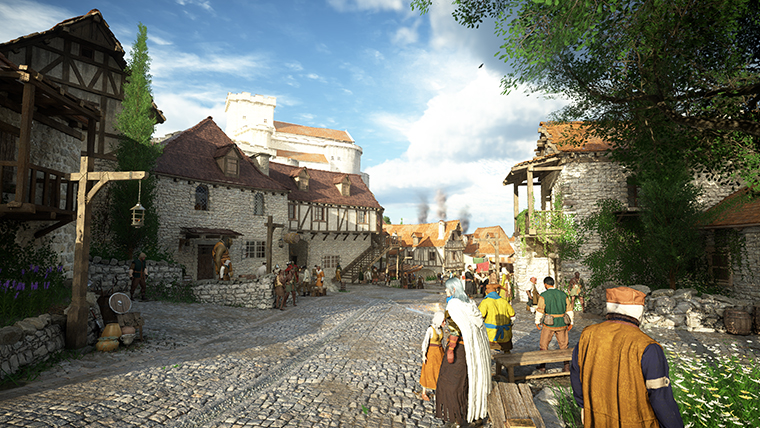
Each weapon type has a distinct stat profile. Swords sit in the middle of every stat curve with medium speed, medium damage, and short range. Greatswords and Spears rank among the highest damage weapons thanks to their reach and raw power. Daggers attack very quickly but deal less damage per hit. Heavy weapons like hammers and maces specialize in stagger damage, which breaks through enemy guards and opens up follow-up attacks.
Refining
The primary method of increasing equipment stats is Refining. Players bring weapons and armor to any Blacksmith NPC and spend materials to raise the item's refinement level. Each refinement level grants roughly +2 to +3 points of Attack (for weapons) or Defense (for armor). Refining only increases these base stat values; it does not improve Attack Speed or Critical Hit Chance.
Even a single refinement level can roughly double defense stats in the early game, so visiting the Blacksmith before major encounters is strongly recommended. In addition to permanent Refining, players can temporarily boost their weapon's Attack at a Grindstone and their armor's Defense at an Anvil, both of which are found at camps and settlements. These temporary buffs are consumed over time or upon death.
Abyss Cores
Abyss Cores are special enhancement items that can be installed into equipment sockets to grant additional stat bonuses and passive effects. They are the primary way to customize secondary stats beyond what base equipment provides.
Abyss Cores are managed by Witch merchants found throughout Pywel. Witches handle all core-related services: installing cores into sockets, extracting installed cores, creating additional sockets on equipment, and selling core recipes. Installation and extraction are free, but adding new sockets to gear requires payment.
Core Types
The following table lists known Abyss Core types and the stats they provide:
Core Name | Effect | Stat Modified |
|---|---|---|
+1.0 Damage Reduction | Damage Reduction | |
+2.0 Damage Reduction | Damage Reduction | |
+1.0 Health Recovery per second | Health Regeneration | |
+0.2 Health Recovery per second | Health Regeneration | |
+0.1 Spirit Recovery per second | Spirit Regeneration | |
Increased Attack | Attack | |
Increased Movement Speed | Movement Speed | |
Increased Critical Hit Chance | Critical Hit Chance | |
+3 Food Enhancement | Food Effectiveness |
Cores come in multiple tiers (I, II, III, etc.), with higher tiers providing stronger effects. They can be equipped to weapons, armor, shields, gloves, and footwear depending on the core type. Named cores such as Howling of Chaos, Piercing Bloom, Slashing Reeds, and Wind Slash provide unique special abilities rather than flat stat increases.
Elemental Stats
Crimson Desert features three elemental enhancement types that can be applied to weapons: Fire, Ice, and Lightning. Each element adds unique effects on top of the weapon's base damage and interacts differently with critical hits and enemy behavior.
Element | Primary Effect | Key Mechanic |
|---|---|---|
Fire | Burn damage over time | Deals 25% of total element stat as burn damage, ticking 4 times per second over a 12-second window. Effective against grouped enemies since fire spreads pressure across multiple targets. |
Ice | Freezing and slowing | Adds a 40% elemental modifier to critical hits specifically. Becomes mathematically superior to Fire when Critical Hit Chance exceeds 40%. Frozen enemies are immobilized and interrupted. |
Lightning | Stun and vulnerability | Applies a micro-stun every 5 seconds and creates a +30% physical damage vulnerability window. Imbuement lasts 12 seconds. Best suited for high-execution combo playstyles. |
Lightning attacks deal 20% more damage during rain, making weather conditions tactically relevant for elemental builds.
Damage Formula
Damage calculation in Crimson Desert follows a multi-step process. While the game does not display the full formula in its menus, community testing and data-mining have established the general structure:
Base Damage: Determined by the weapon's Attack value, which is the foundation for all damage calculations.
Combo Multiplier: Each attack in a combo chain applies a multiplier. Basic chains use a 1.0x multiplier, while advanced sequences like Counter Burst (1.6x) and Full Rotation (1.85x) deal significantly more.
Critical Hits: When a critical strike lands (based on Critical Hit Chance), the damage is multiplied by the Critical Damage modifier.
Enemy Defense Mitigation: The target's defense reduces damage using a diminishing returns formula: Mitigation = 1 minus (Defense / (Defense + 100)). This means that an enemy with 100 Defense mitigates 50% of incoming damage, while an enemy with 200 Defense mitigates about 67%.
Armor Penetration: Flat reduction applied to the enemy's defense value before the mitigation formula runs. Against bosses with very high defense, Armor Penetration provides outsized value.
Elemental Bonuses: Fire, Ice, and Lightning add their own damage layers after the physical calculation.
Combo Multipliers
Combo Type | Damage Multiplier | Hits per Second |
|---|---|---|
Basic Chain | 1.0x | 1.5 |
Triple Slash | 1.15x | 2.0 |
Aerial Smash | 1.35x | 1.0 |
Counter Burst | 1.6x | 1.8 |
Full Rotation | 1.85x | 2.2 |
Temperature and Environmental Effects
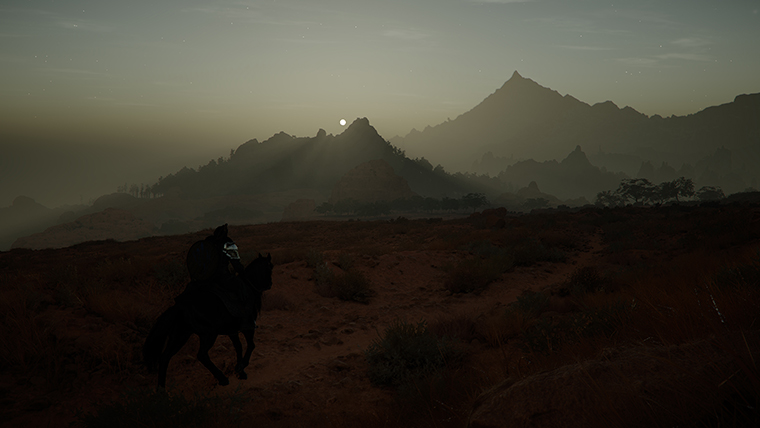
The world of Pywel has a dynamic temperature system that directly affects stat performance. A thermometer HUD indicator tracks the character's body heat, and straying too far from the optimal range triggers stat penalties.
Freezing (Cold)
In cold regions such as Kweiden (the frozen north), low body temperature causes Stamina to drain 50% faster and eventually chips away at Health over time. Blizzards intensify these effects. Cold can be counteracted by wearing fur or heavy armor, staying near fires, or consuming warming items like Spiced Cider or Hot Soup.
Overheating (Hot)
In hot regions such as the Akashen desert, overheating drastically reduces maximum Stamina capacity and slows movement speed. Desert travel also drains a water meter; running depletes it faster. Overheating is countered by wearing lightweight linen clothing, staying in shade during midday, or consuming cooling items like Cooling Water or Cactus Fruit.
Weather Effects on Stats
Condition | Stat Effect | Countermeasure |
|---|---|---|
Freezing | Fur armor, campfires, warming food (Spiced Cider, Hot Soup) | |
Overheating | Maximum Stamina reduced; Movement Speed slowed | Linen clothing, shade, cooling items (Cooling Water, Cactus Fruit) |
Thunderstorm | Metal armor increases lightning strike risk (massive damage) | Equip wood or bone weapons; seek shelter |
Rain | Lightning-element attacks deal 20% more damage | Use Lightning-imbued weapons for bonus damage |
Sandstorm / Blizzard | Visibility reduced; minimap jammed | Eagle Vision skill; tent shelter |

Food Buffs and Stat Bonuses
Cooking and consuming meals at campfires provides temporary stat bonuses beyond simple Health restoration. Eating a cooked meal grants the Well-Fed buff, which increases Maximum Health and Stamina Regeneration for 30 minutes. The quality of the meal determines the strength of the buff. Equipping the Gourmet Abyss Core further enhances the effectiveness of food items.
Detailed Stat Pages
Each stat has a dedicated page with in-depth mechanics, upgrade costs, and build advice. Use these pages for detailed information beyond what this overview covers:
Stat | Type | Description |
|---|---|---|
Primary | Survivability pool. Max Level 18. Restored through food and campfires. | |
Primary | Resource for dodging, sprinting, blocking, and heavy attacks. Max Level 16. | |
Primary | Resource for skills and special abilities. Max Level 14. Regenerates by attacking. | |
Secondary | Physical damage per hit. Comes from weapons, refinement, and Destruction cores. | |
Secondary | How quickly attacks execute. Determined by weapon type, Gale and Swift cores. | |
Secondary | Chance of landing a critical hit. Boosted by Insight cores. Synergizes with Ice element. | |
Secondary | Walking and running speed. Boosted by Haste cores. No equipment weight penalties. | |
Resistance | Reduces fire damage and overheating penalties in hot environments. | |
Resistance | Reduces ice damage and freezing penalties in cold environments. | |
Overview | Breakdown of Physical, Fire, Ice, and Lightning damage mechanics and resistances. |
Reaching the 15/15/15 Stat Cap
The three key secondary combat stats (Critical Rate, Attack Speed, and Movement Speed) each have a maximum effective level of 15. Reaching all three caps simultaneously requires a specific combination of best-in-slot accessories and Abyss Cores. Below is the most efficient loadout, which uses only 7 of the available Abyss Core slots for stats, leaving the rest free for utility effects.
Best-in-Slot Accessory Loadout
Slot | Accessory | Stat Bonus | Source |
|---|---|---|---|
Necklace | +8 Critical Rate (4 displayed, doubled) | Great Main Jeweler or Serpent Marsh Witch | |
Ring 1 | +4 Attack Speed | Windier Manor puzzle chest (Demeniss) | |
Ring 2 | +4 Attack Speed | Chapter 9 quest (Thinning Blade, Sage of the Desert drop) | |
Earring 1 | Estate of Dismay (House Roberts) or Lioncrest Manor | ||
Earring 2 | Green Coral Reef / Engraved Copper Earring | Green Coral Reef drop or camp jeweler (after upgrade) | |
Shield (on back) | Any shield with Movement Speed | +2 Movement Speed | Various (shield stats apply even when using two-handed weapons) |
Stat Math Breakdown
The following table shows how each stat reaches 15 using the loadout above:
Stat | From Equipment | Abyss Cores Needed | Total |
|---|---|---|---|
Necklace (8) + Weapon native (1) = 9 | 2 cores at +3 each = 6 | 15 | |
Mark of Darkness (4) + Witch's Ring (4) = 8 | 3 cores at +3 each = 9 (use 7 to cap) | 15 | |
Earring (4) + Earring (3) + Shield (2) = 9 | 2 cores at +3 each = 6 | 15 |
This loadout uses 7 Abyss Core slots total (2 for Critical Rate, 3 for Attack Speed, 2 for Movement Speed). All remaining Abyss Core slots are free for damage reduction, health regeneration, or other utility effects.
Important Notes on Glove and Boot Stats
A common mistake is investing in Attack or Attack Speed Abyss Cores placed in gloves or boots. The attack-related stats on gloves and boots only apply to unarmed combat, not to weapon-based attacks. Players using any weapon will see no benefit from these stats. Only Movement Speed Abyss Cores placed in gloves or boots apply universally to all combat and movement.
This means Critical Rate and Attack Speed Abyss Cores in glove and boot slots are effectively wasted for weapon builds. Place those cores in weapon, armor, or shield sockets instead.
Shield on Back
A shield carried on the character's back still contributes its stat bonuses even when the player is wielding a two-handed weapon. This is critical for Movement Speed builds: equipping a shield with +2 Movement Speed on the back frees up Abyss Core slots that would otherwise be needed to compensate.
Budget Ring Alternative
Players who have not obtained the Mark of Darkness or the Witch's Ring can substitute two Tarnish Rings (+3 Attack Speed each) for +6 Attack Speed from rings. This requires one additional Attack Speed Abyss Core compared to the optimal loadout but is a viable stopgap.
Slot-Specific Behavior
Not every stat works the same way on every gear slot. Community testing has verified a set of hidden rules that decide whether a given roll actually reaches your equipped weapon or whether it only buffs unarmed strikes. This section summarizes the most important slot-scope rules; the full breakdown and the math behind each case lives on the Character Stats page.
Boots and gloves that list Damage, Crit, or Attack Speed are treated as weapons. Those stats only apply when you are punching or kicking. They do not buff your equipped melee weapon, and they do not buff the bow.
Rings, earrings, and necklaces are the exceptions. Every stat on these three accessory types applies globally, meaning the bonus affects weapon swings, Movement Speed while running, bow shots, punches, and kicks all at once. Accessories are the true baseline of every build.
Every stat from Crit onwards is hard-capped at 15 and split into three segments of five. For Resistances, each threshold of 5, 10, and 15 unlocks a specific immunity or condition. For Crit, Attack Speed, and Movement Speed the cap is the only confirmed effect, so rolling past 15 is wasted.
For the full discussion, including how Crit translates directly into flat double-damage rolls and why necklace Crit may appear doubled in the stat screen, see the Character Stats page and the Critical Rate Build Guide. The Best Accessories Guide covers the actual items that hit these caps.
Tips
Prioritize Stamina upgrades early. Almost every defensive and traversal action costs Stamina, and running out mid-combat leaves you completely exposed.
Visit the Grindstone and Anvil at your camp before every major fight. The temporary Attack and Defense boosts they provide are free and can make a meaningful difference.
Carry at least 100 servings of cooked food (such as Grilled Meat) before attempting difficult bosses. Food can be consumed freely during combat with no cooldown.
Spirit regenerates by hitting enemies, so staying aggressive is the best way to keep Spirit-consuming abilities available. Retreating to play defensively will starve your Spirit pool.
Pay attention to the temperature indicator. Equipping climate-appropriate gear before entering extreme regions prevents Stamina penalties that make exploration and combat significantly harder.
Armor Penetration is extremely valuable against bosses and elite enemies. The defense mitigation formula uses diminishing returns, so reducing an enemy's effective defense before the formula runs yields disproportionately large damage increases.
There is no equipment weight system in Crimson Desert. Wearing heavy plate armor has no movement penalty, so choose armor based on defense value and climate needs.