Loading...
Loading...
Greymane Camp
March 23, 2026 at 09:49 PM
Fix broken wikilink slugs (automated)
The Greymane Camp is the player's home base in Crimson Desert, located in the Hernand region. After surviving the ambush by the Black Bears, Kliff and the remaining Greymanes regroup here to rebuild their mercenary company. The camp starts as a humble settlement and grows over time as players invest resources, recruit companions, and construct new facilities. It draws inspiration from Red Dead Redemption 2's camp management system, evolving from bare-bones beginnings into a thriving base of operations.
The Greymane Camp contains the following confirmed facilities, each serving a distinct gameplay function:
Facility | Function | Key Details |
|---|---|---|
Blacksmith | Weapon crafting and refinement | Craft and upgrade weapons using gathered materials. Upgradeable to unlock higher-tier weapon enhancements. Requires timber, ore, and gold. |
Alchemy lab | Potion, medicine, and dye crafting | Create combat-enhancing potions, healing medicines, and dyes using plants and insects. Can be expanded for better recipes. |
Cooking area | Meal preparation | Cook meals that restore Health, Spirit, and Stamina with temporary buffs. Uses ingredients from the farm, ranch, hunting, and gathering. |
Farm | Crop cultivation | Grow ingredients for cooking and crafting recipes. Expandable to increase crop variety and yield. |
Ranch | Animal husbandry | Raise animals like cows and pigs. Animals produce ingredients over time and can be butchered for meat and hides. |
Barber shop | Appearance customization | Change hairstyles, hair color, beards, eyebrows, face tattoos, and body tattoos for all three playable characters. |
Dyehouse | Equipment and mount coloring | Recolor armor, weapons, horse tack, and mechs. Supports multiple dyeable layers per piece using dyes found or crafted via alchemy. |
Trading center | Item exchange | Trade goods in exchange for useful items. A central commerce hub within the camp. |
Food shop | Food purchasing and selling | Buy prepared meals and raw ingredients. Sells food and rations for quick restocking. |
Resting house | Player housing and rest | Create and customize your own living space. Arrange furniture and use as a resting point. |
Workshops | General construction | Functional buildings that support camp operations and contribute to upgrading other facilities. |
The camp includes dedicated farming and ranching areas that tie into the game's cooking and crafting systems.
The farm allows players to grow a variety of crops used as cooking ingredients and crafting components. Instead of relying entirely on gathering herbs and plants from the open world, players can cultivate what they need at the camp. Crops grow over time while the player is out adventuring, providing a passive source of materials.
The ranch supports animal husbandry, letting players raise livestock for meat, hides, and other animal products. These materials feed into both cooking recipes and equipment crafting. Together, the farm and ranch reduce the grind of open-world gathering by providing a reliable supply chain at the player's home base.
Livestock at the ranch includes cows, pigs, goats, and chickens. Each animal type produces different resources: cows provide milk and beef, pigs yield pork and leather, goats supply milk and hides, and chickens produce eggs. Raising a diverse selection of animals ensures a steady supply of ingredients for cooking recipes and crafting materials for housing and farming upgrades.
Meals prepared in the camp's cauldrons serve as an important combat resource. Cooked dishes provide three types of benefits: direct health regeneration, temporary combat buffs (increased damage, defense, stamina recovery), and passive bonuses that last for a set duration. Food can be consumed during combat to regain health in critical moments. Ingredients come from farming, ranching, hunting, and fishing.
The camp grows organically as the player progresses through the main story and invests resources into construction. New buildings and facilities can be constructed, existing ones can be upgraded, and the camp's population increases as scattered Greymane members are reunited. Some companions arrive on their own after hearing rumors of the camp's revival, adding to the feeling that the rebuilding effort has a life of its own.
Camp expansion is unlocked after completing the "A Gentle Touch" main quest in Chapter 3. Once this quest is finished, players gain access to the full construction system and can begin investing resources to expand and improve the camp's facilities. Both the Alchemy lab and Dye Crafting stations must be unlocked through the base upgrade system via the "Restore the Greymane Camp" main story quest. Until that quest is completed, these crafting stations remain unavailable even if the player has the required resources.
The camp is described as a "mobile base" central to the story, growing from a scattered collection of tents into a fortified settlement that reflects the player's progress. It features dedicated zones for meat production, vegetable patches, and market stalls, creating a self-sustaining community that reduces dependence on outside suppliers.
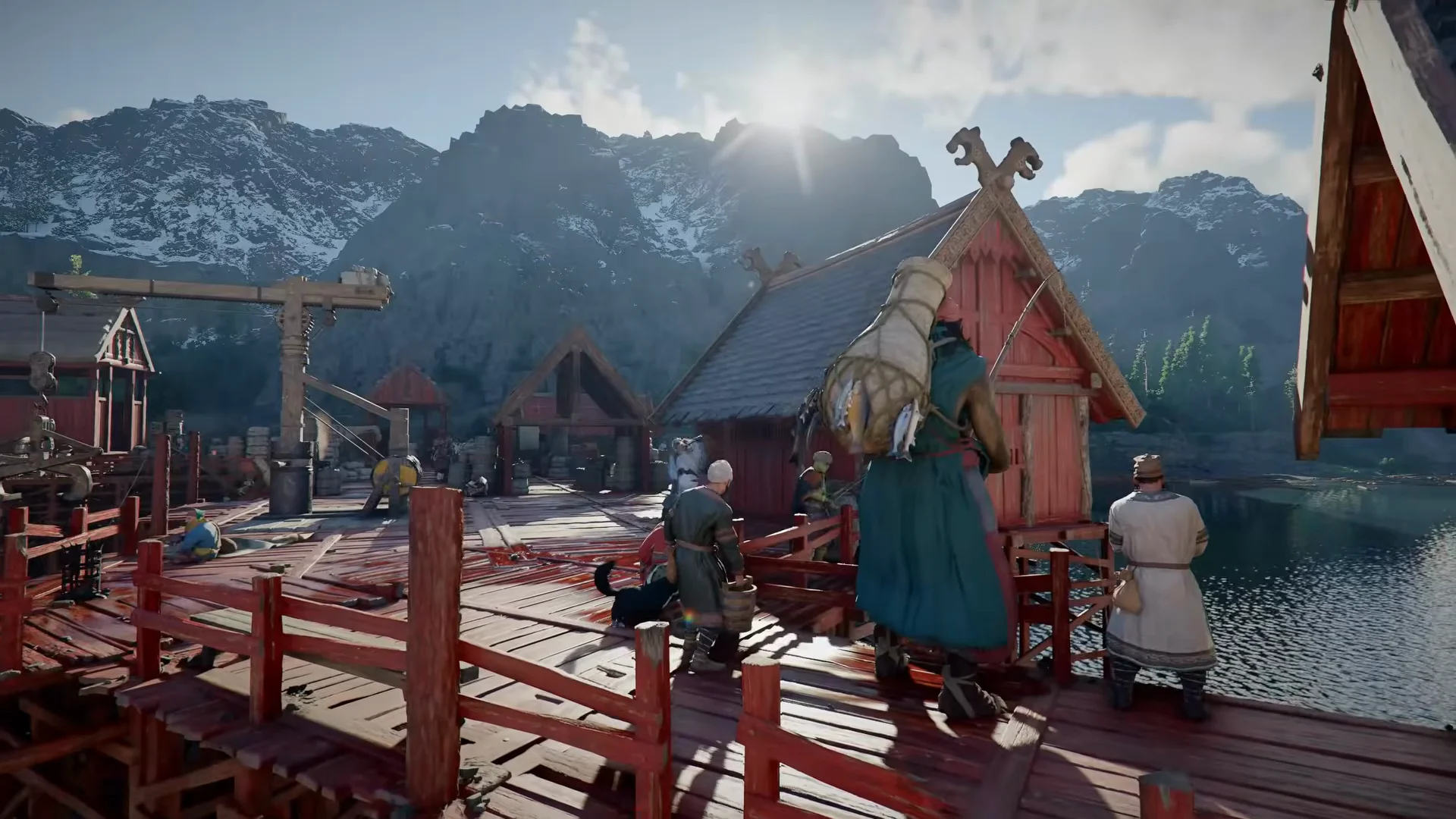
Buildings within the camp can be decorated and arranged. Players can place furniture in their personal quarters and customize the layout of the camp's communal spaces. The camp's visual transformation from a collection of tents to a fortified settlement reflects the player's progress in rebuilding the Greymanes.
The Greymane Camp does not grow on its own. Nearly every major camp upgrade, facility unlock, and new comrade is gated behind the Greymane faction quests found in the Journal. These quests are widely considered the single most important side content in Crimson Desert, and experienced players recommend completing them the moment they become available.
Specifically, the Grounds of the Sunrise chain (38 quests) is the recruitment backbone of the entire camp system. Each quest in this chain sends Kliff to find a scattered Greymane survivor. When that survivor returns to camp, they either unlock a new facility (the cook, the quartermaster, the trading post, and other services) or join the comrade pool for dispatch missions. The more comrades you recruit, the more dispatch missions you can run simultaneously, and several camp expansion tiers have a minimum recruit count before they can even be dispatched.
The Scattered Embers chain (34 quests) focuses on daily camp life: raising morale, building community, and handling disputes between residents. Rewards include pets, crafting recipes, and Abyss Artifacts. While less structurally critical than Grounds of the Sunrise, these quests flesh out the camp experience and should be completed alongside recruitment missions.
The Greymane Commissions (27 quests) are delivery requests from camp residents. Each completed commission rewards a Medium Bag that adds +3 inventory slots. Completing all 27 provides +81 total inventory slots, making commissions one of the most valuable side activities for inventory management. New commissions unlock as more comrades are recruited, so the recruitment and commission chains feed into each other.
Bottom line: Whenever new Greymane faction quests appear in the Journal after a story milestone, prioritize them above all other side content. The camp facilities, dispatch capabilities, and inventory space they unlock compound throughout the entire game. Delaying these quests is the most common progression mistake new players make.
The Greymane Camp serves as the starting point for multiple quest chains that drive the camp's rebuilding narrative. These quest lines unlock as the player progresses through the main story and completes specific prerequisites.
The Scattered Embers quest line focuses on recovering lost Greymane resources and strengthening the camp's foundations. These quests involve tracking down supplies, securing new recruits, and establishing the camp's operational infrastructure.
Quest | Description |
|---|---|
Recover the historical records of the Greymanes. These documents chronicle the mercenary company's origins and are vital for rallying former members back to the cause. | |
The Greymane's New Fangs | Recruit new members to bolster the ranks of the Greymanes. After the ambush scattered the company, Kliff must seek out capable fighters willing to join the reformed mercenary band. |
Secure a mobile strongbox for the camp. This wagon-mounted vault provides safe storage for the camp's most valuable resources and currency during transit. |
The Grounds of the Sunrise quest line centers on reuniting with scattered Greymane companions and laying the groundwork for the camp's long-term future. These quests carry a more personal tone, focusing on the bonds between Kliff and his former comrades.
Quest | Description |
|---|---|
Follow the trail of surviving Greymane members back to the Hernand region. This quest marks the beginning of the camp's revival as Kliff reconnects with allies who escaped the ambush. | |
Reuniting with Comrades | Track down and reunite with specific Greymane companions who fled to different parts of the duchy. Each companion brings unique skills and personality to the growing camp. |
Complete the final preparations needed to transform the camp from a temporary refuge into a permanent settlement. This quest culminates the Grounds of the Sunrise storyline and unlocks further camp expansion options. |
Reunited Greymane companions can be sent on dispatch missions from the camp. These missions operate asynchronously, meaning companions carry out tasks while the player continues adventuring elsewhere.
Dispatch missions include resource-gathering operations (timber, ore, herbs), reconnaissance of hostile territories, and siege preparations against enemy-occupied fortresses. Each companion has individual skills suited to specific mission types, so matching the right mercenary to the right task improves success rates and yields.
The siege dispatch mechanic is particularly impactful. Players can send mercenaries to besiege enemy fortresses before arriving in person. When the player later visits those locations, they encounter reduced resistance because the dispatched team has already weakened the defenses. This creates a strategic layer where camp management directly affects open-world difficulty.
Ronie is the camp's resident merchant, stocking supplies, consumables, and equipment. His inventory grows as the camp expands and the player's reputation increases. He serves as the primary point of sale for basic provisions and crafting materials that players do not want to gather themselves.
Beyond the player's recruited companions, the camp houses blacksmiths, tailors, and other NPC merchants who set up shop as the settlement grows. These NPCs provide services that complement the camp's crafting facilities, offering specialized upgrades and custom orders that the player's own crafting skills cannot replicate. The camp functions as a self-contained hub where players can handle all preparation tasks between adventures without needing to travel to distant towns and cities.
Several named NPCs operate dedicated service stations within the Greymane Camp. Each NPC manages a specific aspect of camp logistics, from food supplies to wagon transport. As the camp expands, these service NPCs become available and their inventories grow.
NPC | Role |
|---|---|
Base Camp Food Shop operator. Sells prepared meals and raw ingredients for quick restocking. | |
Base Camp Supply Management. Handles general supplies and material distribution across the camp. | |
Base Camp Freesword Management Office. Oversees dispatch missions and companion assignments. | |
Base Camp Wagon Management Office. Manages the camp's wagons used for transporting goods and resources. | |
Base Camp Quartermaster. Distributes equipment and oversees the camp's inventory of arms and supplies. |
Camp construction and expansion require both raw materials and currency. Resources flow into the camp through direct gathering, liberation missions that unlock resource access in new territories, and the Freesword Dispatch system where companions are sent on passive resource-collection missions.
Resource | Obtained From | Used For |
|---|---|---|
Lumber | Chopping trees, liberating territories, dispatch missions | Building structures, expanding facilities, furniture crafting |
Mining ore deposits, liberating territories, dispatch missions | Building walls, fortifications, workshops | |
Ore | Mining, dispatch missions | Crafting equipment, upgrading workshops |
Currency | Purchasing upgrades, hiring vendors, buying supplies |
Crimson Desert does not feature traditional storage chests or an item bank. Your personal inventory is the only general-purpose storage available, which makes inventory management an important ongoing concern.
Storage Type | Purpose | Details |
|---|---|---|
Personal Inventory | General item storage | Your only all-purpose storage. Expandable through quests and purchases. |
Product Storage | Trading goods | Exists exclusively for items related to the trading system. Cannot store general equipment or consumables. |
Supply Storage | Missed loot retrieval | Items you miss during exploration are automatically sent here. Functions as a safety net, not general storage. |
Camp valuables | Unlocked through the Grounds of the Sunrise questline. A mobile vault for the camp's most valuable resources during transit. |
Inventory Expansion Tools: Obtained as quest rewards from both main and side quests. Each tool adds 3 inventory slots.
Small Bags: Purchasable from general goods vendors for 50 Copper each. Each bag adds 1 inventory slot. Buying several early on is a worthwhile investment.
Additional Characters: Unlocking Damiane and Oongka through story progression provides access to their separate inventory pools.
Sell or discard quest documents after reading them. They take up inventory space and serve no purpose once their text has been viewed.
Speak with Carl at the Greymane Camp to donate unwanted gear. Donated items convert into Camp Resources used for facility upgrades.
Keep cooking ingredients and crafting materials in active rotation. If your inventory fills up, cook meals or craft items to consolidate loose materials into finished products.
Housing storage is confirmed as a planned future feature but has not yet been implemented. Pearl Abyss has stated it will arrive in a post-launch update.
In addition to functional facilities, the player can build and furnish a personal house within the camp. Housing construction works like the other buildings: players gather materials and physically build the structure from the ground up. Once built, the house serves as a resting place and a showcase of the player's progress.
Furniture can be individually placed and arranged within the house. Players craft furniture from gathered materials or purchase pieces from vendors. The housing system is purely cosmetic and does not affect combat stats, but it provides another avenue for personalizing the camp experience.
Reunited Greymane companions populate the camp as they are found throughout the story. Some companions arrive on their own after hearing about the camp, while others must be actively recruited through reunion quests. Each companion adds to the camp's capabilities and can be:
Assigned to facilities to improve their output. A skilled cook at the kitchen produces better meals; a craftsman at the workshop unlocks additional equipment options.
Dispatched on missions through the Freesword System to gather resources, build statues, recapture blockaded forts, or weaken enemy fortresses.
Interacted with for personal conversations, shared experiences, shared experiences, and trust-building activities at the campfire.
The Companion Trust system tracks the player's relationship with each companion. Spending time at camp, sharing meals, giving gifts, and completing companion-specific quests all contribute to deepening these bonds. High trust unlocks companion backstory missions flashback missions and improves companion performance on dispatch missions.
The camp provides a space for shared experiences with companions. Cooking meals and eating with Greymane members at the campfire builds trust and can unlock companion backstory missions, playable flashback missions that reveal how the Greymanes first formed and the tragedies they have endured. Group meals cooked at the camp kitchen also contribute to overall Greymane morale, which affects companion behavior and dispatch mission outcomes.
The Greymane Camp is located in Hernand but connects to the wider world through several systems. The Trading Center links the camp to commerce across Pywel. Dispatch missions send companions to locations throughout the continent, and their success can reduce hostile resistance in those areas before Kliff visits them in person. The camp's growth also affects the player's Hernandian Contribution reputation, reflecting the Greymanes' positive impact on the surrounding region.
Note that criminal actions in camp-adjacent towns (stealing, attacking NPCs) result in bounties through the crime system. Wanted players may face hostile NPCs or jail time, so maintaining good standing with local communities benefits the camp's supply lines and reputation.
The camp starts small and grows as you invest gold and resources. Upgrading facilities unlocks new capabilities:
Blacksmith upgrades: Higher-tier weapon enhancements and the ability to craft more powerful equipment.
Alchemy lab expansion: Access to better potion and medicine recipes with stronger effects.
Farm expansion: Greater crop variety and increased yield per harvest cycle.
Ranch expansion: More animal types and increased production of animal-derived ingredients.
Camp upgrades consume three primary resource types:
Resource | Sources |
|---|---|
Gold | Quest rewards, selling items at the trading center, companion dispatch missions. |
Chopping trees with an axe in the world, companion dispatch missions. | |
Ore | Mining ore veins with a pickaxe, companion dispatch missions. |
The companion dispatch system provides a passive supply of timber, ore, and currency. Establishing regular dispatch missions is one of the best ways to keep your resource stockpile healthy.
As Kliff explores Pywel and progresses through the story, scattered Greymane members rejoin the camp. Some arrive through story events, others through side quests, and some hear rumors and arrive on their own. The camp grows more lively and functional as more companions settle in.
Reunited companions can be dispatched on missions to gather resources, earn currency, or weaken enemy fortresses. See the Companion Dispatch Guide for detailed information on mission types and strategic use.
Companions assigned to the Freesword Dispatch System possess individual worker skills that determine which tasks they excel at. Matching workers to missions that align with their skills improves output and reduces completion time.
Worker | |
|---|---|
Construction, Basic Ranching, Ranching Mastery | |
Basic Logging, Logging Mastery, Expert Logging |
Each worker skill has multiple tiers (Basic, Mastery, Expert) that affect the quality and quantity of resources produced. Assigning Luke to ranching dispatch missions and Ronald to logging missions yields significantly better returns than sending them on tasks outside their specialization.
The barber shop allows cosmetic customization for all three playable characters. Available options include:
Multiple hairstyle selections with different lengths and styles
Hair color changes from a range of color options
Beard and eyebrow adjustments (for Kliff)
Face tattoos and body tattoos
The Dyehouse extends cosmetic customization to equipment and mounts. Key features:
Separate dye options for different armor parts
Material-based customization options that affect texture appearance
Horse tack and mount equipment can be recolored with multiple dyeable layers
War Robot and mech mounts are also dyeable
Dyes are obtained through world exploration or crafted at the alchemy lab
The resting house serves as your personal living space within the camp. You can customize its interior by arranging furniture, creating a personalized home base. The resting house also functions as a rest point.
Invest in the blacksmith and alchemy lab first. These facilities directly improve your combat effectiveness through better weapons and potions.
Start farming and ranching early. The passive ingredient generation saves time that would otherwise be spent gathering in the wilderness.
Use the food shop for quick restocking before heading into dangerous areas, but rely on cooking for long-term sustainability.
The trading center becomes more valuable as your resource surplus grows. Sell excess materials you do not need for gold.
Visit the barber shop and dyehouse to personalize your characters. While purely cosmetic, customization options increase as you discover new dyes through alchemy.
Dispatch companions on timber and ore missions to maintain a steady supply for camp upgrades. This is especially important in the early-to-mid game when upgrade demands are highest.
The camp grows more populated as you reunite with Greymane members. More companions mean more dispatch slots and a livelier home base.