
Overview
Abyss Dungeons are floating island environments high above the continent of Pywel. They exist within the Abyss, the supernatural dimension whose growing imbalance was described in earlier story notes as sending fragments into the world below. Earlier access notes linked portal entry to Abyss Artifacts and story progression; the named routes below instead identify particular quest, key and puzzle requirements, not one verified Artifact threshold for every portal. These areas emphasize environmental puzzles and creative problem-solving over direct combat, setting them apart from typical dungeon crawl content.
Spires are documented ground-side entry towers, with individual story or key requirements. For example, the Stars route uses a key after Tenebrum in Chapter 4, Clockwork uses its Chapter 8 key, and Jijeong Temple Pagoda opens during Face the Inner Self in Chapter 9. Patch 1.13.00 also allows Damiane and Oongka to enter the Abyss; access does not mean every character receives every puzzle power automatically.
Access and Entry
Earlier access account: Abyss Dungeons are reached through portals found at specific locations on the surface of Pywel. Accessing these portals requires both sufficient Abyss Artifact progression and advancing the main story to certain points. Some portals are discovered through exploration, while others are revealed as part of quest lines. Hot air balloons also provide access to certain Abyss locations from designated launch points.
Structure and Progression
The April 5 completion guide lists 40 Abyss Restorations for the Conqueror of the Abysses trophy and achievement; the earlier article calls it a gold trophy. That guide describes floating sky islands arranged in clusters, with each cluster entered from one of the 8 Spires scattered across Pywel. It recommends completing all eight to reach its listed clusters. This is the coverage and route model of that guide, not a new census of every current or future island.
The same completion guide places the first two Restorations in Chapter 1, and says seven are completed during main-story quests overall. Its 40-entry list therefore has 38 beyond the first two; those are not all separate optional discoveries. It also says the final Dimensional Bonds area requires finishing the story. Follow the named route and story requirements instead of assuming every cluster opens at the same point.
Each Abyss cluster contains multiple Restoration puzzles of varying difficulty. Early clusters tend to feature simpler puzzles focused on a single mechanic, while later clusters combine telekinesis, gravity manipulation, and platforming in more complex sequences. See Exploration Challenges for related world activities.
Spires
The documented Spire roster contains eight puzzle towers on the surface, including Jijeong Temple Pagoda. Their routes differ: some use keys and elevators, while the pagoda is entered during a Chapter 9 story objective. Discovery through exploration can be separate from the requirements of the main story or specific faction quests. The Spire of Frost guide specifically says its area can be accessed before starting its faction quest.
Each Spire connects to a specific cluster of floating islands in the sky.
The earlier base-portal description is not universal. The Stars and Clockwork guides take you to a gate after ascending their towers, while the Jijeong story route enters its gate without the usual tower puzzle.
The Spire of Ringing Truth is a named Pailune Spire. Its guide describes climbing outside, breaking the bell support, defeating Priscus the Ancient and then entering the gate. The earlier main-quest classification is not independently established by that route.
The eight-Spire completion guide covers Conqueror of Spires, while its associated 40-Restoration guide covers Conqueror of the Abysses. Treat those as distinct completion objectives rather than one generic gold-trophy rule.
Telekinetic Manipulation
The core mechanic of Abyss Dungeons is a telekinetic manipulation system that has been directly compared to the Ultrahand ability from The Legend of Zelda: Tears of the Kingdom. Players can grab, move, rotate, and place objects in the environment to solve puzzles and create paths. This includes manipulating floating platforms, ruin fragments, and environmental objects to build bridges, activate mechanisms, and reach otherwise inaccessible areas.
Fragment-alignment puzzles require physically manipulating floating pieces of terrain, structures, and objects. Solutions are not always obvious and reward experimentation. Multiple solutions may exist for a single puzzle, encouraging creative thinking rather than following a single prescribed path.
Earlier Abyss-ability account
An earlier overview described Kliff as gaining the following supernatural powers that only work in the Abyss. Keep the table as that older ability and footage account, not proof of current automatic grants or a universal Abyss-only restriction. The named Axiom Force, Aerial Maneuver and Focused Shot guides have their own unlock requirements and costs.
Ability | Effect | Puzzle Application |
|---|---|---|
Gravity manipulation | Alters gravity on Kliff or targeted objects (shown in Abyss gameplay footage) | Float objects into position, reach elevated platforms, navigate zero-gravity chambers |
Force amplification | Amplifies physical force for manipulating heavy objects | Move massive ruin fragments, activate heavy pressure plates, clear blocked passages |
Crow Wings | Extended gliding ability using Abyss energy | Traverse wide gaps between floating islands, reach distant platforms, navigate vertical spaces |
Earlier combination advice proposed using these powers for puzzle solutions, including Gravity manipulation on a heavy object followed by Force amplification to launch it across a gap. That proposed combo remains an earlier account. Older notes also described Force Palm as pushing objects, activating distant switches and boosting into the air for gliding segments. The Crescent Skybridge guide specifically uses Aerial Force Palm for height and Force Palm on its generator; it does not establish every earlier power combination as a universal skill.
Axiom Force is unlocked for Kliff during Chapter 1, Traces, and its parent card lists no use cost. Aerial Maneuver unlocks at Axiom Force Level 2 and Aerial Swing at Level 3; each named upgrade card lists 200 Stamina. Focused Shot instead requires Kliff to have Marksmanship Level 2 and Focus Level 2, followed by the guide-listed 1 Abyss Artifact. The same guide lists Focused Shot as available by default for Damiane and Oongka after they become playable. Keep these named requirements separate from assuming every Abyss power is free or every grapple costs the same.
Puzzle Types
Abyss Dungeons feature several distinct puzzle categories, each testing different skills:
Puzzle Type | Description |
|---|---|
Telekinetic Puzzles | Grab, move, and arrange floating objects to create paths, bridges, or activate mechanisms. The primary puzzle type throughout all dungeons. |
Platforming Challenges | Navigate between floating platforms using jumping, Crow Wings gliding, and grappling hooks. Stamina management is critical as the floating environments drain traversal stamina. |
Mechanic-Based Puzzles | Involve pressure plates, levers, moving parts, and environmental triggers. Test understanding of how the dungeon's interconnected systems work. |
Observation Puzzles | Require studying the environment carefully. Pattern recognition, environmental awareness, and understanding how Abyss fragments interact with each other. Reward patience and attention to detail. |
Alignment Puzzles | Position floating ruin fragments into specific configurations. May involve rotating pieces to match a pattern or constructing a structure from scattered components. |
Abyss-Specific Enemies
Earlier enemy and equipment-weakness account: While Abyss Dungeons prioritize puzzles, they do contain unique enemies not found on Pywel's surface. These Abyss-corrupted creatures are generally tougher than surface enemies and may require specific strategies or elemental weaknesses from the Axiom Bracelet to defeat.
teleporting enemies: Fast, elusive enemies that blink around the arena, requiring timing and prediction to counter.
Other Abyss-corrupted creatures that have adapted to the floating island environment and use the vertical space to their advantage.
Named Locations
Floating Island Bridges
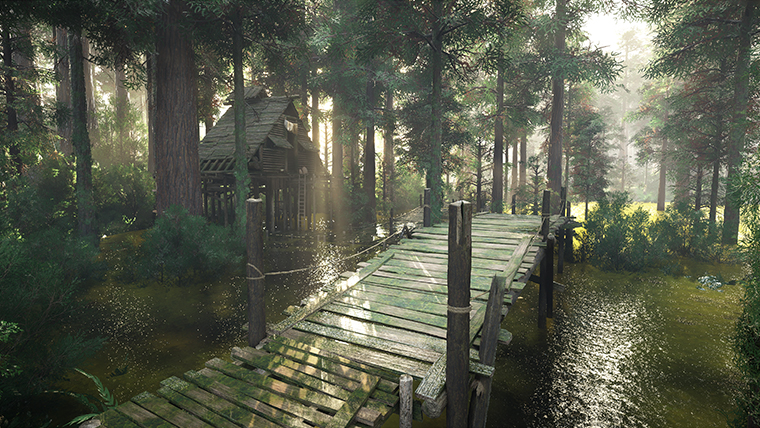
Floating island bridges connect different areas within the Abyss. It connects major floating island platforms and is both a traversal route and a puzzle area where players must manipulate bridge segments to create a passable path.
Library of Providence
The Library of Providence is a significant Abyss location connected to Alustin and the game's cosmic narrative. This location contains lore about the nature of the Abyss, its origins, and its connection to the broader history of Pywel. The Library ties into the overarching story about why the Abyss is expanding and what forces are behind it.
Rewards
Earlier recommendations called these areas a leading source of rare Abyss Artifacts. The Restoration guide supports Artifact rewards and fast travel after solved puzzles. The following list also retains earlier reward and exclusivity accounts, including Abyss Remnants and Soul Spears; those claims are not all newly verified for the selected challenges:
Rare crafting materials (Abyss Remnants) not found on the surface
Exclusive equipment pieces unique to Abyss content
Knowledge System entries about the Abyss and its nature
Abyss Fragments for continued skill tree progression
Soul Spears from Ritual Grounds located within certain dungeons
Each solved Abyss Restoration rewards an Abyss Artifact (Skill Point), which can be spent in the skill tree to unlock new abilities.
Completing an Abyss Restoration unlocks a fast travel point in the sky, expanding your aerial travel network.
Elemental skills in the red skill tree (Lightning, Frost, Storm, Flame) are unlocked by completing specific Abyss Restorations. See Elemental Attacks for details on each element.
Traces of the Abyss (Fast Travel)
The earlier article calls these points Traces of the Abyss, fast travel points connecting sky locations and the surface. The official notes use Abyss Nexus for the fast travel system and the surface of Pywel, allowing quick return to discovered areas. The older permanent-availability claim remains an earlier account; Patch 1.03.00 specifically added Nexus teleportation while mounted, falling, swimming or climbing walls.
Diving Back to Pywel
Earlier skydiving-transition report, including its no-loading-screen claim: After completing an Abyss Dungeon or at certain exit points, players can dive from the floating islands back down to the surface of Pywel. This is a seamless transition with no loading screen. This shows the continent approaching from above as the player descends.
Story Role
The Abyss Dungeons are tied to Crimson Desert's central narrative about the Abyss threatening Pywel. Exploring them reveals lore about why the Abyss is expanding, who or what is behind it, and how it connects to the broader history of the continent. The connection to Alustin and the Library of Providence suggests a deeper cosmic story involving ancient knowledge and the nature of Abyss power itself. Various factions across Pywel, including the Greymane mercenaries and other groups, have their own interests in the Abyss and what it contains.