

Overview
Cooperative Play is the online multiplayer mode that ships with Starsand Island Version 1.0, scheduled for August 18, 2026 at 12:00 UTC. Up to four players share a single session, hosted on one player's island, where they can farm, fish, build, explore the ruins and fight together. It is the largest single addition in the 1.0 release.
Sessions run on an island-host model. One player's island is the world, that host picks one of three access modes to control how others join, and five separate permission categories decide what guests may do once they are there. Nintendo Switch 2 hosts must use the Password Required access mode. There is no crossplay, so everyone in a session has to be on the same platform family.
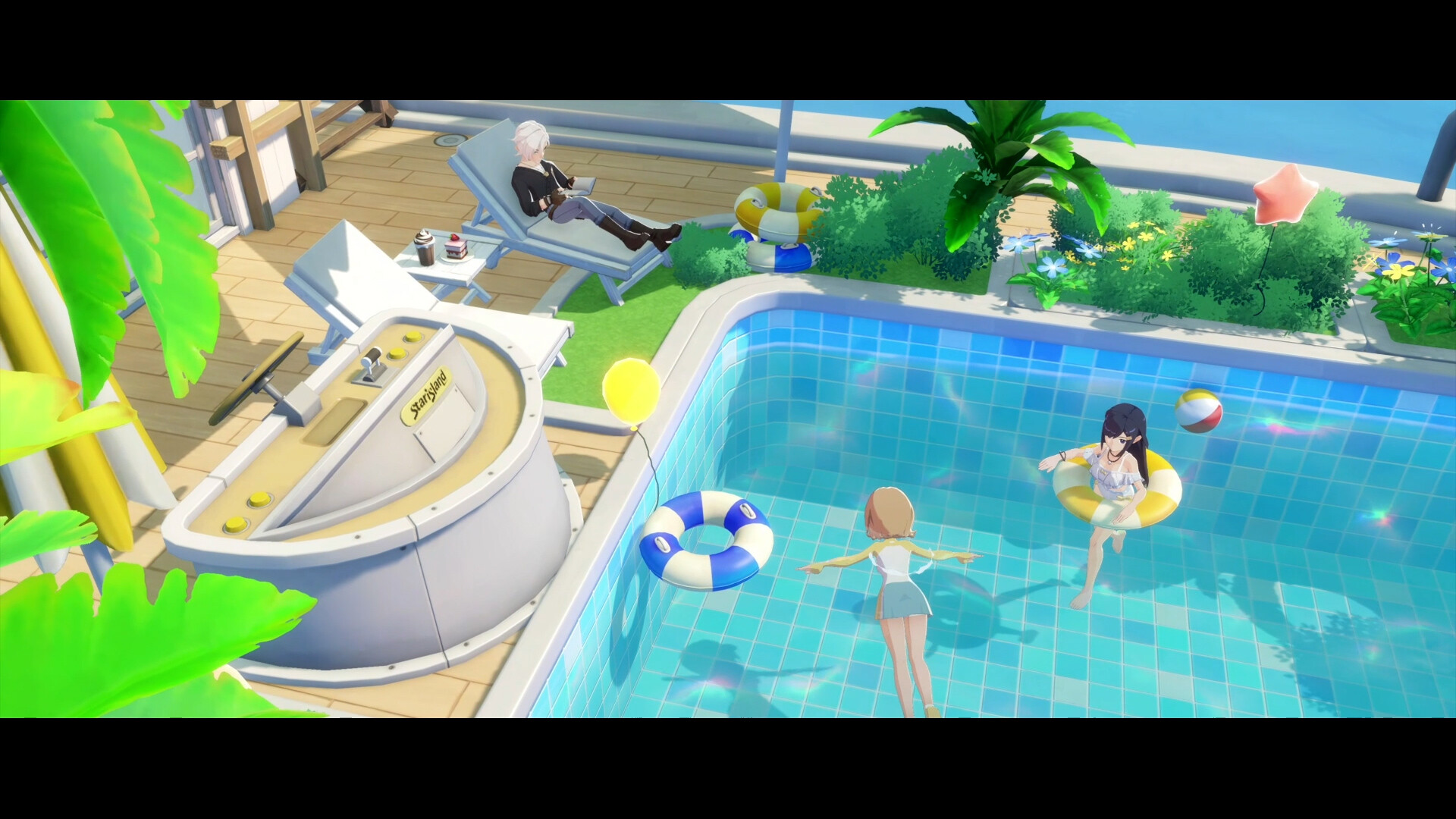
Background
Multiplayer has been one of the most frequently requested features since Starsand Island entered Early Access in February 2026. For the whole 184-day Early Access period the game played as a single-player experience, with all island activities, NPC interactions and progression handled solo. Cooperative Play changed that at 1.0 by enabling shared sessions for up to four players.
Multiplayer was part of the plan from early in development. During the 2025 Kickstarter campaign, Seed Sparkle Lab listed multiplayer as a key feature on its Early Access roadmap, with cooperative play targeted for a mid-2026 update. The June 2026 window slipped, and the studio moved the mode into the full release rather than shipping it unfinished. A limited pre-launch test, with sign-ups opened on June 26, 2026 for groups of two to four players, was the last step before launch.
Confirmed Co-Op Features
The following table summarizes the cooperative play features that have been announced or referenced by the developer. Features marked as "Confirmed" have been explicitly stated in official communications, while others remain under consideration or unconfirmed.
Feature | Details | Status |
|---|---|---|
Online Co-Op | Up to four players share one session on the host's island | Confirmed at 1.0 |
Island Host Model | One player's island is the session world; the host controls access and permissions | Confirmed at 1.0 |
Access Modes | Three host-selectable modes govern how other players join a session | Confirmed at 1.0 |
Guest Permissions | Five separate permission categories the host sets for visiting players | Confirmed at 1.0 |
Switch 2 Host Restriction | Nintendo Switch 2 hosts must use the Password Required access mode | Confirmed at 1.0 |
Island Visits | Players can visit friends' islands to tour farm layouts, houses and decorations | Confirmed at 1.0 |
Cooperative Building | Hosts grant permission for friends to build, move or redesign parts of the island | Confirmed at 1.0 |
Shared Farming and Fishing | Friends can help with farming, fishing, weeding and daily chores together | Confirmed at 1.0 |
Ruins Combat | Groups can fight through the ancient ruins together | Confirmed at 1.0 |
Multiplayer Coins | A currency earned only in co-op, spent at the Multiplayer Shop | Confirmed at 1.0 |
Host-Only Story Progression | Only the host progresses story quests; guests act as helpers during sessions | Confirmed |
Separate Island Progress | Progress is not shared between islands; guests do not take the host's progression home | Confirmed at 1.0 |
Cross-Platform Co-Op | Players cannot play across platform families | Confirmed absent |
Split-Screen | Local split-screen multiplayer | Not confirmed |
Mini-Games (Poker, Mahjong) | Additional social mini-games under consideration for post-launch updates | Under consideration |
Session Setup and Host Controls
A co-op session always belongs to somebody. One player opens their island, and everyone else joins it as a guest, which is why the host's settings shape the whole experience. Two layers of control sit on top of that: access, which decides who can get in, and permissions, which decide what they can do afterwards.
Layer | What It Covers |
|---|---|
Access modes | Three modes the host chooses between, controlling how other players reach the session. Nintendo Switch 2 hosts do not get the full choice and must use Password Required. |
Permission categories | Five separate categories the host toggles for visiting players, deciding what guests are allowed to do on the island. |
Platform limits | No crossplay. Every player in a session has to be on the same platform family, and saves do not move between platforms. |
Session size | Four players maximum, host included. |
The permission layer exists because the island is somebody's long-term save. A visitor who could freely bulldoze a host's farm would make island visits risky rather than social, so the host keeps the final say on what changes hands.
Unlocking Multiplayer
Multiplayer is gated behind the phone app "Island Life", which is granted by the opening tutorial. The app then sets a chain of milestones, and the multiplayer app only downloads once every one of them is done:
Step | Requirement |
|---|---|
1 | Raise any profession to Apprentice rank. |
2 | Place six pieces of furniture in your home. Duplicates count, and discounted stock at Lex Woodworks is the cheapest way to reach six. |
3 | Earn 2,000 Coins and get acquainted with ten residents. Searching for treasure chests is the fastest route to the coin target. |
4 | Raise any profession to Junior rank and complete five Bulletin Board commissions at the Community Center. |
5 | Expand a plot once through the phone's land purchase app. |
6 | Complete the "Smooth Sailing" stage challenge. |
Session Rules
Time and Sleeping
A guest's own island freezes while they are away. Their personal data, including inventory and appearance, travels with them, and both the island clock and the personal data update on return. In multiplayer the clock no longer stops while a shop or the phone is open, which makes it easy to lose track of the hour. Ending the day needs everyone lying in bed at once. At 2:00 AM any player still up faints and takes the faint penalty, while players already in bed do not. After three consecutive faints the cross-day penalty stops applying and fatigue is simply carried over instead. Faint counts are tracked per player.
Disconnections
If a guest drops, loading the co-op save puts them back on their own island with the personal data from that save intact. If the host drops, the host's save behaves like a single-player save and keeps personal data and world coordinates, the room closes, and every guest is returned to their own island.
The Public Warehouse
Starting a co-op session creates a Public Warehouse with unlimited storage. It can only be opened inside a homestead plot. The host can deposit and withdraw freely; guests can always deposit but need permission to take anything out. When the session ends, everything left in the Public Warehouse belongs to the host, and guests keep only what is in their personal backpack.
Building Together
Beyond the activity permissions, the host sets global permissions for house construction and island resources, and can change them at any point in the session.
Rule | Detail |
|---|---|
Plot access | Only one player may be in Build Mode on a given plot. Different plots can be edited at the same time without interfering. The host can revoke build permission at any moment, which force-ends an in-progress edit. |
Demolition | The host can demolish by default and reclaims the materials. A guest with build permission can also demolish, but the reclaimed materials go into the Public Warehouse. |
Material order | A guest builds from their own materials first, then the Public Warehouse if the host has opened it, then the host's storage chests if permitted. |
Ownership | Placed furniture and anything in the Public Warehouse belong to the host once the session ends. |
Loot, NPCs and Restrictions
System | How it behaves in co-op |
|---|---|
Gathering | Chopping and mining still drop a single lot; it goes to whichever player is nearest. |
Treasure chests | Chests that already existed before the session can only be opened by the host, for a single reward. Chests generated after co-op begins give every player their own, though high-value rewards such as recipes and clothing still go only to the host. |
Shops | Each player sees their own shop stock, tied to their own progress, and Starsand Shop availability follows each player's own Island Life progress. |
NPC affection | Dating is locked during a session. Players can still chat and interact, but only one player at a time per NPC. Affection is tracked per player, and affection a guest earns is held and added to their own save when they return to single-player. |
Moonlit Forest | The dungeon is open to co-op. Any player can interact at the entrance to invite the whole party. Entering and leaving both require unanimous agreement. Loot chests are per-player, and there is no death penalty: at zero health you revive at the nearest opened camp. |
Quests and commissions | All players can push their profession quests. Profession commissions can be accepted while visiting another island, and both the commission accept count and the Bulletin Board contents refresh in multiplayer. |
Deep-sea fishing | Not available while in a multiplayer session. |
Island Visits
Players will be able to travel to a friend's island and see their farm layout, house designs, decorations, and island development firsthand. This is a natural extension of the game's emphasis on creative building and decoration. Visiting another player's island lets you appreciate their work, get inspiration for your own builds, and share strategies for efficient farm layouts.
The island visit system works with one player acting as the host and others joining their session. The host's island state, including time of day, season, weather, and NPC schedules, governs the shared experience. Visiting players can interact with the host's island, but they cannot make permanent changes without explicit permission from the host.
Island visits tie into the Blueprint Library system. When visiting a friend's island, players can browse and download building designs, making it easy to share creative builds across the community. This creates a natural incentive for players to visit each other, beyond simply socializing or helping with tasks.
Host and Guest Roles
Cooperative sessions in Starsand Island follow a host-guest model. One player hosts the session on their island, and up to three other players can join as guests. The roles have distinct differences in what each player can do during a session.
Host Privileges
The host is the only player who progresses story quests and main questlines during a co-op session. This is due to the way the story is written and structured, and the developer has confirmed this is an intentional design choice rather than a technical limitation.
The host controls island permissions, deciding which areas guests can modify, what building rights they have, and whether guests can move or redesign existing structures.
The host's island state (season, time of day, weather, NPC locations) determines the environment for all players in the session.
Guest Capabilities
Guests can help with daily tasks such as farming, fishing, weeding, resource gathering, and ranching. They essentially act as helpers on the host's island.
Guests can build and modify structures on the host's island, but only in areas where the host has granted permission. To keep things smooth, only one player can edit the same spot at a time, though multiple players can work on different areas simultaneously.
Guests have access to the whole island, including the Moonlit Forest and any future DLC areas.
Whether guests earn resources, experience, or progression credit for work done on the host's island has not been fully detailed. This remains one of the biggest open questions heading into the June update.
Cooperative Activities
Playing together opens up a range of shared activities that go beyond simple farm work. The developer has outlined several categories of cooperative gameplay.
Farming and Daily Tasks
Friends can work together on farming tasks, including planting, watering, harvesting, and weeding. Group farming sessions make large-scale crop operations much more manageable, and multiple players tending to animals at the same time speeds up the daily routine considerably.
Exploration and Combat
The Moonlit Forest features encounters designed to scale for teams. This puts emphasis on coordinated play and complementary roles. Tackling dungeon challenges with friends introduces new strategic possibilities that are not available in solo play. Players can cover each other during combat, split up to handle different objectives, and combine their efforts against tougher enemies.
Travel and Vehicles
Select vehicles and mounts will support multiple riders, allowing groups to travel together across the island. Bike riding together has been specifically mentioned as one of the social activities available in co-op sessions.
Social Activities and Mini-Games
Beyond work and exploration, cooperative play includes everyday social interactions. Players can sit together, hang out in decorated spaces, and enjoy leisure activities. Card games have been confirmed as a social feature for multiplayer sessions. The developer has also expressed interest in adding additional mini-games such as poker and mahjong in post-launch updates, though these are not guaranteed for the initial June release.
Shared Progression
How progression works in cooperative sessions is one of the biggest open questions. In single-player, your professions, currency, inventory, and relationship progress are all tied to your individual save. The developer has confirmed that story progression is exclusive to the host player during a cooperative session. Guests cannot advance their own story quests while visiting someone else's island.
The 1.0 details settle the question: progress is not shared between islands. A guest helping out on somebody else's farm does not carry the host's progression back to their own save, and the host's story advancement stays with the host. Co-op is a way to play together on one island, not a way to run two saves forward at once.
What co-op does hand back is the Multiplayer Coins currency, which accrues from playing in multiplayer sessions and is spent at the Multiplayer Shop. That gives visiting players a reward track that belongs to them without letting resources farmed on a friend's island duplicate straight into their own economy, which is the exploit most cooperative farming games have to design around.
Multiplayer Coins and the Multiplayer Shop
Multiplayer Coins are earned by playing co-op and cannot be obtained solo. They are spent at the Multiplayer Shop, a dedicated vendor stocking rewards that solo players have no route to. The currency is separate from in-game Coins and from Starsand, the premium currency used elsewhere on the island.
Developer Statements and Community Response
Seed Sparkle Lab treated multiplayer as a headline feature throughout development. During the Kickstarter campaign, cooperative play was included on the official Early Access roadmap as a planned mid-2026 feature. The studio said repeatedly that co-op was not an afterthought and that the team was taking extra time to polish the systems, which is why the mode slipped out of Early Access and shipped with the full release instead.
The decision to hold multiplayer until June 2026, rather than adding it during Early Access, reflects a deliberate approach. By building on a stable single-player foundation with months of bug fixes and content updates already in place, the developer avoids the common pitfall of shipping a half-finished multiplayer mode. Community feedback has been largely positive about this approach, with many players expressing willingness to wait for a polished experience rather than receiving a rushed implementation.
The most common community questions revolved around player count limits, cross-platform support and guest progression. All three now have answers: sessions cap at four players, progress is not shared between islands, and there is no crossplay at 1.0. Local split-screen support remains unconfirmed, and it is the request that comes up most often now that the others are settled.
Timeline and 1.0 Release
Cooperative Play shipped with Version 1.0 on August 18, 2026, the day the game left Early Access. The road there ran through a full year of monthly milestones:
Month | Update Focus | Status |
|---|---|---|
February 2026 | Early Access launch on PC and Xbox Series X|S, single-player only | Released February 11, 2026 |
March 2026 | Content updates, shop expansions, collaboration items | Delivered |
April 2026 | Dating System and expanded NPC voice content | Delivered. The Dating System shipped April 28 in patch 0.4.9868 for six romanceable characters; voice content rolled out across later patches. |
May 2026 | Mod support and Workshop integration | Delivered. The MOD Manager shipped in 0.5.3241 on May 29; Workshop integration followed in 0.6.6510 on June 25. |
June 2026 | Cooperative Play (multiplayer) | Slipped. Pre-launch test sign-ups opened June 26; the mode moved into the 1.0 build. |
July 2026 | Final Early Access patch and the 1.0 date announcement | Delivered. Patch 0.7.7575 landed July 2; the August 18 date was announced July 31. |
August 18, 2026 | Version 1.0 with online co-op, on PC, Xbox Series X|S, PlayStation 5 and Nintendo Switch 2 | Scheduled for 12:00 UTC |
Holding cooperative play for the 1.0 launch rather than dropping it mid-Early-Access gave Seed Sparkle Lab a stable single-player base to build on, and it gives the full release a headline feature for players who were waiting on co-op before buying. Each preceding update, from the dating system in April to mod support in May, moved the game toward feature-complete, with multiplayer as the capstone.
Technical Considerations
Adding multiplayer to a game originally designed as a single-player experience involves significant technical work. Network synchronization for real-time farming, building, and NPC interactions requires careful handling to avoid desync issues, lag, and save corruption. The developers' decision to schedule multiplayer as a late-stage addition gives them the benefit of a stable single-player foundation to build on.
The permission-based building system introduces additional complexity. Ensuring that only one player can edit the same spot at a time while others work on different areas simultaneously requires a robust conflict resolution system. This is particularly important for preventing save corruption when multiple players interact with the same island state.
Platform boundaries turned out to be the hard limit. Players on Steam, Xbox Series X|S, PlayStation 5 and Nintendo Switch 2 cannot play together at 1.0, and saves do not move between platforms either. Patch delivery is uneven for the same reason: PC receives updates first, while console builds lag behind because each one has to pass platform certification before it can ship. Groups spread across different systems should expect to be on different builds for a while after any given patch.
Related Articles
Multiplayer
Post-Launch Roadmap
Professions
Moonlit Forest
Blueprint Library
Fishing
Farming
Kickstarter