

Magic in Fire Emblem: Fortune's Weave sits outside the five weapon types rather than alongside them. Classes with magical affinity attack with spells instead of an equipped weapon, and Nintendo's own summary gives magic two jobs: it is effective against foes in heavy armour, and it heals or otherwise supports allies in trouble. Its resource works differently from a weapon's too, which is the practical reason it needs its own page.
Casting Economy
Each spell holds a limited number of casts rather than a durability bar. That is a genuinely different economy from the one governing Combat Arts, where Uses tick down only when an art is fired and ordinary swings are free.
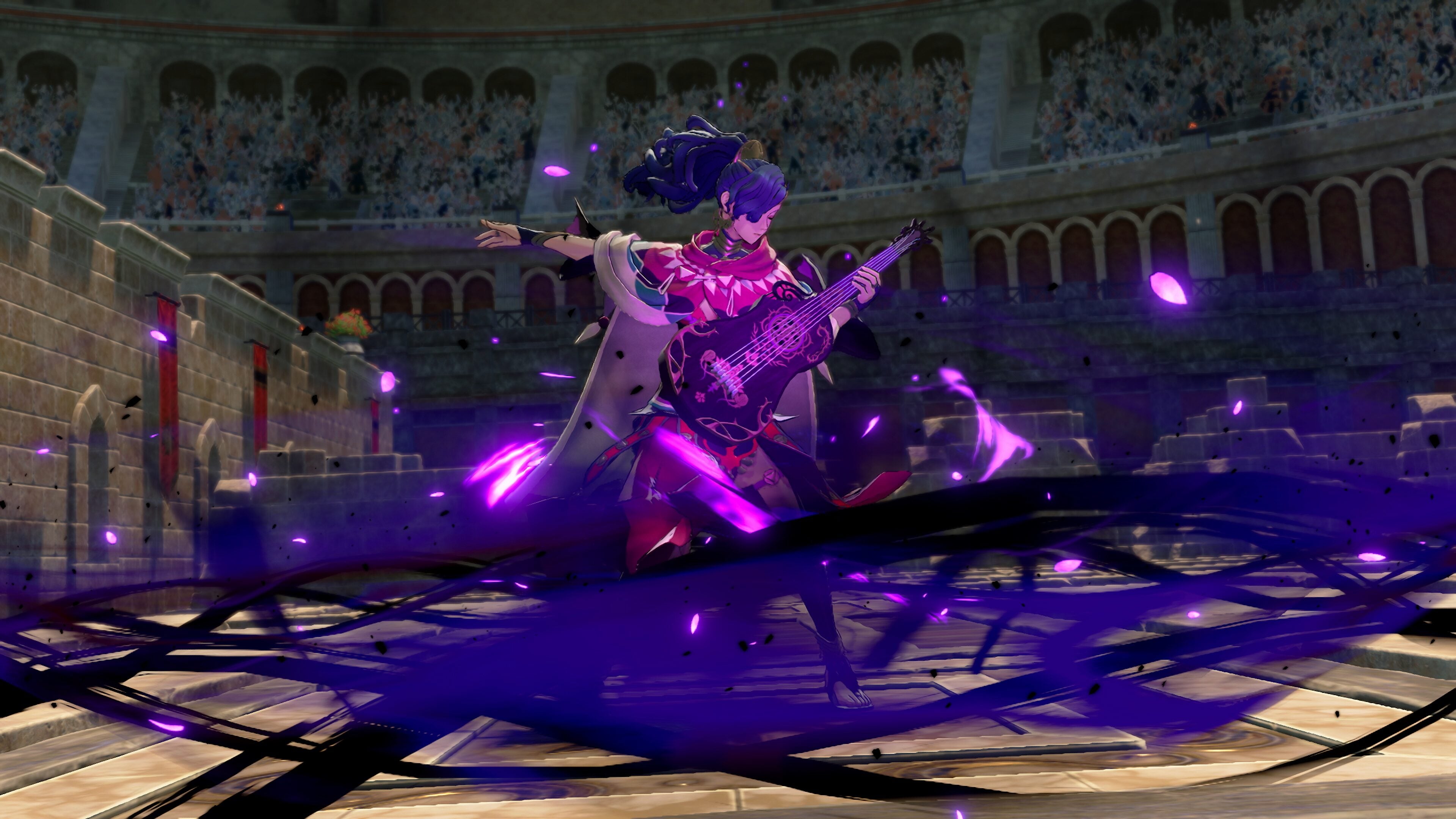
Hands-on coverage of the pre-launch build describes casts refilling after clearing a stage that belongs to the main story. During the free periods between matches they do not refill on their own; a unit has to rest. Sharing a three-person meal at an inn is reported to fully restore HP and magic stocks for everyone at the table, and rest points inside dungeons restore both during a run of Dungeons and Clashes. The dungeon half of that is confirmed for the released game: each dungeon has one Rest Spot, where cooking restores HP and Magic uses, though not LP. The meal claim still comes from previews.
Schools and Vocabulary
Two different sets of terms are in circulation, and no source has reconciled them, so this page keeps them apart.
Reason and Faith are the proficiency names. They appear in class requirements and in class descriptions: the Diviner, one of the five Beginner classes, is the entry point for both, wielding Reason and Faith magic with 4 movement. White Magic is named separately in Nintendo's own class rundown, in the descriptions of the Bishop and of the Guardian, an Advanced class skilled with both spears and White Magic.
The published spell table uses a different vocabulary again, sorting spells into Black magic, Dark magic and White magic as weapon types. Both sets may be true at once, with Reason and Faith as proficiencies and the three-way split as the item classification, but nothing official states that, so the two are recorded here as they were found. The released game's own skill list, as the experience bonuses bought with Karma Shards name it, uses Black Magic and White Magic and has no Reason or Faith entry.
Spells
As of September 2026, most stat lines have not been published. Might, Weight, Hit and Critical values are blank for every spell in the released table, which is why the columns below stop at range and casts.
Spell | Type | Range | Casts | Effect |
|---|---|---|---|---|
Fire | Black magic | Not published | Not published | Not published |
Thunder | Black magic | 1 to 2 | 8 | Basic lightning magic that causes a focused strike |
Wind | Black magic | 1 to 2 | 10 | Basic wind magic that strikes with a blade of vacuum air. Effective against flying units |
Cutting Gale | Black magic | 1 to 2 | Not published | Not published |
Glass Wheel | Black magic | Not published | Not published | Checked against physical defence rather than magical defence. Effective against flying units |
Bolganone | Black magic | 1 to 2 | 10 | Advanced fire magic that incinerates an enemy |
Miasma Δ | Dark magic | 1 to 2 | 10 | Attacks a foe with a ball of concentrated dark matter |
Mire Β | Dark magic | 1 and up | Not published | Not published |
Heal | White magic | 1 | 10 | Sacred magic that heals wounds, restoring HP to an ally |
Physic | White magic | 1 and up | 5 | Sacred magic that heals a distant ally |
Nosferatu | White magic | 1 to 2 | 16 | Absorbs lifeforce, restoring the caster HP equal to half the damage dealt |
Seraphim | White magic | 1 to 2 | 6 | Attacks with a ball of pure light. Effective against undead |
Starlight | White magic | 1 to 2 | Not published | Not published |
The two Greek letters in Miasma Δ and Mire Β are part of the English names as published, not transliteration artefacts. Pre-launch footage has filled in a couple of the gaps above: Fire was seen with 10 casts, and Physic restored 24 HP at a range reaching out to 10 squares.
Glass Wheel is the one entry on that table that breaks the rule the rest of the page runs on. Magic is normally resolved against magical defence, and its selling point is that heavy armour does not stop it. Glass Wheel is checked against physical defence instead, inverting that matchup, and it carries a bonus against flying units on top. Both readings come off a combat forecast in pre-launch footage rather than from published documentation, so treat them as provisional; this wiki has not checked them against the released game as of September 2026. It has been seen in Anatolia's hands.
Bonus damage on the magic side is thin so far and lands on two target categories. Wind and Glass Wheel both hit flying units harder, and Seraphim hits the undead harder, which matters for the late chapters. Nothing published gives a spell a bonus against cavalry or beasts.
What a bonus is worth has now been published, and it is not a modifier so much as a multiplier. An attack flagged Effective deals twice the Might of the spell behind it, and one flagged Effective+ deals three times. Bonus Damage sets out the six target groups and the answers to each of them. The undead group carries a class name of its own in this game, Skellion, which is what Seraphim's line is pointing at, and the reason a single white magic spell matters so much in the chapters where that army is the opposition.
The published weapon roster sorts spells into three groups of their own, which is why this game counts nine weapon groups rather than six: six black-magic entries, two dark-magic entries, and five white-magic ones. Dark magic is the smallest group by a distance and the only one whose names carry Greek letters.
Range and Presentation
Where swords, spears, axes and gauntlets reach one square and bows reach two, magic covers a range of 1 to 2, taking in both the orthogonal and the diagonal squares that the physical types split between them. On screen, the casting circle is drawn in yellow for white magic and red for offensive magic. See the Combat System for how range and counterattacks interact.
Magic Classes
Magic use is gated by class, so a unit's access changes when it passes a Certification Exam. The Diviner is the Beginner class for spellcasters. Among the Specialty tier, the Shaman and the Priest both carry Reason and Faith. In the Advanced tier the Ovate specialises in offensive Reason magic, the Bishop in White Magic, the Guardian pairs spears with White Magic, and the War Monk fights with fists while also handling white magic. The full tier structure is on the Classes page.
Spells Picked Up Later
Spells also turn up as tomes during the story. In Part III, a Fimbulvetr Night tome waits at Jurah's Temple and has to be taught to one of the party's mages before Smyrnos's request at Iapetus Cavern, where the task is to put out the flames at the destination; an Agnea Tome is among the rewards of Smyrnos's trial afterwards. Black-Magic and White-Magic Manuals, the proficiency manuals for the two schools, sit in dungeon chests, Shadowy Cave's among them.
Related Pages
Spellcasting begins in the Diviner class, the Beginner entry for both proficiencies, and the Ovate is the Advanced class built on the offensive side. The spell rows themselves sit inside the wider armament roster on Weapons.