
Fire Emblem: Fortune's Weave
Fire Emblem: Fortune's Weave is a turn-based tactics role-playing game from Intelligent Systems, released September 17, 2026 on Nintendo Switch 2, with a paid Expansion Pass that began on October 15, 2026. Four Heroes compete at a gladiatorial tournament, and a summoned soul travels back to change their fates.
On This Page
Fire Emblem: Fortune's Weave is a turn-based grid tactics role-playing game developed by Intelligent Systems and published by Nintendo. It released on September 17, 2026, only on Nintendo Switch 2. It is the eighteenth main entry in the series and the first built for the console. Nintendo revealed the game on September 12, 2025, announced the release date on June 9, 2026, and gave it a dedicated presentation running 22:27 on August 4, 2026. Pricing, packaging and ratings are collected on Editions and Release.
The game is set on the continent of Dagda, where the theocratic Dagdan Empire has prospered for about 1,500 years under the rule of gods. Its capital, Dagsion, is a city of well over a million people built around a lake, with markets, ports full of trading ships and rows of temples crowding its streets. The Empire stages the Heroic Games there, a gladiatorial tournament held in tribute to Dagda, the empire's first and founding king, and the Divine Sovereign Solel grants the victor whatever wish they desire.
The story opens after that tournament has ended. Five years later, in 1454 of the Dagdan Calendar, the demon god Balor has revived, Dagda faces its end, and the four Heroes who played the largest part in the Games have vanished. The progenitor god Sothis calls down a single soul to confront it. That soul is the story's true protagonist, a player-created avatar whose default name is Eshmel, and the player is handed two choices: face Balor now, or use the time-travelling powers of the goddess Fortuna to return to the Games and change what became of the four Heroes. The full arc is on Story and Plot Structure.
Quick Facts
Field | Detail |
|---|---|
Title | Fire Emblem: Fortune's Weave |
Developer | Intelligent Systems |
Publisher | Nintendo |
Platform | Nintendo Switch 2 |
Release date | September 17, 2026 |
Genre | Turn-based grid tactics role-playing game |
Series position | Eighteenth main entry, and the first built for Nintendo Switch 2 |
Setting | The continent of Dagda, chiefly the Dagdan Empire and its capital Dagsion |
Protagonist | A player-created avatar, default name Eshmel |
Editions | Standard digital, standard physical, and the Dagdan Collection |
Announced | September 12, 2025 |
Age ratings | CERO C, ESRB T, PEGI 12, USK 12, ACB M, GRAC 12, GSRR 15 |
Titles in other regions | Traditional Chinese 萬縷千絲; Korean 만자천홍. The English, French, German, Spanish and Italian releases all keep Fortune's Weave. |
Director | Toshiyuki Kusakihara (Intelligent Systems) |
Producers | Masahiro Higuchi (Intelligent Systems) and Genki Yokota (Nintendo), with Kenta Nakanishi (Nintendo) as associate producer |
Setting
The Dagdan Empire is the largest and most powerful nation on the continent and is suzerain of three countries, the best documented of which is the Kingdom of Saramis in the south. The kingdoms of Arago and Brezarant also appear, along with the territory of Mosa on the far southern edge, which the Empire does not rule. Dagsion's temple row is watched over by a bronze statue of the Divine Sovereign and is home to seven temples; the deities named include Fortuna, Mars, Smyrnos, Jurah, Credna, Aurora and Kalla. See Dagdan Pantheon.
Dagda is not a purely medieval setting, and this is worth stating plainly because it surprised most people who played the preview build. Firearms exist and are handled as a gauntlet-class weapon, so a gun benefits from the same evasion bonus a gauntlet does. The 1454 sections go further, with automated turrets and laser batteries defending a holdout. These sit alongside swords, lances and magic rather than replacing them.
The Four Heroes and the Protagonist
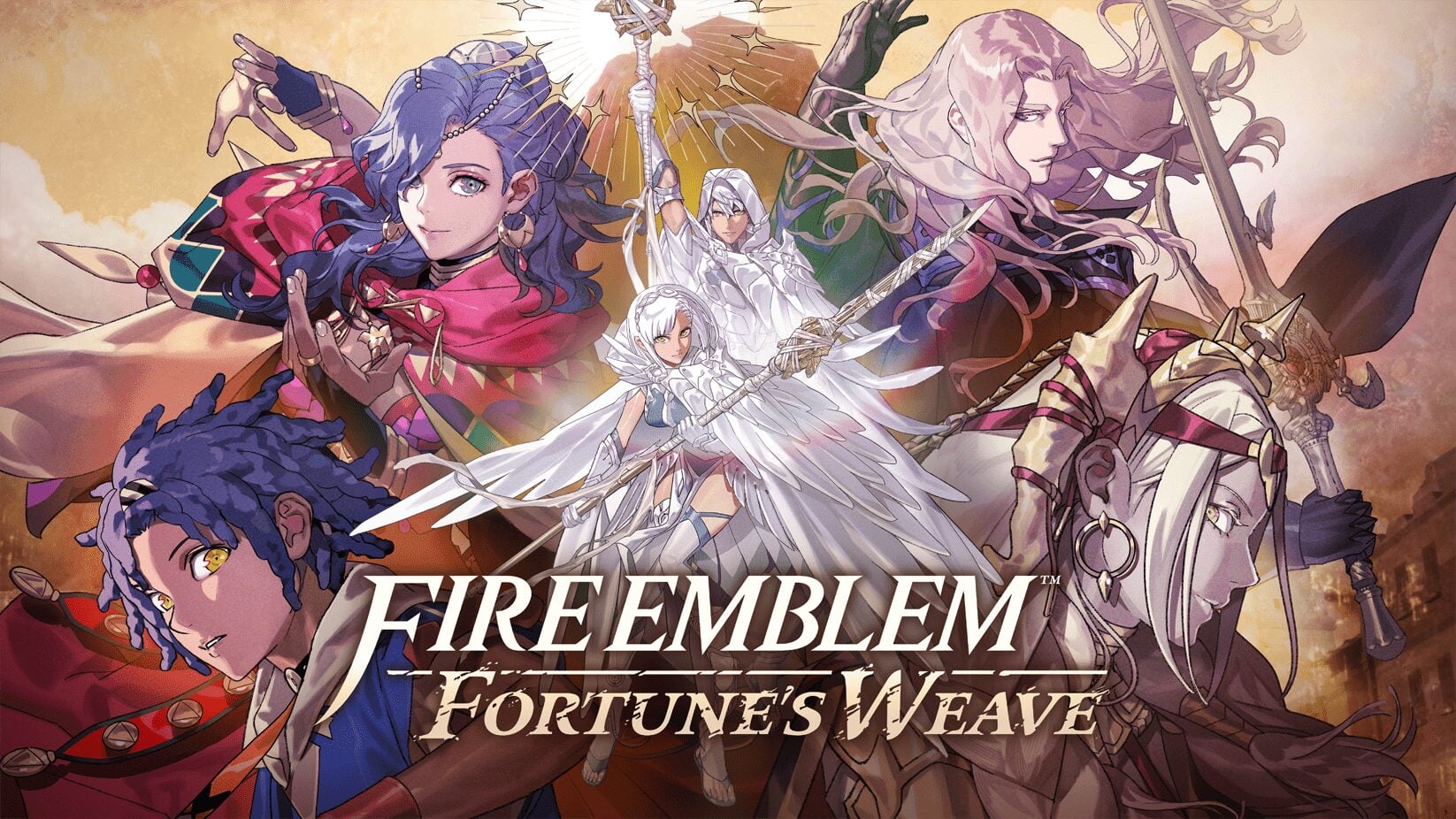
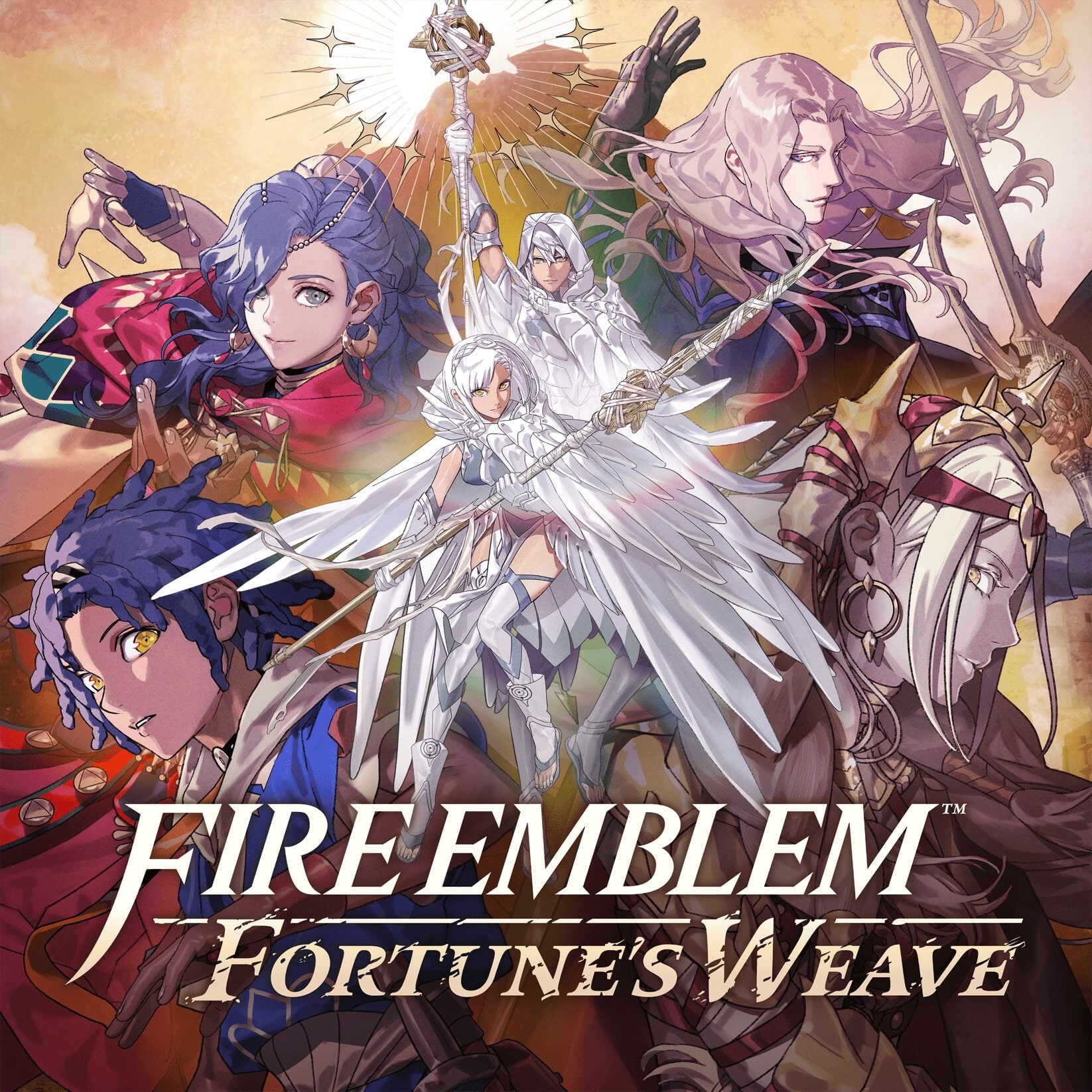
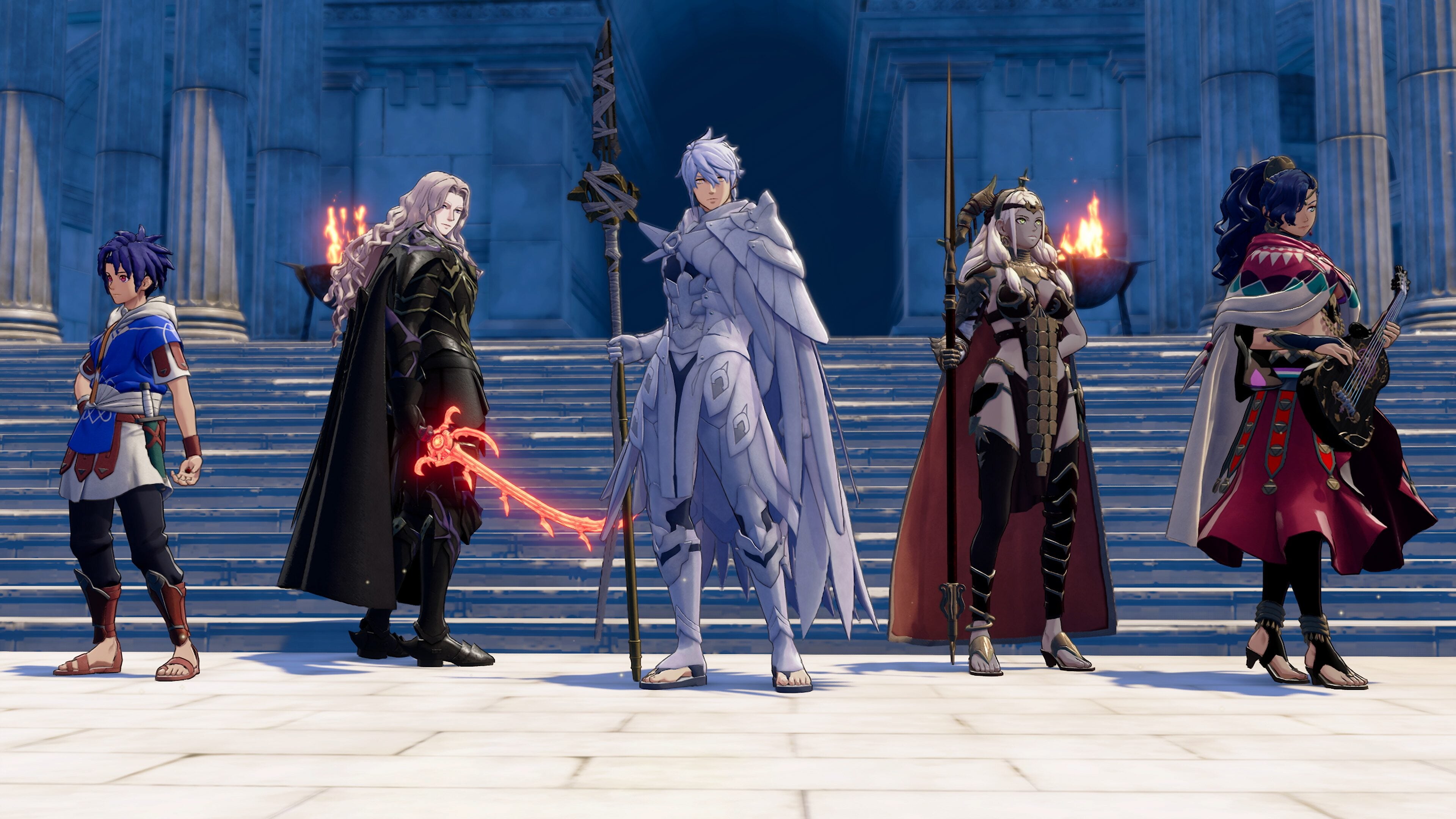
The story revolves around four Heroes who have entered the Heroic Games, and who the player picks determines how the narrative unfolds. The protagonist is separate from all four. Nintendo's own marketing metadata keeps the same five names together and no more: the tag list attached to a pre-launch trailer names Cai, Dietrich, Theodora, Leda and Eshmel.
Character | Role | Summary |
|---|---|---|
The protagonist | The soul Sothis calls down in 1454, and the story's true protagonist. A player-created avatar with a chosen body type, skin, hairstyle, hair color and name, titled the Promised One and the Herald of the Pale Raven, and able to take the form of a white bird. | |
Hero, Fox route | Cai Castor, fifteen, from the peaceful village of Ribeira. On his fifteenth birthday his father is imprisoned beneath Dagsion for crimes committed before Cai was born, and he sets out with his childhood friends to win the Games and free him. | |
Hero, Lion route | Dietrich Gregor Lamine, a swordsman ever in search of a stronger opponent. Attacked by an enormous monster while sailing a stormy sea, he washes ashore in Dagda from Fódlan and enters the Games to slake his thirst for battle. | |
Hero, Wolf route | Queen of Saramis, representing a culture that worships the Keeper of Death and Night. She swears to restore the honor of her goddess and defend her people's faith and her kingdom's peace, and leads her veteran retainers into the tournament. | |
Hero, Eagle route | A musician born into prestige and titled Rose of Caelus, consumed by rage after her father's murder. She enters once she learns that the killer plans to compete. |
Both avatar forms carry their own voice casts, listed with the rest of the cast on Voice Cast. Fighters enter the Games in named clans, covered on Factions, and the playable roster is on List of Characters. Sothis and Seteth both appear in this game, and Anna turns up as a guest unit in the Elephant Rider class and as the in-game adventure guide.
Gameplay
Battles play out on a grid. Before each match you choose your party members and their starting placement, movement range is drawn in blue and attack range in red, and once all of your units have acted the opposing side moves. Victory conditions include defeating the enemy leader, among others. Striking inside an enemy's range invites a counterattack, terrain confers advantages, and units standing next to allies can pick up buffs. Combat System has the detail.
Weapons and Arts
Weapon types have their own advantages rather than a sword-axe-spear triangle. Swords improve follow-up damage, spears are effective against cavalry, axes have a minimum damage rule, gauntlets improve evasion against other weapon types and bows threaten fliers. Magic supplies offense, healing and status control. Weapons, Magic and Items and Equipment give the exact stats and restrictions. Combat Arts spend weapon durability; ordinary attacks do not. Blaze Arts spend HP and raise a separate gauge toward Overblaze. Filling the gauge triggers Burst and removes its bonuses; the maximum-HP penalty belongs to Underworld users, rather than every Blaze type.
Turn Rewind
Fortuna's Blessing rewinds the battle to any earlier point after a move goes wrong, so a lost unit does not have to mean a lost map. Hands-on accounts describe it as unlimited on Normal; on Hard, each rewind uses up Divine Sand. The difficulty itself is one of two settings, Normal or Hard, chosen alongside a separate Casual or Classic setting that decides whether a fallen unit is lost for good. Both are set at the start and both can be changed later. See Difficulty and Modes.
Classes
Units are sorted into Classes across Beginner, Specialty and Advanced tiers. Five Beginner classes form the foundation, among them the Gladiator, the Hunter, the Soldier, the Diviner and the Ornius Rider, which rides a new mount that hops low obstacles without flying. More than ten Specialty classes can be attained, including the Charioteer, which strikes multiple enemies in a straight line. Advanced classes are masters of their skills and include the Cataphract, which pairs the mobility of a horse with heavy-armor defense, the Guardian, skilled with both spears and White Magic, and the Elephant Rider, which fights astride a giant beast. Changing class means passing a certification exam with an Exam Proctor in Dagsion. Part III adds Master Class exams and eight Divine Classes, unlocked with items found in the chambers of the Temple of the Diadem.
Between Matches
Matches are spaced apart, and Nintendo's framing for the gaps is that the time is yours to spend. Between-Match Preparation covers the Dagsion routine: intel on your next opponent, additional training at the arena plaza once per week, watching other participants fight on match days, buying and forging at the shopping arcade, temple blessings earned by volunteering, quests with deadlines, recruiting warriors you meet in the city, and inns where time passes, materials accumulate and close characters talk.
Beyond Dagsion
World map travel costs time with every move, so expeditions need planning. Towns sell local wares and information, travelling with allies improves everyone's abilities, and random encounters begin skirmishes. Dungeons yield materials for strengthening weapons along with other treasure, and roaming enemies inside them begin a clash, a turn-based fight that runs on different rules from a normal battle and allows attack combos between allies.
Controls
Controls include mouse input using Joy-Con 2 controllers, a first for the series, with the player able to switch between button and mouse control at any time.
Routes and Structure
Each Hero anchors a route, named internally for an animal: Fox for Cai, Lion for Dietrich, Wolf for Theodora and Eagle for Leda. Two prologue chapters are shared before the split. Progress is saved separately for each Hero, so all four stories can be played in parallel, and Heroes are swapped at the Pale Raven's Perch, a spot where a mysterious white bird rests its wings. Routes covers how the structure works in play.
Other Announcements
A ten-track Special Release arrived on Nintendo Music on August 4, 2026, including the game's main theme. The Nintendo Today! app received a Fire Emblem theme from August 5, 2026 and carried new information up to launch, and an Ask the Developer interview was published on September 15, 2026, covering the four-route story, the growth system, the music and the character designs by Chinatsu Kurahana. A manga adaptation was announced in the Japanese cut of the August presentation, with its prologue chapter printed in a Japanese magazine issue on sale September 4, 2026; an English translation of that prologue (Chapter 0) was released free in the Nintendo Today! app in mid-September 2026. A further trailer arrived on August 24, 2026, running 1 minute 22 seconds and titled "The final battle awaits" in English. Its published description sets out the same fork the opening does: "Fight a god alone or change fate and gather heroes to your cause, which path will you walk to save the world?" It went up on the European and Australian channels and had not appeared on the North American or Japanese ones a day later, the same pattern the earlier Blaze Arts trailer followed.
On launch day Nintendo published a launch trailer, running 2:06 on its North American channel and 2:40 in the European "Out now" cut. The North American description reads: "The Heroic Games have begun!" and "Between matches, visit locations within the city of Dagsion to prepare for battle by recruiting allies, honing your skills at the training ground, and strengthening your bonds." A 19 second character video followed on the European channels on September 22, 2026, captioned "Hell's-Eye Cai."
What Is Confirmed So Far
This page was last checked on October 18, 2026, about a month after the game released. The account above draws on Nintendo's own presentations, trailers and official character material, on the mid-August 2026 hands-on window, and on coverage of the finished retail game. One retail guide lists about 62 characters besides the avatar who can be recruited or join the army, but no official total has been published, so none is given here as definitive.
The game displays growth values. Character profiles give growth rates, skill preferences, learnsets and recruitment requirements, while class profiles give certification requirements, bonuses and mastery rewards. Crests covers Bloodmarks. The current Gambits and Battalions references cover all 68 battalions, their eight stat modifiers, Authority requirements, types, locations and holder-specific Gambits. Weapons, Magic and Combat Arts contain the full equipment and attack references. Paid content is covered on Expansion Pass.
Launch and Reception
The game released on September 17, 2026 for Nintendo Switch 2. The storefront download is listed at 29.5 GB, and the version most players started on is Ver. 1.0.1, a day one update of about 297 MB that also distributes four weapons into the game, received as the story progresses in places such as Dagsion: the Chosen Sword, Chosen Lance and Breidablik from the Fire Emblem series, and the Royal Sword from Fire Emblem Shadows. The version history is on Editions and Release.
On October 15, 2026, Nintendo released the paid Expansion Pass alongside the Ver. 1.1.0 update. It delivers its content in three waves: four prototype weapons available at release, three gods who join as allies and four outfits in holiday 2026, and new stories for Bertrand, Talimun, Orchel and Anatolia in 2027.
The story has three Parts after the Prologue. Part I is the twelve-chapter Heroic Games campaign played from four Flame Lords' perspectives. Part II is the six-chapter War Arc. Part III is the six-section Salvation Arc led by Eshmel, entered through the Door of Destiny. Completed routes and their paralogues determine the available army and route-specific commands; recruiting a lord through a paralogue alone does not provide that lord's full party or world-map systems. Routes and Story and Plot Structure explain those conditions.
Critical reception was strongly positive: review scores clustered around 9 out of 10, with several top marks among them, and none of the roughly seventy reviews counted by late September 2026 was negative. Reviewers reported anywhere from about 80 hours to more than 200 hours of play; one breakdown put a first route at roughly 35 hours, each route after it at 20 to 35 hours, and about 100 hours to finish all four Part I campaigns. The game debuted at number two on the UK physical sales chart in its launch week, and in Japan it topped the weekly physical retail chart with 127,131 copies sold in its first days on sale. Sales detail is on Editions and Release.
Performance at launch was described as stable, at around 30 frames per second rather than 60, with minor dips below 30 when docked and some ghosting and jagged edges in handheld play during fast camera movement or fast animations. Loading is quick: about 5 to 6 seconds from the system menu to the title screen and 3 to 4 seconds to load a battle, measured from internal storage. No resolution figure is reproduced on this wiki.
Gameplay guide directory
Guide | Focus |
|---|---|
Character and class growth | |
Class profiles and certification | |
Playable character profiles | |
Gameplay mechanics | |
Gameplay mechanics | |
Gameplay mechanics | |
Gameplay mechanics | |
Gameplay mechanics | |
Gameplay mechanics | |
Gameplay mechanics | |
Gameplay mechanics | |
Gameplay mechanics | |
Places and facilities | |
Gameplay mechanics | |
Gameplay mechanics | |
Gameplay mechanics | |
Places and facilities | |
Places and facilities | |
Gameplay mechanics | |
Gameplay mechanics | |
Gameplay mechanics | |
Gameplay mechanics | |
Gameplay mechanics | |
Places and facilities |
World and timeline
Dagda lies southwest of Fodlan. Its local calendar places the Heroic Games in 1449 and Salvation in 1454; Dagdan Calendar explains the approximate connection to the wider series timeline.
Practical guide starting points
Start with the route walkthrough for chapter deadlines and battle objectives. Team Planning helps choose roles without treating one class choice as mandatory. Calendar Events covers birthdays, discounts and dated activities; Bird Time and Endings connect relationship planning to their specific outcomes.
Playtime estimates
Completion time varies with dialogue, optional quests, repeated route play and battle animation choices. The following are planning ranges rather than minimum times or a promise for every playthrough.
Scope | Estimated time |
|---|---|
First Part I route | 30-40 hours |
Other three Part I routes together | 45-90 hours, about 15-30 each |
Part II across route playthroughs | About 40 hours, about 5-10 per route |
Part III | 20-30 hours |
All routes and Parts | About 100-200 hours |
One route followed by Part II and Part III | About 60-80 hours |
Related pages
Team Planning, Calendar Events, Bird Time, Endings, Classes, Gambits, Battalions
Related Pages
For the avatar the whole premise turns on, see Eshmel, and for the tournament the four campaigns are built around, see Heroic Games. Routes sets out how the Fox, Lion, Wolf and Eagle branches are entered and run in parallel, and Story and Plot Structure covers the 1454 framing that sends Eshmel back into them.