

Dagsion is the capital of the Dagdan Empire and the city where most of Fire Emblem: Fortune's Weave takes place. Nintendo's description gives it bustling markets, ports teeming with trading ships, temples to the gods, and other establishments lining crowded streets. It stages the Heroic Games, and it doubles as the hub the four Heroes return to between matches.
The City
Dagsion sits near the middle of the continent of Dagda, built around a giant lake in the territory of Amalthea, and its population runs well over a million. The city is layered: several of its temples stand in what the game calls upper Dagsion, above the streets and markets below. Hands-on previews describe it as a fully three-dimensional hub that you walk around, rather than a menu of destinations. The capital's water supply is plentiful enough that putting it to everyday use is normal there, which is not the case further out: Anatolia describes her own village as having several wells but too little supply, so that rationing is the rule.
Districts and Facilities
These are the places confirmed as of September 2026. Nintendo has said that more facilities open up as a Hero's journey continues, so the list is not final.
Place | What Happens There |
|---|---|
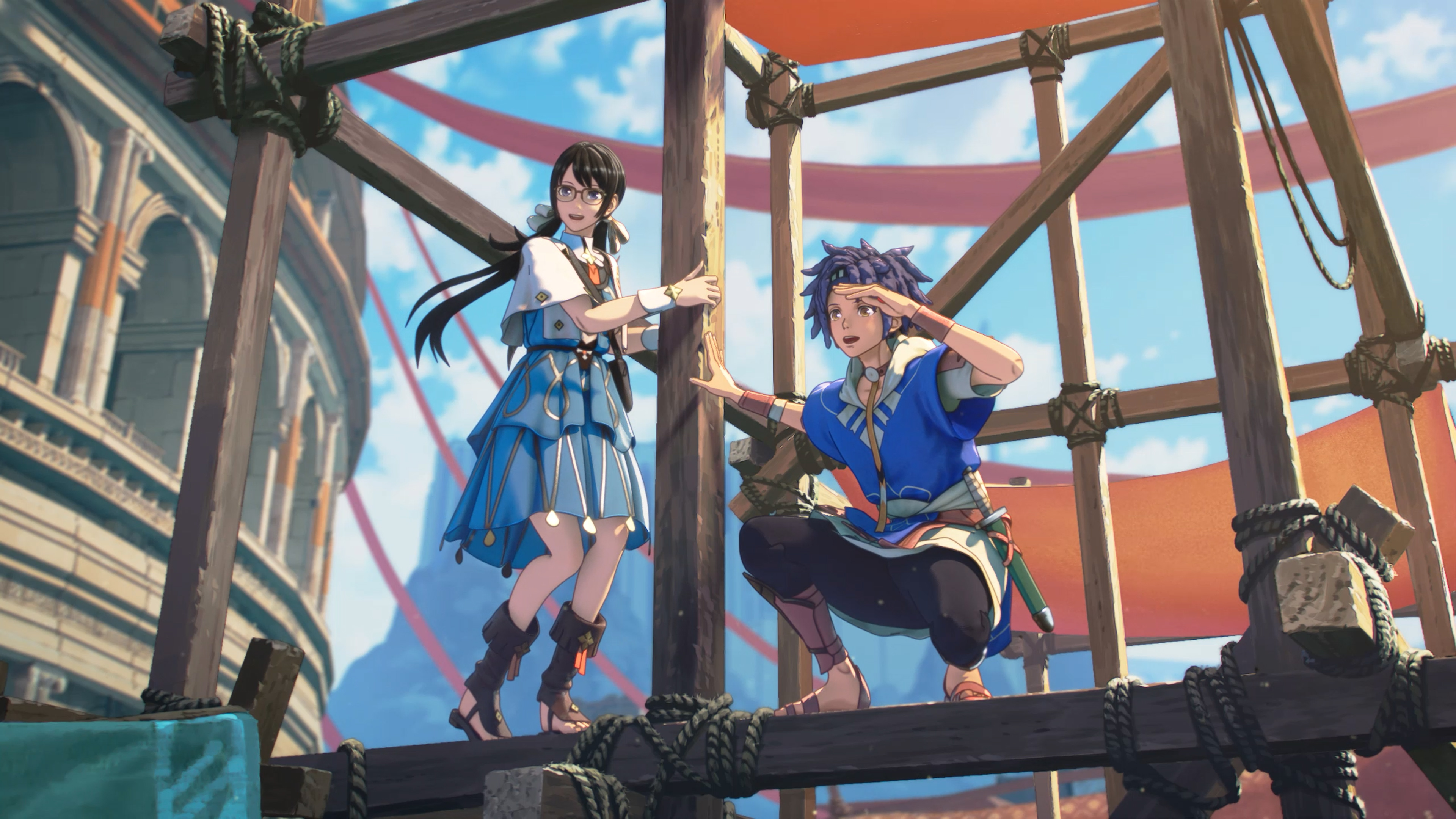
Grand Arena | The colosseum that stages the Heroic Games. Gladiator bouts run there day and night, and on match days you can watch rival teams fight to research them. |
Arena plaza | Training grounds usable once per week between matches. Improving your skills there teaches new moves and unlocks heavier weapons. |
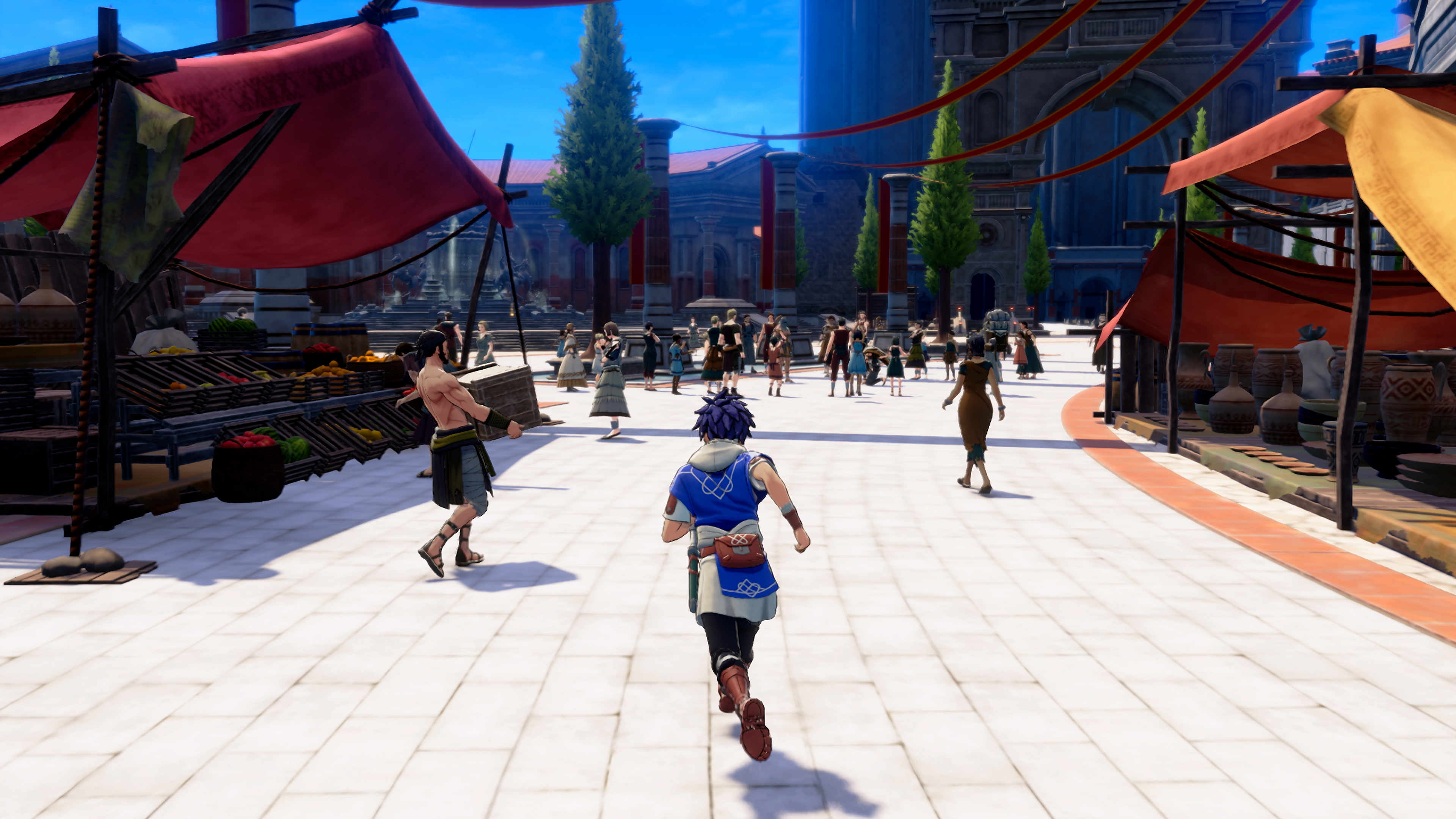
Shopping arcade | A sprawling market for weapons and tools, with a blacksmith who upgrades gear using materials you have gathered. |
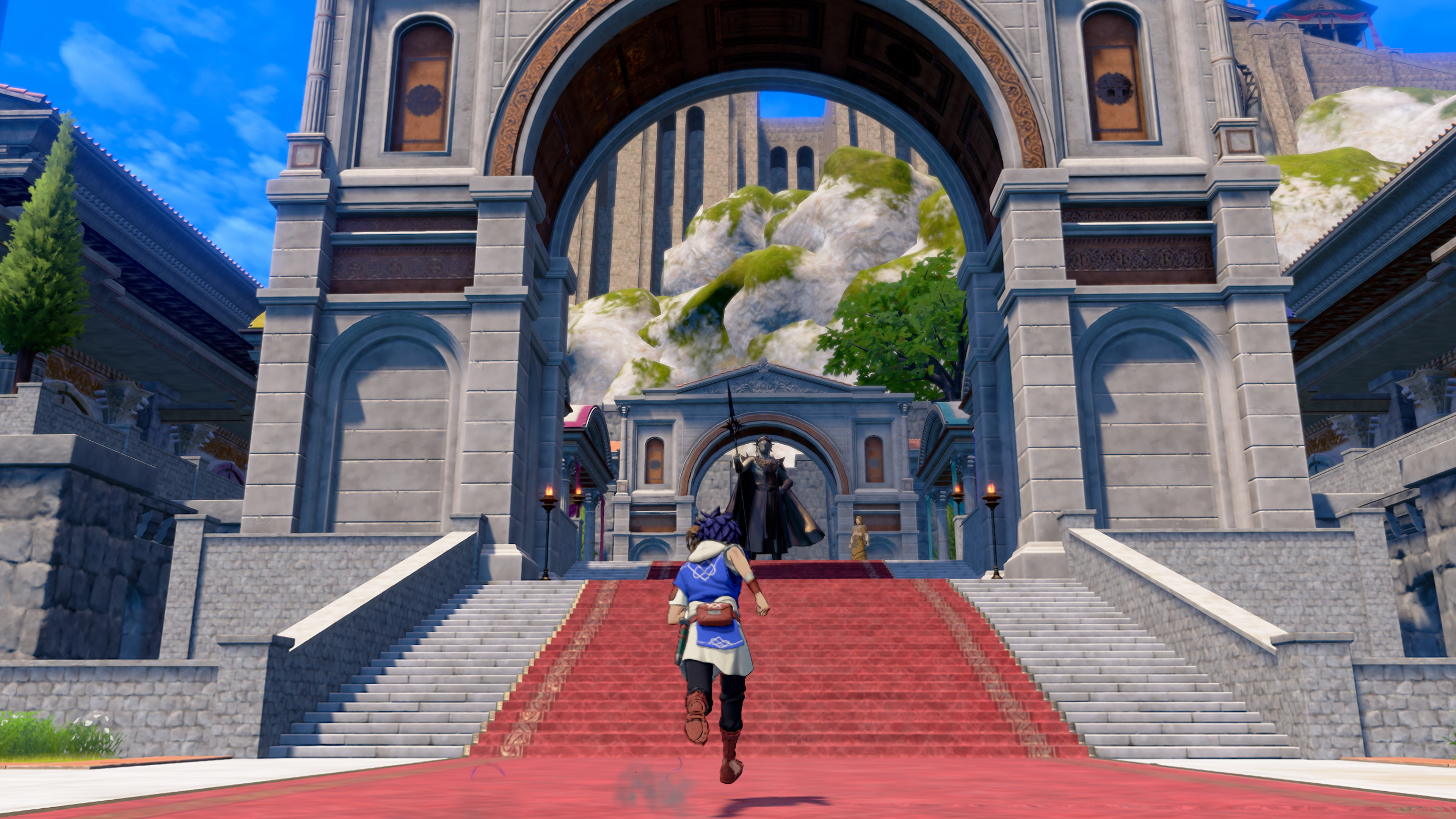
Temple row | Seven temples in the upper city, watched over by a bronze statue of the Divine Sovereign. Volunteering at one earns a blessing for the next battle. |
Exam Proctor | The official who administers certification exams for new classes. |
Inns | Lodgings where units share meals, hold support conversations, and let time pass to gain experience and gather materials automatically. |
A perch where a mysterious white bird rests. From here the player swaps to a different Hero. | |
Credna's temple | One of the temples in the upper city, and the posting of the masked priest Orchel. |
Anatolia's fortune-telling shop | A shop in the city the player can visit. Anatolia reads fortunes there and is regarded as accurate, with Dadao and Sha Lan alongside her. |
Games Reception | A staffed counter at the head of the arena steps, marked with the Games sigil. It is where the tournament side of the city is handled between matches. |
Arena Reception | A second counter alongside it, marked with crossed blades, covering the arena bouts that run outside the tournament proper. |
Gladiators work the Grand Arena outside the Games as well. Gaitz is the first of them named: a fighter trained in the eastern land of Sai, shown inside the Arena alongside Dietrich, Fabio and Bertrand.
Districts in the Retail Game
Walkthroughs of the retail game name the districts the player moves between on the city map.
District | What Is There |
|---|---|
Hightown | The north of the city, where Theodora's party begins its time in Dagsion; Dagda's temple stands at its top |
Temple Row | The temples of the gods; Anna's shop appears north of it from time to time |
Lower Temple Row | Where Orchel gives her paralogue |
Dagsion Summit | Where Anna gives her paralogue, and where Dagda's Godshield is found in Part III |
City Streets | Where Anatolia and Cai give their paralogues |
Entertainment District | Open alongside Temple Row on Theodora's first limited visit; the way to Yu Phas' temple |
Arena Square | Where Gabriel gives Bertrand's paralogue |
Arena Underground | Reached through the sewers on Cai's route |
Lowtown | The south end of the city, with the Lowtown Tavern |
Port | Where Talimun gives his paralogue |
Facilities opened over the first Part include the Marketplace, where gifts are bought beside the Armory and Weapon Shop; the Inn, where meals raise Support; a theater for Stage Shows; the Vandahl Trading Company, which trades items for other items; Divine Services at the temples; and a bulletin board for subquests. Cai's route adds a stable and Leda's a Drink Vendor.
Temple Row
Temple row runs through the upper city beneath a bronze statue of the Divine Sovereign, Solel, and holds seven temples devoted to the gods of the Dagdan pantheon. Which temple you volunteer at decides the blessing you carry into battle, with effects that include a temporary stat buff and halving the damage you take. Temple service is one of the activities capped to a set number of uses each week, alongside arena training and meals. Credna's temple is one of the seven, and the masked priest Orchel serves there.
The Heroic Games
The Games are held at Dagsion in tribute to Dagda, the empire's first and founding king, and the Divine Sovereign opens them in person with a promise to grant one wish to whoever wins. Every competing clan gathers in the city, and its streets are also where the Heroes find new fighters to bring aboard, which is covered on Recruitment. The activity loop between rounds is covered on Between-Match Preparation.
Dagsion in the Story
The city is where the story of Cai starts. On his fifteenth birthday his father Castor is imprisoned beneath Dagsion for crimes committed years before Cai was born, and winning the Games is how Cai hopes to free him.
By the year 1454 of the Dagdan Calendar, five years on from the Games, the capital has fallen. An Underworld Gate has opened in the city, the ruins are overrun, and Eshmel arrives to find survivors fighting the risen dead among the wreckage. Statues of the four Heroes are shown standing outside the walls. Beneath the temple of Fortuna lies the Obelisk Chamber, the room that reaches back into 1449; Story and Plot Structure covers what follows.
Later Parts return to the city in force. The fourth chapter of Part II, The Storming of Dagsion, is fought on the Alcineus Span; the fifth crosses the city to Dagda's temple at the top of Hightown with no facilities open; and the sixth ends with Flight from Dagsion, an escape battle. Part III opens with The Liberation of Dagsion, and from then on the city has to be defended: during each Mission Time, enemies on the world map head for Dagsion and must be intercepted in Clashes before they damage it, while subquests such as Arena Construction Effort rebuild its facilities with Building Materials.
Reading the City Screen
Walking Dagsion keeps a permanent readout on screen. The bottom left carries the year, the month and day, the weekday and a clock, so 1449 with 7/20, Fri and 12:02 is a single afternoon in the run-up to a match. Beside it sits the current objective with the time left expressed in turns rather than hours, and the deadline written as a date, a weekday and a time, for example 9/1 Sat 12:00. A location line confirms where you are standing, and a minimap in the top right marks the reception counters, shops and people worth talking to. That readout is a dating and scheduling display drawn from the Dagdan Calendar, not a separate activity system: what you actually spend is turns.
Beyond the Walls
Leaving the capital opens the continental map, where every move costs time and roaming enemies trigger skirmishes. World Map and Exploration covers travel, and Dungeons and Clashes covers the material-gathering runs found out there.
Related Pages
The tournament the city is built around is Heroic Games, and the state it serves as capital of is Dagdan Empire. Volunteering on temple row earns the effects listed on Temple Blessings, and the spot where the player swaps Heroes has its own page at Pale Raven's Perch.