

Overview
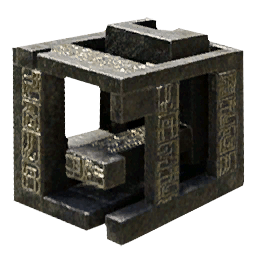
Artifacts are unique gatherable items in Crimson Desert that represent ancient relics scattered across Pywel. Unlike minerals that are obtained through mining, Artifacts are discovered through exploration, excavation, and interacting with points of interest in the world. They carry historical and cultural significance within the game's setting and serve multiple purposes, from quest objectives to trade goods and camp upgrades. Artifacts are distinct from Abyss Artifacts, which are combat-related items obtained from defeating enemies and used for high-tier equipment refinement.
Item Properties
Property | Value |
|---|---|
Category | |
Subcategory | Ancient Relic |
Description | An ancient relic of historical significance found through exploration and excavation |
Obtainable Via | Exploration, excavation, quest rewards |
Stackable | Yes |
Where to Find
Artifacts are found through world exploration rather than traditional mining. They appear at various points of interest, historical sites, and hidden locations throughout Pywel.
Excavation sites: Certain locations in the world contain buried artifacts that can be dug up. Look for disturbed earth or marked dig spots near ruins and ancient structures.
Ruins and historical sites: The remnants of old civilizations scattered across Pywel sometimes contain harvestable artifacts. Explore these areas thoroughly, checking behind collapsed walls and inside crumbling structures.
Quest locations: Some quests lead you to artifact discovery sites. Completing exploration-focused quests often rewards Artifacts alongside other loot.
Cave interiors: Deep caves and underground passages occasionally hold ancient artifacts alongside other mineral formations like Stalactite.
Artifacts tend to be one-time pickups at specific locations rather than respawning nodes. Once you collect an artifact from a particular spot, it will not reappear there.
Uses
Artifacts serve several purposes in the game:
Quest objectives: Certain quests require you to find and deliver specific artifacts. These quests often tie into the broader story of Pywel's history and the lore of its ancient civilizations.
Trade and sale: Artifacts can be sold to specific vendors and collectors for copper coins. Their value is generally higher than common gatherables, making them a worthwhile source of income.
Camp development: Some Greymane Camp upgrades or decorative projects require artifacts as materials. These tend to be special one-time upgrades that improve the camp's appearance or unlock unique features.
Collection: Artifacts contribute to exploration completion. Finding all artifacts in a region is part of the game's broader collectible tracking system.
Artifacts are not used for equipment refinement at the blacksmith. For combat-related upgrades, Abyss Artifacts are the relevant item type.
Artifacts vs. Abyss Artifacts
It is important to distinguish between regular Artifacts and Abyss Artifacts. Regular Artifacts are exploration-based collectibles with historical value, found in the open world. Abyss Artifacts are combat drops used for high-tier equipment refinement at the blacksmith. The two item types serve completely different purposes and are obtained through different gameplay activities.
Tips
Explore ruins and historical sites thoroughly. Artifacts are often tucked into corners or hidden behind obstacles that are easy to overlook during a quick pass.
Pay attention to quest dialogue that mentions ancient relics or historical items. These conversations frequently hint at artifact locations nearby.
Since artifacts are generally one-time pickups, there is no farming route. Instead, focus on systematic exploration of each region's points of interest.
Check with vendors who deal in antiques or historical goods. Some vendors pay a premium for specific artifact types.
Do not confuse regular Artifacts with Abyss Artifacts. If a refinement recipe asks for an Abyss Artifact, regular Artifacts will not work.