

Overview
Wagon trading is one of the most profitable activities in Crimson Desert. Players can package trade goods at Greymane Camp, load them onto a wagon or horse, and transport them to trading posts scattered across Pywel to sell for profit. The trading system operates on a buy-low, sell-high model where prices fluctuate on a weekly in-game cycle. Different trading posts stock different goods and pay different prices, so planning your routes carefully is the key to generating serious income.
Trading in Crimson Desert splits into two distinct economies. Packaged trade goods are processed through the camp provisioner and sold at official Trading Posts for camp funds. Unpackaged trade goods are raw valuables found in the world or stolen from NPCs, and they can be sold at Goldleaf Tradepost black market vendors for personal silver. Both systems are worth pursuing, but wagon-based packaged trading is by far the higher earner in the mid and late game. Combined with the Freesword Dispatch system, trading can generate a steady and substantial income stream.
Getting Started with Trading
Unlocking the Trading System
Trading access is gated behind main story progression. After completing Chapter 2 and arriving in the Hernand region, visit the Goldleaf Guildhouse south of Unicorn Cliff. Speak with Ugmon, the trading center manager, to access the buying and selling interface. You can inspect any trading center on the map and select the Trading Post tab to review what they are currently buying, what they are selling, and the current value trend for each commodity.
Milestone | Chapter | What It Unlocks |
|---|---|---|
Defeat Kailok the Hornsplitter | End of Chapter 2 | Access to Goldleaf Tradeposts for selling unpackaged trade goods |
Rebuild camp, recruit Karl | Chapter 3 | Camp Provisions menu for packaging trade goods (100 camp funds per item) |
Complete "Rumor in Glenbright Farm" | Chapter 3-4 | Recruits Brice as Wagonmaster; opens Wagon Management Office |
Complete "Rumor in St. Halssius" | Chapter 4 | Recruits Arnold (Engineering skill); enables wagon construction via Timberturner Wainwright dispatch |
Trade Goods Basics
Trade goods are valuable items identified by a blue background in your inventory. Examples include Calligraphic Paintings, Tobacco, Red Ginseng, and Ceramics. These items have no use in crafting or combat; their sole purpose is to be sold for profit. Trade goods can be obtained through several methods:
Stealing: Items marked with a scale icon in the world can be stolen. This generates a bounty that must be cleared by paying fines. For more details, see the crime system.
Quest rewards: Certain quests award trade goods upon completion.
Exploration: Trade goods can be found in chests, on tables, in cabinets, and scattered throughout houses and manor estates.
Dispatch missions: Send comrades on dispatch missions through the Greymane Camp to acquire trade goods passively. Comrades with rare or advanced skills produce higher-value goods.
Purchasing: Buy trade goods at low prices from one trading post and resell them at a higher price elsewhere.
Packing Trade Goods
Packing trade goods increases their value significantly compared to selling them individually. To pack goods, return to the Greymane Camp and speak with Karl, the Camp Provisioner. Karl becomes available once you rebuild the camp at the start of Chapter 3. Select Camp Provisions from his menu, then choose the items from your inventory that you want to package.
Packing cost: Each packing operation costs 100 Alms, deducted from your camp funds. Make sure you have sufficient camp funds before attempting to pack goods. Camp funds can be earned through Freesword missions and by donating items to Karl for camp supplies.
Once packed, goods must be loaded onto a horse at a stable or onto a wagon at the wagon depot before they can be transported. Packed goods transported via horse or wagon sell for considerably more than unpackaged items sold directly at a trading post. This price premium is the core incentive for investing in the packing and transport infrastructure.
Packaged vs Unpackaged Goods
Trade goods in Crimson Desert come in two forms, and understanding the difference is critical to making the most of the trading system.
Type | How to Obtain | How to Sell | Currency Earned |
|---|---|---|---|
Unpackaged Trade Goods | Looting chests, stealing from NPCs, quest rewards, world drops | Sell directly at Goldleaf Tradepost black market vendors (no wagon required) | Personal silver and coppers |
Packaged Trade Goods | Packaging items via Karl at camp (100 camp funds each), dispatch missions, converting 1,000 camp resources | Transport by wagon or horse to Trading Posts (Goldleaf Guildhouse, Royal Trading Post) | Camp funds |
Unpackaged goods are identifiable by their blue background in your inventory. Common examples include Calligraphic Paintings, Tobacco, Red Ginseng, Ceramics, Black Pepper, and Pororin Pottery. Many of these appear in chests, on tables, or in cabinets inside wealthy households. Items stolen from NPCs are also considered unpackaged trade goods. After completing Chapter 2, you can sell these directly to black market vendors at Goldleaf Tradeposts without any packaging or transportation step. Regular merchants will refuse to buy them.
Packaged goods are created by speaking to Karl (the Camp Provisioner) at Greymane Camp and selecting "Camp Provisions." Choose items from your inventory and click "Package Provisions." Each item costs 100 camp funds to package. Once packed, items cannot be unpacked, so choose carefully. Packaged goods must be loaded onto a horse or wagon and physically transported to a Trading Post before they can be sold. The prices are location-dependent and fluctuate weekly.
Getting a Wagon
Building Your Own Wagon
Building a wagon is the legitimate (and more profitable) path to large-scale trading. The process requires several prerequisites:
Recruit Brice. Complete the quest "A Rumor in Glenbright Farm" to discover Brice, the wagon manager. Once found, he relocates to your Greymane Camp and opens the Wagon Management Office.
Obtain an Engineer. You need a comrade with the Engineering skill. Engineering typically unlocks at comrade Level 3. The easiest Engineers to recruit are: Arnold (from "A Rumor in St. Halssius"), Otto (from "A Rumor in Hills of No Return"), and Terry and Falstaff (from "A Rumor in Calphade"). For a detailed walkthrough, see How to Get an Engineer at Camp.
Start the Timberturner Wainwright mission. Speak to Ross at camp and select Mission Dispatch. Locate the "Timberturner Wainwright" task in the dispatch list. Assign your Engineer and any additional workers to begin construction.
Choose your wagon type. Select from the available wagon options (see Wagon Types below). Larger wagons carry more cargo but require more workers, longer build times, and additional resources.
Wait for completion. The dispatch mission takes real in-game time to complete. Once finished, speak to Brice at the Wagon Management Office to deploy your new wagon.
Larger wagons require more workers, longer crafting time, and additional resources. As your Engineers level up through completed missions, more advanced wagon designs unlock automatically through the Timberturner Wainwright dispatch.
Theft and Black Market
The faster but riskier alternative is stealing a wagon. Wagons and carts can be found throughout the world, particularly on trade roads between settlements. To steal one, equip a mask to hide your identity and approach the vehicle. Stolen wagons can only be sold at black market locations; they cannot be used at legitimate trading posts. The Wagon Black Market north of Unicorn Cliff is one such location. Selling stolen wagons provides a quick cash injection but does not build toward a sustainable trading operation.
You can steal wagons directly from road caravans and sell them at the Wagon Black Market north of Unicorn Cliff. To steal a wagon, you need the Steal skill and the appropriate gloves. With the right gear, you can take a wagon without being noticed even in front of witnesses.
Each stolen wagon pays approximately 15 silver. The payout is modest, and the drive to the Wagon Black Market can be lengthy, followed by a long transaction animation. This method is best treated as supplementary income rather than a primary money-making strategy. Stolen wagons cannot be sold at legitimate trading posts, and the crime system will increase your bounty if you are caught.
Wagon Types
There are several wagon options available through the Timberturner Wainwright dispatch, each offering a different balance of cargo capacity, speed, and build cost:
Wagon Type | Capacity | Speed | Notes |
|---|---|---|---|
Old Wagon | Low | Fast | Fastest to build and easiest to handle. Ideal for beginners entering the trading system. Lowest resource cost. |
Standard | Moderate | The baseline wagon for regular trade runs. Good balance of capacity and maneuverability. | |
High | Slow | Significantly larger cargo hold. Requires more workers and materials to construct. Clunky handling makes it a target for bandits. | |
Four-Horse Carriage | Very High | Slow | The largest wagon type. Unlocks as your Engineers reach higher levels. Maximum cargo capacity but highest build cost and slowest speed. |
At the Wagon Management Office, you can eventually upgrade your wagon's wheels (for increased speed) and frame (for increased durability). These upgrades require higher-level Engineering comrades and specialized parts like Cogwheels. Upgraded wheels are particularly valuable for Freight Wagons and Four-Horse Carriages, since their slow base speed makes them vulnerable on long hauls.
Trading Post Locations
There are three types of trading venues in Crimson Desert, each serving a different purpose:
Goldleaf Guildhouse
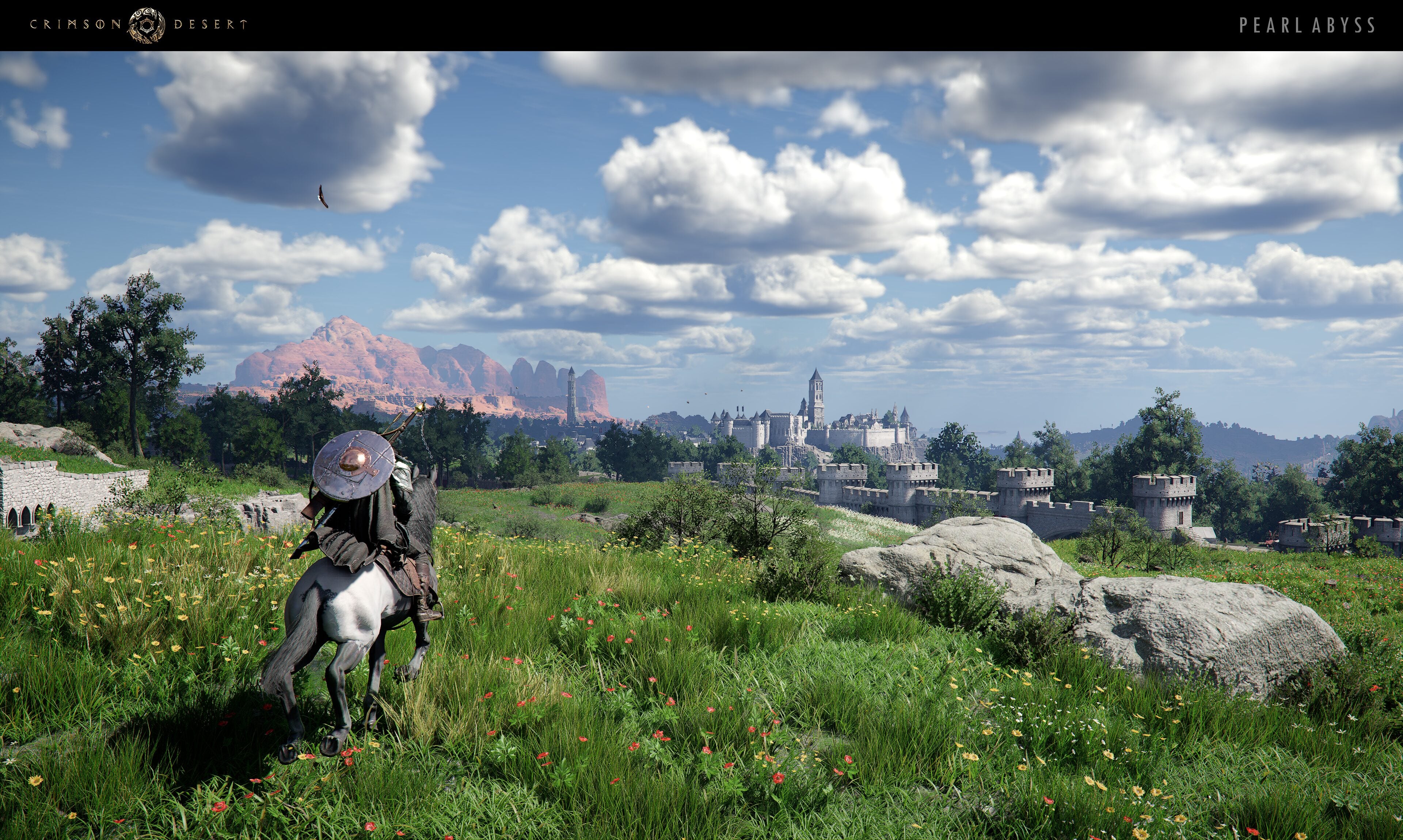
The Goldleaf Guildhouse is the main hub for buying and selling packaged trade goods. It is located south of Unicorn Cliff, in the Hernand region. The manager here is Ugmon, and you must speak to him directly to initiate any buy or sell transaction. The Guildhouse has a minimum purchase and sale quantity of 25 stacks per item, meaning you need to bring goods in bulk to trade here. This is where you monitor price trends and time your sales for maximum profit.
Royal Trading Posts
Royal Trading Posts are located inside the major cities of Pywel. The closest one to the early game is north of Hernand Castle, managed by Bentley. Unlike the Goldleaf Guildhouse, Royal Trading Posts automatically accept qualifying goods upon arrival via a cutscene. There is no minimum quantity, making them convenient for offloading smaller shipments quickly. As you progress and unlock new regions, Royal Trading Posts also appear in Demeniss, Varnia, Pailune, and Delesyia. The trade challenge "Contract of the Golden Crown" requires delivering packaged goods to all four royal courts (Hernandian, Demenissian, Varnian, and Delesyian).
Goldleaf Tradeposts (Black Market Vendors)
Goldleaf Tradeposts are smaller outposts scattered across the map where black market vendors buy unpackaged trade goods for personal silver and coppers. These become available after completing Chapter 2. You do not need a wagon, horse, or any packaging step; simply walk up to the vendor and sell directly from your inventory. One of the earliest accessible locations is the Goldleaf Tradepost east of Springtide Mill, southeast of Hernand, where a vendor named Groks operates. Additional Goldleaf Tradeposts unlock across Pywel as you progress through the story and unfog new areas of the map.
Wagon Black Market
The Wagon Black Market is located north of Unicorn Cliff and exists solely for selling stolen wagons. It does not accept regular trade goods. If you steal a wagon from a road caravan, you must bring it here to sell. Each stolen wagon pays approximately 15 silver. This is a quick but modest income source compared to legitimate packaged trading.
Livestock Fence
For stolen livestock, you can sell animals to Edmond, the Livestock Fencer, located west of Muckroot Ranch. This is separate from the trade goods economy but worth knowing for players pursuing a criminal play style.
Quick Reference Table
Venue | Location | Accepts | Currency | Notes |
|---|---|---|---|---|
South of Unicorn Cliff | Packaged trade goods | Manager: Ugmon. Minimum 25 stacks per item. Buy and sell both directions. | ||
North of Hernand Castle | Packaged trade goods | Manager: Bentley. Auto-accepts on arrival. No minimum quantity. | ||
Royal Trading Posts (Other) | Packaged trade goods | Unlock as you progress the story and reach new regions. | ||
Goldleaf Tradeposts | Scattered across Pywel (e.g., east of Springtide Mill) | Unpackaged trade goods | Silver/coppers | Vendor: Groks (Hernand area). No wagon needed. Available after Chapter 2. |
Wagon Black Market | North of Unicorn Cliff | Stolen wagons only | Approximately 15 silver per wagon. Stolen goods only. | |
Livestock Fence | West of Muckroot Ranch | Stolen livestock | Vendor: Edmond. For animals only, not trade goods. |
Price Fluctuations
Prices at trading posts fluctuate on a weekly cycle. Each commodity has a base market price, and the actual buy/sell price at each post varies above or below that baseline depending on local supply and demand. The trading interface displays trend indicators that show whether a commodity's price is currently rising, falling, or stable.
Sell when prices are above market value. The trading interface shows the current price relative to the base market price. If the trend indicator points upward and the price is higher than average, it is a good time to sell.
Buy when prices are below market value. If a commodity at a particular post is priced below its baseline, purchase it and store it until the price rises at that post or another one.
Hold goods between cycles. Packed trade goods do not expire. You can store them on your wagon or at camp and wait for a favorable price swing before selling. Patience is the key to high-margin trades.
Understanding the underlying mechanics helps maximize your trading income:
Weekly price shifts: Prices update at the start of each in-game week. A good that was expensive last week may be cheap this week, and vice versa.
Location-based variation: The same good can have different prices at different trading posts simultaneously. Black Pepper might be cheap at the Goldleaf Guildhouse but fetch a premium at a distant Royal Trading Post.
Price trend indicators: When you hover over a Trading Post on the map and check the Buying/Selling tabs, you can see indicators showing whether each item's price is trending upward, downward, or holding steady.
Buy low, sell high: The core strategy. Watch for goods priced below their normal value at one post, buy at least 25 stacks (the Goldleaf Guildhouse minimum), and either hold them until the price climbs or haul them to a different post where demand is higher.
Profitable Trade Goods
While all trade goods can generate profit if bought low and sold high, some commodities consistently offer higher margins due to their base value and availability. The following goods are commonly cited as strong trading candidates:
Trade Good | Base Value | How to Obtain |
|---|---|---|
High | Found in wealthy estates, stolen from manor houses | |
High | Exploration loot, quest rewards, dispatch missions | |
Medium-High | Found in houses and shops, quest rewards | |
Medium | Common trade good, available at multiple posts | |
Spices | Medium | Purchased at low prices from certain posts |
Textiles | Medium | Dispatch missions, purchased from Goldleaf posts |
For a full breakdown of items worth keeping versus selling, see the vendor guides and the Best Ways to Farm Money article.
Detailed Trade Good Notes
Trade Good | Notes | |
|---|---|---|
Black Pepper | Spice | One of the highest-value goods. Buy when the price is low at the Goldleaf Guildhouse and transport to distant posts like Demeniss or Pailune for higher resale. The go-to item for serious traders. |
Art | High-value items often found in wealthy households or as quest rewards. Excellent profit when sold at posts with high demand. | |
Herb | Valuable trade good that appears in chests and can be generated through dispatch missions. Consistently in demand at most posts. | |
Commodity | Commonly found in settlements and on tables. Moderate value but easy to accumulate in large quantities. | |
Ceramics | Craft goods | Found in homes, shops, and sometimes as dispatch mission rewards. Steady demand across trading posts. |
Pororin Pottery | Craft goods | Obtainable from dispatch missions or farming. A reliable trade good for consistent income. |
Most trading posts will not buy basic materials like stone, timber, weapons, or raw food. The trading system is designed specifically for high-value trade goods, so keep standard resources for camp use and crafting instead.
Transporting Goods
Once goods are packed, load them onto your wagon at the Wagon Management Office run by Brice. You can select which wagon to deploy, load cargo, and unload cargo from this menu. Alternatively, packed goods can be loaded onto your horse at a stable for smaller deliveries.
To deliver goods, you must manually drive the wagon (or ride your horse) to the destination trading post. There is no automated delivery system. Plan your route ahead of time and consider the terrain, as mountainous paths may be slower. Stick to main roads when possible for the fastest travel times.
Horse-Based Trading
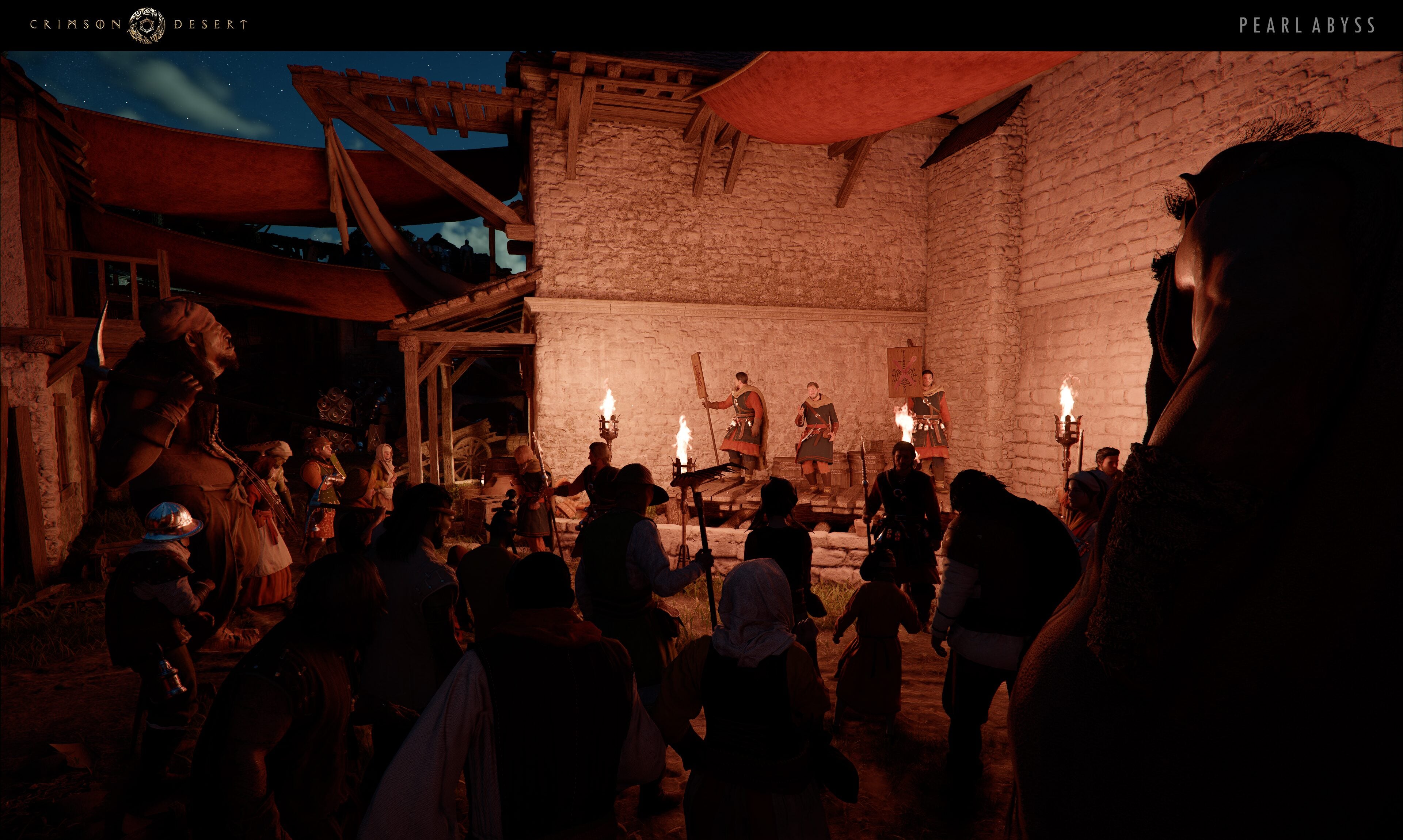
You do not strictly need a wagon to trade packaged goods. If you visit a Stable and select "Load Supply to Mount," you can load a smaller quantity of packaged goods directly onto your horse. Horse-based trading is ideal for short runs to nearby posts or when your wagon is still being built. The downsides are obvious: horses carry far less than any wagon, and you still cannot fast travel while carrying loaded goods. For quick deliveries to the Goldleaf Guildhouse or a nearby Royal Trading Post, however, horseback is faster and avoids the clunky handling of larger wagons.
Risks and Bandit Attacks
Transporting trade goods is not without danger. Larger wagons (Freight and Trading Wagons) move slowly and attract the attention of bandits who patrol the roads between settlements. Bandit ambushes can occur on any trade road, and the risk increases the more valuable your cargo.
Drive defensively. Avoid stopping on the road. If you see bandits ahead, try to steer around them or accelerate through their blockade.
Bring combat-ready gear. If ambushed, you will need to fight off the attackers before you can resume your journey. Ensure your weapons and armor are refined and in good condition before setting out.
Choose safer routes. Main roads near major settlements are generally safer than backcountry paths. The road from Hernand to the Goldleaf Guildhouse is one of the more secure routes.
Travel light for short runs. If you are making a quick delivery to a nearby post, use your horse instead of a large wagon. Horses are faster and less likely to be targeted.
Types of Road Hazards
The roads of Pywel present several specific dangers to wagon traders:
Bandit ambushes: Groups of bandits set up blockades on trade roads between settlements. Larger, slower wagons like the Freight Wagon and Four-Horse Carriage are particularly vulnerable. If caught, you must fight off the attackers before resuming your journey.
No fast travel: You cannot use fast travel while driving a wagon or while carrying loaded goods on horseback. Every trip is a manual drive from start to finish.
Wagon damage: Wagons can take damage from combat encounters and rough terrain. A heavily damaged wagon may slow down further or require repairs at the Wagon Management Office.
Crime escalation: If you choose to steal wagons or goods from caravans, your bounty on Kliff increases, which may attract guards and bounty hunters on subsequent trips.
To minimize risk, stick to main roads near major settlements for shorter runs. The road from Hernand to the Goldleaf Guildhouse is one of the more secure routes. For longer hauls, make sure your weapons and armor are refined, and bring healing items. If you spot a bandit blockade ahead, try to steer around it or accelerate through before they can surround your wagon.
Wagon Management
Interact with Brice at the Wagon Management Office in the Greymane Camp to manage all aspects of your wagon fleet:
Deploy a wagon: Select which wagon to take out from your available fleet.
Load and unload cargo: Transfer packed trade goods between your inventory and the wagon.
View wagon status: Check current cargo capacity and condition.
Build new wagons: Initiate additional Timberturner Wainwright dispatch missions to expand your fleet as your trading operation grows.
Selling at Trading Posts
When you arrive at a trading post with your wagon, approach the trading counter and select the Sell option. Note these important rules:
Minimum quantities. The Goldleaf Guildhouse requires a minimum of 25 stacks of an item to process a purchase. Smaller posts may have lower minimums.
Only listed items. Each post only buys specific commodities. Check the post's buy list before making the trip.
Packed vs. unpacked value. Packed goods transported by wagon or horse sell for significantly more than unpacked items sold directly from your inventory. Always pack before selling for maximum profit.
Camp donations. Instead of selling, you can donate trade goods to Karl at camp to build up your camp fund reserves. This is useful when you need camp funds more than silver.
Step-by-Step Trading Process
The packaged trade goods system follows a buy-low, sell-high model. Here is the full process from start to finish:
Pack goods at camp: Speak to Karl at Greymane Camp and select "Camp Provisions" to convert items into packaged trade goods. Each package costs 100 camp funds.
Check demand before traveling: Open your map screen, hover over a Trading Post icon, press Inspect, then check the "Buying Items" and "Selling Items" tabs. This tells you what each post is currently stocking and what it wants to buy.
Load the wagon or horse: Visit the Wagon Management Office and speak with Brice. Select your wagon, then move goods from your inventory into the wagon's cargo slots. For smaller loads, you can visit a Stable and select "Load Supply to Mount" to load goods onto your horse instead.
Drive to a trading post: Manually drive the wagon (or ride your horse) to your chosen destination. You cannot fast travel while driving a wagon or while carrying loaded goods on horseback.
Sell for profit: At the Royal Trading Post, goods are accepted automatically upon arrival via a cutscene. At the Goldleaf Guildhouse, speak to Ugmon to initiate the trade. Sell when prices are above the market baseline; hold your goods if prices are below average.
Packed goods transported by wagon or horse fetch significantly higher prices than unpackaged items sold individually. This price premium is the primary incentive for using the packaging and transport system rather than selling raw goods to black market vendors.
Tips for Maximizing Profit
Build a reserve of camp funds first: Use Freesword Dispatch missions to accumulate camp funds before your first trading run. You need funds both for packaging goods (100 each) and for buying goods at the Guildhouse when prices are low.
Check prices before every trip: Open your map, hover over each Trading Post, and inspect the Buying/Selling tabs. Only load goods that the destination post is actively purchasing at above-market prices.
Focus on high-value goods: Black Pepper is widely considered the best trade good for profit. Calligraphic Paintings, Red Ginseng, and Pororin Pottery are also strong choices.
Buy in bulk at Goldleaf: The Goldleaf Guildhouse requires a minimum of 25 stacks per item. Buy when prices dip below the baseline, hold the goods, and sell when the price rebounds the following week.
Use horses for short runs: For quick deliveries to the nearby Hernand Royal Trading Post, loading goods onto a horse is faster than hitching a wagon. Save the wagon for longer, higher-capacity hauls.
Upgrade to a Freight Wagon as soon as possible: The higher cargo capacity means each trip earns significantly more. The slow speed is a worthwhile trade-off, especially once you upgrade the wheels.
Keep dispatch missions running at all times: The Freesword Dispatch system is the best source of passive trade goods. Always have active missions generating goods in the background while you handle other activities.
Sell unpackaged goods to black market vendors for quick silver: While exploring, sell any unpackaged trade goods (blue background items) at the nearest Goldleaf Tradepost. This earns personal silver without any transport overhead.
Bring combat gear on long hauls: Bandit ambushes are a real threat on longer routes, especially with slow wagons. Keep your weapons refined and pack healing items.
Plan multi-stop circuits: Instead of single-destination trips, plan routes that hit multiple trading posts in sequence. Buy cheap goods at one stop and sell them at the next, turning each leg of the journey into profit.
Work toward the 300,000 camp funds milestone: The "Magnate of the Golden Desert" trade challenge rewards consistent trading over time. Treat it as a long-term goal and let your earnings compound through regular trade runs.
How to Obtain Trade Goods
There are several methods to acquire trade goods, each with different risk and reward profiles:
Method | Good Type | Details |
|---|---|---|
Camp Provisioner Packaging | Packaged | Speak to Karl at camp and select "Camp Provisions." Costs 100 camp funds per item to package. This is the most reliable method for generating packaged trade goods. |
Camp Resource Conversion | Packaged | Convert 1,000 camp resources into one packed trade good through Karl. Useful when you have surplus camp resources. |
Freesword Dispatch | Both | Send comrades with rare or advanced skills on dispatch missions. Workers can passively generate trade goods over time. The most consistent long-term source. |
Exploration and Looting | Unpackaged | Find trade goods in chests, on tables, and in cabinets throughout the world. Items with a blue inventory background are trade goods. Random but free. |
Theft | Unpackaged | Steal items marked with a scale icon from NPCs. Generates a bounty on Kliff. Stolen goods sell at Goldleaf Tradepost black market vendors or Back Alley Shops. |
Wagon Seizure | Stolen wagon | Steal entire wagons from road caravans. Sell at the Wagon Black Market north of Unicorn Cliff. Quick but low payout (~15 silver). |
Profitable Trade Routes
Profit in wagon trading comes from buying goods where they are cheap and selling them where they are expensive. While exact prices shift weekly, several routes are consistently strong:
Route | Recommended Goods | Strategy |
|---|---|---|
Mixed packaged goods | The safest and shortest route for beginners. Buy low at the Guildhouse and sell at the Hernand Royal Trading Post. Low profit per trip but very low risk. | |
Black Pepper, high-value spices | A longer haul that crosses into Demeniss territory. Higher prices for Black Pepper and spices at the Demeniss Royal Trading Post. Moderate bandit risk on the road. | |
Black Pepper, Calligraphic Paintings | The long-distance route for maximum profit. Pailune offers some of the highest buy prices for premium goods. High bandit risk and long travel time; best done with a Freight Wagon or larger. | |
Hernand region short loop | Mixed packaged goods | Pack goods at camp, deliver to the Hernand Royal Trading Post, restock, repeat. Best for steady income with minimal travel time. Use a horse for speed. |
Cross-region delivery (all four Royal Courts) | Any packaged goods | Required for the "Contract of the Golden Crown" trade challenge. Deliver to Hernandian, Demenissian, Varnian, and Delesyian courts. Plan a circuit through all four regions with a full wagon. |
Distance matters. Transporting goods to faraway cities generally yields higher prices, but the journey takes longer and exposes you to more road dangers. Short loops near Hernand are less profitable per trip but can be repeated rapidly for consistent income.
Trade Challenges
Crimson Desert features five trade challenges under the Life category. Completing all five earns the "The Golden Merchant" trophy/achievement. These challenges are found at specific roadside NPCs across Pywel:
Challenge | Location | Requirement | Reward |
|---|---|---|---|
Traveler with Oak Barrels | Pailune City | Meet inn owners from all regions (8 total) | |
Rainbow Mane | Varnia (south of Alabastar Bridge) | Learn dyeing techniques from Theoric, Monty, Pororin, Castiel, Laurick, Alton, and Cromac | |
Mysterious Accessory Shop | Demeniss (south of Demeniss Castle) | Visit all Witches' workshops (4 total) | |
Contract of the Golden Crown | Northeast of Crimson Wall Shrine | Deliver trade goods to all four royal courts (Hernandian, Demenissian, Varnian, Delesyian) | |
Magnate of the Golden Desert | Delesyia (east of Western Outpost) | Earn over 300,000 camp funds through trading |
The "Contract of the Golden Crown" challenge is essentially a grand trading tour and one of the most rewarding reasons to invest in a large wagon. Plan your route through all four regions in a single extended trip, filling your wagon to capacity before departing. "Magnate of the Golden Desert" is a long-term milestone that tracks your total trading earnings and is the ultimate test of your trading prowess.
Patch 1.16.00 Trading Overhaul
The August 1, 2026 update reworked large parts of the trading loop and made wagon trading noticeably more profitable.
133 new trading posts were added, including the merchant at the Pailune Trading Post. Some posts only appear after progressing related quests.
Overall trading profit was increased, and posts that are hard to reach by wagon pay better than easily accessible ones.
Prices now fall when too many of the same good are sold at one location, so spreading sales across posts beats dumping a full load in one place.
Royal trading post prices were quadrupled, and wagons no longer disappear after delivering trade goods there.
24 new high-value trade good types and 4 new regular types were added.
Packaged goods stack up to 10 or 100 depending on price, unpackaged trade items stack up to 5 or 50 per inventory slot, single goods can be sold on their own, and goods can be moved between wagon and horse.
More trade goods are now lost when retrieving your horse or wagon, or when destroying your wagon, so plan deliveries instead of abandoning loads.
Seven wagon workshops (Hernand, Demeniss, Delesyia, Pailune, Tommaso, Urdavah, Varnia) now serve as intermediate trading posts where goods can be packaged and loaded mid-route. A new Trade tab on the map shows every post, workshop, and wagon route with per-post market prices, and wagon routes appear on the minimap while driving.
Related Articles
Trading - Overview of the Crimson Desert economy
Goldleaf Guildhouse - Primary trading hub details
Goldleaf Merchant Guild - Faction overview
Greymane Camp - Camp management and facilities
Greymane Camp Guide - Detailed camp walkthrough
Brice - Wagon manager NPC
How to Get an Engineer at Camp - Engineer recruitment guide
How to Make Money Fast and Early - Money-making strategies
Best Ways to Farm Money - Comprehensive farming guide
Trade Challenges - Trade-related achievement challenges
Skiffs and Wagons - Transport vehicle overview
Vendors - All vendor locations and inventories