

Overview
Humidity is a hidden environmental stat in Pokemon Pokopia that measures how moist or dry a given area of your island is. Every Pokemon has climate preferences, and humidity is one of the key environmental variables (alongside temperature and light) that determine how comfortable a Pokemon feels in its surroundings. Humidity operates on a per-zone basis, meaning different parts of the map can have different humidity levels. Managing humidity is essential for raising Comfort System ratings, which in turn increases each area's Environment Level.
Checking Humidity
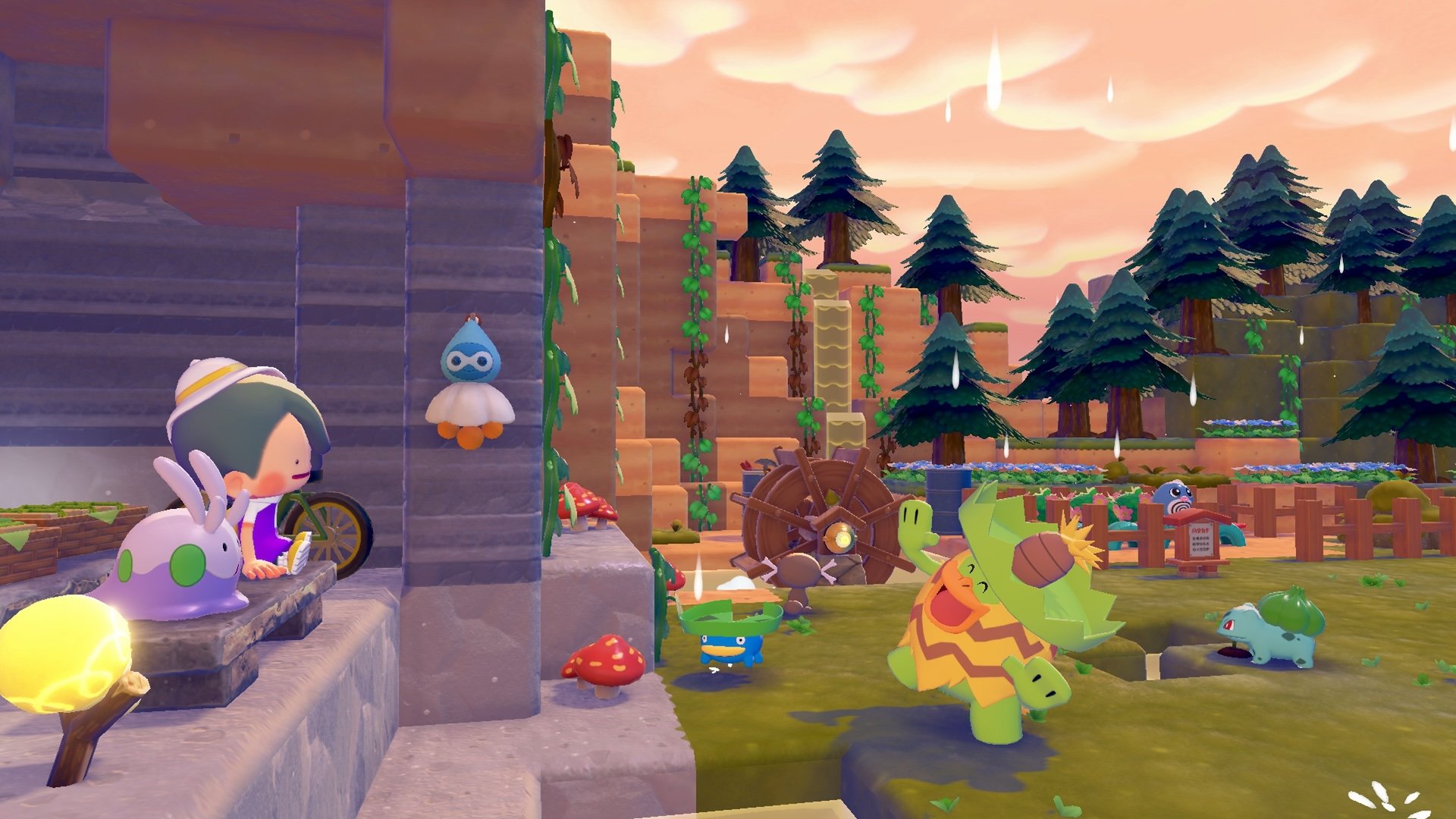
To check the humidity of an area, lead Slowpoke to the zone you want to measure and ask it to yawn. Slowpoke produces a yawn and reports a score out of 100. The longer and louder the yawn, the higher the humidity reading. This mechanic is introduced during the "Yawn up a Storm!" Important Request in the Withered Wasteland, where the goal is to raise Slowpoke's yawn reading all the way to 100 to trigger rain.
How to Raise Humidity
Several methods increase the humidity level in an area. Combining multiple methods is usually necessary to reach higher readings.
Method | Description |
|---|---|
Water vegetation with Water Gun | Use Water Gun (learned from Squirtle) to water trees, grass, and flowers. Actively watered vegetation raises local humidity. Unwatered plants contribute nothing. |
Create grass with Leafage | Use Leafage (learned from Bulbasaur) to place grass blocks, then water them with Water Gun for a humidity boost. |
Break blocked water pathways | Use Rock Smash (Hitmonchan) on rocks with bubbles coming out of them. Breaking these rocks releases water springs that increase local humidity. |
Horsea Fountain | Purchase from the PC Shop for 50 Coins. Place it in a pond or pool to cause water splashing, which passively raises humidity in the surrounding area. |
Sprinklers and fountains | Place outdoor sprinkler and fountain furniture items near water sources. These passively increase humidity in the surrounding zone. |
Field of Flowers habitat | Build the Field of Flowers habitat (Habitat #011, requires 8 Wildflowers). This habitat passively increases local humidity and is a home for Ivysaur and Vespiquen. |
Hydrated Tall Grass | Created by planting tall grass near water sources. Acts as both a humidity booster and a habitat for certain Water-type Pokemon. |
Rain Dance Site | A buildable weather station that creates rainy conditions and provides a large humidity boost. See the Rain Dance Site section below. |
How to Lower Humidity
Some Pokemon prefer dry conditions, so lowering humidity in certain zones is just as important as raising it.
Method | Description |
|---|---|
Smooth Rock | Found in a glowing Pokeball inside a cave near where Onix was trapped. Automatically lowers humidity in the surrounding area. Can be duplicated using the 3D Printer inside the Pokemon Center. |
Campfires | Placing campfires in an area lowers local humidity and creates a warmer, drier environment. |
Sunny Day Site | The opposite of the Rain Dance Site. Built with Castform Weather Charms in Sunny Form instead of Rain Form. Creates sunny weather that dries out the area. |
Cave placement | Habitats placed inside caves are protected from rain, keeping them consistently dry. Specifically recommended for Onix and other dry-preferring Pokemon. |
Distance from water | Placing habitats far from water sources and near dry earth or bare ground keeps them in a drier zone. |
Rain Dance Site
The Rain Dance Site is a buildable weather structure that significantly raises humidity and triggers rainy conditions. It is central to the "Yawn Up a Storm!" quest in the Withered Wasteland, where reaching 100 humidity is required to advance the story.
Requirements:
2 Castform Weather Charms (Rain Form)
1 Wooden Plate (50 Coins from the Pokemon Center shop)
1 Leppa Berry
Setup:
Place the Wooden Plate in the center of the designated area.
Hang the two Castform Weather Charms on either side of the plate on a wall.
Place the Leppa Berry on top of the plate.
Bring Squirtle to the site. Squirtle eats the berry and performs a dance, activating the Rain Dance and pushing humidity to 100.
Sunny Day Site
The Sunny Day Site works identically to the Rain Dance Site but uses Castform Weather Charms flipped to their Sunny Form instead of Rain Form. When activated, it creates sunny weather that dries out the surrounding area, lowering humidity. This is useful for creating dedicated dry zones for Fire-type, Rock-type, and Ground-type Pokemon.
Pokemon Humidity Preferences
Different Pokemon thrive in different humidity levels. Water-type and Grass-type Pokemon generally prefer moist environments, while Fire-type and Rock/Ground-type Pokemon prefer drier conditions.
Pokemon | Preference | Notes |
|---|---|---|
Bulbasaur line | High (moist) | Grass/Poison type. Thrives in humid, well-watered zones. |
Squirtle line | High (moist) | Water type. Prefers seaside or riverside habitats. |
High (moist) | Water/Psychic type. Requires seaside or water-adjacent habitats. | |
Lotad line | High (moist) | Water/Grass type. Requires hydrated habitats near water. |
High (moist) | Water type. Requires Hydrated Yellow Tall Grass habitat. | |
High (moist) | Dragon type. Rain-only Pokemon; require Rain Dance weather to appear. | |
Charmander line | Low (dry) | Fire type. Prefers warm, dry climates away from water. |
Low (dry) | Rock/Ground type. Requires Smooth Tall Grass with a Smooth Rock. Best placed in a cave. | |
Low (dry) | Grass type. Sunny-only Pokemon; requires Sunny Day weather. |
This is not a complete list. Check individual Pokemon Pokedex entries for specific environmental preference details.
Zoning Strategy
Because humidity is zone-based, the game encourages building dedicated climate districts. Group Water-type and Grass-type Pokemon together in a lush, heavily watered zone on one part of the map, and keep Fire-type and Rock/Ground-type Pokemon in a dry zone on the opposite side. Houses can serve as environmental buffers, letting you create a microclimate inside that differs from the outdoor conditions. For example, a Leaf Den can keep Grass-type Pokemon comfortable even if the surrounding outdoor area is drier than ideal.
When habitats for Pokemon with conflicting preferences are placed too close together, their comfort zones can overlap. Check the comfort zone boundaries by clicking the right stick to see the white lines around each habitat. Move conflicting habitats apart or use houses to isolate Pokemon with different needs.
Tips
Ask Slowpoke to yawn whenever you want to check an area's humidity. The 0 to 100 readout gives you an exact measurement.
The Horsea Fountain is one of the easiest early-game humidity boosters. Buy it from the PC Shop for 50 Coins and place it in any pond.
Unwatered plants do not contribute to humidity. Always water vegetation with Water Gun after planting.
Breaking rocks with bubbles (using Rock Smash) releases hidden water springs. Look for bubbling rocks in every area.
Place Onix and other dry-preferring Pokemon inside caves. Caves provide natural protection from rain and keep humidity low.
Duplicate the Smooth Rock using the 3D Printer to create multiple dry zones across your island.
Build the Rain Dance Site early in the Withered Wasteland. The humidity boost is required for story progression and also benefits Water-type habitats in the area.
Players commonly get stuck around 71 to 79 humidity during the "Yawn Up a Storm!" quest. Complete additional tasks like building the Field of Flowers, placing the Horsea Fountain, and watering all nearby trees to push past this plateau before activating the Rain Dance Site.