
Loading...
Loading...
Roofs
May 8, 2026 at 09:33 AM
Add wikilinks to table cells (58 new links)
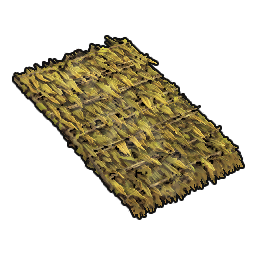
Roofs are the pieces that close the top of a structure and satisfy the Roof requirement for craft stations and NPC merchants that need shelter. Windrose ships 58 roof pieces across four pitch angles (13°, 26°, 45°, and 64°) in material variants that range from starter leaf thatching up to estate-tier ceramic tile and stone. Roofs snap onto Walls and Floors below them and connect to Pillars and Beams where the span is too wide for a single tile. For related top-of-structure pieces that do not satisfy the Roof requirement, see Canopies.
The building menu organizes roofs into seven sub-groups. Counts below reflect the full roster across the launch Early Access build.
Group | Count | Role |
|---|---|---|
Roofs 26°: Flats | 29 | Low-pitch roof tiles used for flat-roofed cabins, verandas, and estate porch extensions. |
Roofs 45°: All pieces | 6+ | High-pitch peaked roof pieces. The default auto-unlocked angle for leaf and straw tiers. |
Roof Caps | 9 | Ridge pieces that cap the peak line of a pitched roof. Without a cap, a pitched roof leaves a visible gap along the ridge. |
Roof Corners (Up / Down) | 19 | Corner pieces that join two roof slopes at an outside or inside 90-degree intersection. Up corners for convex outside turns, Down corners for concave inside turns. |
Roof Frontons | 4 | Gable-end triangular wall pieces that fill the triangular hole under a pitched roof. Placed on the short end of a rectangular building. |
Roof Cap Frontons | 5 + 6 | Specialty corner caps for the junction where a fronton meets the ridge on a peaked roof. |
Roof Tri-Corners (Up / Down) | 8 | Three-way corner pieces for complex junctions on L-shaped or T-shaped buildings. |
Every roof piece is keyed to one of four fixed pitch angles. Pieces from different pitches do not snap to each other, so you choose a pitch at the start of a build and commit. A mixed-pitch roof will leave unavoidable gaps along the ridge line.
Pitch | Shape | Typical Use |
|---|---|---|
13° | Very shallow flat | Estate-tier roofing, mostly in the ceramic tile and stone sets. Preferred for wide interiors where headroom matters. |
26° | Low-pitch flat | Gentle flat roofs that read as verandas and covered porches. The workhorse pitch for mid-tier builds in leaf, straw, reed, and tile. |
45° | Peaked | The default auto-unlocked pitch for leaf and straw. Classic pirate-cabin silhouette; reads best over narrow buildings 2 to 3 tiles wide. |
64° | Steep peaked | Tall steep roofs gated behind the 26° and 64° triangle wall plans. Works well on narrow single-tile huts and guard towers. |
Most new players build in 45° leaf because that is the auto-unlocked pitch. The 26° variants require the Plans: Leaf Roofs and Triangular Walls curio in the early tier and Plans: Straw Roofs and Triangular Walls for straw. The 13° and 64° variants are gated behind higher-tier plans, most commonly the Plans: Tile Roofs Extras Spanish Caribbean set.
Roofs unlock in progressive material tiers that match the rest of the base-building set. Higher tiers cost more processed materials but have higher max health and cleaner visual styling. Walls, floors, and roofs share the same tier pacing, which makes it possible to build a full matching set per tier.
Tier | Material | Core Resources | Unlock Path | Durability |
|---|---|---|---|---|
T1 | Leaves | 1 Plant Fiber per standard piece | 45° auto-unlocked on game start. 26° from Plans: Leaf Roofs and Triangular Walls curio. | Lowest. Roughly 750 HP per tile. Adequate for early-game shacks, vulnerable to raids and wear. |
T2 | Straw | 1 Wood + 1 Plant Fiber per piece | Plans: Straw Roofs and Triangular Walls unlocks 26° and 64° triangular variants. | Moderate. Roughly 1,000 HP per tile. Standard mid-game roofing. |
T3 | Reed / Sticks / Planks / Weathered | Wood-based, plus Wood intermediates for planks and weathered wood | Recovered from plan drops across the archipelago as you reach new islands. | Higher. Roughly 1,000 to 1,500 HP depending on variant. |
T4 | Mahogany / Ceramic Tile | 3 Clay per standard tile roof piece, or Hardwood for mahogany | Plans: Marble, Plaster, and Tile Base set and Plans: Tile Roofs Extras, both part of the Spanish Caribbean tier. Plan drops from Points of Interest. | High. Roughly 1,500 to 2,500 HP. Estate-grade roofing for permanent bases. |
T5 | Stone | Processed Stone and hardwood beams | Late-game plan drops from high-tier Points of Interest and faction vendors after clearing regional threats. | Highest. Roughly 2,500 HP per piece. Reserved for fortified settlements. |
Roofs share tier pacing with Walls, Floors, and Pillars and Beams. If you scout Recipe Papers for one tier of roof, you typically pick up the matching wall and floor plans at the same Points of Interest.
A large set of craft stations and every Merchant Contracts NPC requires a roof directly overhead to function. The check is a simple overhead test: the station's hologram turns valid as soon as a single roof tile sits above it. There is no sanity check for walls, floors, or building completeness, so a one-tile roof on top of a pair of Pillars and Beams is enough.
Workbench and its tier upgrades
Jewelery Table and the Jeweler's Bench
All three merchant NPCs: Merchant: Animal Products, Merchant: Food, and Merchant: Natural Resources
Some stations produce smoke or open flame and must remain outdoors. Placing them under a roof returns an invalid (red) hologram:
Bonfire: the heart of your settlement. Must stay open to the sky.
Cooking Fire: open flame; rejects overhead coverage.
Charcoal Kiln: smoke-producing; outdoor only.
Smelting Furnace and Large Smelting Furnace: outdoor only.
Seedbed and other farming plots: require sunlight.
Every functional station, roofed or not, also has to sit inside the glowing radius of a Bonfire. The roof check and the bonfire range check are two separate requirements: a station that is roofed but out of bonfire range still refuses to work, and vice versa.
Roof pieces snap to walls and floors below them and to adjacent roof pieces at matching snap points. The building hologram previews the final shape before you commit materials. It uses color feedback for both geometry and resources:
Green: the roof snaps cleanly and you have enough materials to place it.
Yellow: the roof can snap, but you are short on one or more materials.
Red: the placement is invalid (overlapping another piece, wrong pitch for the adjacent roof, or the station underneath rejects a roof).
If the hologram looks wrong, placed pieces will look wrong too. Rotate using the designated rotate key rather than walking around the placement point. If you are trying to align a finicky piece (most often a fronton or a cap), anchor from the bottom of the hologram rather than the top, because most roofs build upward from a wall edge.
The easiest build order is walls first, roof second. Placing roofs directly onto finished walls lets the snap system pick the correct tile automatically. Attempting to place roofs mid-air without supporting walls or pillars is possible but requires more manual alignment.
Early-tier leaf roofs at 45° are auto-unlocked. Every other pitch and material needs a plan. Plans come from chests at Points of Interest and from faction vendors after you have cleared enough regional threats. See Recipe Papers for the full plan system.
Plan | Tier | Unlocks |
|---|---|---|
T1 | 26° leaf roof pieces plus matching triangular walls | |
T2 | 26° and 64° straw variants plus triangular walls | |
Plans: Reed Roofs | T3 | Reed roof pieces in 26° and 64° variants |
Plans: Marble, Plaster, and Tile. Base set | T4 | Base ceramic tile roofs plus plaster walls, marble floors, hewn stone foundations, stone pillars, and stone stairs |
T4 | 13° and 64° ceramic tile variants, the estate-tier shallow and steep pitches | |
T4 | Matching mahogany trim that pairs with mahogany roofing |
Keep every recipe paper you loot until you can read it at the Workbench. Plans are account-wide once learned, so you do not need to replant a duplicate recipe across saves.
If you are early in a run and just need a roof over a station, the fastest solution is the Prebuilt StructuresHut Frame. It is a single buildable that drops walls and a roof together for 56 Plant Fiber. Place the Hut Frame first, then drop your Workbench or station under it. The Hut Frame satisfies the roof check without requiring you to learn any plans or place individual tiles.
The trade-off is that the Hut Frame is a fixed shape and cannot be extended with matching pieces. Most players use it as a temporary shelter in the early hours, then demolish and replace it with a custom build once they have unlocked better materials.
Demolishing a roof refunds the full material cost. Open the Base Building menu with B and click the middle mouse button to toggle destroy mode, then click the roof piece. The refund goes straight into your inventory, which makes roof layout cheap to iterate.
Note that roofs cannot be moved as placed pieces. If you want to reposition a roof, demolish it and rebuild at the new snap point. Any decoration attached to the walls below is destroyed when you demolish those walls, so save any ornaments or lights you want to keep before a large renovation.
Once you have unlocked a higher tier, you can upgrade an existing roof tile in place with the construction hammer. Highlight the roof piece, select the upgrade prompt, and the game consumes the material difference rather than charging the full new-tier cost. This is the standard path from leaf through straw into the final tile or stone set without having to demolish and replace the whole building.
Upgrading does not change the pitch. A 45° leaf roof upgrades to a 45° straw or plank roof; the angle stays constant. To change pitch you must demolish and rebuild with the new-pitch pieces.
Steep pitches push the roofline higher and eat into the floor footprint above, while shallow pitches leave more usable second-story space. Plan accordingly if you intend to place decorations or pillars above:
13°: negligible vertical rise; behaves almost like a flat floor for most decoration purposes.
26°: modest rise; leaves room for pillars and beams above without awkward clearance.
45°: classic pitched-roof look; the ridge line sits roughly one wall-height above the roof edge.
64°: steep silhouette; useful for narrow towers but limits anything you could place on top.
Peaked pitches look better over narrow structures (2 to 3 tiles wide). Wider rooms read cleaner with shallow pitches, because a 45° or 64° peak over a 6-wide room produces an exaggerated roofline. If you are building a long hall, the shallow 13° or 26° tile variants are the better fit.
Leaf and straw roofs are cheap but make the building read as temporary. Upgrade to planks, reed, or ceramic tile before committing to a permanent base or entering the Building Contest.
Budget two extra cap pieces per peaked roof. Placing a pitched roof without a cap leaves a visible seam along the ridge line that most players miss on the first build.
Large roof pieces cost slightly more per tile but provide larger shelter coverage under a single health pool, which makes them more durable than several small tiles under the same footprint.
When you are placing a single roof just to satisfy the Roof requirement on a Workbench or merchant, pick a Large Roof variant rather than a standard tile. You save on pillars and get the shelter check at minimum material cost.
Build walls first, then roofs. Roof pieces snap to wall tops and floor tops more reliably than to other roof pieces in open air.
If you plan to upgrade materials later, keep the same pitch across the whole building. You cannot mix pitches, but you can upgrade leaf 45° to straw 45° in place without demolishing.
For a quick temporary roof while you build, use the Hut Frame from Prebuilt Structures. 56 Plant Fiber for walls plus roof in one placement.
Save loose Recipe Papers until you reach the Workbench to read them. Plan drops from Points of Interest are the main gate on higher-tier pitches and materials.
Base Building: the overall build system
Settlement Building: settling and expanding a permanent base
Building Pieces: the full catalog of every structural part
Pillars and Beams: support pieces for wide roof spans
Canopies: shade structures that do not satisfy the Roof requirement
Prebuilt Structures: the Hut Frame and other one-shot structures
Bonfire: the range check every station shares with the roof check
Craft Stations: the full list of stations and their requirements
Recipe Papers: the plan system that gates higher-tier roof variants
The complete list of Roofs variants is shown below. Each entry links to its own article with full build cost, requirements, and source information.
Variant | Build Cost |
|---|---|
Wood ×5 | |
- | |
- | |
Clay ×2 | |
Clay ×2 | |
- | |
- | |
Wood ×4, Plant Fiber ×4 | |
Plant Fiber ×2 | |
Wood ×1, Plant Fiber ×2 | |
Wood ×1, Plant Fiber ×2 | |
Clay ×4 | |
Wood ×2, Plant Fiber ×4 | |
Wood ×1, Plant Fiber ×1 | |
Clay ×3 | |
Plant Fiber ×1 | |
Wood ×1, Plant Fiber ×1 | |
Wood ×1, Plant Fiber ×1 | |
- | |
- | |
Wood ×1, Plant Fiber ×1 | |
Clay ×3 | |
Plant Fiber ×1 | |
Wood ×1, Plant Fiber ×2 | |
Wood ×1, Plant Fiber ×1 | |
Clay ×3 | |
Plant Fiber ×1 | |
Wood ×1, Plant Fiber ×2 | |
Wood ×1, Plant Fiber ×1 | |
Clay ×3 | |
Wood ×1, Plant Fiber ×1 | |
Plant Fiber ×1 | |
Wood ×1, Plant Fiber ×2 | |
Wood ×1, Plant Fiber ×1 | |
Clay ×2 | |
- | |
- | |
- | |
Plant Fiber ×1 | |
Wood ×1, Plant Fiber ×1 | |
- |