

Overview
Traditional Pokemon evolution does not exist in Pokemon Pokopia. Pokemon cannot evolve through leveling up, evolution stones, trading, friendship, or any other method from the mainline games. Instead, evolved forms are treated as completely separate species with their own habitats, Pokedex entries, rarity tiers, and specialties. Bulbasaur, Ivysaur, and Venusaur all exist in the game, but each must be found individually by building the right habitat. You can have all three living together in the same house, but Bulbasaur will never transform into Ivysaur.
Why There is No Evolution
Pokopia has no battling system and no experience points. Pokemon do not level up in the traditional sense; they gain comfort and friendship through habitat quality, food, and personal requests. Without a leveling system, the standard evolution trigger (reaching a certain level) does not apply. The game's entire progression model is built around attracting and befriending individual Pokemon through habitat creation, not training them to grow stronger.
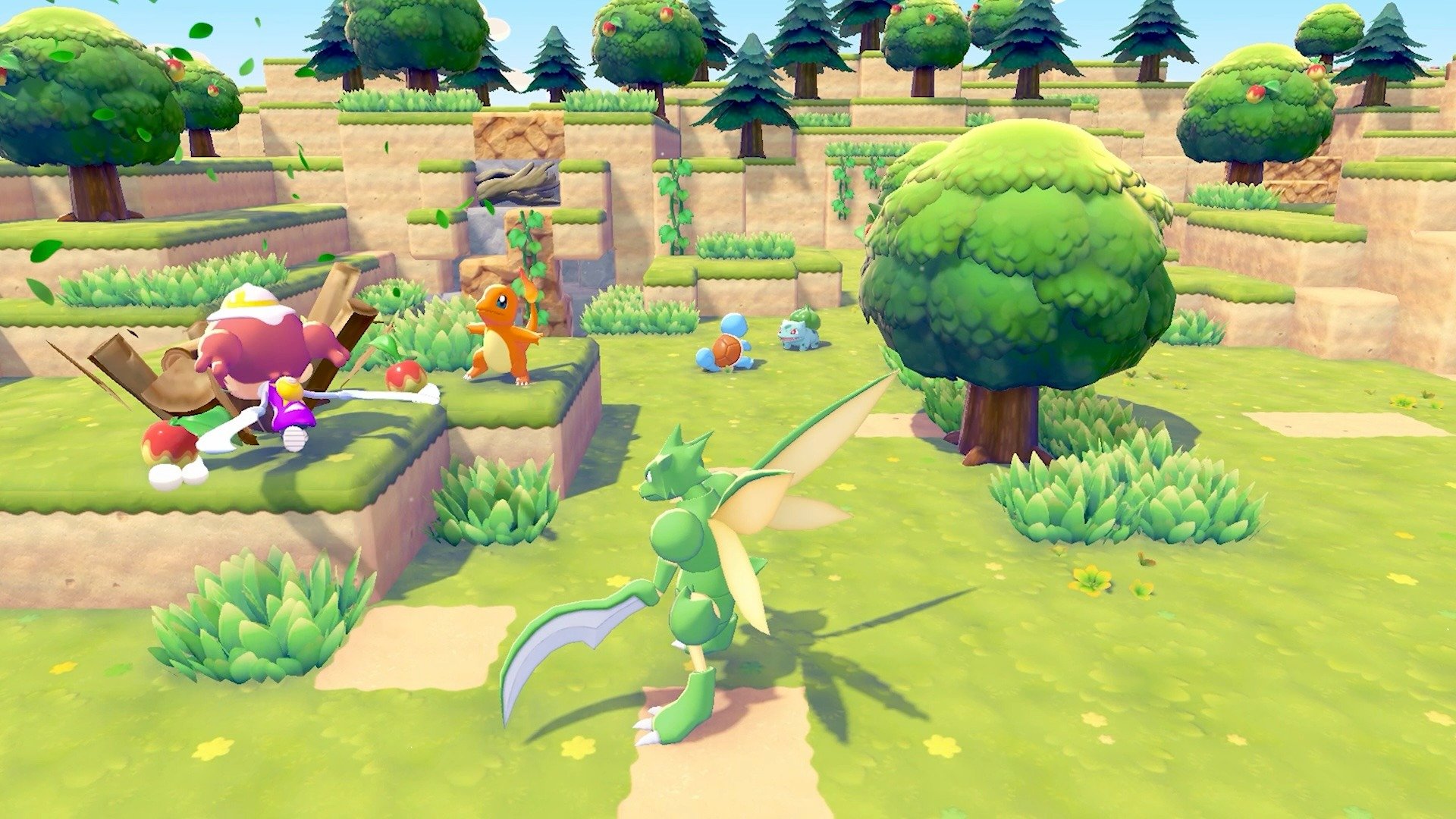
This design means every Pokemon you meet is a permanent, individual character. Ditto (the player character) builds relationships with each one separately. A Charmander in your settlement will always be that same Charmander; it will not change into Charmeleon.
How Evolved Forms Work
Evolved Pokemon still appear in the game and can be befriended normally. They are simply different Pokemon that require different habitats. Each evolutionary stage has its own:
Pokedex entry: Separate entry number, description, and specialties.
Habitat requirements: Different habitat types, furniture, or conditions to attract them.
Rarity tier: Evolved forms are typically rarer than their base forms.
Specialties: Each stage may have different specialties. For example, Pidgey and Pidgeotto both have Fly and Search, but other evolution lines have different specialty splits.
If any member of an evolution line is present in the game, all other members of that line are also present. You will never encounter a situation where Bulbasaur exists but Ivysaur or Venusaur does not.
Rarity Tiers
Pokemon in Pokopia are assigned rarity tiers that affect how likely they are to appear when a habitat is built. Evolved forms are generally rarer than their base stages.
Rarity | Description | Examples |
|---|---|---|
Common | Appears readily when the correct habitat is built. Base-stage Pokemon usually fall into this tier. | |
Rare | Less likely to appear. Often requires building the habitat multiple times or clearing out common Pokemon first. | |
Very Rare | The hardest to attract through standard habitats. Usually the final evolution stage or Pokemon with limited habitat options. |
How to Find Evolved Pokemon
Since evolved forms are rarer, they require more effort to attract. Several strategies help:
Guaranteed Rare Spawn Strategy
The most reliable method for getting a rare or very rare Pokemon is to fill all other slots in a habitat first. Since you cannot attract duplicate Pokemon in Pokopia (only one of each species exists), once every common and rare Pokemon native to a habitat has been found, the next spawn is guaranteed to be the remaining rare one. For example, if a habitat can attract five Pokemon and you already have four of them, the fifth and final one will always be the rare species.
Dedicated Habitats
Some evolved Pokemon have dedicated habitats where they are the only possible spawn. Building one of these habitats guarantees that specific Pokemon will appear. For example, the Floating in the Shade habitat only attracts Blastoise, making it much easier to obtain than building a shared Hydrated Tall Grass habitat where Blastoise competes with four other species.
Moving Pokemon to Free Slots
If a habitat has attracted a common Pokemon but you want the rarer evolved form from that same habitat, move the common Pokemon into a custom house to free up the habitat slot. For example, move Gastly from its Spooky Study habitat into a house, and the freed habitat can now attract Haunter instead.
Time, Weather, and Items
Some evolved Pokemon only appear under specific conditions:
Time of day: Espeon only appears during the day; Umbreon only appears at night.
Weather: Rain-only Pokemon like Goomy and its line require Rain Dance weather to spawn.
Food and furniture: Adding a Naptime Bed or specific food items to a habitat can sometimes attract evolved versions of the Pokemon listed for that habitat.
Pokedex Structure
The Pokopia Pokedex uses its own regional numbering system (not the National Dex). Evolution lines are grouped consecutively, with each stage receiving its own separate entry. The game contains 300 Pokemon in total, and this count includes all evolutionary stages as separate entries.
Dex # | Pokemon | Notes |
|---|---|---|
#001 | Base form | |
#002 | Middle stage (separate entry) | |
#003 | Final stage (separate entry) | |
#004 | Base form | |
#005 | Middle stage | |
#006 | Final stage | |
#007 | Base form | |
#008 | Middle stage | |
#009 | Final stage |
You may discover evolved forms before their base stages. For instance, you might befriend Flaaffy before encountering Mareep. The Pokedex tracks all discoveries regardless of order.
Evolution Line Examples
Starter Lines
The three Kanto starters each have fully separate habitats for every stage. Bulbasaur appears in Tall Grass (common), Ivysaur in the Field of Flowers (rare), and Venusaur in Garden-type habitats (very rare). All three can live together in the same house once befriended.
Eevee and Eeveelutions
Eevee is one of the most notable examples. In the mainline games, Eevee evolves into different forms using stones, friendship, location, or time of day. In Pokopia, Eevee and all eight Eeveelutions are separate species, each requiring a unique habitat with a specific food item and an unlock condition. See the Eevee and Eeveelutions article for the full list of habitat recipes.
Trade Evolution Pokemon
Pokemon that traditionally required trade to evolve (Gengar, Machamp, Alakazam, Golem, and others) simply appear as rare habitat spawns in Pokopia. There is no trading mechanic for Pokemon; the word "Trade" in Pokopia refers to exchanging items with Pokemon that have the Trade specialty. All trade-evolution Pokemon can be found by building the appropriate habitats and using the guaranteed rare spawn strategy.
Branching Evolutions
Pokemon with branching evolution lines (like Oddish, which can become Vileplume or Bellossom) have all branches present as separate species. In the Pokedex, Oddish is #013, Gloom is #014, Vileplume is #015, and Bellossom is #016. Each requires its own habitat conditions.
Tips
Do not wait for your Pokemon to evolve. Build the correct habitat for the evolved form you want instead.
Use the guaranteed rare spawn strategy: attract all common Pokemon from a habitat first, then the rare evolved form becomes the next guaranteed spawn.
Check the Habitat Dex (accessible from the Pokedex menu) to see which habitats attract which evolved forms and their rarity ratings.
Move common Pokemon from habitats into custom houses to free up slots for rarer evolved forms to appear.
Look for dedicated habitats that only attract a single evolved Pokemon. These skip the rarity competition entirely.
Some evolved forms require specific weather or time of day. Check the Pokedex entry for spawn conditions before building their habitat.
All members of an evolution line are present in the game. If you found the base form, the evolved forms are available somewhere.
The Naptime Bed and specific food items placed in habitats can help attract evolved versions. Experiment with different furniture combinations.