Loading...
Loading...
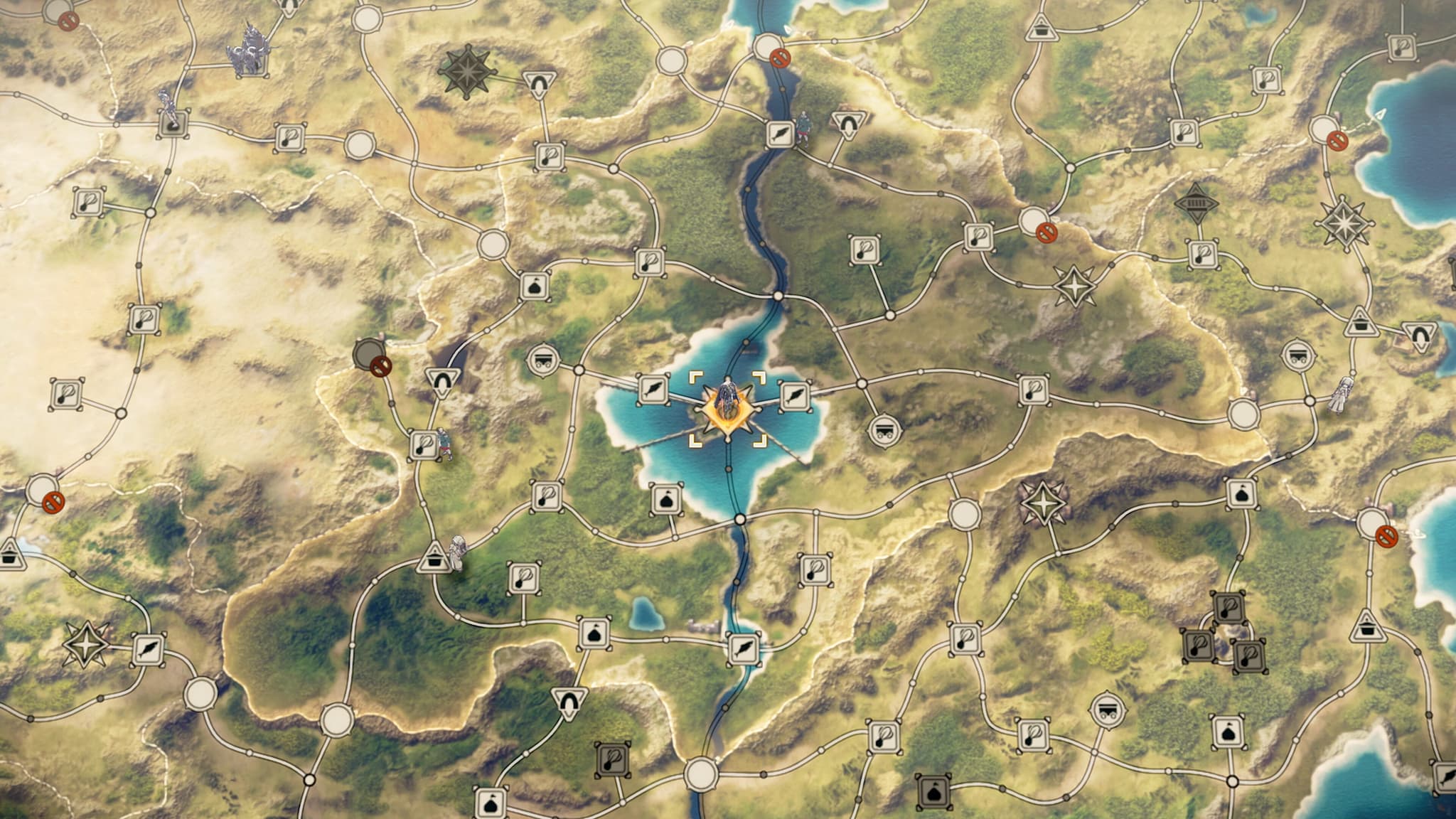
How exploration works outside Dagsion in Fire Emblem: Fortune's Weave, covering world map movement and its cost in turns, regions only some Heroes can reach, town visits, random Skirmishes, and the overworld functions unique to each of the four Heroes.

Skills in Fire Emblem: Fortune's Weave are the passive and triggered abilities a unit carries into combat, split into personal skills unique to one character and combat skills shared across the roster.

How the four route campaigns work in Fire Emblem: Fortune's Weave: the Fox, Lion, Wolf and Eagle obelisks, the three Parts and their chapter titles, route-exclusive functions, the single save file, Replay, and the Clear Save after the credits.

How armaments work in Fire Emblem: Fortune's Weave, covering the six weapon types and their roles, the stat schema including the new Curse column, the durability rule, forging, where named weapons turn up, and the published roster.
How recruiting works in Fire Emblem: Fortune's Weave: support with the route's Hero, a Renown level, and extra conditions such as gold, items, quests or paralogues, with every character's requirements listed route by route and the characters who join in Parts II and III.

Every class documented for Fire Emblem: Fortune's Weave, sorted by the Beginner, Specialty and Advanced tiers, with the Commoner and Noble starting classes and the classes unlocked later through quests and the story.
The cursed artifacts that carry Blaze Arts in Fire Emblem: Fortune's Weave, one for each of the four Heroes, and how they feed the Blaze gauge.

Combat Arts in Fire Emblem: Fortune's Weave are attacks unleashed at the expense of weapon durability, trading Uses for extra power, longer reach or another effect. The published listing runs to twenty-seven entries, ten arts carry full stat lines, and Dietrich's path adds duels that award new arts.
Consumables, shields, accessories and the Storage command in Fire Emblem: Fortune's Weave, with the published data for Vulnerary, Concoction and Antitoxin, what Licenses are for, how forging works, and where items turn up in the released game.
Certification Exams are how units change class in Fire Emblem: Fortune's Weave, checking weapon rank letters and a Renown level and spending a License of the matching tier, with Master Class exams opening in Part III.

Fire Emblem: Fortune's Weave offers two difficulty settings, Normal and Hard, alongside two unit-death modes, Casual and Classic. The two choices are independent, giving four combinations, and retail guides describe ways to change them after a run begins.
The Obelisk Chamber is the hidden room beneath Fortuna's temple in Dagsion that sends Eshmel back to 1449. It is the hub of the 1454 present and the place where a run can be restarted without losing progress.
Crests are the hereditary marks carried by certain characters in Fire Emblem: Fortune's Weave, called Bloodmarks in Dagda, with each individual mark named a Diadem and tied to a god of the Dagdan pantheon.

How the story is framed and structured: the world ends in 1454, Sothis calls down a single soul, and three Parts carry Eshmel from the Heroic Games through the war to the final Salvation arc.
The nine optional Part 1 side battles in Fire Emblem: Fortune's Weave, with who gives each one, its rewards, its date windows on each route, and the recruits and Part 3 allies it affects.
The clans, armies and orders of Fire Emblem: Fortune's Weave, from the four Heroes' Heroic Games teams to the Temples of Dagda and the Order of Mithras.

Every named character recorded for Fire Emblem: Fortune's Weave, grouped by the clan or faction the roster files them under, with roles, classes and join points across all three Parts.
Motivation is a Dagsion downtime resource in Fire Emblem: Fortune's Weave, spent alongside gold on arena training and tracked separately from the turn clock.
Renown is the standing level Fire Emblem: Fortune's Weave tracks across a run. It rises through main missions, subquests, paralogues and audiences with the gods, and it gates certification exams, recruitment, Dagsion facilities and parts of the world map.
The ten track Special Release added to Nintendo Music on August 4, 2026, running 30:13 and including the main theme, with the full track list, Japanese titles and runtimes, and what the developers have said about the score.
Commoner is the shared starting class in Fire Emblem: Fortune's Weave. It sits outside the three-tier ladder, can pick up any weapon type without a proficiency bonus, and is the listed start for most of the playable cast.

Theodora Sergio Sabangrain is the young Queen of Saramis and one of the four Heroes of Fire Emblem: Fortune's Weave. She leads the Wolf route, commands Battalions on the world map, and fights to restore her goddess's honor.

Magic in Fire Emblem: Fortune's Weave is a separate system from the five weapon types. Spellcasting classes attack with spells instead of a weapon, magic is effective against heavy armour, and each spell has a limited number of casts.

Blaze Arts are special moves in Fire Emblem: Fortune's Weave that spend the user's health and fill a gauge. Nine characters have them. Filling the gauge to about the halfway mark grants a stat boost for the rest of the battle, while topping it out triggers a Burst that halves the unit's maximum HP.

Anatolia is a Mediator in Fire Emblem: Fortune's Weave, known as the Mystical Bride, who leads the Brides of the Pale Raven. She runs a fortune-telling shop in Dagsion and fights with the firearm Salamander, Qi-powered martial arts and uncommon magic.

Dietrich Gregor Lamine is a swordsman shipwrecked on Dagda and one of the four Heroes of Fire Emblem: Fortune's Weave. He leads the Lion route, wields the Hero's Relic Answerer, and fights to find a stronger opponent.

The Dagdan pantheon is the set of gods worshipped across Dagda. Seven of their temples stand on Dagsion's temple row under a bronze statue of the Divine Sovereign, and volunteering at one earns a blessing for battle.

Cai Castor is a fifteen-year-old from the village of Ribeira and one of the four Heroes of Fire Emblem: Fortune's Weave. He enters the Heroic Games to free his imprisoned father. Profile, story, faction, Blaze Arts and his Fox route.

Leda, also known as Leilidahna, is a vihuela player titled Rose of Caelus and one of the four Heroes of Fire Emblem: Fortune's Weave. She leads the Eagle route, hunting her father's killer, and can summon Demonic Beasts with her songs.

Eshmel is the player-created avatar and the true protagonist of Fire Emblem: Fortune's Weave, called down by Sothis to save Dagda from the demon god Balor. Profile, origin, the Pale Raven form, the Purifying Flash Blaze Art and Eshmel's role across all three Parts.
Serving at the temples of Dagsion in Fire Emblem: Fortune's Weave raises a Bless Level with one of six gods and unlocks blessings to use in battle. Each god has a day of the week, Bless Levels carry across every route, and reported effects cover all six.
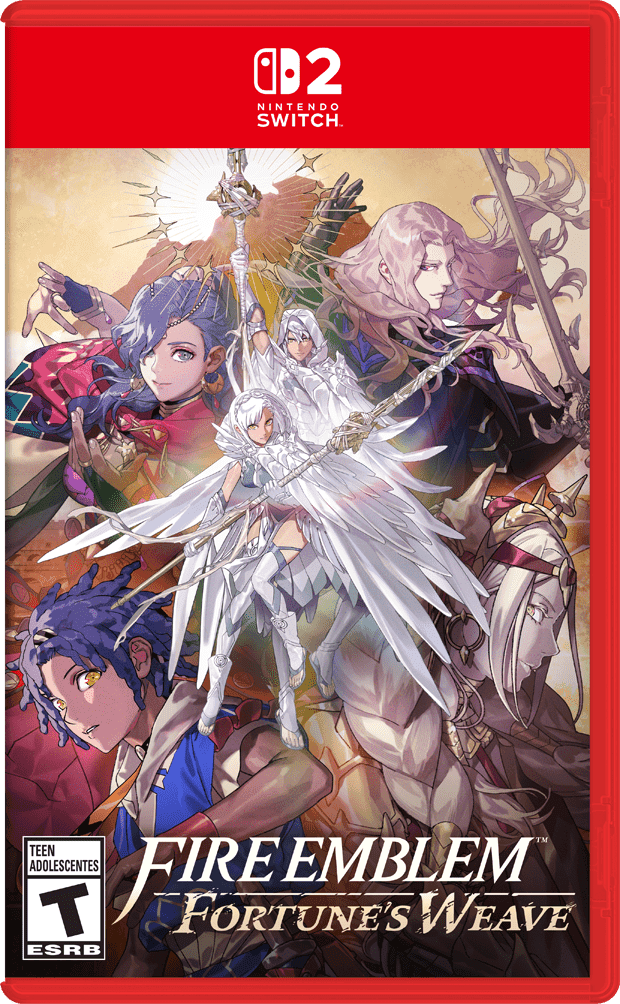
Release date, platform exclusivity, prices in four regions, the regionally different Dagdan Collection contents, the version history with the four weapons Ver. 1.0.1 adds, reception, age ratings and the announcement timeline for Fire Emblem: Fortune's Weave.
The stretch of free time between matches of the Heroic Games in Fire Emblem: Fortune's Weave, spent training at the arena, shopping, volunteering at temples, taking quests, recruiting warriors and resting at inns before the next fight.
The Divine Classes are the eight highest classes in Fire Emblem: Fortune's Weave, unlocked at the Temple of the Diadem in Part III with the five Keys of the Diadem and an item from each of the temple's chambers.
Raksha, called the Magistra, is the masked figure the Order of Mithras answers to in Fire Emblem: Fortune's Weave, with influence over Solel and several named agents working for her.
Boons of Salvation are the save-wide bonuses of Fire Emblem: Fortune's Weave, bought with Karma Shards earned from Notable Deeds. This page lists every Boon and its tiers, and covers the Part III Merge Causality function the shards also pay for.

How a battle works in Fire Emblem: Fortune's Weave: the grid, deployment, the combat forecast, terrain, adjacency bonuses, the absent weapon triangle, and Gambits with the battalions behind them.
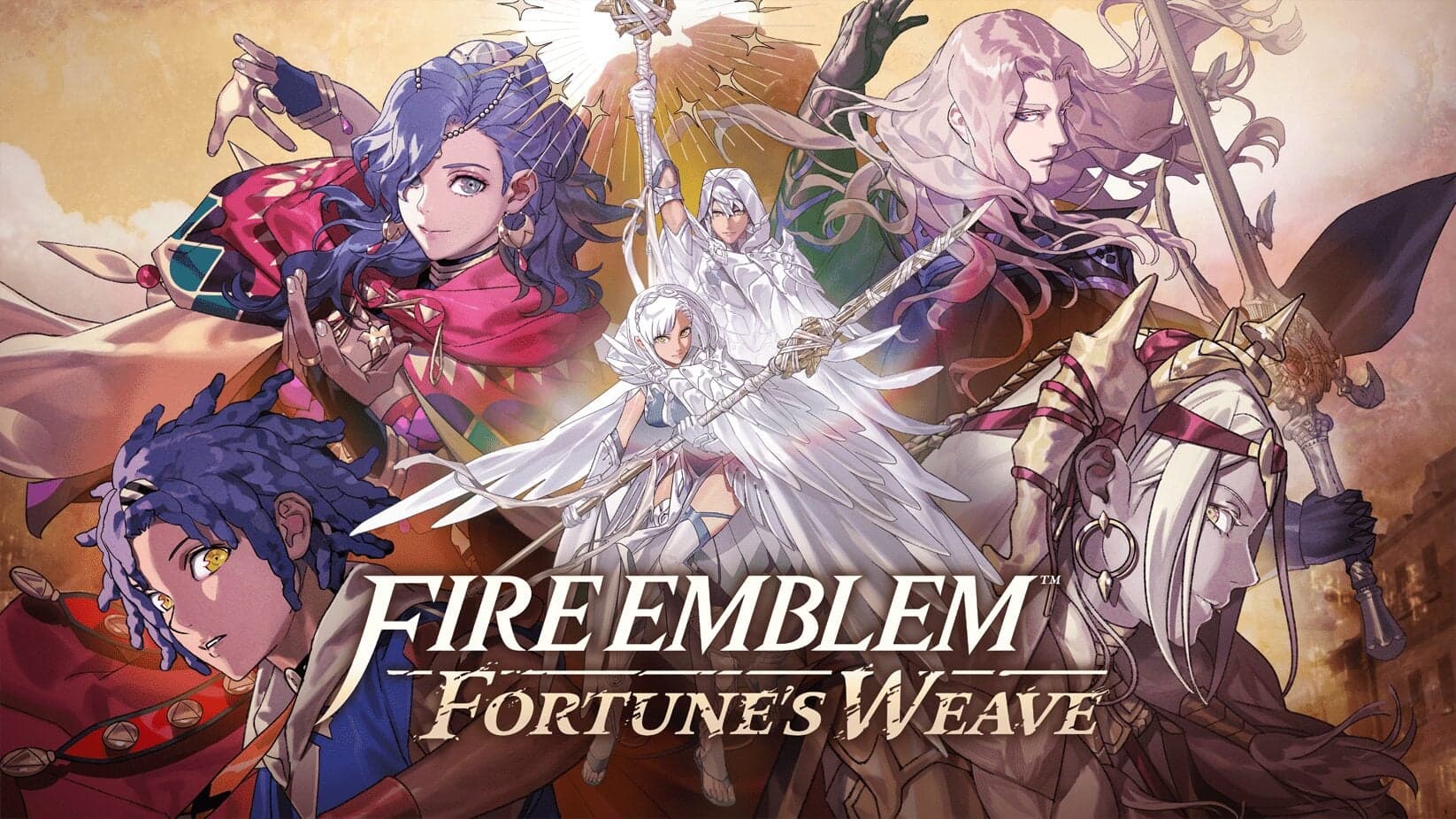
Fire Emblem: Fortune's Weave is a turn-based tactics role-playing game from Intelligent Systems, released September 17, 2026 on Nintendo Switch 2. Four Heroes compete at a gladiatorial tournament, and a summoned soul travels back to change their fates.
Talimun is a playable character in Fire Emblem: Fortune's Weave, chief manager of the merchant guild Vandahl Trading and head of the clan called The Moon's Lie. He fights with the cursed sword Long-Night Katara.
How supports work in Fire Emblem: Fortune's Weave: adjacency bonuses on the battle map, the gifts, meals and Stage Shows that raise support levels across every route, and the C, B and A conversations held at inns.