
Fire Emblem: Fortune's Weave opens at the end of the world and works backwards from there. Five years after the Heroic Games, the demon god Balor has revived and the continent of Dagda faces its end. Even the four Heroes who played a significant role in the Games have vanished. The progenitor god Sothis calls down a single soul to confront the situation, and the player is then asked whether to fight Balor directly or travel into the past and change what became of the four.
Three Parts, and the Timeskip Between Them
The plot is built in three Parts across a timeskip, and all of them play out on Dagda. The game opens on the later half. Balor's forces hold the continent, and a good part of that force is made up of reanimated corpses, which the people have taken to calling the risen dead. What sits on the other side of the skip is set mostly in 1449 and turns on the Heroic Games in Dagsion. Eshmel crosses between the two, appearing at particular moments in the earlier period to change what the later one becomes.
Part | In-World Year | What It Covers |
|---|---|---|
Part 1 | Mostly 1449 | The Heroic Games in Dagsion, played through four times over as the four Heroes’ campaigns |
Part 2 | After the Games, still before the timeskip | The war against the Dagdan Empire, split the same four ways. The maps are reported to run close to identical across all four routes, with the differences sitting mostly in dialogue |
Part 3 | 1454 | Balor and his forces hold Dagda, the living are in hiding, and the Promised One’s Army works to break the siege. One campaign rather than four, led by the protagonist |
Part 3, titled Salvation, is entered through the Door of Destiny in the Obelisk Chamber. The door is open at any time, but only Heroes who have finished their own War Arc take part, so in practice Part 3 follows one or more completed Part 2 campaigns. Guides to the finished game still recommend finishing at least two Part 1 routes, and as many paralogues as possible, before going through, since Part 3 battles are demanding and a larger army helps. A Hero whose paralogue is finished but whose own Part 1 route is not can still join as a battle ally, without story scenes or supports.
Dagda itself is described as a continent lying south of Fódlan. That establishes a shared world and nothing more. No published material places this story before or after any other, and the years quoted here belong to the Dagdan Calendar alone.
The End of the World
The framing sequence runs in 1454 of the Dagdan Calendar, five years after the Games were held. Balor has come back, the capital Dagsion has been overrun, and the dead walk in its ruins. Nintendo's word for what happened to the four Heroes is that they have vanished. Nothing published states that they died, and this wiki does not say that they did.
The composition of that army is stated directly: it is at least partly made up of reanimated corpses, and risen dead is the name the surviving population uses for them. They are the enemy type the present-day chapters are built around, which is why a spell such as Seraphim, effective against undead foes, matters more in 1454 than it does during the Games.
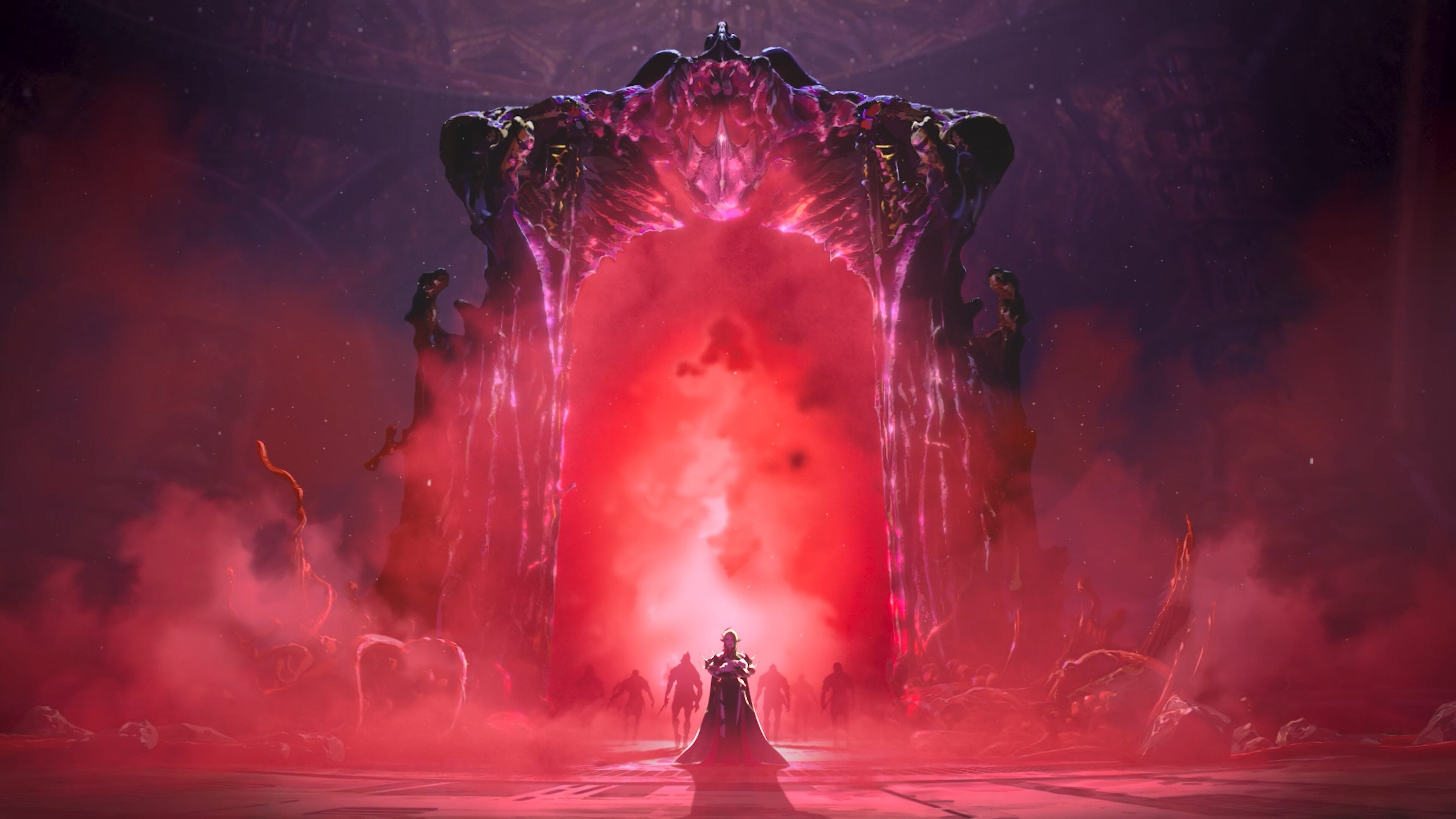
Accounts of the opening describe an Underworld Gate that has appeared over Dagsion, turning the city into a hive of shades, with survivors still fighting the risen dead among the wreckage. The protagonist finds two of them, Hong Hua and Troy, and the three of them form the group that carries the present-day thread.
The Summoned Soul
Sothis, described in the game as the progenitor god, calls down one soul to answer the situation. Nintendo's narration is unambiguous about who that soul is: it is the story's true protagonist, not one of the four Heroes. The character is a player-created avatar with the default name Eshmel, and the player chooses body type, skin, hair and name. In the fiction the protagonist carries the titles Promised One and Herald of the Pale Raven, wields the lance called the Nameless, and can take the form of a white bird.
The goddess of fate Fortuna attaches herself to the same group, and it is her power that makes the rest of the story possible.
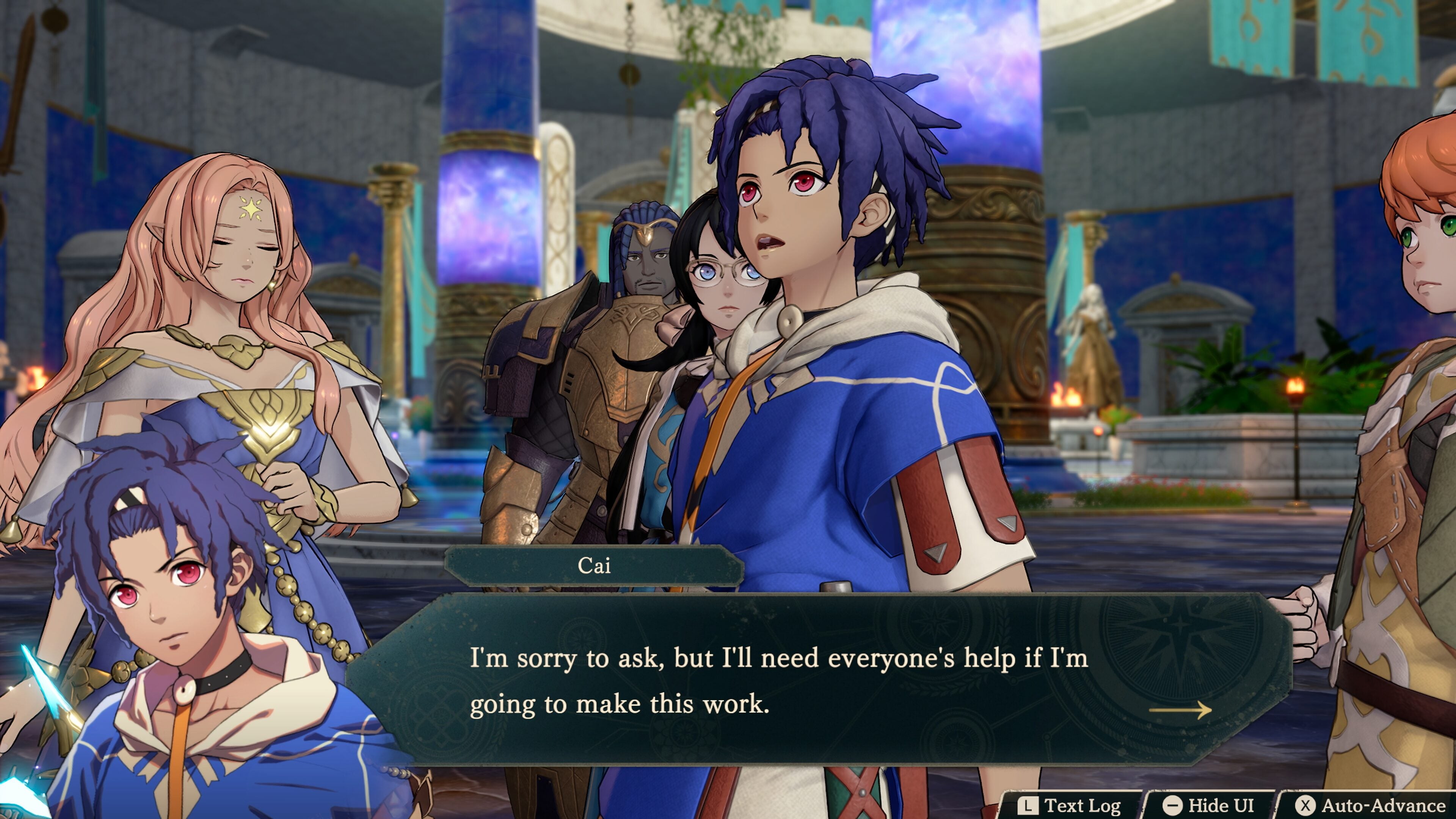
The task is handed to the pair of them rather than to Eshmel alone. Sothis charges Eshmel and Fortuna with righting the past so that the present can be undone, and it is Fortuna who does the sending, pushing Eshmel back across the timeskip. The stated goal is to change what becomes of Cai, Dietrich, Leda and Theodora so that all four can be carried forward into 1454 and put to work against Balor. Fortuna's own line on why is blunt: you will never win the battles ahead without them.
Two Choices
The structure is laid out plainly rather than hidden. You are given two choices: face the forces of the demon god Balor on your own, with the knowledge that it is no easy task, or use the time-travelling powers of the goddess Fortuna to change the fates of the four Heroes. Taking the second path is what opens the four campaigns set during the Games.
Nintendo's trailer copy compresses the same fork into a single line: fight a god alone, or change fate and gather heroes to your cause. Fighting alone is presented as a real option rather than a bluff, and the game does not require the four campaigns to be finished before the present-day thread can be picked back up.
Allies won over in the past do not stay there. Those who join you strengthen the might of your assembled forces for the fight in the present, which is the mechanical reason to work through the Heroes' stories rather than charge Balor immediately. The segment closes by asking which path you will walk.
The Prologue and the Split
Two prologue chapters are shared by every playthrough before the story branches. They run in 1454 and end at the point where the four routes open up. During the second prologue the four Heroes appear as tutorial bosses, fighting in classes different from the ones they use as playable units. After that, chapters carry route names and the story moves to 1449, the year of the Games. How the four branches are organized in play is covered on Routes.
The Protagonist in the Past
In the 1449 chapters the character under the player's control is the Hero whose route is running, not the protagonist. Hands-on accounts describe the protagonist as present in the past mostly as the white bird, watching, and stepping in directly at key moments. Exploration around the arena and the ruins is likewise handled by the Hero rather than by the protagonist.
How Far Back the Power Reaches
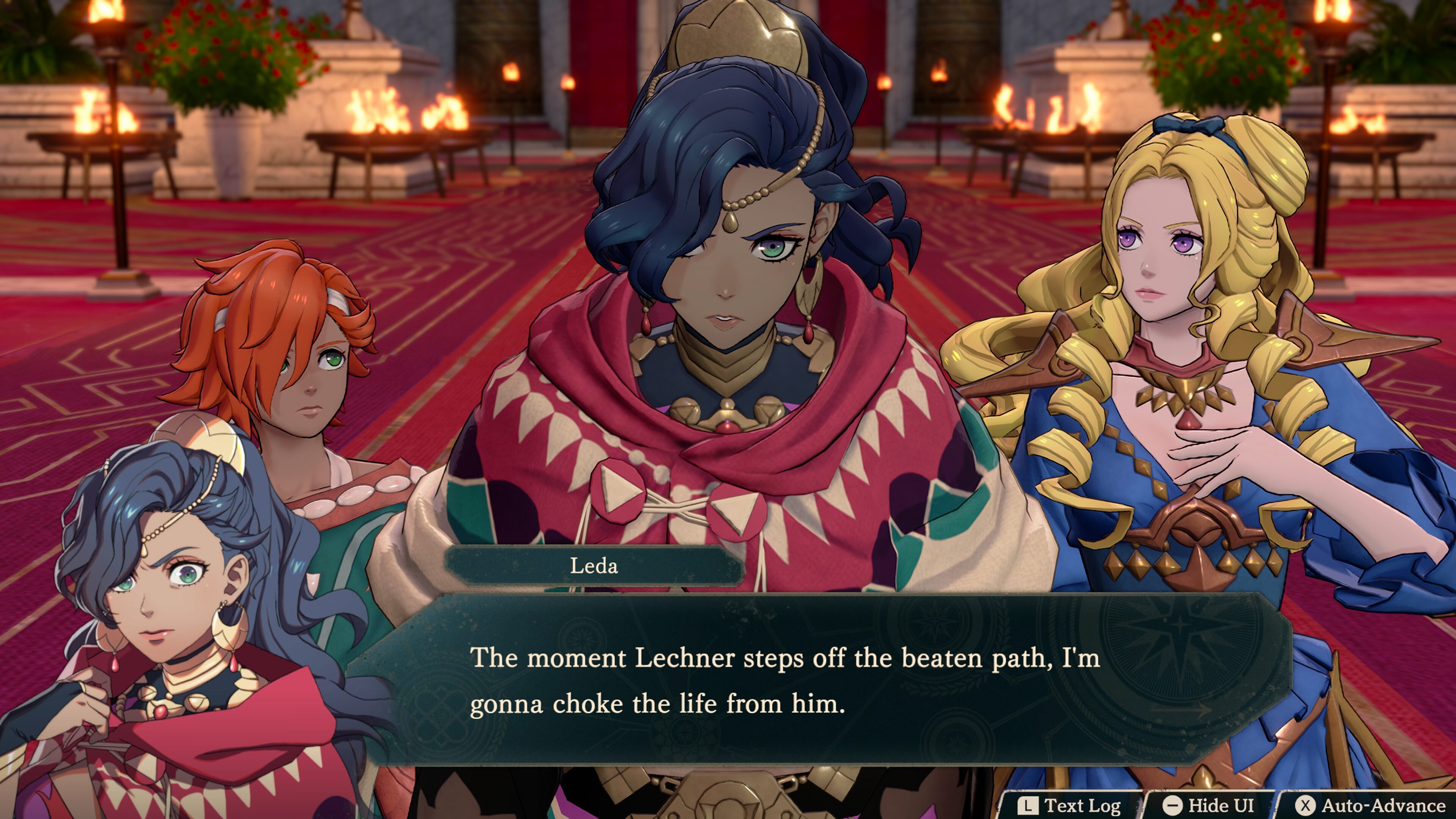
The five-year jump is not the limit of Fortuna's power. One preview scene depicts the killing of Leda's father, an event that happened five years before the Games rather than five years after them, which puts the reachable past at least a decade back from the framing story. This wiki has not yet documented the full extent of the power as of September 2026. See Leda.
After the Four Routes
The four Games campaigns are not the whole game. Part 3 follows them: a single campaign led by the protagonist, with the stated goal of gathering an army for a last stand to save Dagda, fought with the characters who came through the earlier Parts. The Door of Destiny that leads into it can be taken at any time, but only Heroes who have finished their War Arc come along, so the player chooses how many of the four campaigns to finish before moving on.
Part 3: Salvation
Part 3 calls its six chapters Sections, from The Liberation of Dagsion to To the Edge of Twilight. It brings back Free Time and the world map and adds Mission Time, in which the army clears Gates corrupted by miasma and defends Dagsion through Clashes. Eshmel leads, and every Part 3 battle is lost if Eshmel falls. The army is split into squads, two at the start and up to five by the Fifth Section, and each squad moves every turn; Eshmel does not join a squad.
The final dungeon is the Temple of Balor, and the last battle, Balor's Last Stand, allows up to 25 units: gates on the map must be destroyed to bring down Balor's barrier, and he has four health bars. After the credits, the game offers a Clear Save placed just before the final boss, from which any Part can be replayed.
What Is Not Yet Known
The chapter structure is now known in outline: a two-chapter Prologue, twelve Part 1 chapters per Hero, six Part 2 chapters and six Part 3 Sections, with the titles collected on Routes. As of September 2026 this wiki has not yet documented how many endings exist, what exactly became of the four Heroes in the untouched timeline, or how the opening choice between fighting alone and going back resolves in the end.
The years in this story are Dagdan Calendar years. They are not comparable to any other continent's dating system and cannot be used to place this game against any other title; see Dagdan Calendar.
How the Structure Was Designed
The developers have described where the shape of the game came from. The project started with eight story perspectives and was cut down to four, on the reasoning that eight would make the game feel complicated. The four paths were then written to converge on a single outcome rather than to stand opposed to one another.
The single save file follows from the same structure. Because progress is tracked for four campaigns at once inside one file, the game keeps a checkpoint per chapter for each protagonist rather than offering separate slots. Firearms, which sit oddly in a setting of swords and spears, are given an in-world explanation that the story uncovers as it runs.
Each Hero also brings their own way of spending downtime: Cai catches and cares for animals and works the fields, Dietrich acquires and strengthens combat arts, Theodora recruits and deploys battalions, and Leda performs in taverns.
In the Ask the Developer interview published on September 15, 2026, the developers added that all four Heroes' stories are built around one shared theme, family. Dagda was designed with the ancient Mediterranean in mind, and Eshmel, the saviour at the center of the frame, was a late addition, created around the halfway point of development.
Related Pages
For the enemy whose return sets the whole frame, see Balor, and for the soul called down to answer it, see Eshmel. The tournament the counter-plan reaches back into is the Heroic Games, and the rewind the goddess hands over for use in battle is Fortuna's Blessing.