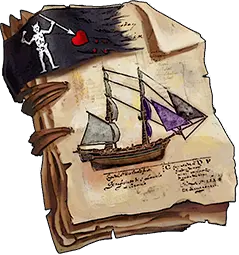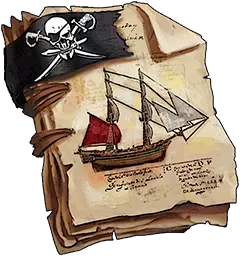
Brig is the stock variant of the Brig ship class in Windrose. A brig is a versatile war-capable hull that stands between trader and warship, favored by captains who expect trouble but still want cargo space for plunder. Stock ship variants have balanced stats with no real strengths or weaknesses, which makes the base Brig the cleanest introduction to the class before committing resources to the heavier Brethren Brig or the faster Blackbeard Brig. Build one at the Wharf with the Ship Design: Brig plan, then outfit the cannon, hull, Naval Tactics, and boarding party slots before setting sail.

Overview
Property | Value |
|---|---|
Hitpoints | 70,000 |
Max Speed | 20 |
Cargo Size | 24 |
Main Battery | 6 guns, 12 lbs |
Crew | 50 |
Secondary Battery | None |
Restoration Cost | Medium |
The stock Brig sits in the middle of the Windrose hull ladder: a clear upgrade over the starter Ketch in health, cargo, and firepower, but a smaller commitment than the endgame Frigate. Six 12-pound cannons on a single broadside make it the first hull that can deliver a coordinated volley, and 50 crew lets a boarding party pin down a target's deck without leaving the helm undefended.
Strategic Role
The stock Brig is the balanced loadout: neither the fastest raider nor the toughest fortress, but versatile enough to handle escort duty, trade protection, or first-encounter combat against other mid-tier hulls. New captains who finish the opening arc and start running faction quests typically build a stock Brig first, because every Naval Tactics and Hull Bracing the class can mount is available out of the box. It is also the cheapest of the three Brig variants to build and repair, which matters during the rough patch where you are still learning cannon aim and boarding timing and will lose a hull or two to bad engagements.
In the wider hull progression, treat the stock Brig as a training vessel and a stepping stone. Clear Foothills content, farm faction reputation, and buy the Ship Design: Brig plan before you touch any of the Brig variant plans. Once the stock Brig pays for itself in raid loot and escort fees, the logical upgrade path splits: captains who enjoy boarding pivot to the Blackbeard Brig for 24-pound cannons and higher top speed, tanks grind into the Brethren Brig for the heavier hull, and the endgame crowd starts saving for the Frigate plans.
Mobility
Each gear step is a separate throttle notch. Speed and turn rate in calm wind are fixed per notch; hull bracing, hold load, and wind angle still modify the effective output. The reverse notch is the only negative gear and turns the hull in the opposite direction.
Gear | Speed | Turn Rate |
|---|---|---|
Gear -1 | -4.1 kn | -7.3°/s |
Gear 0 | 0 kn | 5°/s |
Gear 1 | 2.8 kn | 7.2°/s |
Gear 2 | 6.9 kn | 10.8°/s |
Gear 3 | 12.6 kn | 10.4°/s |
Gear 4 | 21.8 kn | 9.5°/s |
The Brig's sweet spot for turning is Gear 2, where the 10.8°/s rate is the highest on the table and the 6.9 kn speed is slow enough to cut tight loops around a drifting enemy. Gear 3 and Gear 4 keep good turn rates on paper but the higher speeds push the turning radius out, so full-throttle evasions arc wider than many new captains expect. Running at Gear 2 during a broadside exchange keeps the Brig pointed at the target without overshooting the firing arc.
Wind angle is the other half of the equation. A Brig running beam reach or broad reach (wind roughly 90 to 135 degrees off the bow) hits the speed numbers above; running close-hauled into the wind knocks several knots off every notch, and running dead-downwind is surprisingly slow because the brig's main course is a fore-and-aft rig rather than a square rig. Plan tactical disengagements with that in mind: a smart captain turns broadside-to-broadside, empties the guns, then peels off on a beam reach rather than trying to outrun a pursuer by pointing straight away.
Build Cost
Construct Brig at the Wharf after learning Ship Design: Brig. The following materials are consumed when the keel is laid. Quantities do not include the cannons, hull bracing, or naval-tactics book you will want to mount before the first voyage.
Ingredient | Quantity |
|---|---|
200 | |
80 | |
40 | |
200 | |
40 | |
120 | |
40 | |
30 |
Most of the bulk cost (nails, planks, coarse fabric) is trivially farmed at Foothills-tier camps and from scuttled Ketches. The two supply bottlenecks are Copper Ingot and Linen Fabric: copper requires tin and copper ore smelted with coal, and linen requires flax farmed or bought from a Provisioner. Stockpile both before you buy the plan so the Brig does not sit half-built in the dry dock.
How to Unlock
To build the stock Brig you must first own the Ship Design: Brig plan. The plan is sold by the Brethren of the Coast faction and requires Faction Reputation Rank 2 with them before the merchant will unlock the sale. Reputation is earned by running Brethren contracts, handing in bounty targets, and completing escort missions out of their harbor office. Ships lost to enemy fire can be rebuilt from the same plan as long as the hull plate is recovered or a fresh plan is bought, so the 1,000 Piastre plan cost is a one-time investment that covers future stock Brigs too.
A few common mistakes to avoid during the grind: do not buy the stock Brig plan immediately after unlocking the faction, because plan prices drop as your reputation climbs a tier, and do not ignore the Brethren's gear vendor while you are turning in quests. The Hull Bracing: Keelhold plan and the Naval Tactics III: Stretch the Supply book both come from the same faction storefront and should be purchased in the same reputation tier as the ship plan whenever the pocketbook allows.
Variant Comparison
All three Brig hulls share the same plan prerequisite and are built at the Wharf from the same Brig class plan, but each variant tunes the base chassis toward a different role. The stock Brig is the entry point; the Blackbeard Brig sacrifices hull durability for higher top speed and a cannon slot that accepts heavier 24-pound guns; the Brethren Brig trades speed for a significantly tougher hull and more cargo space, leaning into sustained engagements.
Variant | Hitpoints | Max Speed | Cargo | Main Battery | Role |
|---|---|---|---|---|---|
Brig (Stock) | 70,000 | 20 kn | 24 | 6 x 12-Pounders | Balanced all-rounder |
Reduced | Higher | Reduced | Supports 24-Pounders | Raider, hit-and-run | |
Higher | Lower | Higher | 6 x 12 lbs | Tank, war of attrition |
Players typically own one variant at a time and retire the older hull when the next one launches, but experienced captains keep the stock Brig as a second fleet vessel for escort duty or trade runs where the extra firepower of the Blackbeard is overkill and the slowness of the Brethren is a liability. Swapping between variants at the Wharf is instant if the plans are owned, but each variant has its own build cost, so hoarding multiple hulls at once is a late-game luxury rather than a starter strategy.
These three Brig variants describe the live build as of October 2026. In an October 8, 2026 developer blog, the studio said the Ashlands update (expected this winter) will drop predefined faction hulls, so a Brig will be a single class customized from its full option pool. Owners of Blackbeard and Brethren Brigs will be migrated under a process the studio has yet to detail, and it has promised that resources from dismantled ships will be refunded in full.
Equipment Loadout
Each Brig carries dedicated slots for ship Cannons, Hull Bracings, Naval Tactics, and crew equipment. The following items can be mounted on Brig at the Wharf interface once the hull is built. Equipment is swappable in dock at no material cost, so rotating loadouts between a boarding-focused build and a long-range harassment build is cheap and encouraged.
Cannon Slot
The stock Brig carries a main battery of 6 guns at 12 lbs (no secondary battery on this hull class). Each slot can mount the baseline 12-Pounders or any of the three ascendable variants (Devastating, Perfectly Ordered, Tempered). See Ship Cannon Loadouts for each variant's exact Rare and Epic effect, and Shipwright's Workshop for the crafting interface. The stock Brig is not rated for 24-pound guns; that upgrade is locked behind the Blackbeard variant, so captains who want to step up to heavier calibers need a new hull, not a new cannon tier.
For single-slot hulls like the stock Brig, Perfectly Ordered 12-pounders are usually the most reliable choice: hitting an enemy within four seconds of reloading gives a near-permanent 30% reload-speed buff during a dogfight, which raises broadside uptime at a hull class already held back by caliber. Devastating and Tempered both peak higher on pure damage numbers once fully upgraded, but they require steadier aim to outperform Perfectly Ordered in practice.
Hull Slot
The Hull slot accepts the baseline Hull Bracing or any of three Rare-tier ascendable variants.
Image | Effect | |
|---|---|---|
| As ship health drops, damage resistance increases, peaking around 25% at 30% remaining hull. A risk/reward bracing that rewards staying in the fight at low HP. | |
| Taking damage no longer shortens the duration of repair kits. At Epic the kit lasts 30% longer, making this the strongest all-round bracing for attrition Brig builds. | |
| Stack-based damage reduction that builds during incoming fire, good for burst mitigation when a Brig takes back-to-back broadsides. |
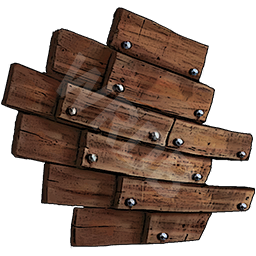
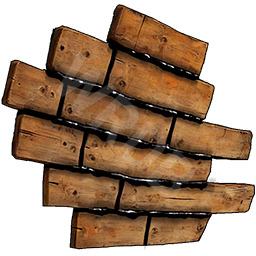
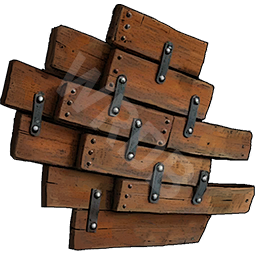
Keelhold is the default recommendation for a stock Brig: with only 70,000 HP and no secondary battery to threaten volley-dense enemies, surviving long enough to burn through multiple Combat Repair Kit charges is what wins most fights. Iron Resolve pairs well with a boarding playstyle because a Brig pushing for a grapple will naturally take the first volley in the face, and Standfast is reasonable on routes where you expect repeated weaker skirmishes rather than one large set-piece battle.
Naval Tactics Slot
Five Rare-tier Naval Tactics books are available for the slot, one active at a time. Swapping tactics requires docking and opening the Wharf equipment screen, so most captains pick a tactic before every voyage rather than switching mid-run.
Image | Naval Tactic | Effect |
|---|---|---|
| Patient first strike: +130% damage on the next volley after 2 minutes of neither taking nor dealing damage | |
| Aggression buff during sustained combat, with a 30% hull heal triggered by nearby kills | |
| Extends consumable duration for extended engagements: Combat Repair Kit duration by 30% and Grog duration by 200% | |
| Out-of-combat hull regeneration that stacks with structural repairs | |
| Hitting an enemy ship applies Broken Rhythm for 30 seconds, reducing their reload speed and damage by 20% |





For a stock Brig, Ambush is the highest-impact pick for scripted ambushes and ship-design quests where you know the engagement will start fresh, because the +130% first-volley damage compensates for the hull's middling 12-pound battery. No Quarter is the safest pick for open-world patrols where multiple fights chain together, and Stretch the Supply is invaluable on long Foothills circuit runs where repair-kit and grog economy matters more than raw burst.
Crew Equipment Slot
The crew slot accepts Boarding Party Gear, the sole Ship Crew Equipment item. It raises the HP, Defense, and Attack of the NPC boarding party that follows the player onto an enemy deck. On a Brig with 50 crew, boarding parties are a decisive second phase of combat: an unupgraded crew tends to fold in under 30 seconds against a full enemy deck, while a fully upgraded crew reliably clears the majority of the opposition, leaving the captain free to mop up stragglers or to sprint for the helm and scuttle valves.
Naval Combat and Sailing Tips
The stock Brig's combat identity is the mid-range broadside skirmisher. Its 6-gun single-side battery fires as a coordinated volley when the aim reticle hovers over an enemy hull, and the preferred rhythm is: open at maximum range with a single volley to bleed repair kits, close to Gear 2 at broadside bearing for the main exchange, then peel off at Gear 4 once the target's cannons come into their effective range. Skipping the peel-off and sitting at point-blank range is the fastest way to lose a stock Brig, because 12-Pounders do not outscore heavier calibers in a pound-for-pound slugfest.
A few concrete habits help the hull punch above its weight. Trim sails down to Gear 2 before the first shot so the turn-rate is already at its peak when the broadside comes up. Mount at least one Combat Repair Kit in the consumable belt and, if you are running Hull Bracing: Keelhold, save the kit for when you are already being shot at rather than using it preemptively. Crew deaths during a boarding action are permanent for that engagement but refill automatically back at a friendly port; Officers assigned to ship roles cannot die and carry between engagements, so prioritize their crew-skill roles before any risky boarding attempt.
Against larger hulls, the stock Brig's best plan is hit-and-run rather than stand-and-deliver. A Frigate out-ranges and out-sustains a Brig on any gun bar accuracy, so use wind angle to dictate the engagement: force a chase on a beam reach where the Brig's 21.8 kn top speed matters, land a single Ambush volley, then turn into the wind for a downrange extraction. Fighting another Brig or a Ketch is where the stock Brig shines, because its crew count, cannon count, and cargo buffer all give it an edge at equal numbers.
Boarding Dynamics
A stock Brig fields a 50-crew boarding party against the defender's deck. Cannon fire softens the enemy ship to set up the boarding: each volley that damages the hull also damages the enemy crew and degrades their defensive positions. Once the enemy falls below roughly one-third HP and the player's ship is bowsprit-to-bowsprit, the Boarding phase begins and combat transitions to on-deck melee. The boarding party follows the captain automatically once the grapple is set; the captain's job during this phase is to hold the quarterdeck line, clear officer targets (the enemy captain and sailor officers take priority because they buff the enemy crew), and prevent the enemy from sprinting into the hold to scuttle the cannons.
Boarding is also the only way to capture loot beyond the standard scuttle drops. Enemy ships that surrender after a boarding can be looted in full rather than pulled from a drowning wreck, which massively raises the per-fight reward on a Brig's plundering circuit. The tradeoff is risk: if the captain dies during boarding, the whole engagement resets, including any cannon damage already dealt. That makes boarding party gear, Officer assignment, and the captain's personal combat loadout the three highest-leverage investments for any captain who plans to board more often than sink.
Upgrade Progression
As a mid-game hull, the stock Brig marks a specific milestone rather than a final destination. The expected arc for most captains looks like this: finish the Ketch-tier opening, buy the stock Brig as the second hull, run the Foothills circuit to bank reputation and materials, then choose a Brig variant based on playstyle. Aggressive boarders go to the Blackbeard Brig for the 24-pound guns; patient blockaders go to the Brethren Brig for the fortress hull. After the variant Brig, the Frigate is the next natural step, with its own three-variant ladder and the only hull that can support 36-pound cannons.
A stock Brig is not wasted the moment the next hull launches. Keep it at a home port with a skeleton crew assigned as a trade hauler: 24 cargo slots and Medium restoration cost make it a far better coin-per-voyage hauler than a Ketch, and a moored hull lets you deploy it for faction quests that insist on a Brig-class vessel without rebuilding it from scratch.
Officers and Crew Animation
The Brig's 50-crew capacity is split between standard sailors and a separate NPC type called Officers. Officers are exclusive to ships, improve vessel capabilities through their assigned roles, and unlike standard crew they cannot die during combat. That makes Officer assignment a permanent investment rather than a churn slot: a downed sailor can be replaced after a bad boarding, but an Officer carries between engagements without risk of being lost to a single bad fight. See NPC Crew for the full crew-slot system.
Crew animation cycles: the Brig is the ship class currently receiving the most crew-related gameplay development, and the crew on deck have full animation cycles to match. Sailors fire and reload cannons during naval combat, sleep in hammocks below deck during downtime, and sing sea shanties while sailing in calm water. The animation set is most visible on the Brig because of its larger crew capacity relative to the Ketch, and stepping below decks during a long sail shows the off-duty cycle directly.
Enemy Brigs Cannot Be Captured
Every player Brig has to be built from scratch at the Wharf after the Ship Design: Brig blueprint is purchased from the Brethren of the Coast Provisioner and the Foothills-tier materials are stockpiled. Enemy NPC Brigs encountered in the open world drop loot and cargo when scuttled or boarded, but the hull itself cannot be claimed, towed, or added to the player's fleet. Captains occasionally ask whether a named Brig from a bounty quest can be commandeered; the answer is no. The boarding flow rewards loot and plan fragments rather than ships.
See Also
Ships - the top-level Windrose ship index
Wharf - where ships are built and rigged
Naval Combat - the broader naval combat system
Boarding - crew-vs-crew boarding actions
Blackbeard Brig - the Blackbeard Brig variant
Brethren Brig - the Brethren Brig variant
Frigate - the next hull class above Brig
Ketch - the hull class below Brig
Details
Properties
Property | Value |
|---|---|
Hitpoints | 70,000 |
Max Speed | 20 |
Cargo size | 24 |
Main battery | 6 guns, 12 lbs |
Crew | 50 |
Build Cost
Ingredient | Quantity |
|---|---|
x200 | |
x80 | |
x40 | |
x200 | |
x40 | |
x120 | |
x40 | |
x30 |
Taught By
Plan |
|---|
Variants
A complete list of Brig variants in Windrose is shown below, with thumbnail, build cost, and comfort bonus for each entry. Click any name to open its dedicated page.
Image | Variant | Build Cost | Comfort |
|---|---|---|---|
| Nails x200, Copper Ingot x80, Timber x40, Wooden Plank x200, Linen Fabric x40, Coarse Fabric x120, Rope x40, Shipwright's Tools x30 | - | |
| Nails x200, Copper Ingot x80, Timber x40, Wooden Plank x200, Linen Fabric x40, Coarse Fabric x120, Rope x40, Shipwright's Tools x30 | - |