

Overview
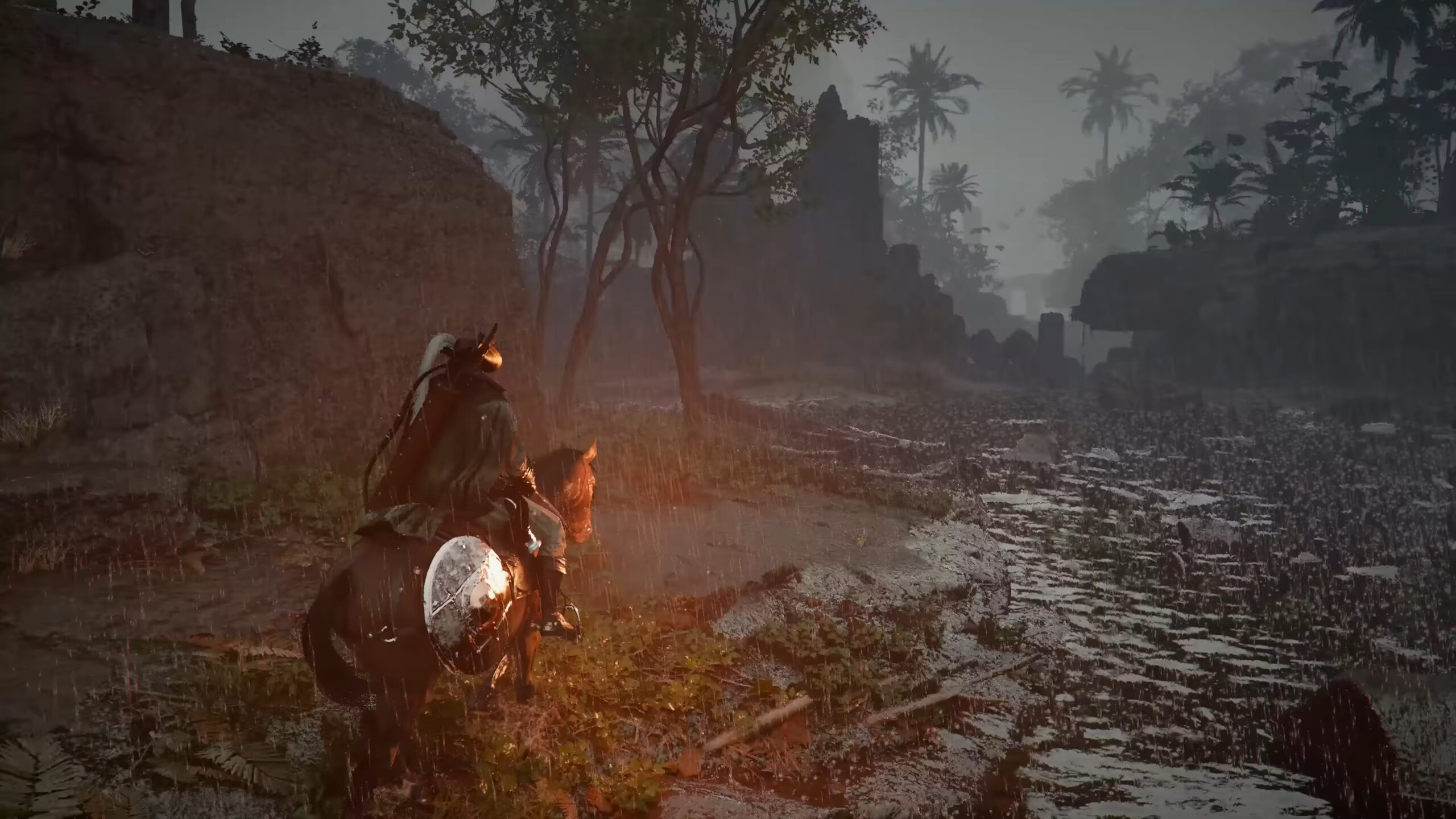
Crimson Desert has a fully dynamic weather system powered by the BlackSpace Engine. Weather conditions are not scripted or placed on a fixed timer. Instead, they are calculated in real time from multiple environmental variables: biome type, temperature, elevation, wind patterns, and time of day. Pearl Abyss marketing director Will Powers described the approach in a preview coverage interview: "It's all happening in real time...all of these things are just happening and being calculated naturally in real time, which makes this feel like a really alive world."
The result is that no two playthroughs see the same weather at the same moments. Desert regions produce sandstorms but never snowfall. Alpine areas experience blizzards. Coastal zones cycle through fog and rain. The system respects geography, so you will not encounter a snowstorm in the middle of the arid Crimson Desert region because the biome and temperature would never produce one. Weather affects everything from cutscene lighting to boss fight difficulty, stamina drain, elemental damage modifiers, NPC behavior, and enemy spawn patterns.
Day and Night Cycle
Pywel operates on a continuous day-night cycle. One real-life minute equals roughly 12 in-game minutes, so a full 24-hour cycle completes every two real-world hours. The HUD displays the current day, day of the week, and time (for example, "Day 30 Wed 5:51 AM"). Diurnal shifts influence which weather events can occur: fog is more common at dawn, heat peaks at midday, and temperatures drop significantly after sunset.

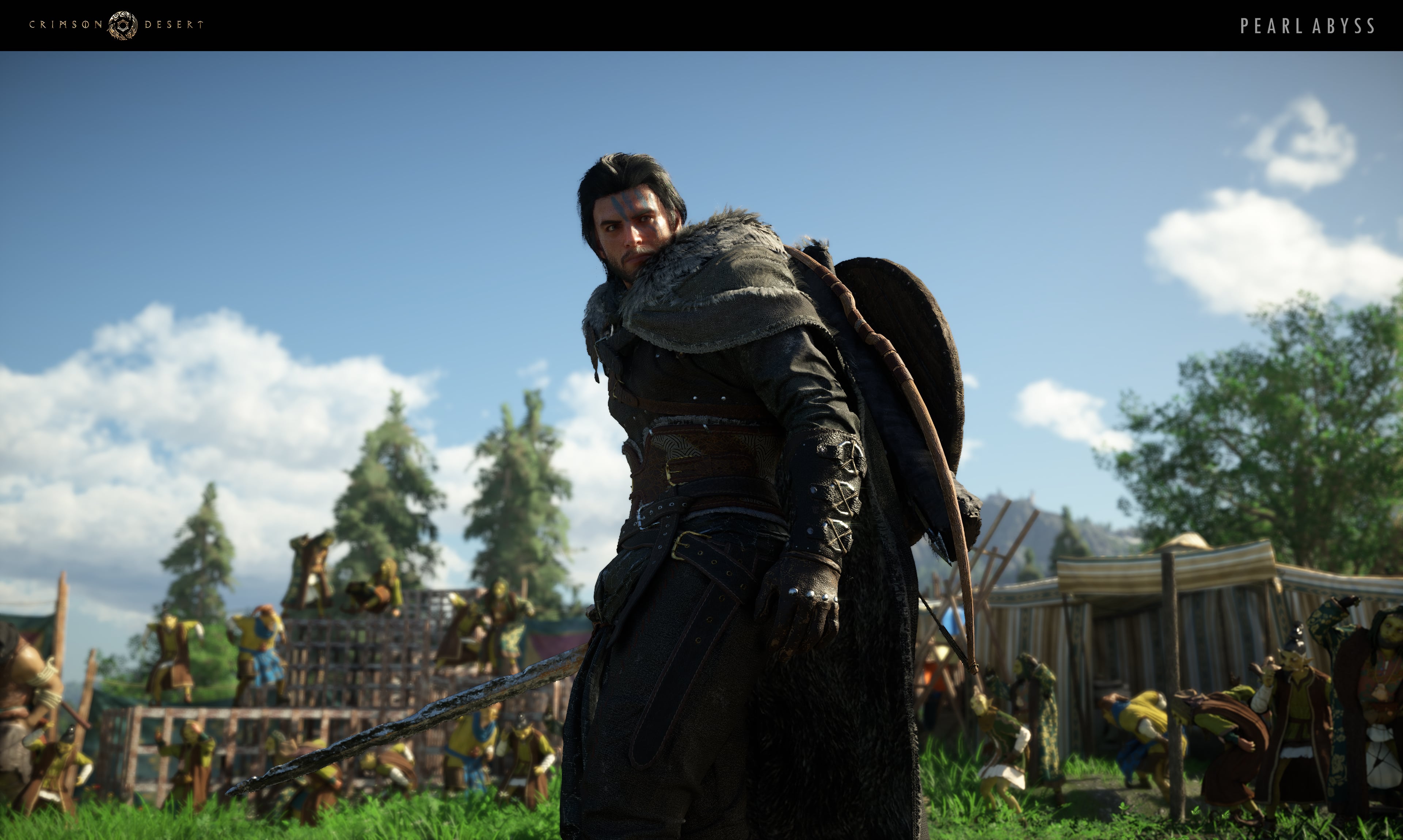
Nighttime brings more than a visual change. Wilderness areas become genuinely dark, reducing visibility for both Kliff and enemies. Some enemies only spawn after dark, and certain rare encounters are exclusive to nighttime hours. NPC schedules in settlements shift as well; merchants open during the day and close at night, while guards rotate their patrols. These patterns create meaningful gameplay differences depending on when you choose to explore or fight.
How to Pass Time
There are three ways to advance time in Crimson Desert: sleeping in beds, waiting at campfires, and using quest-triggered time skips. Understanding these methods is essential for reaching time-sensitive objectives and managing the day-night cycle to your advantage. For a full walkthrough, see Tips and Tricks.
Sleeping in Beds
Beds are found in settlements, inns, and campsites throughout Pywel. Interact with any vacant bed to lie down, then choose to sleep for 3, 6, or 12 hours. Villagers do not mind Kliff borrowing their beds, so feel free to use any unoccupied one you find. Campsites tend to have a higher concentration of available beds.
Campfires and Cooking Pots
To use a campfire, hold Focus (L1 on PlayStation, LB on Xbox, or CTRL on keyboard) to lock onto the fire. Three options appear: Cook (opens the cooking interface for preparing meals), Wait (advances time by 3, 6, or 12 hours), and Off (extinguishes the fire). Select Wait, pick your desired increment, and a short cutscene plays before you resume control at the new time.
Campfires and cooking pots are scattered across the open world, at campsites, settlements, and roadside rest stops. If you need to advance time while exploring, look for a nearby fire rather than returning to a settlement.
Quest-Triggered Time Skips
Some quests require you to be at a specific location at a particular time of day. When you arrive at the quest marker before the required moment, the game displays a "Wait for the right time" prompt. Press ESC on keyboard or the Menu/Start button on a controller, and time advances instantly to the exact moment the quest needs. This is the fastest and most precise way to skip time, but it only works when a quest actively calls for it.
For example, during the Missing Companion quest in Chapter 2, you enter a house and receive the prompt at the bottom of the screen. Pressing the menu button skips to the right hour without any manual calculation.
Rest Cooldown
After Kliff rests (through a bed or campfire), there is a built-in cooldown before he can rest again. The game does not display an explicit timer for this, so plan your time increment carefully. Choosing 12 hours when you only needed 3 locks you out of resting again sooner, which can be frustrating if you overshoot a quest window or vendor restock timer.
Weather Types
Pywel has a range of weather conditions that vary by region, elevation, and time of day. Each type has distinct visual and gameplay effects.
Weather Type | Visual Effect | Gameplay Impact |
|---|---|---|
Clear Skies | Full visibility, bright sunlight during the day, starry nights | No penalties. Ideal for exploration and long-distance travel. |
Rain | Falling rain, wet surfaces, darker skies | Climbing surfaces become slippery. Lightning element damage is boosted (enemies and Kliff are considered wet). Reduces Ice Resistance by 13 and Lightning Resistance by 9. |
Thunderstorm | Heavy rain with lightning strikes and thunder | All rain effects apply. Lightning skills deal up to 50% more damage against wet targets and can chain to nearby enemies. Thunderstorms may temporarily disable certain Axiom Bracelet abilities. |
Snow / Blizzard | Snowfall, whiteout conditions in blizzards, icy terrain | Cold drains stamina faster and slows regeneration. Deep snow further increases stamina cost for sprinting. Requires adequate Ice Resistance to avoid severe penalties. |
Fog | Thick fog reducing draw distance, muted lighting | Reduces visibility for both you and enemies. Enemy detection range drops, making fog favorable for stealth approaches. |
Sandstorm | Blowing sand, heavy particle effects, orange-tinted sky | Dramatically reduced visibility. Exclusive to the arid Crimson Desert region. Dust makes ranged targeting difficult. |
Extreme Heat | Heat shimmer, harsh sunlight, temperature gauge spikes | Overheating causes stamina drain similar to cold. Heavy armor amplifies the effect. Common in the Crimson Desert region during daytime. |
Environmental Effects on Gameplay
Temperature and Stamina
The temperature gauge beside the minimap tracks Kliff's body temperature. Blue indicates cold, red indicates hot, and the further the bar shifts from neutral, the more severe the stamina penalties become. In cold environments, stamina regeneration slows and every action costs more stamina than normal. Sprinting burns through your bar faster, climbing drains you quicker, and combat combos that normally chain smoothly start falling apart because you run dry mid-swing. Hot environments impose a similar drain, especially for characters wearing heavy armor.
Temperature varies based on region, altitude, time of day, and whether you are indoors or outdoors. Preview footage from the Crimson Desert region showed temperatures reaching 50 degrees Celsius during daytime travel. Standing near a fire source in a cold area warms Kliff up temporarily, while moving to higher elevations in warm regions reduces heat.
Rain and Lightning Damage
Rain directly modifies your defensive stats. When it is raining, Kliff receives a reduction of 13 Ice Resistance and 9 Lightning Resistance. More critically, both Kliff and all outdoor enemies are considered "wet" during rain. Striking a wet target with a Lightning element attack deals up to 50% bonus damage and has a chance to chain to nearby targets. This makes rainy conditions extremely powerful for Lightning-focused builds, but also dangerous if enemies use Lightning against you.
The wet condition also applies when enemies stand in water or on a shattered ice platform, not only during rain. However, rain is the most common and reliable trigger for this bonus, since it affects every outdoor enemy on the field simultaneously.
Cold and Ice Resistance
Cold regions like Pailune and the Sleet Isles impose heavy stamina penalties unless you have enough Ice Resistance. If your total Ice Resistance is below 5, cold will drain your stamina faster, slow its regeneration, and make every action more expensive. Reaching Ice Resistance Level 5 provides full immunity to cold stamina drain, which is essential before venturing into the deepest frozen areas.
Sources of Ice Resistance
Source | Ice Resistance Level | How to Obtain |
|---|---|---|
3 | Found in Echoing Tunnel near Fort Perwin, behind a waterfall in the Hernand region. Free, no quest required. | |
5 | Obtained from a research site south of Scholastone. Provides full cold immunity on its own. | |
Frostcursed Plate Set | High (varies by piece) | 5-piece armor set found in hidden caves across Demeniss. Cannot hold Abyss Gears and most pieces cannot be upgraded, but provides excellent Ice Resistance. |
3 | Costs 19 Contribution Points from the Contribution Shop inside Hernand Castle. | |
Temporary boost | Consumables purchased from any settlement Inn. Honey Tea is especially effective for temporary Ice Resistance. | |
Modest Clear Soup | Temporary boost | Cooked at any bonfire/campfire. Grants temporary cold resistance. |
Frostward (Abyss Gear) | Passive bonus | Abyss Gear that provides passive Ice Resistance when slotted into armor. |
For early-game players heading into cold territory, the Dark Ringleader's Cloth Cloak (Ice Resistance 3) is the most accessible option since it is free and located in the Hernand region where you spend much of the early game. Combine it with a consumable like Honey Tea to push past the Level 5 threshold temporarily. For a permanent solution, the Reindeer Cloak south of Scholastone provides Level 5 on a single piece.
Heat and Hot Climates
The Crimson Desert region and other arid zones produce extreme heat during the day. Overheating is just as punishing as freezing if you ignore it: stamina drain increases, especially in heavy armor. Unlike cold, where resistance gear is abundant, heat management relies more on avoiding the worst conditions. Traveling through hot areas at night reduces the temperature significantly, and staying near water or in shaded areas helps.
Wind and Gliding
Wind direction and strength are simulated in real time. This has a direct gameplay effect on gliding: headwinds reduce distance and increase stamina drain, while tailwinds extend range. Some areas have consistent updrafts that let you gain altitude. When planning long glides, pay attention to wind direction to conserve stamina and maximize distance. See Exploration and Traversal for more on gliding mechanics.
Fog and Visibility
Fog reduces draw distance and mutes lighting. Critically, fog reduces enemy detection range as well as your own visibility. This makes fog conditions favorable for stealth approaches; enemies that would normally spot you at a distance become unaware until you are much closer. If you are trying to sneak past a camp or set up a stealth kill, foggy weather is your ally.
Effects on NPCs and Enemies
NPC Schedules
NPCs in settlements follow daily routines tied to the time of day. Merchants open their shops during morning hours and close at night. Vendor inventories restock at midnight (0:00) each night, so you can buy out a merchant's entire stock, sleep until after midnight, and buy it all again. Some quest NPCs only appear at certain times or under specific weather conditions, so check your quest log for timing hints.
Enemy Spawns and Behavior
The day-night cycle directly affects enemy spawns and patrol patterns. Nighttime introduces tougher enemies, rare encounters, and exclusive spawn types that do not appear during the day. Weather conditions further modify behavior: fog reduces detection range (benefiting stealth), and storms may alter patrol routes.
Boss fights also inherit the current weather and lighting conditions. Since all cutscenes are rendered in real time using the BlackSpace Engine, the same boss encounter looks and feels different depending on whether you trigger it at noon under clear skies, at dusk during rain, or at midnight in fog. Will Powers noted that this was intentional: "You can have the same boss encounter and...if you do it at night or if you do it during the rain, like completely different vibes in encounters."
Time-Sensitive Activities
Several activities in Crimson Desert reward you for paying attention to the clock. Planning around the day-night cycle can save time, earn more money, and unlock encounters you would otherwise miss.
Activity | Best Time | Why |
|---|---|---|
Night | The bank in northwest Hernand is best robbed at night when guard presence shifts. Equip a Mask (purchased from the Back Alley Shop south of the Church) before entering, then crouch and loot the strongboxes. A successful night heist yields at least 60 silver. | |
Gambling Dens | Evening / Night | Gambling dens in Hernand and Tomasso host Duo (card game) and cost 15 Silver per round. The number of opponents varies by visit (1 to 3), and visiting at different times gives you fresh matchups. Five-Card is played in Beighen. |
Vendor Restocking | After midnight (0:00) | All vendor inventories reset at midnight. Buy out food, arrows, or crafting materials, sleep or wait until past midnight, then buy again for double the stock. |
Freesword Camp Missions | Any (use sleep to speed up) | Passive Freesword missions at Greymane Camp (Howling Hill) require set amounts of in-game time to complete (e.g., 18 hours). Sleeping for 12 hours significantly speeds up reward collection. |
Rare Night Enemies | Night | Certain powerful enemies and rare encounters only spawn between sunset and sunrise. If you are hunting specific drops or looking for unique fights, explore the wilderness after dark. |
Stealth Approaches | Night or Fog | Darkness reduces enemy detection range. Combine night travel with foggy weather for the least chance of being spotted. Ideal for infiltrating camps or pickpocketing. |
Region-Specific Weather Patterns
Each of Pywel's five major regions has its own climate profile, producing distinct weather patterns. The weather system uses these biome definitions to determine what conditions are possible in each area.
Region | Climate | Common Weather | Notes |
|---|---|---|---|
Cold / Arctic | Snow, blizzards, ice | The game's opening area. Requires Ice Resistance 5 for deeper frozen zones. Autumn-hued valleys at lower elevations. | |
Temperate / Mountainous | Clear, rain, mild fog | Rivers, vertical terrain. Weather is relatively mild. Most early-game gear acquisition happens here. | |
Varied | Clear to harsh at elevation | Large region with political complexity. Lowland fortress towns stay clear while higher elevations produce harsher conditions. | |
Coastal | Rain, fog, overcast | Tech-forward coastal region. Frequent precipitation due to proximity to the sea. | |
Arid / Extreme heat | Sandstorms, extreme heat, clear nights | Daytime temperatures reach 50°C. Much cooler at night. Sandstorms reduce visibility dramatically. |
Weather and the BlackSpace Engine
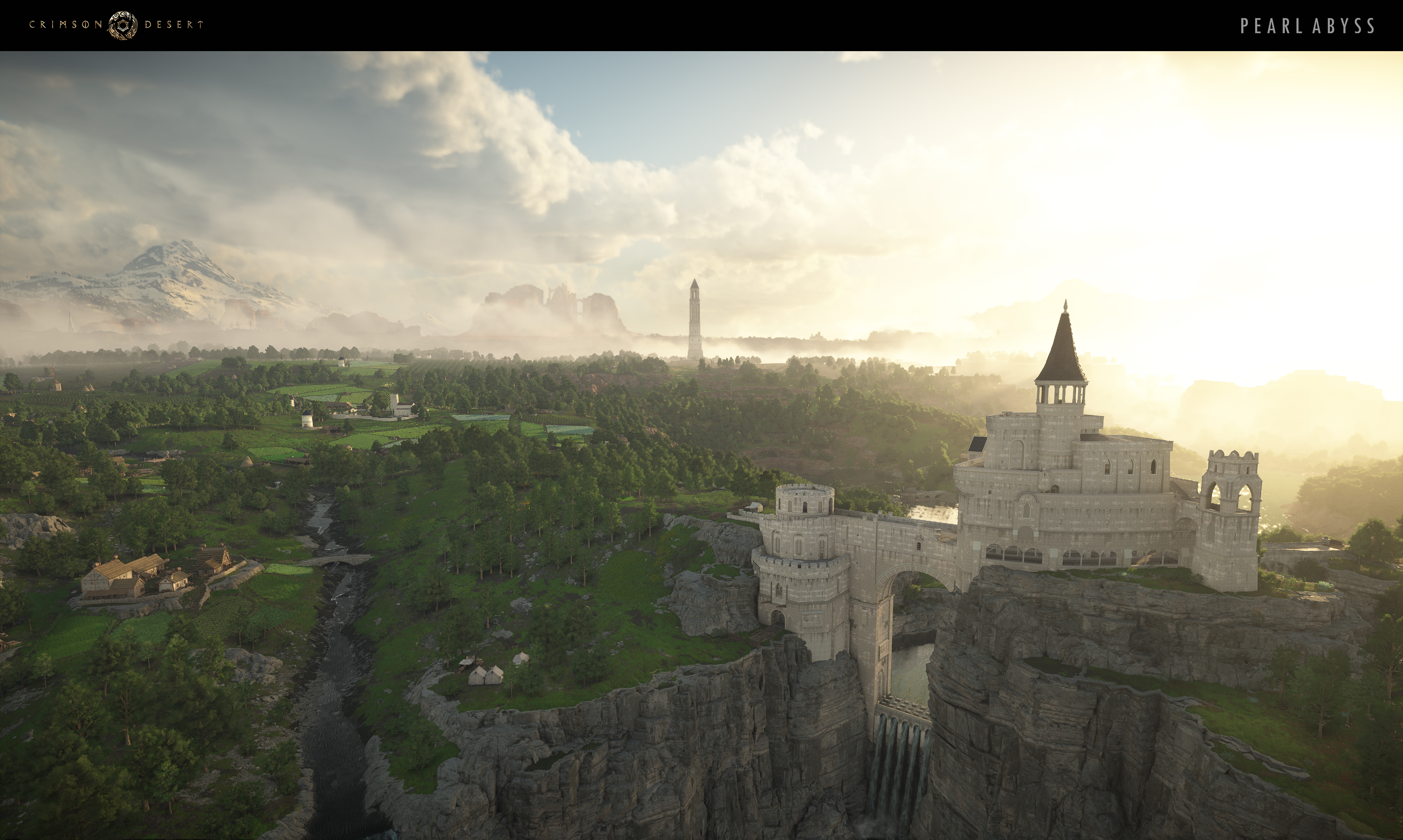
The entire weather system runs on Pearl Abyss's proprietary BlackSpace Engine, which handles real-time atmospheric scattering, volumetric lighting, and physically based rendering. Light shafts pass through clouds, foliage, and structures with real-time calculations. The engine's weather layer integrates directly with the rendering pipeline, which is why cutscenes can inherit environmental conditions without a separate pre-rendered pass.
Because every cutscene is rendered in-engine in real time, weather and lighting at the moment of triggering carry through. One player might see a dramatic confrontation under bright noon sun, while another sees the same scene at dusk in a downpour. Pearl Abyss showcased the engine at GDC 2025, demonstrating how the weather and lighting subsystems operate under the hood. The studio built on its experience with large-scale weather simulation from Black Desert Online.
Practical Tips
Check the temperature gauge regularly. The bar beside the minimap gives you advance warning before stamina penalties become severe. If it shifts to blue or red, take action before you lose combat effectiveness.
Stack Ice Resistance to Level 5 before Pailune's deeper zones. The Reindeer Cloak (from south of Scholastone) handles this in a single slot. Alternatively, combine the Dark Ringleader's Cloth Cloak (Level 3) with a consumable like Honey Tea for a temporary boost past the threshold.
Use rain to your advantage with Lightning builds. When it rains, every outdoor enemy is wet. Elemental attacks with Lightning deal up to 50% extra damage and can chain between targets. Switch to Lightning imbues during storms for massive burst damage.
Plan bank robberies for nighttime. The Hernand bank in the northwest district is easier to rob at night. Equip your Mask, crouch, and loot the strongboxes for at least 60 silver per run.
Sleep strategically to speed up passive missions. Greymane Camp Freesword missions run on in-game timers. Sleeping for 12 hours at the nearest bed or campfire cuts the wait dramatically.
Avoid heavy armor in the Crimson Desert region. Heat penalties are amplified by heavy equipment. Switch to lighter gear when traveling through arid zones during the day, or travel at night when temperatures drop.
Use fog for stealth. Fog reduces enemy detection range. If you are infiltrating a hostile camp or setting up an ambush, wait for or seek out foggy conditions.
Watch for the quest time-skip prompt. When a quest requires a specific time of day, an hourglass icon appears on screen. Press ESC or the Menu button to skip instantly to the right moment instead of manually calculating sleep increments.
See Also
Stamina - how stamina works and what drains it
Elemental Attacks - weather interactions with elemental damage types
Exploration and Traversal - gliding, climbing, and wind effects
Tips and Tricks - general gameplay advice including time management
Weather and Day-Night Cycle - overview of the weather simulation engine and developer quotes
Dynamic World Events - emergent events influenced by weather and time
Regions of Pywel - biome differences across the five major regions
BlackSpace Engine - the proprietary engine powering the weather system