

Overview
Pywel is designed to feel like it runs whether you are paying attention or not. Crimson Desert populates its open world with dynamic events that fire without warning and without player input. Bandit ambushes, wildlife encounters, faction skirmishes, traveling merchants and weather-driven hazards occur based on the game's internal simulation rather than pre-placed scripted triggers.
A hands-on preview put it plainly: "Dynamic events occur throughout the world and without warning (bandit ambushes, wildlife encounters, faction skirmishes), giving the impression of a world that isn't merely staged and waiting for the player to interact with it." Early community-sourced materials described the system as generating "infinite procedural events" tied to the day-night cycle and ecosystem, though Pearl Abyss has not used that exact phrasing in official statements. What they have confirmed is that events are driven by simulation rules rather than a fixed event roster.
Types of Dynamic Events
Bandit Ambushes
Bandits attack travelers on roads and in the wilderness. These are not scripted encounters at fixed locations. They trigger dynamically based on region, time of day, and (presumably) player level or progression. The Crimson Desert region is particularly dangerous for ambushes, given its lawless reputation.
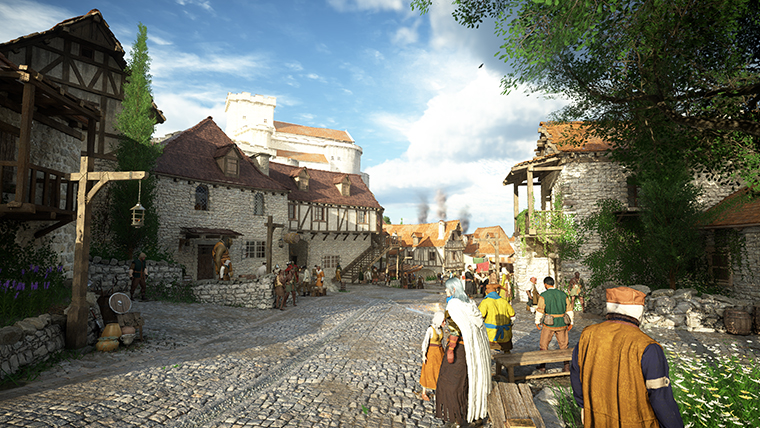
During large-scale battles, you have a choice in how to handle them. one encounter: "Skirmishes erupted all around us, and I could easily try to help press each one to resolution, or I could bust through with my trusty steed and aim to cut the head from the snake to resolve it once and for all." You can engage, help NPCs fight, or ride straight through.
Traveling Merchants and Caravans
Merchant caravans move between settlements. These are not fixed vendor locations but mobile NPCs traveling along routes. Encountering one gives you a chance to trade, though some coverage suggests they may also be targeted by bandits, creating emergent multi-party encounters.
Wildlife Encounters
Animals in Pywel are not background decoration. Multiple sources describe a functioning ecosystem where wildlife, enemy mobs, and non-combatant NPCs operate under behavior patterns. Creatures roam freely, defend territory, and appear or disappear based on conditions. Some animals are mountable, including bears, wolves, and eventually dragons. See Mounts and Traversal for details on taming and riding.
Animal stampedes have been mentioned in preview materials as an emergent event type. A herd moving through an area can disrupt whatever you are doing, and the implication is that these are triggered by the ecosystem simulation rather than a timer.
Faction Skirmishes
Pywel has "dozens and dozens" of factions per Pearl Abyss. These groups clash with each other across the map, and their fights can break out around you as you travel. Unlike Faction Wars missions (which you actively undertake), these skirmishes happen on their own. You can intervene, ignore them, or use the chaos as cover to slip past.
Weather Events
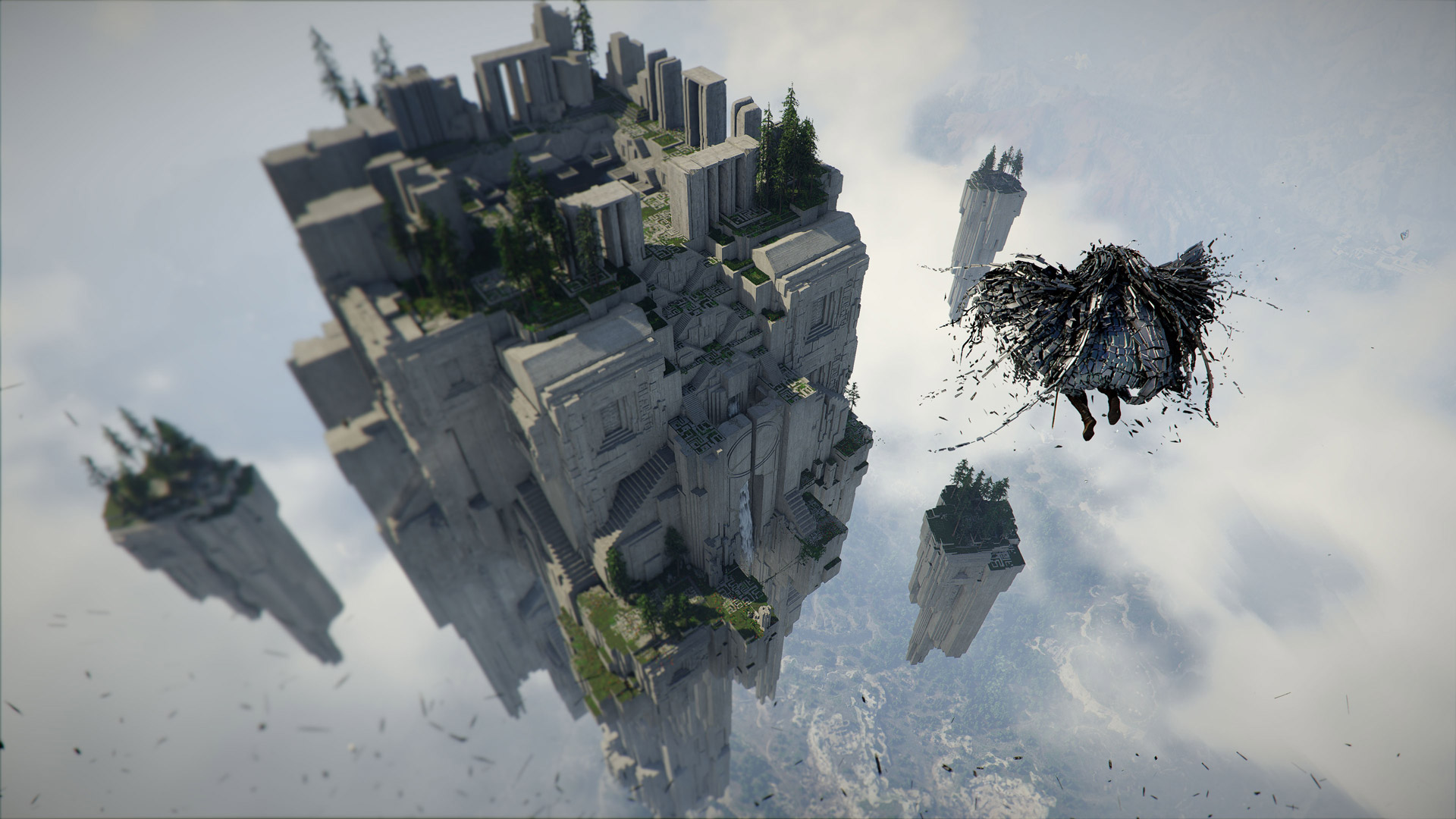
Sandstorms in the Crimson Desert region, blizzards in Pailune, fog banks in lowland areas: these are driven by the dynamic weather system and have gameplay consequences. Reduced visibility is confirmed, and stamina effects from wind are tied to the gliding system. Some weather events are localized, affecting a specific area while neighboring zones stay clear.
How the System Works
Pearl Abyss has not published a technical diagram, but the design philosophy is clear from developer comments and preview coverage. The world simulation runs continuously, driven by several interconnected systems:
Feature | Description |
|---|---|
Day-night cycle | Time of day affects which events can fire. Bandits may be more active at night. Certain wildlife appears only during specific hours. Merchants travel during the day. |
Weather | Current conditions influence event types. Storms may drive wildlife into unusual areas or make roads more dangerous. |
Ecosystem simulation | Wildlife follows behavior patterns rather than fixed spawn points. Animals have territories, routines, and reactions to player presence. Wearing ghillie suits for camouflage affects how wildlife responds to you during hunting. |
Faction state | The political state of a region affects what kinds of events occur there. An area you have liberated may have fewer bandit ambushes. Contested territory has more skirmishes. |
Player progression | While not explicitly confirmed, the scaling of dynamic events likely accounts for player level or gear, given that the rest of the game's systems do. |
NPC Behavior and Daily Routines
The living world extends to non-combat NPCs in settlements. Merchants haggle with each other, guards patrol routes, and villagers follow daily schedules. Named NPCs in major towns have specific routines tied to the time of day: shops open in the morning and close at night.
NPCs also react to player behavior. Theft triggers a visible "Crime: Theft" overlay and a bounty notice. Hostile actions make nearby NPCs turn against you. Producer Seongwoo Lee stated: "All villagers going about their daily lives and every NPC, event, and side quest in the game were created for a purpose."
After you liberate a settlement from hostile occupation, displaced residents move back in. Vendors reopen. New quests appear from returning NPCs. The world state changes based on your actions. See Faction Wars for details on how liberation reshapes territories.
World Reactivity
The dynamic event system feeds into a broader world reactivity design. Time, weather, NPC routines, and political shifts all interact. A region's faction state affects its economy. Weather affects which events fire. Time of day affects NPC availability. The intent, according to multiple developer statements, is a world that "moves forward with or without the player."
Pearl Abyss has described this as creating a "world full of distractions," the idea being that you should constantly get sidetracked by emergent situations while traveling between objectives. Whether this lands as immersive or interrupting will depend on execution, but the design ambition is clear.
What Remains Unknown
The exact rules governing event frequency, spawn conditions, and scaling have not been detailed. How much player choice actually alters the long-term event mix in a region is unclear. Whether dynamic events can chain together (e.g. a bandit ambush on a merchant caravan that you happen to witness) has been implied but not confirmed. The boundary between "emergent" and "procedural with randomized triggers" is also fuzzy. Pearl Abyss has used both terms at different points.
See Also
Item | Description |
|---|---|
The environmental system that drives many events | |
Deliberate faction content vs. emergent skirmishes | |
How geography shapes event types | |
Settlements and Towns | NPC routines and town life |
Mountable wildlife encountered in the world |