
Loading...
Combat System
March 20, 2026 at 05:25 AM
Add wikilinks to table cells (10 new links)
Crimson Desert features a deep, fast-paced combat system that Pearl Abyss describes as having "no single correct answer." Rather than following a traditional action RPG model, the combat draws direct inspiration from fighting games like Samurai Shodown and King of Fighters, requiring players to memorize specific button combinations rather than relying on simple light and heavy attack buttons. The system seamlessly chains weapon strikes, unarmed grapples, kicks, elemental abilities, and mounted attacks into a continuous flow of combat.
Pearl Abyss has stated that Crimson Desert is not a Soulslike. It is closer to a brawler with fighting game influences, emphasizing combo creativity and environmental interaction over methodical, stamina-heavy approaches.
Crimson Desert's Knowledge System tracks 573 territories across the continent of Pywel, each with its own enemy encounters, environmental challenges, and rewards. This territory count reflects the scale of the world that the combat system is designed for, with encounters tailored to each region's distinct enemies and terrain.
Protagonist Kliff can wield seven categories of weapons, each with a distinct moveset. Players can equip multiple weapons and swap between them on the fly mid-combat.
Weapon Type | Key Characteristics |
|---|---|
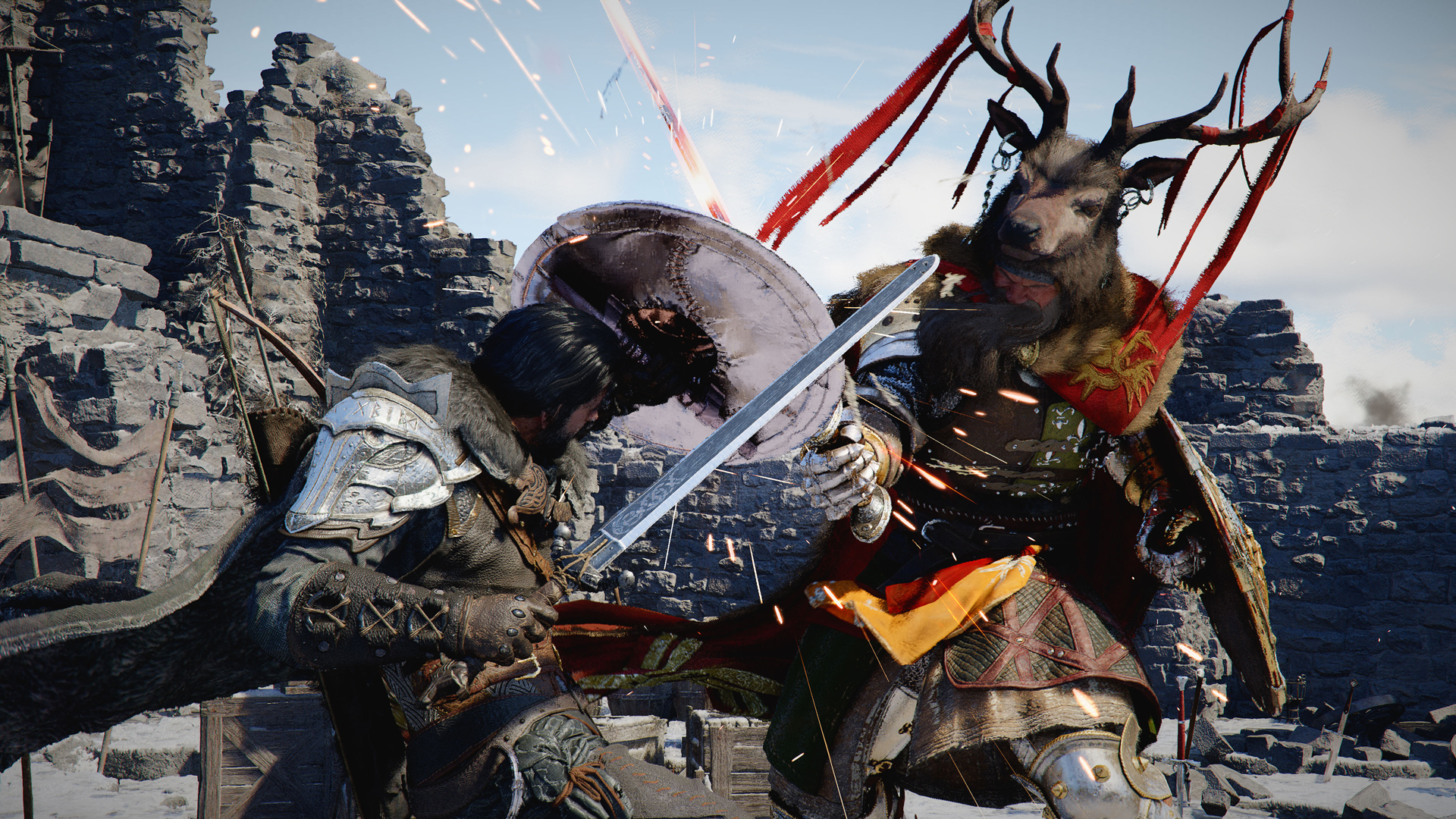
Sword and Shield | Balanced offense and defense; parry chains, overhead slams, and shield bashing |
Spear / Polearm | Extended reach with rapid single-target attacks; wind blast effects and aerial attacks |
Greatsword | Heavy swings with wide area-of-effect damage; high commitment per attack |
Axe / Longsword | Brutal cleaves with high damage output; wide-arcing swings |
Fast combo chains with quick strikes; evasion-focused playstyle | |
Ranged (Bow, Arquebus) | Precision shots; whistling arrow airstrikes; slow-motion headshots in Precision Focus mode |
Bare-Handed / Unarmed | Punches, kicks, and grapples that chain into weapon attacks; has its own damage stat suggesting upgrade paths |
Each weapon performs differently and encourages a different combat approach. The game rewards players who learn the movesets of multiple weapon types and switch between them to exploit enemy weaknesses.
The combo system is the heart of Crimson Desert's combat. Unlike traditional action games with simple attack buttons, the system uses fighting game-style inputs where two to three buttons pressed simultaneously trigger different moves. Players must memorize specific combinations rather than mashing a single attack button.
Attacks flow seamlessly between weapon strikes, bare-hand combat, kicks, and grapples. The game actively encourages mixing input types to extend combos:
Weapon to unarmed: Swing a sword, then chain into a flying kick or suplex
Unarmed to weapon: Land a punch combo, then switch to a greatsword for a finishing cleave
Aerial combos: Vault into the air, perform aerial attacks, and chain air-to-ground sequences
Magic launch: Shoot magic at the ground to launch Kliff into the air, then follow with a slow-motion arrow barrage or dive attack
Wrestling moves are fully integrated into the combo system. Suplexes, chokeslams, hammer throws, shoulder tackles, back breakers, knee thrusts, drop kicks, and flying front kicks can all be chained with weapon attacks. Directional grapples add depth: a stationary grab slams enemies to the ground, while adding directional input tosses them, turning enemies into projectiles that damage other enemies.
The kick animations in Crimson Desert are motion-captured from Taekwondo practitioners, giving them a distinctive martial arts feel that sets them apart from typical video game kick animations. This contributes to the fluid, fighting-game-inspired feel of the unarmed combat system.
Input | Action |
|---|---|
L1 | Block / Parry |
R1 | Attack (fast strikes) |
Square | Jump |
X | Run (stamina-based) |
Circle | Dodge / Evade |
Triangle | Mount / Kick / Interact |
L1 + R1 | Stun-flash sword attack |
R1 + R2 | Powerful downswing |
L3 + R3 | Activate elemental bracelet / Focus Mode |
D-Pad | Item and element selection |
Every button serves multiple purposes depending on context. Preview journalists have consistently noted that the control scheme resembles a fighting game character's entire moveset mapped to a controller, creating a steep but rewarding learning curve.
Once an attack animation starts, players cannot cancel mid-swing. This adds commitment and risk to every attack, forcing players to read enemy movements and choose their openings carefully. Whiffing a heavy attack leaves Kliff vulnerable to counterattacks, while correctly timing a swing rewards with full combo potential.
Defensive options are tightly integrated into the combat flow. For a full breakdown, see the dedicated Dodge, Block, and Parry article.
Mechanic | Description |
|---|---|
Dodge / Roll | Slides, dodges, and evasions that chain directly into attacks. A perfect dodge opens counter opportunities. |
Shield Block | Holding block absorbs incoming attacks. Shield can also be used offensively for bashing. |
Parry / Counter | Well-timed guards create openings for counterattacks. Shield parries trigger back-and-forth duels. |
Attack Commitment | Once an attack animation starts, it cannot be cancelled. This creates risk-reward tension in every swing. |
The system emphasizes skillful timing over button-mashing. Reading enemy movements and attack patterns is essential for survival.
The dodge roll includes a perfect dodge window. Nailing the timing at the exact moment of an incoming attack restores stamina rather than consuming it, rewarding precise timing with resource recovery. This mechanic makes mastering dodge timing one of the most efficient ways to sustain aggressive play during extended encounters. The Quick Recovery skill (unlockable via the Abyss Tree) lets players tap the dodge button to instantly roll back onto their feet after being knocked down, preventing enemies from stun-locking Kliff on the ground.
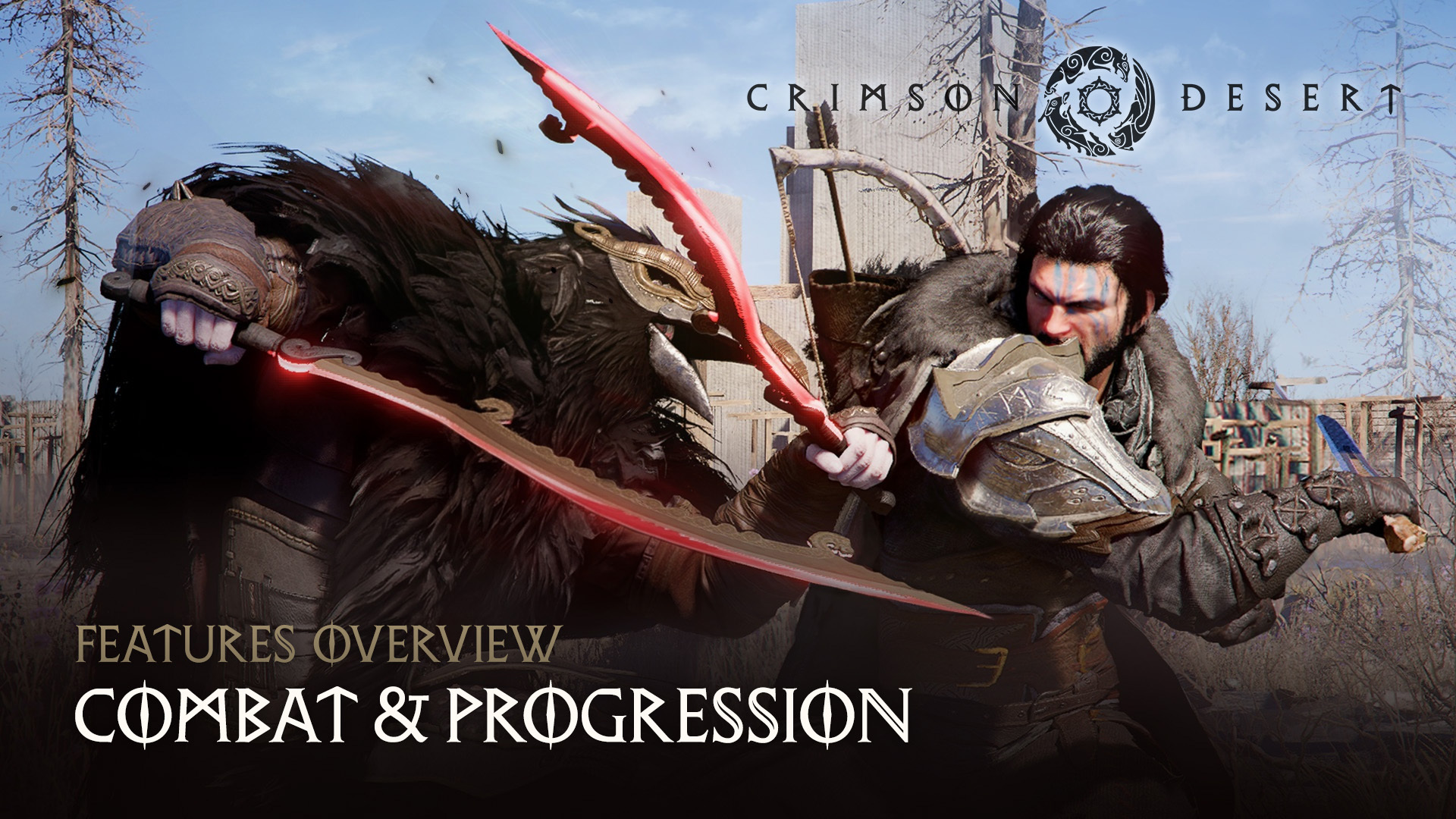
Crimson Desert uses a stamina system with one important distinction: normal strikes do not consume stamina. Only advanced movement and special skills drain the stamina bar. This design makes combat flow smoother and faster than games where every attack costs energy.
Uses Stamina | Does Not Use Stamina |
|---|---|
Dodging and evasion | Standard weapon attacks |
Special skills and abilities | Basic combo chains |
Sprinting | Walking and jogging |
Climbing (including boss climbing) | Standard movement |
Players can invest Abyss Artifacts into the stamina stat branch of the Abyss Tree to increase their energy pool for evasion and special actions. The stat distribution between Health and Stamina can be respecced for build experimentation.
The Axiom Bracelet grants elemental abilities that serve both combat and exploration purposes. Players select an element via the D-pad wheel and activate it with thumbstick clicks (L3/R3).
Element | Combat Effect | Environmental Use |
|---|---|---|
Fire | Incinerates and explodes; burning damage over time; effective against clustered enemies | Clears thorny terrain; sets wooden structures ablaze |
Ice | Freezes enemies solid for follow-up shattering strikes; best for crowd control | Creates floating ice platforms on water surfaces |
Lightning | Paralyzes and stuns enemies; disrupts shielded foes | Electrifies water for bonus damage against wet enemies |
Wind | Enables aerial positioning and dive-kick attacks | Used for traversal and puzzle-solving |
Elements can be infused into melee weapons for ongoing status effects: burning damage over time, freezing slows, and shocking stuns. The Axiom Bracelet also enables sequential casting (L3-R3-L3 for triple jumps) and can launch Kliff into the air for aerial combos.
Crimson Desert's BlackSpace Engine powers a physics-driven combat environment where the world reacts to combat in real time. For a detailed breakdown, see Environmental Combat and Physics.
Mechanic | Description |
|---|---|
Object Destruction | Boxes shatter, structures collapse, and grass reacts to attacks. Destruction varies based on force applied. |
Burning Gates | Setting fire to wooden gates weakens them as they burn, allowing players to bust through once-immovable surfaces |
Electrified Water | Lightning abilities electrify water, dealing bonus damage to enemies standing in it |
Ice Platforms | Ice darts create floating platforms on water for traversal and tactical positioning |
Environmental Weapons | Players can use magic to lift broken pillars and slam them down to crush bosses |
Physics-Based Reactions | Enemies dynamically collide with the environment; hit reactions convey weight and impact |
The engine also features GPU-based cloth and hair simulation, volumetric fog that swirls as Kliff moves through it, and realistic water simulation with waves and flow. These visual systems contribute to combat readability and immersion.
Large boss encounters feature climbing mechanics reminiscent of Shadow of the Colossus and Dragon's Dogma. Players can clamber onto massive creatures, search for weak points, and deliver devastating attacks from atop the boss.
The most detailed climbing encounter shown in previews involves the Queen Stoneback Crab. Players must clamber up her back as she bucks and rears to fling them off. The strategy involves searching for silvery patches to smash and stab through, releasing a poisonous effect. Players then grapple to the creature, swing around, and smash down on pots atop her shell. The Crow's Wing gliding ability is essential to survive being thrown off, allowing Kliff to glide safely back to solid ground rather than falling to his death.
White Horn: A snowy arena boss featuring heavy charges and climbing-based attack opportunities on its massive frame
Grappling mechanics: A web-like grappling tool is used to swing to and attack weak points on large bosses
Stamina management: Players must manage stamina during mount transitions and aerial finishers on bosses
Crimson Desert features a unique skill acquisition system where players learn combat techniques by watching NPCs and enemies perform them. There are no character levels or experience points. Instead, skill progression follows a two-step process:
Step 1: Observe: Watch an NPC or enemy perform a technique (hold the observation button for approximately two seconds)
Step 2: Invest: Spend an Abyss Artifact to "lock in" the technique permanently in the Abyss Tree
Crucially, "Artifacts alone don't teach you skills." Players must first witness the move being performed. Some techniques can even be learned mid-combat from enemies. Confirmed examples include a palm strike learned from a passive NPC and a body slam mimicked from an enemy's technique.
Equipment in Crimson Desert can be enhanced through the Abyss Gear socket system, which represents the endgame tier of equipment customization. For full details on crafting and enhancement, see Blueprints and Crafting.
Enhancement | Description |
|---|---|
Weapon Sockets | Gear has slots for passive stat jewels. Multiple slots per item allow stacking bonuses. |
Abyss Gear Augments | Provide effects like increased attack speed, critical hit chance, and bonus damage against stronger foes |
Boss Signature Equipment | Defeating bosses yields exclusive gear; equipping it grants that boss's signature combat skill |
Blacksmith Upgrading | Attack stats upgraded using mined materials, boss drops, hunted animal parts, and exploration finds |
Enchanter Optimization | Interacting with an enchanter allows loadout optimization |
Crimson Desert does not use automatic lock-on. The camera does not snap to opponents automatically. Manual targeting requires double-tapping a shoulder button. A focus mechanism exists to help maintain orientation during chaotic multi-enemy fights, but preview journalists have noted that targeting in group encounters can be unreliable, sometimes snapping to the wrong enemy.
Enemies in Crimson Desert are aggressive and coordinate attacks. In group encounters, enemies attack from multiple directions simultaneously rather than waiting politely for their turn. Different enemy and boss types require entirely different tactical approaches:
Humanoid bosses (Staglord, Fortain): One-on-one duels with parry-counter dynamics
Beast bosses (White Horn, Queen Stoneback Crab): Climbing mechanics and environmental tactics
Supernatural bosses (Hexe Marie): Teleportation, minion summoning, transformation phases
Mounted enemies: Enemies ride mounts, and players can grapple them off and commandeer the mount
Three characters are playable, each with a unique combat style:
Character | Combat Style | Key Abilities |
|---|---|---|
Versatile swordsman with seven weapon types | Full weapon switching, Axiom Bracelet, Crow's Wing, wrestling grapples | |
Agile duelist | Greatsword, rapier with buckler, musket with charged shots, short-range pistol, Izuna Drop spinning kick | |
Power bruiser | Two-handed greataxe, large hammer with crowd-knockback, leap slams, spinning attacks |
Character switching occurs at specific story points. Damiane's signature move, the Izuna Drop, involves a spinning kick that grabs an enemy mid-air and slams them into the ground. Oongka's ground-shattering leap slam deals massive area-of-effect damage.
Players can enter a slow-motion mode for enhanced precision. During a sideways dive, Kliff enters Precision Focus, allowing slow-motion arrow shots with enhanced accuracy. This mode can also trigger after launching Kliff into the air, enabling an aerial arrow barrage in bullet time.
Some story sequences feature Dynasty Warriors-inspired large-scale encounters with dozens of enemies simultaneously. The Calphade siege showcased battlefield combat alongside allied NPCs with cannon fire and environmental destruction. These sequences blend the one-on-one precision of boss fights with crowd-clearing AOE combat.
Crimson Desert has no difficulty settings. A single difficulty curve applies to the entire game. Will Powers (Pearl Abyss Director of Marketing and PR) stated: "Does that mean the game's easy? Hell no."
Feature | Details |
|---|---|
Difficulty Adjustment | No slider or presets. Players can prepare for tough fights by finding alternate paths, upgrading gear, and learning new skills before retrying. |
No harsh death penalties. No corpse runs or lost currency. | |
Autosave | Robust autosave system makes it "extremely rare to lose huge chunks of progress." |
Emergent Challenge | World enemies do not scale to player level. Some areas are genuinely harder than others. |
Topic | Connection |
|---|---|
Detailed breakdown of defensive mechanics | |
Wrestling moves integrated into the combo system | |
Combat while riding horses, bears, raptors, dragons, and mechs | |
Physics-driven environmental destruction in combat | |
Fast combo-focused weapon type | |
Blueprints and Crafting | Weapon forging and gear enhancement |
Abyss Artifacts | Progression currency for skill learning and stat boosts |
Source of the Abyss Tree skill progression system | |
Boss Encounters | Multi-phase boss fights featuring climbing and unique mechanics |
IGN's extended hands-on preview highlighted the progression of combat encounters across the game. In the opening hours set in Hernand, Kliff starts by brawling with bandits and goblins around the city. The difficulty escalates as rival knights and faction leaders start seeking out Kliff for confrontation.
The mini-boss battle against Matias was singled out as a particularly thrilling fight. Even as one of the earlier encounters in the game, it demonstrated how visceral the battles can get, with both sides landing heavy blows in a tense exchange.
The mid-game demo showed a powered-up Kliff taking on new enemies and a more powerful boss that matches his upgraded skills. IGN noted that the mid-game does well to showcase how combat ramps up with "more zany encounters that blur the lines between a high fantasy adventure and steampunk fantasy." The mid-game segments also confirmed that party members like Damiane and Oongka can be swapped in during gameplay for different combat styles.
Players can choose between three distinct specializations that alter their combat approach. The game maintains constant enemy difficulty standards with no level scaling, making specialization choices meaningful.
Specialization | Focus | Playstyle | Key Benefits |
|---|---|---|---|
Archery | Range | Emphasizes ranged combat and bow mastery | Precision Focus, enhanced arrow damage |
Tanking | Focuses on perfect parries and damage mitigation | Improved blocking, counter opportunities | |
Agility | Prioritizes evasion and ambush tactics | Enhanced dodges, backstab damage |
Combat in Crimson Desert centers on the bumper buttons, with L1 for parrying and R1 for main weapon strikes. The face buttons use a nonstandard layout that takes time to master.
Input | Action | Description |
|---|---|---|
R1 | Light Attack | Fast strikes for combo building, hammer repeatedly for chains |
R2 | Heavy Attack | Powerful charged blows, context-sensitive |
R1+R2 (Hold) | Special Attack | Devastating down-swing attack |
L1 | Block/Parry | Timed blocks create counterattack windows |
L2 | Aim/Palm Attack | Context-sensitive: Aim bow or use Force Palm |
Square | Jump | Vertical movement, combo starter |
X (Cross) | Run | Stamina-based sprinting |
Circle | Evasive roll with invincibility frames | |
Triangle | Kick/Mount/Interact | Context-sensitive: kick in combat, mount horse, interact |
Circle+Triangle | Grab | Initiates grapple moves, direction-dependent |
Right Stick Press | Energy wave ability using Spirit meter |
Beyond basic attacks, players can execute named skills through specific multi-button inputs:
Skill Name | Effect | Input/Activation |
|---|---|---|
Slow-motion arrow shooting while diving | L2 + directional input while airborne | |
Flurry Slash | Deadly combo of rapid sword swipes | Multi-button combo |
Turning Slash | Vicious blow that hurls enemies away | Directional + attack |
Neckbreaker (RKO) | Wrestling finisher, grabs and slams enemy | Circle+Triangle + direction away from enemy |
Blinding Flash | Flash sword to blind and incapacitate enemies | Special input |
Sprint Grab | Wrap arm around neck using momentum | Circle+Triangle while sprinting |
Body Slam | Wrestling-style slam attack | Face button combination |
Suplex | Grab and suplex human-sized enemies | Grab + directional input |
Force Palm is a signature ability that shoots a wave of green energy from your palm, activated by pressing the right stick. It uses the Spirit meter and serves multiple purposes:
Combat - Knock back enemies, interrupt attacks
Traversal - Give yourself vertical boosts when combined with jumps
Air Combo - Use three times in a row to propel yourself up in the air
Slam - Dive kick down, palm thrust back up, then slam down with a massive green fist
Boss Fights - Launch into air before activating bullet-time bow attacks
The Axiom Bracelet grants elemental powers that can be infused into weapons and attacks. Elements are selected via D-Pad and apply status effects to enemies.
Element | Effect | Combat Application |
|---|---|---|
Fire | Incinerates, causes explosions | Area damage, damage over time, environmental ignition |
Ice/Freeze | Freezes enemies solid | Crowd control, vulnerability windows, stops fast enemies |
Lightning | Paralyzes targets | Stun effects, chain damage, interrupts enemy attacks |
Wind | Pushes enemies with gust force, enhanced knockback | Crowd control, repositioning enemies near hazards |
Elemental effects can be applied to both melee weapons and arrows, creating powerful combinations. Different arrow types plus elemental infusions can stack effects on enemies.
Throughout the story, Kliff gains magical powers granted by mysterious spirits:
Kliff's cloak transforms into large, tattered raven wings, enabling gliding across terrain. This ability is crucial for traversal and tactical combat positioning. During the Queen Stoneback Crab fight, forgetting to use Crow's Wing after being thrown can result in death from falling.
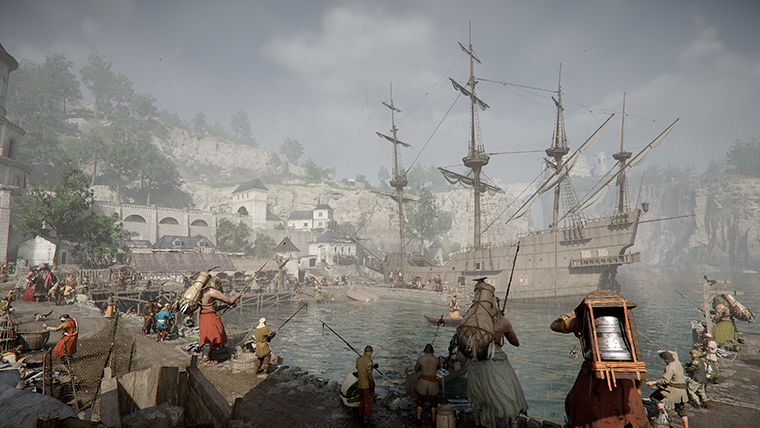
Summons allied reinforcements to shell enemy positions with a barrage of raining fire arrows from the sky, dealing massive area damage to groups of enemies.
Combat abilities extend to various mounts, each offering unique capabilities:
Horse Combat - Use lances, spears, and standard weapons while riding
Bear Mount - The huge black bear can maul foes directly during combat
Dragon Riding - Scorch entire battlefields with aerial fire attacks (limited duration)
Dwarven Mech - Machine guns, missiles, jump jets, and EMP blasts (late game, energy-limited)
Pearl Abyss prioritizes the 'rule of cool,' allowing players to pull off unexpected move combinations. As one reviewer explained: 'When you're in a fight, you're doing all of this stuff, switching weapons on the fly, landing those big hits, jump kicking some dude and then following that up with a big sword combo, and RKOing the next mook unlucky enough to get close to you, it feels great.'
Character progression focuses on obtaining better equipment from defeating bosses and unlocking new moves or skills. Similar to Devil May Cry or Ninja Gaiden, as you progress by defeating bosses and exploring, you unlock more moves to add to your combat repertoire rather than spending points in complex skill trees.