Loading...
Loading...
The Coast
May 8, 2026 at 09:02 AM
Applied Title Case to body headings
The Coast is the second biome in Outbound, introduced during the October 2025 beta build (v0.7.6). It was first revealed at the Gamescom Xbox show in August 2025, where a brand-new trailer debuted the region to the public. The official patch notes described it as a place where players could "explore tropical shores with rocky cliffs" and discover "plenty of fruits alongside a new type of wood to unlock more building possibilities."
Compared to the starting biome, The Outdoors, The Coast presents a dramatically different environment. Instead of open plains and wheat fields, players find sandy beaches lined with palm trees, dramatic rocky cliffsides overlooking the sea, and forests of gigantic redwood trees towering above the canopy. An old lighthouse perched atop the highest cliff is the most prominent landmark in the region. The biome is designed to reward players who push beyond the familiar starting area by offering unique materials, new crafting options, and fresh terrain to explore.
The Coast stretches along a varied shoreline where several distinct terrain types blend into one another. Wide sandy beaches form the lowest elevation, with palm trees clustering along the waterline and tropical vegetation filling the gaps between dunes. The sand transitions into rocky outcrops and dramatic cliffsides that rise steeply above the shore, creating natural overlooks with sweeping views of the ocean.
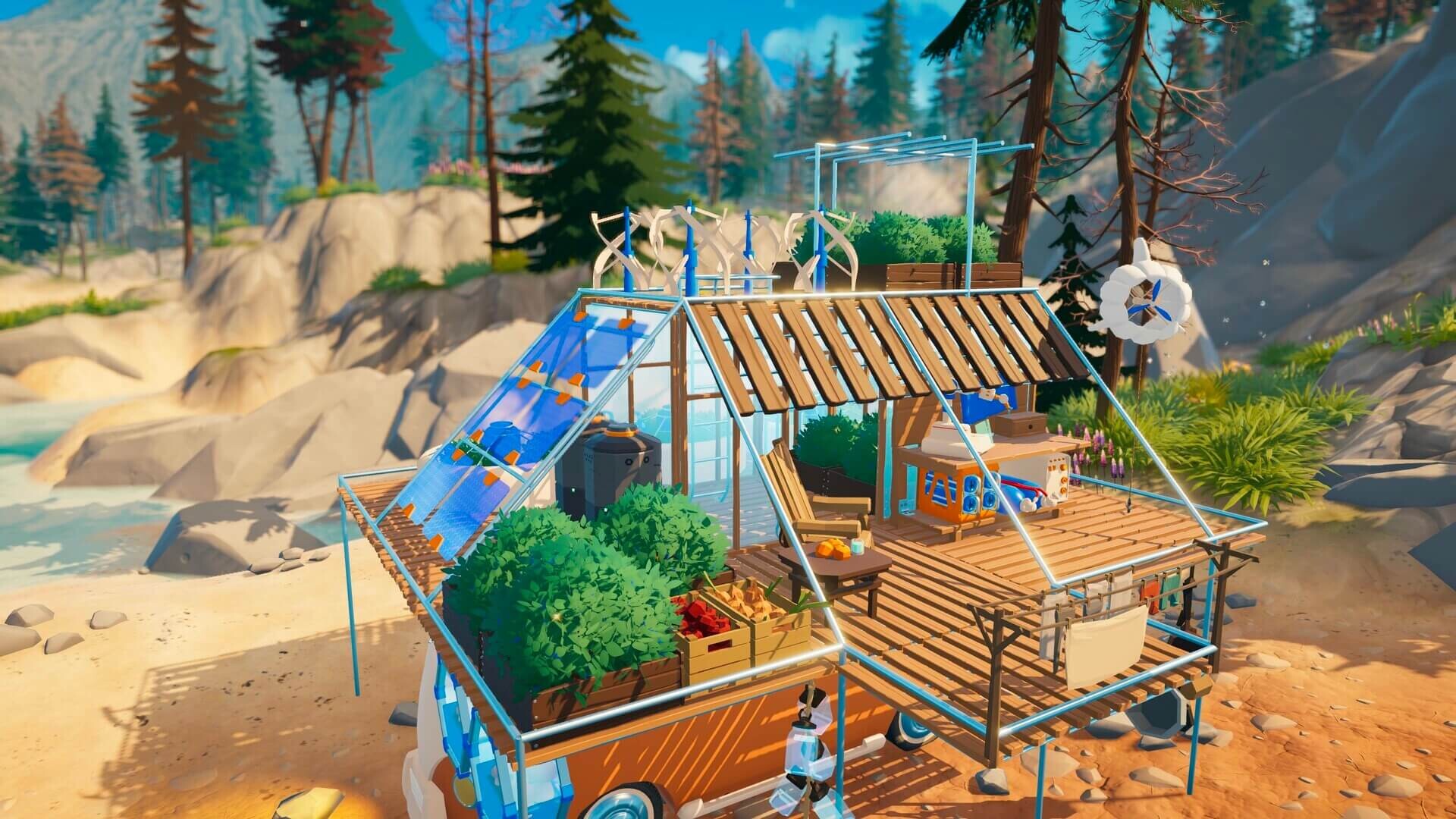
Inland from the cliffs, forests of gigantic redwood trees dominate the landscape. These trees tower above the rest of the canopy and create a dense woodland canopy that filters the sunlight, giving the forest floor a shaded, atmospheric quality. The contrast between the bright, open beaches and the dark, towering redwood forest is one of the defining visual characteristics of the biome.
Coastal streams and small rivers wind through the terrain, flowing from the forested highlands down toward the shore. These waterways provide natural farming opportunities and serve as reliable locations for water-based energy generation. Some areas of The Coast are only reachable on foot. Clifftop overlooks, hidden beach coves, dense forest interiors, and caves tucked into the rock formations reward players who leave their van behind and explore on foot.
The Coast is accessible by driving from The Outdoors. The two biomes are connected through the game's seamless open world, with no loading screens between them. However, the road connecting the regions is blocked by obstacles that must be cleared before the van can pass through.
Outbound uses roadblock mechanics to gate progression between biomes. Three types of obstacles can block the path: fallen trees, broken barriers, and collapsed bridges. Each requires specific crafted tools or materials to remove. Fallen trees need an axe, broken barriers need a wrench, and collapsed bridges need planks. Players must gather the right resources and craft the necessary tools using blueprints obtained from Signal Towers before they can clear the road and drive into The Coast.
The transition between biomes is gradual rather than abrupt. As players drive from The Outdoors toward The Coast, the terrain shifts from grasslands and deciduous forests to sandy ground and coastal vegetation. The ambient soundscape also changes, with birdsong giving way to crashing waves and the sound of sea breeze through palm fronds.
The most recognizable landmark in The Coast is an old lighthouse perched atop the highest coastal cliff. Visible from a long distance across both the beach and the sea, it functions as a natural navigation reference point for players exploring the region. The lighthouse was historically described as "a vital landmark for ships navigating the nearby traffic routes," and its elevated position makes it one of the first things players notice when arriving in the biome.
The area surrounding the lighthouse contains resources and environmental storytelling elements. Players can explore the clifftop around the structure to find materials and discover hints about the world's lore. The lighthouse and its surroundings serve as both a practical destination for resource gathering and an atmospheric focus that anchors the visual identity of The Coast.
Beyond the lighthouse, The Coast contains several additional points of interest scattered across its terrain. The world map for The Coast marks several categories of locations, consistent with the map system used in The Outdoors.
Beach coves: Sheltered inlets along the shoreline where players can park their van close to the water. These coves often contain unique coastal resources and provide scenic camping spots.
Tidal rock formations: Rocky outcrops along the shore that are shaped by the ocean. These formations add visual variety and serve as navigational markers along the coastline.
Hidden caves: Accessible on foot, these caves are tucked into the cliffsides and rock formations. Exploring them can reveal resources and environmental details that reward thorough exploration.
Coastal roads: Winding roads that follow the clifftops and shoreline, connecting the various areas of The Coast. Some roads pass through dense redwood forest sections while others run along open cliff edges with ocean views.
Signal Towers are present throughout The Coast, following the same mechanics as those found in The Outdoors. Players interact with these tall structures to download new blueprints for their workbench and build menu. Each tower typically offers multiple blueprint options, and the choices vary between playthroughs, keeping the progression fresh.
To download a blueprint from a Signal Tower, players need a token. Tokens are obtained by collecting litter found throughout the world and processing it through the trash compactor on the camper van. The blueprints available from Signal Towers in The Coast may include crafting recipes that use the region's unique materials, such as redwood timber and tropical plants. Signal Towers also contribute to map discovery, revealing a portion of the surrounding area when activated.
From time to time, previously visited Signal Towers will receive a new signal, giving players a reason to return and complete their blueprint collection.
The Coast provides favorable conditions for multiple energy sources, with water and wind being particularly strong in this region. The table below compares how each energy source performs in The Coast.
Energy Source | Performance in The Coast | Notes |
|---|---|---|
Solar Panels | Good on beaches, variable elsewhere | Open sandy beaches receive strong sunlight during clear days. Redwood forest canopy blocks sunlight inland. Coastal weather can bring sudden cloud cover that reduces output. |
Wind Turbines | Very good along cliffs and headlands | The persistent sea breeze provides consistent wind along exposed clifftops and open coastline. Effective both day and night. |
Hydro Generators | Excellent near rivers and shoreline | Coastal streams and rivers flowing toward the shore offer reliable water flow. The shoreline itself provides additional placement options not available in The Outdoors. |
Moderate; redwood timber available | Redwood forests provide a source of fuel, though the trees may be less densely packed than the forests in The Outdoors. Useful as a backup during storms or at night. |
The balanced energy profile of The Coast means that players who diversify their setup across solar, wind, and hydro will rarely run out of power. The strong hydro and wind conditions make this biome particularly comfortable for players who had difficulty maintaining consistent energy in The Outdoors.
The Coast introduces resources not found in The Outdoors, providing new materials that expand the player's crafting and building options. The v0.7.6 patch notes specifically highlighted "a new type of wood" and "plenty of fruits" as key additions.
Resource | Location | Use |
|---|---|---|
Redwood timber | Redwood forests inland from the coast | A new wood type that unlocks additional building possibilities not available with standard lumber from The Outdoors |
Tropical fruits | Palm trees and tropical vegetation along beaches | Used in cooking recipes; expand the food variety beyond what is available in The Outdoors |
Coastal stone | Rocky cliff formations and outcrops | Stone varieties distinct from inland deposits, used in crafting |
Tropical plants and mushrooms | Forest floors and shaded areas near the coast | Unique species that expand the crafting and cooking catalog |
Because certain crafting recipes require materials found only in specific biomes, players will need to travel between The Outdoors and The Coast to access the full range of crafting options. Stocking up on resources from one biome before departing for the other is a practical strategy.
The Coast has its own weather patterns that differ from those in The Outdoors. Coastal conditions tend to be more unpredictable, with sudden shifts between clear skies and rain. Sea fog can roll in along the shore, reducing visibility and creating an atmospheric, moody environment. Gusty winds are common along the cliffs and headlands, especially during the afternoon.
These weather patterns directly affect energy production. Solar panels see reduced output during foggy or overcast periods, but wind turbines benefit from the strong coastal gusts. Rain is more frequent along the coast than inland, making hydro generators a reliable choice and the bio burner a sensible backup. Players who pay attention to the weather cycle and adjust their energy strategy accordingly will maintain smoother power output throughout their stay in The Coast.
Like The Outdoors, The Coast contains collectibles scattered throughout the environment for players to discover. The world map for The Coast marks several categories of collectible locations.
Cairns: Stone-stacking spots where players can add a rock to a cairn as an in-game achievement. These are marked with red pins on the world map.
Gnomes: Hidden garden gnomes placed around the map as a side quest challenge. These are marked with purple pins on the world map. Finding all gnomes in a biome is a completionist goal.
Bottle caps: Scattered throughout the world, bottle caps can be used in a vending machine mini-game that dispenses adorable animal bobblehead figures for the van.
Paintings: The v0.7.7 patch (released two days after the beta launch) added paintings to The Coast as discoverable items.
The Coast has a distinctly different look and feel from The Outdoors. While the starting biome emphasizes rolling green plains and warm, golden light, The Coast trades that palette for turquoise waters, white sand, and the deep greens of redwood canopy. The official trailer described the biome as a place where "the scent of fresh fruit and the salty sea welcomes you," and the visual design reinforces that sense of tropical warmth.
Sunrises and sunsets take on new character along the coast. The open horizon over the ocean allows for dramatic lighting effects that are not visible in the enclosed forests of The Outdoors. At night, the coastline under moonlight creates a serene atmosphere, with waves gently reflecting the light. The lighthouse beam sweeping across the water adds a subtle animated detail to the nighttime scene.
The overall aesthetic maintains Outbound's signature style of flat surfaces and saturated color, but the coastal palette gives the biome its own identity. The contrast between the bright, sunlit beaches and the dark, shaded redwood forest interiors provides visual variety within a single biome.
Clear roadblocks in The Outdoors first. You will need crafted tools (axe, wrench, planks) to open the path to The Coast, so prepare these before heading out.
Diversify your energy setup before arriving. The Coast favors wind and hydro, so consider mounting a wind turbine and parking near water sources for steady power.
Explore on foot. Some clifftop overlooks, hidden caves, and dense forest interiors are not accessible by van and contain valuable resources or story details.
Visit Signal Towers as you discover them. They unlock blueprints specific to The Coast's materials (including redwood-based recipes) and reveal more of the map.
Stock up on resources from The Outdoors that are not available at the coast. Some crafting recipes require materials from both biomes.
Use the lighthouse as a navigation reference. Its elevated position and visibility from long distances make it easy to orient yourself in the region.
Watch the weather. Coastal fog and rain can reduce solar panel output significantly, so have a backup energy source ready.
Look for cairns, gnomes, and bottle caps throughout the biome. They are easy to miss in the dense redwood forests and hidden coves.