

Overview
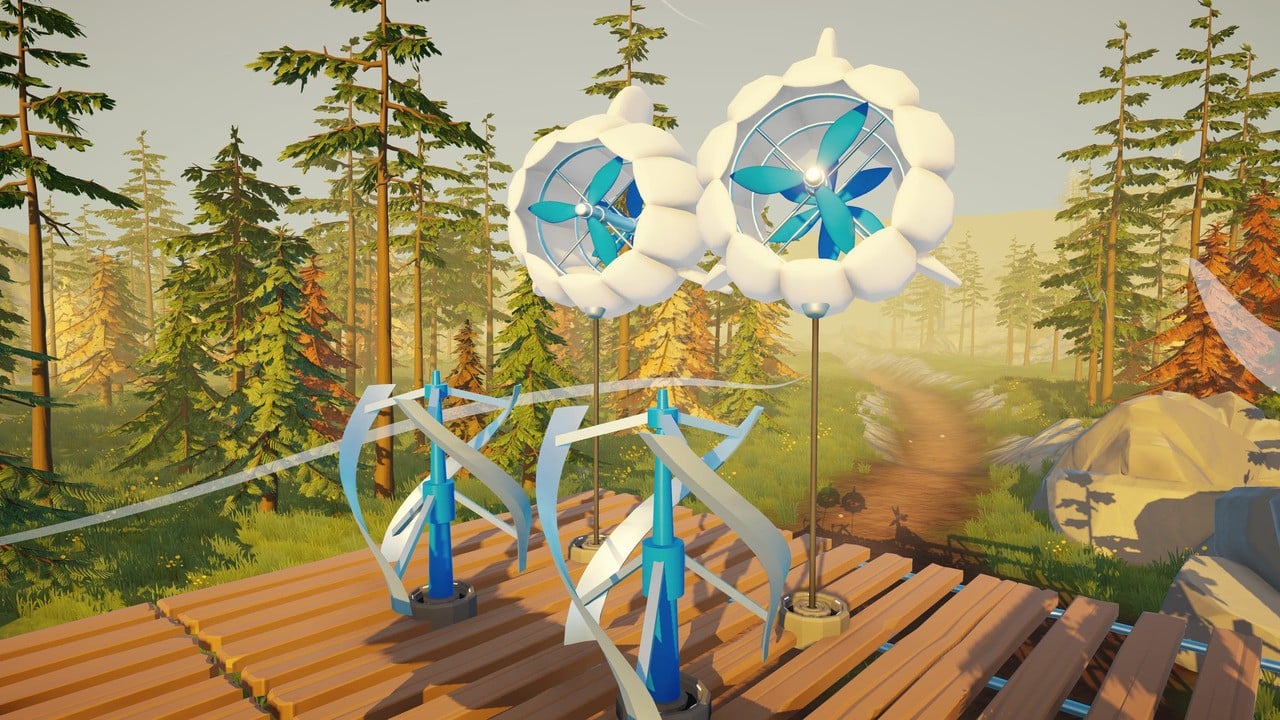
The energy system is the central ongoing challenge in Outbound. The camper van's electric motor, workstations, lights, and appliances all draw from a shared battery. If the battery drains completely, the van stops moving and powered equipment shuts down until power is restored. Players start with a basic bio burner and progressively unlock renewable sources through the technology tree, eventually building a fully self-sufficient power grid. This progression from burning resources to generating clean energy represents the game's core sustainability theme.
The Battery
The van has a single battery that powers everything. Early in the game, managing battery levels is a constant concern. As players unlock upgrades, battery capacity increases and surplus power from efficient setups feeds into reserves for nighttime or high-consumption periods. The energy meter on the van's dashboard shows current charge, and keeping an eye on it is essential when planning longer drives between biomes.
While driving, players also need to monitor motor heat levels. The driving system tracks both charge consumption and motor temperature, creating a balance between speed and efficiency.
Power Sources
Four energy sources are available in the game, each with different characteristics.
Bio Burner
The bio burner is the starting power source. It burns biodegradable materials to charge the battery.
Fuel | Battery Restored |
|---|---|
Fibre | ~10% per unit |
Standard Lumber | ~10% per unit |
Light Lumber | ~20% per unit |
Small logs can be picked up by hand, while larger logs require an axe. The bio burner is mounted in the back of the vehicle and works anywhere, making it reliable but resource-intensive. Early gameplay revolves around a loop of gathering fuel, traveling, and gathering more.
Solar Panels
Solar arrays unfold from the van's exterior and generate power during daylight hours. Output depends heavily on conditions.
Feature | Details |
|---|---|
Clear skies | Maximum power generation |
Overcast weather | Significantly reduced output |
Night / rain | No generation |
Panel orientation | Properly angled panels capture more sunlight |
Solar energy is the most intuitive renewable source but requires supplementation during night and storms. It pairs naturally with wind turbines for round-the-clock coverage.
Wind Turbines
Wind turbines generate power regardless of time of day. They need elevated positioning and open terrain for optimal performance. Placing a turbine on top of the van or on high ground works best; sheltered valleys reduce output. Wind conditions vary by biome and weather. Windmill sound effects were added in alpha v0.5.6, and the feature was present from the earliest playable builds.
Hydro Generators
Water-powered generators harness flowing rivers and streams for steady output. The energy is consistent as long as the van is parked near running water, but this restricts parking location choices. Rivers and lakes were added to the map display in alpha v0.5.8, making it easier to plan routes that include hydro-friendly parking spots.
Power Source Comparison
Source | Works At Night | Weather Dependent | Location Dependent | Fuel Required |
|---|---|---|---|---|
Yes | No | No | Yes (biodegradable materials) | |
Solar Panels | No | Yes (needs clear sky) | No | No |
Wind Turbines | Yes | Partially (varies) | Partially (needs elevation) | No |
Hydro Generators | Yes | No | Yes (needs flowing water) | No |
Energy Progression
The intended progression path moves players from dependence on the bio burner toward a fully renewable setup.
Early game: The bio burner is the only power source. Gather fibre and lumber constantly to keep moving.
Mid game: Unlock solar panels and/or wind turbines through signal tower blueprints. Supplement the bio burner with renewables.
Late game: Build a mixed renewable grid (solar + wind + hydro depending on location) that eliminates the need for burning resources. Battery bank upgrades store surplus for nighttime and high-draw activities.
Energy Strategy by Biome
Different regions reward different power configurations.
The Outdoors: Forests provide plentiful lumber for the bio burner. Open plains suit wind turbines. Mountains offer elevation for improved wind performance.
The Coast: Coastal breezes benefit wind turbines. Rivers and streams near the shoreline support hydro generators. Sunny beaches are good for solar, though coastal weather can be unpredictable.
Energy and Other Systems
Energy affects nearly every part of gameplay. Crafting workstations draw power to operate. Cooking stations need electricity. The van's headlights (nighttime driving was added in beta v0.7.6) and interior lights consume charge. Even storage upgrades and the pop-up camper mode add to the van's overall power draw. Managing energy is not a one-time setup; it is an ongoing part of the gameplay loop that keeps players engaged throughout their journey.
For a practical power setup guide, see the solar panels and power article. For specific details on renewable sources, see solar, wind, and water energy.
Battery Capacity Research
Battery capacity is raised through three research nodes rather than through built modules. They chain, and the last one is gated behind Power Cells, which are among the most expensive items in the game to make.
Node | Cost |
|---|---|
Battery Capacity Upgrade I | 10x Bolts, 8x Scrap Metal |
Battery Capacity Upgrade II | 3x Battery Components, 2x Sheet Metal |
Battery Capacity Upgrade III | 4x Power Cell |
A single Power Cell costs 4x Battery Components, 2x Hardened Metal and 4x Hyperthread at the Battery Workstation, and each Battery Component itself costs 1x Electronics, 2x Sheet Metal and 4x Bolts. Upgrade III therefore represents 16 Battery Components and a long refining chain, which is why it usually lands last. A patch during the first console rollup cut the Power Cell recipe cost from four Battery Components to two, so older guides overstate it.
The Cooling System Upgrade sits on the same side of the tree at 2x Hardened Metal, 4x Electronics and 10x Water. It addresses motor heat rather than battery capacity, which the Driving page covers.
Confirmed Bio Burner Fuels
The bio burner accepts exactly three inputs in the shipped build. Each one burns for ten seconds and returns one Electric Charge, so the difference between them is purely how easily you can restock, not how much power you get.
Fuel | Burn Time | Output |
|---|---|---|
Lumber | 10s | 1x Electric Charge |
Light Lumber | 10s | 1x Electric Charge |
Fibre | 10s | 1x Electric Charge |
Fibre is the cheapest of the three to gather because bushes regrow quickly and need no tool at the lowest tier, which makes it the practical fallback when the battery drops overnight. Full recipe data is on the Recipes List page.