

Overview
Outbound is a cozy open-world exploration and crafting game where you build a home on top of a camper van and travel through a colorful utopian world. While the game never punishes you for playing at your own pace, a few smart habits can make the journey smoother and more rewarding. This guide collects practical tips across every major gameplay system, from energy management and crafting to farming, driving, and multiplayer co-op.
Exploration Tips
The world of Outbound is filled with resources, blueprints, and hidden details. Taking a methodical approach to exploration helps you find what you need without wasting time or energy.
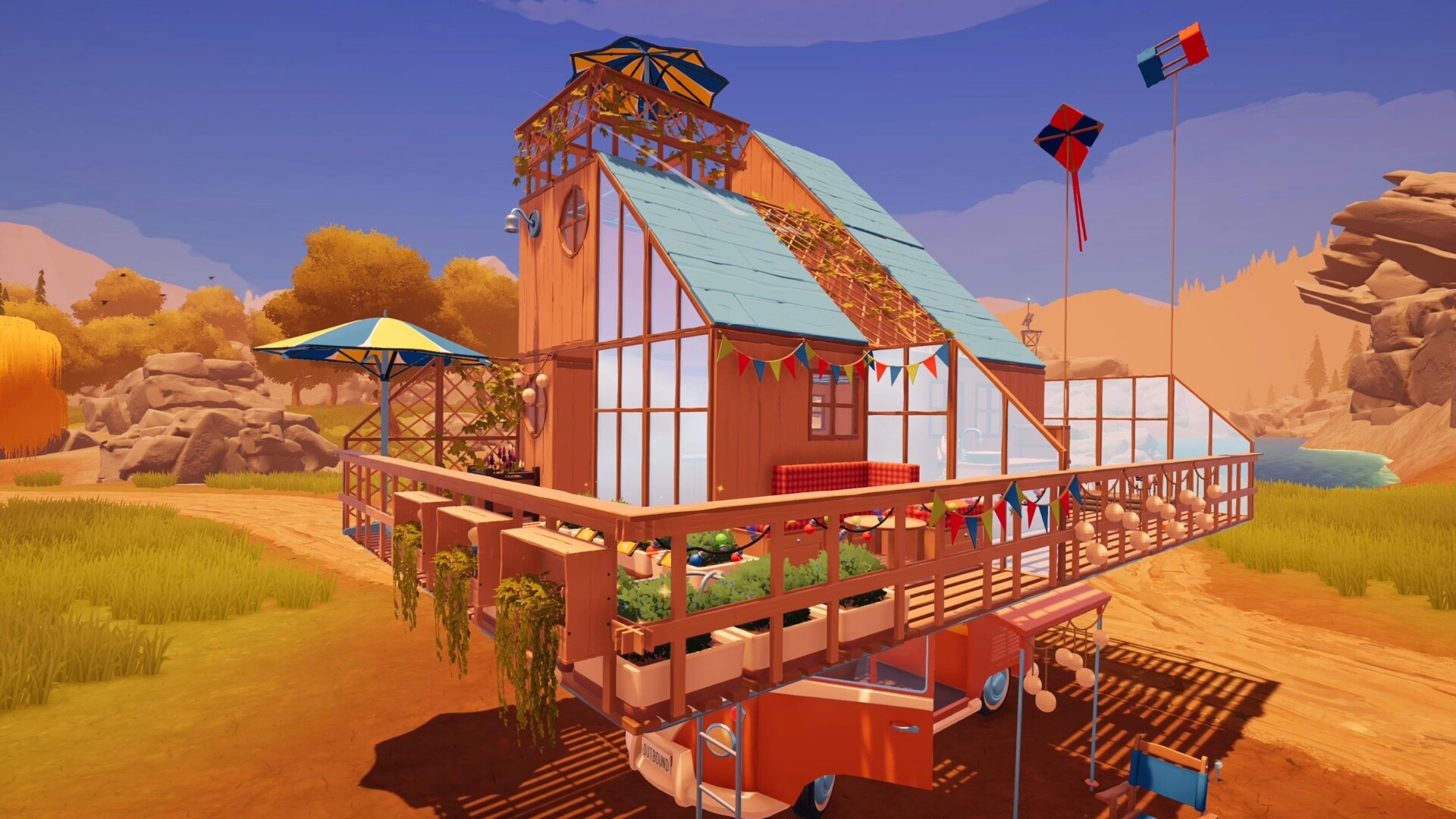
Follow roads and paths first. Roads connect major points of interest and lead to structures, resource clusters, and signal towers. Wandering off-road is rewarding later, but roads give you the best early orientation.
Scan the horizon for signal towers. Signal towers are tall and visible from a distance. Spotting one on the skyline gives you a clear destination and guarantees new blueprints when you arrive.
Check every building and ruin you pass. Abandoned structures frequently contain litter, scrap metal, and other useful materials. Even small sheds can hold resources worth picking up.
Always bring the van with you. Walking on foot limits how much you can carry before becoming encumbered. Drive the van close to your exploration target so you can offload resources frequently.
Use fire lookouts and signal towers as landmarks. These tall structures help you navigate even without a compass. When you spot one you have already visited, you know your bearings relative to places you have been.
Return to signal towers periodically. Signal towers can offer different blueprint options over time. Revisiting them lets you pick up blueprints you may have skipped on your first visit.
Stack cairns for fun. Stone cairns are a small, relaxing activity you can do anywhere. They have no direct gameplay benefit, but stacking rocks on a scenic overlook is part of the cozy spirit of Outbound.
Energy Management Tips
The energy system is the central ongoing challenge in Outbound. Your van's electric motor, workstations, lights, and appliances all draw from a shared battery. If the battery drains completely, the van stops and powered equipment shuts down. These tips help you keep the power flowing.
Do not over-rely on the bio burner. The bio burner is your starting power source and works anywhere, but it consumes fiber, lumber, and other biodegradable materials quickly. Treat it as a backup rather than your primary long-term source.
Unlock solar panels as early as possible. Solar panels generate power passively during daylight with no resource cost. They are the most straightforward renewable source and dramatically reduce your dependence on burning materials.
Park in sunny, open spots during the day. Solar panels produce more power when the van is parked in direct sunlight. Avoid parking under trees or in deep valleys if you need to charge up.
Pair solar with wind turbines. Solar panels produce nothing at night or during storms. Wind turbines generate power regardless of time of day, so combining the two sources covers more situations. Place wind turbines on elevated, open positions for best output.
Turn off lights and non-essential equipment. Interior lights, headlights, and idle workstations all draw charge. Switching them off when not in use extends your battery life noticeably, especially at night.
Upgrade your battery bank. A larger battery stores surplus energy generated during peak production hours (sunny afternoons, windy days) and lets you draw on reserves overnight or during bad weather.
Build toward a mixed renewable grid. The late-game goal is a combination of solar, wind, and hydro power that eliminates the need to burn resources entirely. Plan your signal tower blueprint choices with this progression in mind.
Crafting Tips
The crafting system lets you build workstations, tools, furniture, and upgrades using scavenged materials. Knowing what to prioritize saves time and resources.
Prioritize essential workstations first. The sawmill and recycler are two of the most important early crafting stations. The sawmill processes raw lumber into planks, and the recycler converts litter into download vouchers you can spend at signal towers.
Recycle all the litter you find. Litter is scattered across the world and has no direct use, but the recycling system turns it into download vouchers. These vouchers unlock new blueprints, making litter one of the most valuable things to pick up.
Spend download vouchers and bottle caps promptly. Vouchers and bottle caps occupy the same backpack space as raw resources. Visit signal towers and vending machines regularly to exchange them before they pile up and eat into your carrying capacity.
Check plant sizes before harvesting. Large bushes require a scythe or similar tool to harvest, but small bushes can be gathered by hand. If you run low on fiber early on, look for smaller plants you can pick without crafting tools first.
Craft a portable food processor early. Injuries from falls or other mishaps require healing items like tea. A portable food processor inside the van lets you prepare remedies on the move instead of searching for ingredients in a pinch.
Building Tips
The building system in Outbound is modular: you attach walls, floors, furniture, and workstations to your van in whatever layout you prefer. Because everything rides on a moving vehicle, a few structural decisions make a big difference.
Balance weight against functionality. Every wall panel, workstation, and piece of furniture adds weight to the van. A heavier van drains more battery while driving and handles more sluggishly. Keep your build practical rather than decorative in the early game, and add luxury items once your energy grid can handle the extra load.
Use the fold mechanic before driving. Outbound lets you fold parts of your build down for travel. Folding reduces wind resistance and keeps your center of gravity lower, which improves handling on rough terrain. Get into the habit of folding before you hit the road.
Place workstations inside the van. Workstations mounted inside the van are protected from the elements and accessible at any time. Placing them on the roof works too, but exterior stations may be harder to reach in certain terrain.
Rearrange as you progress. The modular system lets you reconfigure your layout at any time. Do not be afraid to tear down an early setup and rebuild once you have unlocked better materials and larger storage containers.
Add rooftop racks for exterior storage. As your inventory grows, rooftop racks provide extra storage capacity without cluttering the interior. Unlocking them through the tech tree is a worthwhile early investment.
Farming Tips
Growing crops on your van is one of the most satisfying systems in Outbound. Farming provides a steady supply of food and cooking ingredients, and getting started early pays off throughout the game.
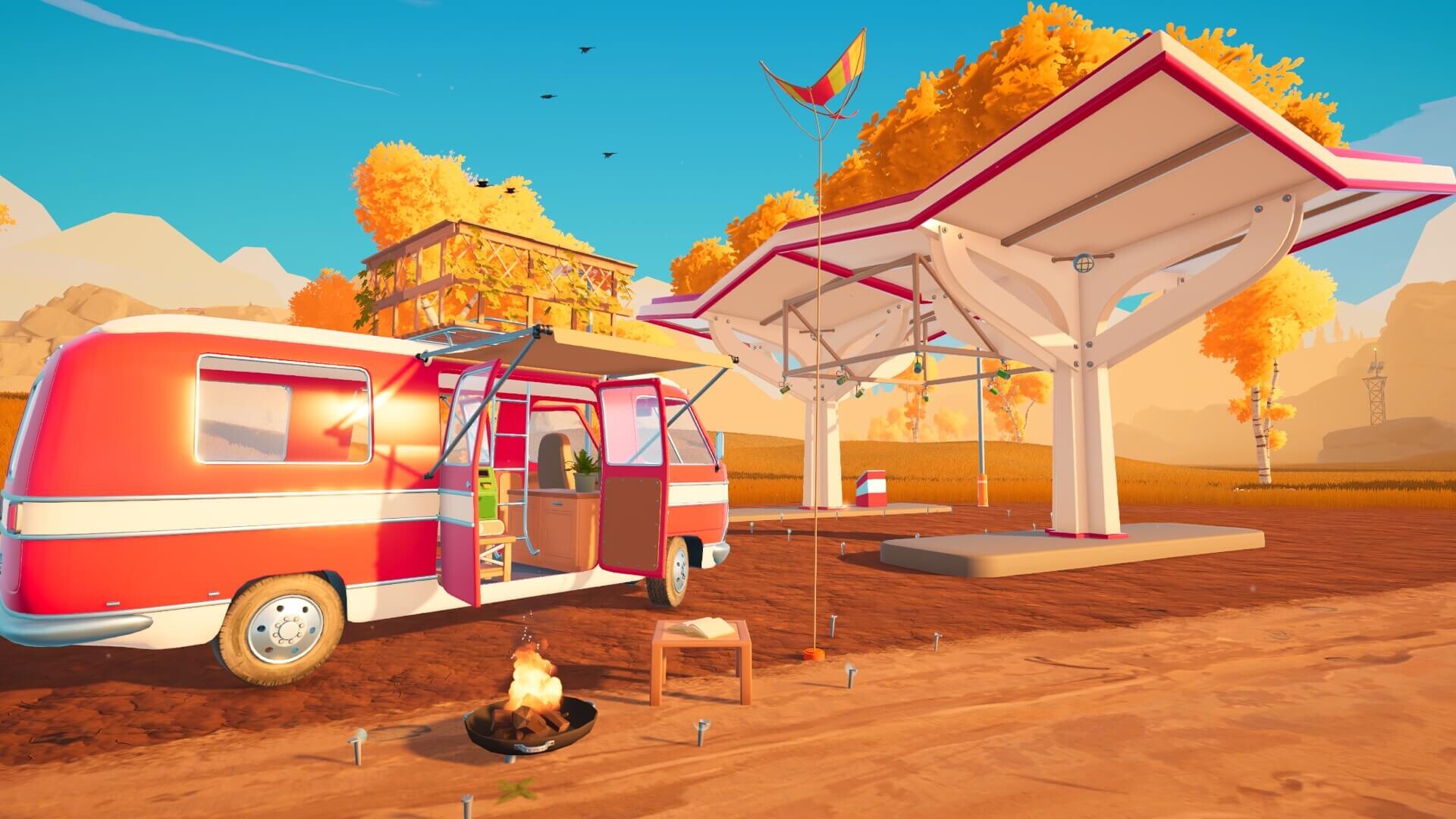
Plant crops as soon as you can. Seeds and garden beds become available relatively early. The sooner you start planting, the sooner you have a renewable food source that reduces your reliance on foraging.
Rain auto-waters your gardens. When it rains, outdoor garden beds receive water automatically. Position your gardens on the van's exterior or rooftop to take advantage of rainy weather without manual watering.
Grow mushrooms for shaded areas. Mushrooms thrive in low-light conditions, making them a good complement to sun-loving crops. If you park in a forested area, mushrooms keep producing while other plants slow down.
Harvest before driving long distances. Mature crops can be lost if you forget about them while traveling. Check your gardens before a long drive and harvest anything that is ready.
Resource Management Tips
Inventory space is limited in Outbound, split between your personal backpack and the van's storage compartments. Smart resource habits prevent frustrating trips back and forth.
Use the dog to carry items. Your dog companion can fetch resources and carry them back to the van on command. This effectively extends your carrying capacity while exploring. Send the dog back with a load so you can keep gathering without returning on foot.
Offload at the van frequently. Becoming encumbered slows you down and limits what you can pick up. Make short trips from the van, deposit what you find, and head back out rather than trying to carry everything at once.
Keep your backpack clear of vouchers and caps. Download vouchers and bottle caps share space with raw materials. Spend them at signal towers and vending machines before they stack up and reduce your effective carrying capacity.
Upgrade storage containers early. The tech tree includes larger storage containers for the van's interior. Unlocking these lets you stockpile materials for bigger projects without running out of room.
Gather common materials in bulk. Fiber, lumber, and scrap metal are used in most recipes. Whenever you pass through a resource-rich area, top off these staples so you are not caught short when a recipe calls for them.
Driving Tips
Driving your camper van is the primary way to traverse the world. The van runs on an electric motor powered by your battery, so every trip is a trade-off between distance and energy.
Watch your battery level before setting off. If your charge is low, top it up with the bio burner or wait for solar panels to recharge before a long drive. Running out of battery mid-journey leaves you stranded until you generate more power.
A lighter van performs better. Reducing the weight on your van improves acceleration, handling, and energy efficiency. If you are heading on a long drive across flat terrain, consider whether you can leave behind heavy items you do not need at your destination.
Fold your build before driving. Folding exterior structures lowers your profile and center of gravity. This makes the van more stable on slopes and reduces energy consumption from wind resistance.
Drive during the day when using solar power. If your energy grid relies heavily on solar panels, driving during daylight lets the panels recharge while you travel. Night driving drains the battery with no solar input to offset the cost.
Learn the steering feel. The van intentionally handles like a loaded vehicle: slow to accelerate, wide turns, gentle braking. Fighting the physics wastes battery. Work with the van's momentum rather than against it.
Monitor motor temperature. The driving system tracks motor temperature alongside charge. Sustained high-speed driving can overheat the motor. Ease off the throttle periodically on long stretches to keep the temperature in check.
Multiplayer and Co-Op Tips
Outbound supports up to four players in online multiplayer co-op. Everyone shares a single van, which means coordination is more important than in a solo game.
Specialize roles. With multiple players, it helps to divide responsibilities. One player can focus on gathering and crafting, another on driving and navigation, and a third on building and energy management. Specializing avoids duplicate effort and keeps the group efficient.
Coordinate sleep schedules. All players must go to bed at the same time to advance to the next day. Communicate when you are ready to sleep so nobody is left waiting or caught off guard by a sudden day transition.
Share the driving. Any player can take the wheel. Switching drivers lets one person explore the surroundings or manage inventory while another drives. Passengers can also sit in the van and craft or organize storage during travel.
Recipes unlock globally. When one player discovers a new blueprint at a signal tower, everyone in the session gains access to it. Split up at signal tower clusters so each player can grab different blueprints simultaneously.
Use personal inventories and van storage together. Each player has their own backpack, but the van's storage is shared. Deposit resources into van storage regularly so teammates can access what they need for crafting and building.
Use each player's dog companion. In multiplayer, each player's dog can shuttle resources back to the van independently. Send all the dogs on fetch runs while the group continues exploring to maximize gathering efficiency.
Note that friend codes are session-specific. Co-op sessions use friend codes that regenerate each time. Share the new code at the start of every session so your group can reconnect.
General Tips
There is no wrong way to play. Outbound is designed around relaxation, not optimization. If you want to park the van on a hilltop and watch the sunset with your dog, that is a perfectly valid session.
You will not die from hunger. If your character gets too hungry, you pass out rather than face a permanent penalty. The game gives you friction, not failure. Do not stress about keeping a perfect food meter.
Explore thoroughly before moving on. Each area has resources, litter, and points of interest worth discovering. Rushing to the next biome means leaving useful materials behind.
Plan your signal tower choices. Most signal towers offer multiple blueprint options, and the selection can vary between playthroughs. Think about your current needs (energy, storage, tools) before picking a blueprint, since some choices shape your progression path.
Keep the van close while on foot. Your movement speed on foot is slow, and your backpack fills up fast. Parking the van near your current activity saves time on return trips.
Enjoy the atmosphere. Outbound is built to feel like a cozy road trip, not a race. Take time to fish, fly kites, stack cairns, or just sit by a fire. The world is designed to reward curiosity and patience.