

Overview
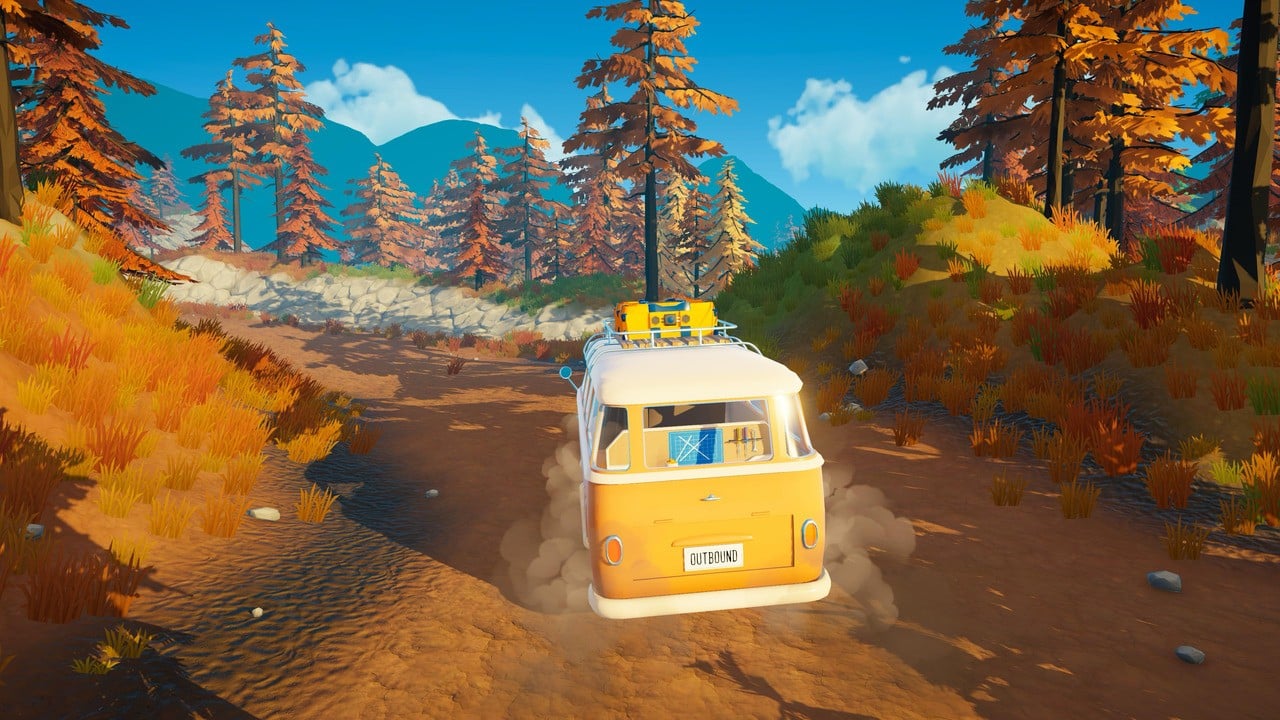
Driving is the primary method of travel in Outbound. The player's camper van is an electric vehicle that connects the game's regions and biomes. Unlike traditional driving games, there is no gear shifting. Instead, the focus is on managing battery charge, monitoring motor heat, and navigating physics-based terrain. The van has a customizable license plate and an odometer that tracks the total distance traveled across a playthrough.
Driving sits at the heart of the Outbound experience. Every road trip between camp spots, every delivery run, and every scenic cruise through the countryside happens from behind the wheel. The game treats driving not just as a way to get from one place to another, but as a core activity with its own set of considerations and rewards.
Controls
The driving controls are designed to be accessible. Acceleration and braking are handled with simple inputs, and there is no manual gear shifting. The van responds to steering with physics-based handling, meaning turns have momentum and weight to them. Driving feels grounded rather than arcade-like, but it is not a punishing simulation either. The controls sit in a comfortable middle ground that suits the game's cozy tone.
Players can rebind driving controls in the settings menu. Gamepad support is available, and the game is designed to work well with both keyboard/mouse and controller setups.
Electric Motor and Battery
The camper van runs on an electric motor powered by a shared battery. This battery is the same one that supplies power to the van's interior modules and appliances through the energy system. Driving consumes charge, and if the battery drains completely, the van stops and cannot move until it is recharged.
Battery management is a constant consideration. Longer drives require more charge, and running appliances inside the van while driving accelerates drain. Players need to balance their electrical usage between driving range and creature comforts. Solar panels, generators, and other charging methods restore battery power over time or on demand.
The motor also generates heat during operation. Players must monitor motor temperature, especially during extended drives or uphill climbs. Overheating does not cause permanent damage in the current build, but it does force the player to slow down or stop and let the motor cool. Keeping an eye on the temperature gauge becomes part of the driving rhythm.
Weight and Performance
The camper van has a weight capacity that directly affects its driving performance. A heavier van accelerates more slowly, handles differently on inclines, and may consume more battery charge per distance traveled. The base weight capacity was 12 units in early alpha builds, but this was increased to 20 units in a patch based on player feedback.
Weight comes from the modules and items stored inside the van. The building system allows players to construct and arrange interior modules, and each module contributes to the van's total weight. Heavier setups (more furniture, appliances, and stored resources) make the van slower and less nimble, while a stripped-down van is faster and more agile. Players can upgrade the van's weight capacity as they progress, but the trade-off between comfort and mobility is always present.
Factor | Effect on Driving |
|---|---|
Total weight near capacity | Slower acceleration, reduced hill-climbing ability |
Low weight (few modules) | Faster acceleration, better handling on inclines |
Weight capacity upgrades | Allow more modules without as much performance loss |
Stored resources | Add to total weight; offload excess at camp to improve speed |
First-Person and Third-Person Views
Outbound supports both first-person and third-person camera views while driving. The camera perspective is selected at save creation and applies to the entire playthrough. In first-person view, the player sees the van interior from the driver's seat, with hands on the steering wheel and the dashboard visible. This perspective is immersive and atmospheric, especially during scenic drives or nighttime travel.
Third-person view positions the camera behind and above the van, giving a wider field of view. This makes it easier to spot nearby resources, landmarks, and terrain features. Most players find third-person more practical for general exploration, while first-person is better suited to leisurely cruising and enjoying the scenery.
Weather and Night Driving
Dynamic weather conditions affect driving in several ways. Rain changes the atmosphere and can reduce visibility. Clear skies make for pleasant cruising. The game's day and night cycle means players will sometimes drive after dark, which limits visibility and gives the headlights a chance to shine. Night-time driving through forested areas or along coastlines has a different feel compared to daytime travel.
Weather does not appear to change road physics in a dramatic way (there is no ice or hydroplaning mechanic from confirmed details), but it does affect the mood and visual experience of driving. Storms can create tense moments, while sunny weather complements the game's relaxing tone.
Multiplayer Driving
In multiplayer sessions with up to four players, only one player drives the van at any given time. The other players ride as passengers and can move around inside the van or look out the windows while in transit. Players can switch who is driving, so the role does not have to stay with one person for the entire session.
Passenger players are free to interact with the van's interior modules while someone else drives. This means a co-op group can have one person driving while others cook, craft, or manage resources, making road trips a collaborative activity rather than downtime.
The Fold Mechanic
When the player needs to relocate the van to a new camp spot, the fold mechanic compacts the entire van into a portable form. All interior modules fold down into boxes, and the van can then be moved to a new location and unfolded. This mechanic connects driving with the building system; the van is both a vehicle and a mobile home that can be set up and taken down as needed.
The fold mechanic means players do not have to rebuild their interior layout from scratch every time they move. The modules remember their positions and unfold back into place at the new site. This makes frequent relocation practical and encourages players to explore freely rather than staying rooted in one spot.
Terrain and Biomes
Different biomes offer different terrain types. Open meadows allow for smooth, fast driving, while rocky hillsides or dense forest paths may require more careful navigation. The game's world is designed to reward exploration by road, with scenic routes, hidden paths, and vista points scattered throughout each region.
Terrain variation keeps driving interesting across long play sessions. A drive through The Outdoors feels different from a coastal cruise or a mountain pass, both visually and in terms of handling.
Tips
Keep battery charge above 20% before starting a long drive. Running out mid-route means waiting for a recharge.
Monitor motor heat on uphill sections. If the temperature gauge climbs, ease off the accelerator and let it cool.
Remove unnecessary modules before a long trip to reduce weight and improve fuel efficiency.
Use third-person view for exploration and resource spotting; switch to first-person for scenic drives.
In multiplayer, rotate drivers so everyone gets a turn and passengers can handle interior tasks.
The fold mechanic preserves your interior layout, so do not hesitate to relocate frequently.