

Overview
The cooking system in Outbound lets players turn raw ingredients into meals that restore more hunger than the ingredients would on their own. Food comes from two pipelines: foraging in forests and meadows and farming crops in mobile garden beds. All of it feeds into workstations that live inside the camper van, so the kitchen travels with the player wherever they drive. A third ingredient pipeline, fishing, arrived from the post-launch roadmap in the Version 1.1 update, but the studio has clarified that fish in Outbound are decorative collectibles for the journal and fish tanks rather than a food ingredient, so cooking did not gain a fish recipe.
Cooking is part of the game's gentle survival layer. Characters eat to keep their hunger meter topped up and to recover health, but running out of food causes the player to pass out rather than die. The system rewards preparation without punishing casual play, which matches the wider sustainability theme of the game.
Cooking Stations
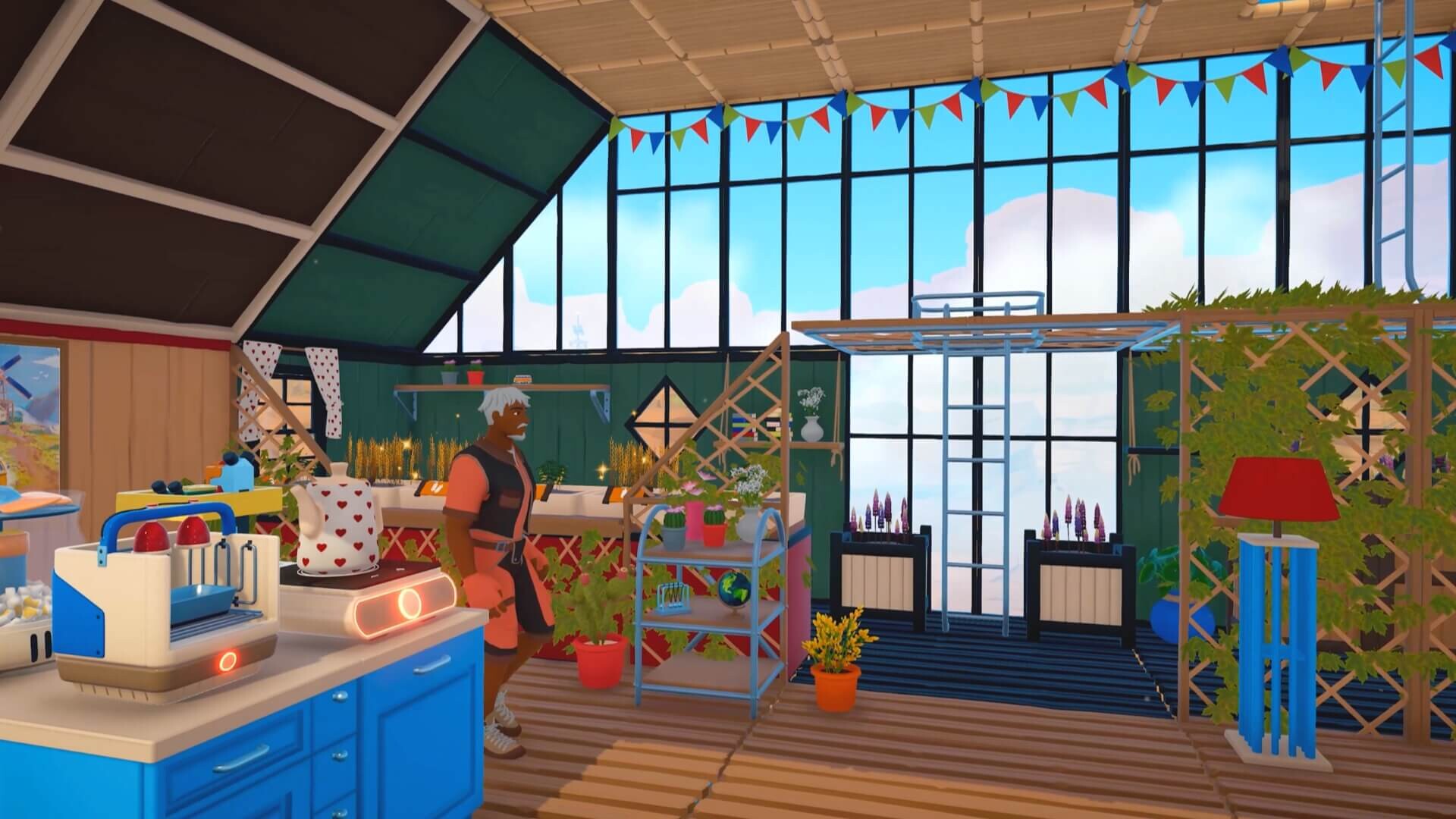
Meals are prepared at dedicated stations that can be placed inside the van through the modular building system. Each station handles a different category of recipe, and the shipped build has eight food and drink stations, so a fully stocked kitchen takes real floor space. Stations are crafted at the van's rear workbench using blueprints; some blueprints are unlocked by default, and others are downloaded from signal towers scattered across the map as part of the technology tree.
Station | Function | Recipes |
|---|---|---|
Food Processor | Cold prep station that crushes, mashes, and blends raw ingredients without heat. One of the first cooking tools available. | Jam, Tomato Sauce, Coconut Smoothie |
Cooking Pot | Heated pot for soups. Takes two mushrooms of one kind plus water. | Mushroom Soup (from Amber Morels, Indigocaps, Sunshrooms, or Golden Boletes) |
Baking Oven | Dry-heat oven for grain-based foods. Unlocks the most filling meals in the game. | Bread, Pizza |
Bread Press | Tops a loaf with a spread. | Bread with Jam, Bread with Honey |
Cake Oven | Bakes sweet loaves from grain plus a fruit or vegetable. | Carrot Cake, Banana Bread, Corn Bread |
Roasting Station | Fast dry roaster for beans and corn. | Roasted Coffee Beans, Salty Popcorn, Sweet Popcorn |
Coffee Maker | Brews coffee from roasted beans and water. | Cup of Coffee |
Tea Station | Steeps a single plant in water; the teas restore health rather than hunger. | Ginger Tea, Lavender Tea |
Campfire | Outdoor open-flame site built at campsites. Used for cooking on the road away from the van, but goes out in rain unless sheltered. | Basic field cooking |
Powered stations draw from the van's onboard electrical grid, which is fed by solar panels, wind turbines, or small hydro generators depending on the player's build. Keeping the kitchen running while parked in a bad spot for sunlight or wind is a common early-game power puzzle, and it ties cooking directly into the energy system and bio-burner backup generator.
Ingredients
Ingredients fall into four buckets based on how they reach the kitchen. Most items can be eaten raw for a small +10 hunger boost, but feeding them through a station multiplies their value. Health recovery comes from cooked items instead: Mushroom Soup from the Cooking Pot and the Ginger and Lavender teas from the Tea Station.
Ingredient | Source | Raw Effect | Used In |
|---|---|---|---|
Berries | Foraged in the wild or planted in a crop plot once unlocked | +10 hunger | Jam |
Tomatoes | Foraged in the wild or farmed in a crop plot | +10 hunger | Tomato Sauce, Pizza |
Carrot | Foraged in the wild or farmed in a crop plot | +10 hunger | Carrot Cake, or eaten raw |
Mushrooms (Amber Morel, Indigocap, Sunshroom, Golden Bolete) | Foraged in the wild or grown in a crop plot once unlocked | +10 hunger | Mushroom Soup |
Wheat / Grain | Harvested from the wheat fields around Lilly's Windmill, or grown in a crop plot | Crafting ingredient only | Bread, Pizza, Carrot Cake, Banana Bread |
Corn | Grown in a crop plot | Crafting ingredient only | Corn Bread, Salty Popcorn, Sweet Popcorn |
Banana and Coconut | Gathered in the warmer biomes | Crafting ingredient only | Banana Bread, Coconut Smoothie |
Ginger and Lavender | Gathered in the wild | Crafting ingredient only | Ginger Tea, Lavender Tea |
Raw Coffee Beans | Gathered in the wild | Crafting ingredient only | Roasted Coffee Beans, then Cup of Coffee |
Salt and Sugar | Gathered in the wild | Crafting ingredient only | Salty Popcorn, Sweet Popcorn |
Water | Bottles found near man-made structures give 1 water per bottle, wells give 5 water per draw | Crafting ingredient only | Bread, Pizza, Mushroom Soup, cakes, teas, coffee, Coconut Smoothie |
Honey | Produced from hives added through the beekeeping Kickstarter stretch goal | Sweet food source | Bread with Honey, Corn Bread |
Mushroom variety matters at the cooking pot: a batch of Mushroom Soup has to use two mushrooms of the same kind, so Amber Morels, Indigocaps, Sunshrooms, and Golden Boletes cannot be mixed in one pot. Players who want to stockpile soup tend to harvest each biome's dominant mushroom separately and keep them in labeled storage crates in the van pantry.
Confirmed Recipes
These are the food and drink recipes in the shipped build, with base craft times and no upgrades applied. The full production list, including material recipes, is on the recipes list page.
Recipe | Ingredients | Station | Time |
|---|---|---|---|
Jam | 2 Blue Roadberries | Food Processor | 15s |
Tomato Sauce | 2 Wild Tomatoes | Food Processor | 15s |
Coconut Smoothie | 1 Coconut, 1 Water | Food Processor | 15s |
Mushroom Soup | 2 mushrooms of one kind (Amber Morel, Indigocap, Sunshroom, or Golden Bolete), 1 Water | Cooking Pot | 15s |
Bread | 2 Grain, 1 Water | Baking Oven | 15s |
Pizza | 2 Grain, 1 Water, 1 Tomato Sauce | Baking Oven | 15s |
Bread with Jam | 1 Bread, 1 Jam | Bread Press | 7s |
Bread with Honey | 1 Bread, 1 Honey | Bread Press | 7s |
Carrot Cake | 1 Grain, 1 Water, 1 Carrot | Cake Oven | 15s |
Banana Bread | 1 Grain, 1 Water, 1 Banana | Cake Oven | 15s |
Corn Bread | 1 Corn, 1 Water, 1 Honey | Cake Oven | 15s |
Roasted Coffee Beans | 1 Raw Coffee Beans | Roasting Station | 3s |
Salty Popcorn | 1 Corn, 1 Salt | Roasting Station | 3s |
Sweet Popcorn | 1 Corn, 1 Sugar | Roasting Station | 3s |
Cup of Coffee | 5 Roasted Coffee Beans, 1 Water | Coffee Maker | 7.5s |
Ginger Tea | 1 Ginger, 1 Water | Tea Station | 10s |
Lavender Tea | 1 Lavender, 1 Water | Tea Station | 10s |
Food Effects and Buffs
Prepared food outperforms raw ingredients by a large margin. A single berry restores +10 hunger on its own, but two berries processed into Jam restore +22. The same math holds for tomatoes and mushrooms. Grain and water are only useful once cooked, since neither has a standalone effect. Pizza is the clear winner for hunger output at +32, but it is also the most ingredient-heavy recipe, chaining farming, water collection, tomato processing, and baking into one dish.
Recipes that use the cooking pot currently skew toward health recovery rather than hunger. Mushroom Soup restores health, and so do the Ginger and Lavender teas from the Tea Station, which makes them the go-to items for players returning from a rough day in the outdoors or a hard fall in the canyons. The food processor and oven branches, by contrast, are hunger relief.
Farm-to-Table Loop
Cooking sits at the end of a production chain that starts with growing or gathering ingredients. Early in a run, players lean on foraging: berries, herbs, carrots, and mushrooms scattered through the forest will keep hunger up while the van's kitchen is still bare. As the crafting system opens up, the player installs crop plots inside the van and plants wheat, tomatoes, carrots, and mushrooms for a reliable supply. Harvested grain goes straight to the Baking Oven, tomatoes pass through the Food Processor, and mushrooms land in the Cooking Pot.
Water is the one ingredient that does not come from the garden. Bottles of water can be scavenged from abandoned structures around the map, and wells offer a larger five-unit payout for players willing to walk to them. Because every hot recipe uses water, planning a route past a well before a big cooking session is a common tip. Honey from the beekeeping stretch goal adds another farm-side pipeline, giving late-game players a sweet ingredient to pair with bread and jam-based meals.
Campfire Cooking
Alongside the van's built-in kitchen, campfires give players an outdoor cooking option at rest stops. Campfires are part of the camping stretch goal added during the Kickstarter campaign, which expanded the game with bonfires and other outdoor-living features. Rain extinguishes open flames, so players usually park the van nearby and extend a side door, floor panel, or roof piece over the fire to keep it lit. A well-known moment from a streamer who tried to cover their campfire with a van door during a storm directly inspired the developers to build the shelter mechanic into the final game.
Campfires are slower than powered stations and are not a replacement for the van kitchen, but they work well for field trips where the van is parked at a scenic overlook and the group wants to cook together outside. Setting up a campfire, tossing raw ingredients into the pot, and watching the sunset with teammates is a very Outbound kind of evening.
Multiplayer Cooking
Cooking is designed with multiplayer in mind. In a four-player co-op session, ingredients and finished meals can be shared freely, and the group typically splits roles by ingredient pipeline: one player tends the garden, another forages mushrooms and herbs, a third handles water runs to wells or scavenges bottles, and a fourth focuses on processing (Food Processor recipes, Cooking Pot meals, Baking Oven outputs). Feeding everyone gets much easier when nobody has to cover every step of the chain alone.
Multiplayer cooking also turns the van kitchen into a social hub. Because all three stations can run in parallel on the same grid, a full team can batch-cook jam, soup, and bread at the same time while catching up between exploration runs. Stocking a shared pantry before a long drive is one of the most common group rituals in the game.
Tips
Build the Food Processor first. Two berries into a single jar of Jam more than doubles the hunger you would get by eating the berries raw, and berries are the easiest early ingredient to find.
Keep a tea on hand. Ginger Tea and Lavender Tea each take one plant and one water at the Tea Station and restore health, so they are the cheapest way to top up after a fall.
Do not mix mushroom types in a soup. The cooking pot requires two mushrooms of the same kind, so keep Amber Morels, Indigocaps, Sunshrooms, and Golden Boletes in separate inventory slots.
Route through wells when possible. Wells give 5 water per draw compared to 1 from scavenged bottles, and hot recipes drain your water supply quickly.
Save grain for Pizza. Bread is fine, but Pizza gives +32 hunger versus Bread's +22 for only one extra ingredient (Tomato Sauce).
Shelter your campfire. Before it rains, park the van so a side door, floor, or roof panel covers the fire, or the flame will go out mid-cook.
Check signal towers often. New cooking blueprints are unlocked through signal tower downloads, so visiting every tower you pass keeps the kitchen growing.