

Overview
Outbound has an open world divided into distinct biomes, each with unique terrain, vegetation, wildlife, and resources. Players navigate this world using an interactive map that reveals itself through exploration. The map is accessible alongside a task log and journal, all of which help guide progression.
Interactive Map
The in-game map supports zooming and panning, with icons marking key points of interest. Category filters let players toggle visibility for different marker types, making it easier to find specific locations. Rivers and lakes were added to the map display in alpha patch v0.5.8, helping players locate water sources for hydro power and fishing spots.
Map markers include:
Feature | Details |
|---|---|
Campfires | Designated rest and cooking spots |
Major points of interest and scenic locations | |
Blueprint download stations for the technology tree | |
Bridges | River crossings (some require repair before use) |
Cairns | Stone stack collectibles hidden throughout each region |
Gnomes | Hidden collectible figurines placed in hard-to-reach spots |
Utilities | Vending machines and other interactive stations |
Confirmed Biomes
The full game includes four biomes. Two of them, The Outdoors and The Coast, were playable during the closed beta (v0.7.6). The other two, the Canyons and the Mountains, round out the map in the May 2026 launch build. All four are seamlessly connected, so the van can drive between them without loading screens.
Biome | Terrain | Status |
|---|---|---|
Forests, open plains, wheat fields, mountains | Playable in alpha, beta, and demo | |
Tropical shores, rocky cliffs, redwood forests, palm beaches | Playable in beta (v0.7.6) | |
The Canyons | Narrow rock corridors, dry mesas, abandoned infrastructure | Added in the launch build |
The Mountains | High-altitude peaks, snow, sparse rocky terrain | Added in the launch build |
The Outdoors
The Outdoors is the starting biome and the area featured in the free Steam demo. It consists of lush forests, open plains, wide wheat fields, and mountainous terrain. Signal towers and fire lookouts dot the landscape, serving as navigation aids and blueprint download points. The demo alone offers approximately three hours of exploration content within this single biome, giving a sense of how large each region is.
The Coast
The Coast was introduced in beta v0.7.6. It combines tropical shores with rocky cliffs and dense forests. Gigantic redwood trees rise just beyond the sandy beaches, while palm trees line the shore. The old lighthouse atop the coastal cliffs is a major landmark, and the beta update added encrypted terminals at landmarks for players to discover and solve. The coastal environment brings different wildlife and resource types compared to The Outdoors.
The Canyons
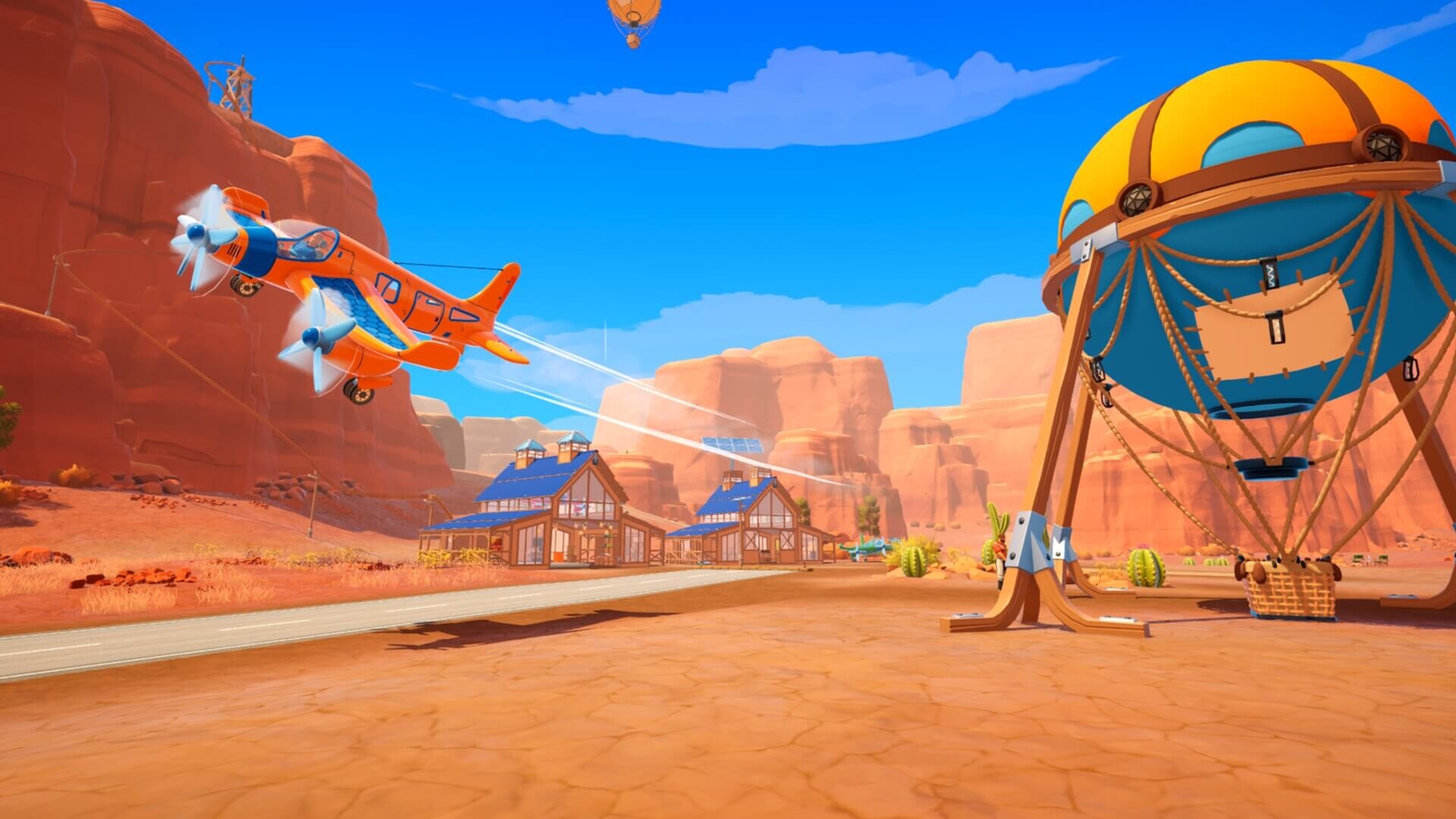
The Canyons is an arid, industrial-leaning region of narrow rock corridors, dry mesas, and the remains of old infrastructure. It marks the shift from early survival into deeper crafting, and it is the main source of several mid-game materials. Clay gathered here feeds pottery and other recipes, and a post-launch patch doubled the clay yielded by each deposit to ease that early bottleneck. The biome also supplies crops such as corn and wild tomatoes alongside heavier minerals and ores used in later upgrades.
The Mountains
The Mountains is the highest and most remote biome, a late-game destination of rocky peaks and sparse, snowy terrain. It carries a smaller resource list than the lower regions, but it is the only place to gather the rarest top-tier minerals and the densest sources of the strongest metals, making it the goal for players chasing the most advanced equipment and upgrades.
Named Points of Interest
Thirteen locations carry their own name and description on the world map, separate from the signal towers and the collectible markers. Several of them are tied to achievements or to systems that only work once the location has been repaired.
Location | What Is There |
|---|---|
Red Ridge Airstrip | A canyon-side airstrip where hot air balloons launch on regular tours |
The Stormhold Overpass | A long bridge crossing between sky and sea |
The repaired Ferry | A dry dock where a coastal boat is repaired; once running it carries travellers to new islands |
The Coffee Farm | Rows of coffee beans below the cliffs, watered by hovering drones |
Sunbeam Acres Farm | A working farm with cloud seeders over the fields and a shed building new wind turbines |
Fire Lookout | A hilltop ranger tower with items left behind by its last occupant |
Heartmoor Float Village | A floating village built out over the water |
Red Rock Rapids Kayak Club | A riverside club at the edge of the rapids |
The Lighthouse | A cliffside lighthouse with a winding stairway and a beacon that can be brought back online |
The Research Center | An ecosystem research station; delivering research material at all four centres is a completion milestone |
The Outbound Festival | A travelling celebration of van life with its own party sites |
The Community Tree | A hilltop tree with a hut in its branches, tended by the local community as a growing space |
The Windmill | A windmill that can be repaired and set turning again |
Four of these carry achievements directly: repairing the lighthouse, repairing the windmill, getting the ferry running, and riding the hot air balloon from the airstrip. The Landmarks page covers the ones with their own articles in more detail.
Navigation Tools
In addition to the map, players have access to a compass visible during third-person driving (added in alpha v0.5.13), a journal that tracks discoveries and tasks, and a task log that provides direction for both short-term and long-term goals. The technology tree also contributes to navigation by unlocking upgrades related to navigation abilities.
Discovering New Regions
Each biome contains unique materials that are not available in other regions. This creates a natural incentive to keep moving and explore new areas rather than staying in one place. Discovering a new biome also provides fresh environments for setting up temporary or permanent camps. Some areas are blocked by obstacles like fallen trees, broken barriers, or collapsed bridges that require crafting specific tools (wrench, axe, planks) to clear.