

Overview
Outbound is a cozyvival game developed by Square Glade Games. Unlike traditional survival games, there are no enemies, no combat, and no way to die. The world is entirely safe. You start with an empty camper van and gradually turn it into a mobile home packed with workstations, gardens, storage, and decorations. Your main goals are to explore the open world, gather resources, unlock new blueprints, and build the van of your dreams.
This guide walks through everything a new player needs to know, from picking up your first piece of Lumber to powering your van with renewable energy. There is no time pressure, so take things at your own pace.
Your First Minutes
You spawn in The Outdoors biome standing next to your van. The back hatch is open, revealing the Crafting Table where all recipes are built. Your immediate priorities are simple: gather materials and fuel the van.
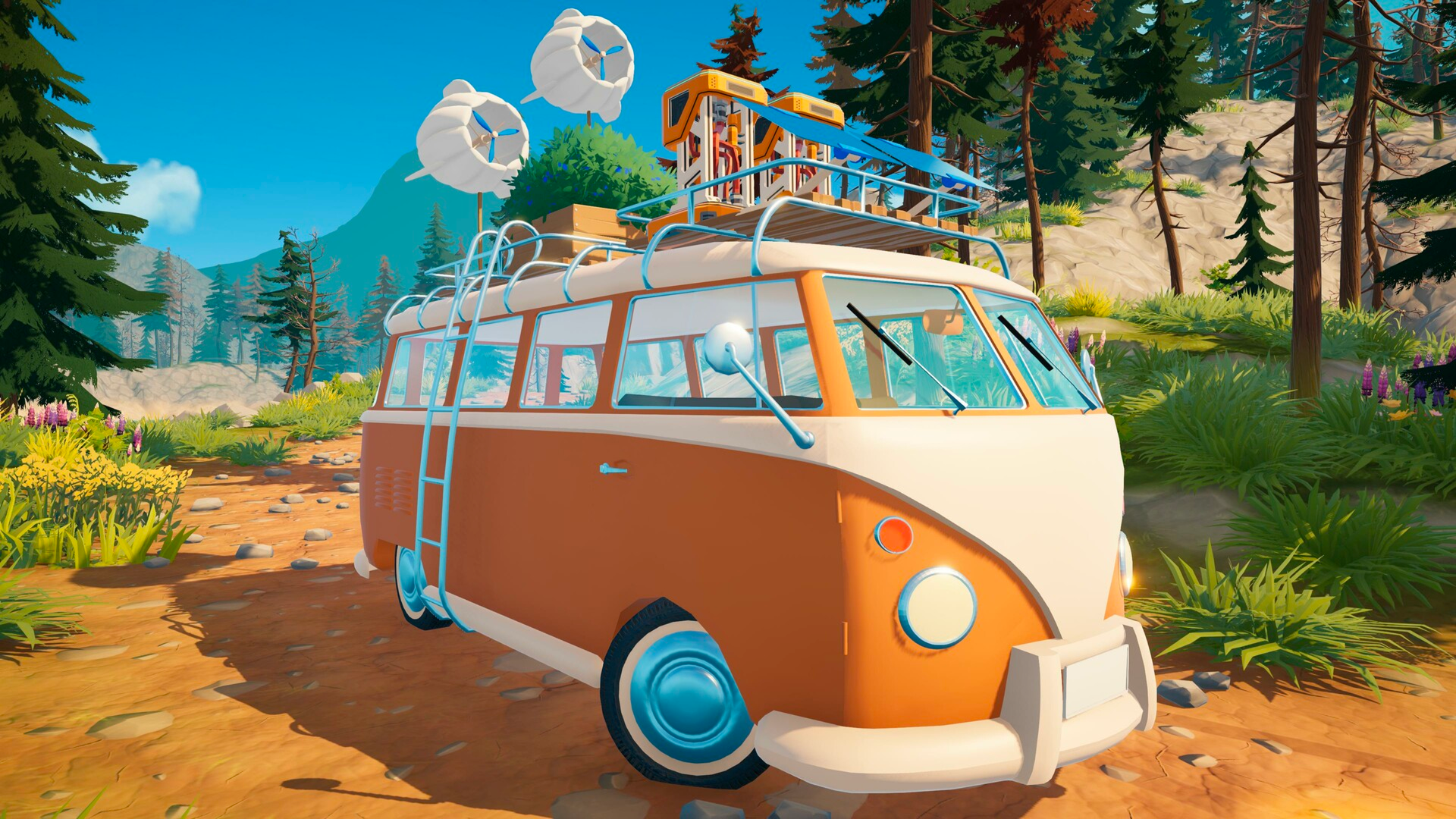
Pick up everything nearby. Walk around and collect Lumber (small logs on the ground near trees), Fibre (tall grass clumps), Rocks (scattered on the ground), and Berries (from bushes). Grab any Litter you see as well.
Open the van's front door. Inside you will find the Bio Burner, your starting power source. Feed it Fibre or Lumber to begin charging the battery.
Craft at the Crafting Table. Head to the back of the van and open the Crafting Table. You start with a handful of default recipes. Craft a Recycler first, then a Wrench if the recipe is available.
Deposit resources into the van. Your backpack has limited space. Use the Storage Panel inside the van to deposit materials so you can head out and gather more without running out of room.
The Bio Burner
The Bio Burner is the first power source available to you. It sits inside the front cab of the van and burns organic material to charge the battery. Without power, workstations will not function and the van will not drive.
Fuel | Energy per Unit | Notes |
|---|---|---|
Fibre | +1 | Easy to gather early on |
Lumber | +1 | Abundant near trees |
Light Lumber | +2 | Made from Lumber at a Sawmill |
The Bio Burner works in any weather and at any time of day, making it a reliable backup power source. Its downside is that it needs constant refueling. Keep a stack of Fibre or Lumber in your storage at all times so you are never caught with a dead battery.
Basic Crafting
The Crafting Table at the back of the van is where you build tools, workstations, and modules. You start with a small set of default recipes and unlock more by visiting Signal Towers. Early crafting focuses on building workstations that open up new crafting possibilities.
Recommended Early Crafting Order
Recycler (converts Litter into Download Coupons). Build this first. Without it you cannot unlock new blueprints.
Wrench (a tool needed to repair barriers and broken objects in the world). You will encounter a broken barrier early on that blocks road access; the Wrench lets you fix it.
Sawmill (processes Lumber into Light Lumber and Planks). Light Lumber provides double the fuel compared to raw Lumber, and Planks are needed for many building recipes.
Axe (lets you chop larger trees). Small logs can be picked up by hand, but bigger trees require an Axe, giving you access to much more Lumber per trip.
Cooking Pot (basic food preparation). Allows you to cook meals that restore health and satisfy hunger. See the Cooking page for recipes.
Signal Towers and Download Coupons
Signal Towers are tall structures scattered across the landscape. They serve as blueprint download stations. When you interact with one, you can spend Download Coupons to unlock new recipes and building modules for your van.
How the Blueprint Loop Works
Collect Litter. Litter is scattered everywhere: along roads, near campsites, in the grass. It looks like rubbish but it is your most important progression currency.
Recycle the Litter. Place Litter into your Recycler. It converts Litter into Download Coupons.
Find a Signal Tower. Look for tall antenna structures on the horizon. Roads often lead toward them, and they are visible from a distance.
Spend Download Coupons. Each tower offers a selection of blueprints. Choose the ones that match your current needs. Early priorities include workstations (Sawmill, Cooking Pot) and tools (Axe, Pickaxe).
Download Coupons take up backpack space, so spend them at Signal Towers before they pile up. You can also deposit them in your van's storage to free up inventory room.
Recycling
The Recycler is one of the most important workstations in the game. It converts Litter into Download Coupons, which are the currency used to unlock blueprints at Signal Towers. Without a Recycler, your progression stalls. Build one as soon as possible and feed it every piece of Litter you collect.
Litter is found everywhere in the world. Make it a habit to pick up every piece you pass. The world of Outbound is set in a near-future utopia where sustainability matters, and cleaning up the environment is rewarded with new technology.
Farming Basics
Once you unlock the garden modules from a Signal Tower, you can plant crops on your van. The farming system lets you grow a variety of plants and mushrooms that can be eaten raw or cooked into meals.
Planting: Place a garden module on the van, add soil, and plant seeds. Seeds can be found while foraging or purchased from vending machines.
Watering: Crops need water to grow. Rain waters them automatically, but during dry weather you will need to water them by hand.
Harvesting: Once crops are fully grown, interact with them to harvest. Some crops yield seeds for replanting.
Cooking: Raw ingredients can be combined at a Cooking Pot or Food Processor. Cooked meals restore more health and hunger than raw ingredients. Check the Cooking page for specific recipes.
Early crops to prioritize are Berries (eaten raw for a quick hunger fix, or processed into Jam) and Wheat (its Grain feeds Bread and Pizza); health recovery comes from Mushroom Soup and, later, the Ginger and Lavender teas. As you unlock more recipes, farming becomes a reliable source of food that travels with you.
Energy Management
Every workstation, light, and module on your van draws power from the battery. Managing your energy is one of the core challenges in Outbound. If the battery runs dry, workstations stop functioning and the van will not drive.
Power Sources
Source | Availability | Pros | Cons |
|---|---|---|---|
Always | Works anywhere, any weather | Needs constant refueling | |
Solar Panel | Daytime, clear weather | Free power, no fuel needed | Stops at night and in storms |
Wind Turbine | Windy conditions | Works day and night | Needs elevation and open terrain |
Water Wheel | Near flowing water | Steady output near rivers | Location-dependent |
The key lesson is to diversify your power sources. Relying on the Bio Burner alone means you are constantly gathering fuel instead of exploring. Mount a Solar Panel on the van roof for free daytime power, then add a Wind Turbine to cover nighttime and cloudy weather. Check the Solar Panels and Power page for detailed placement and efficiency tips.
Energy Tips
Watch the battery meter on the van's dashboard. If it is trending downward, add more generation before installing new workstations.
Solar Panels produce nothing after dark. Pair them with a Wind Turbine or keep the Bio Burner loaded as a backup.
Wind Turbines perform best when mounted on top of the van or placed on high ground. Sheltered valleys reduce output.
Keep a stack of Fibre or Lumber in storage as emergency Bio Burner fuel in case your renewables cannot keep up.
Van Building Tips
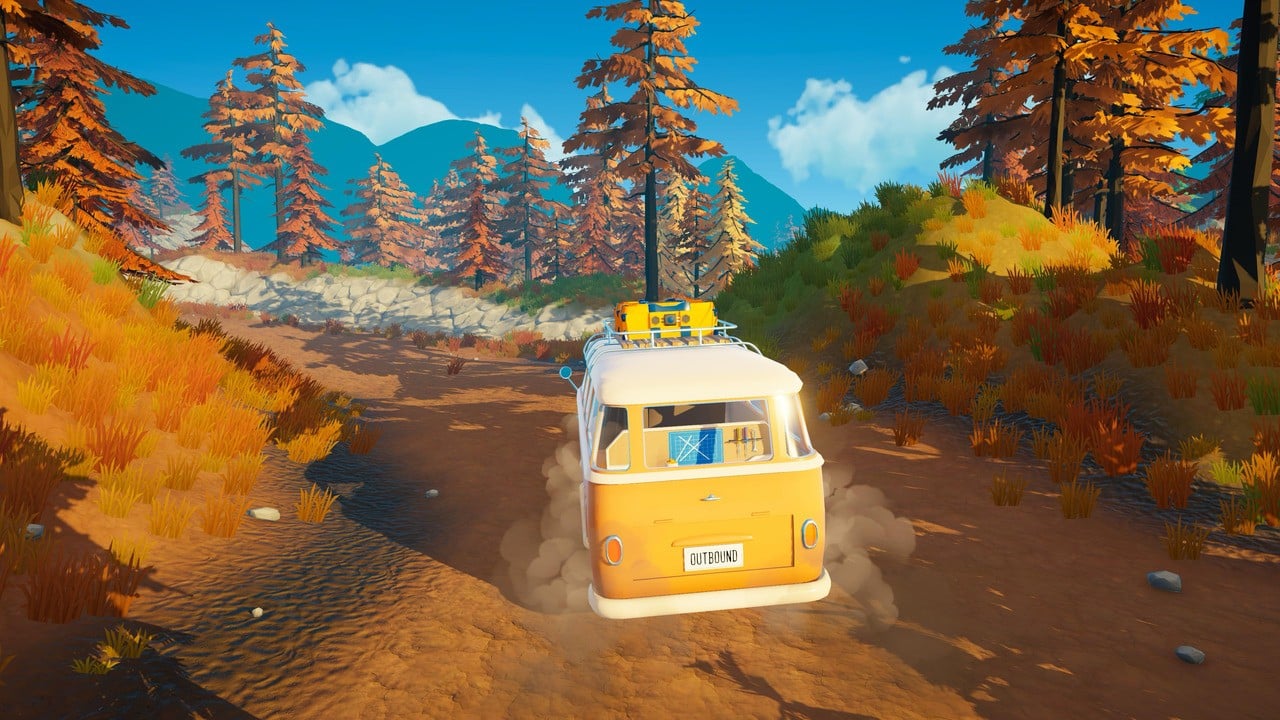
Your camper van is your home, workshop, and transport all in one. The modular building system lets you snap workstations, walls, floors, decorations, and utility modules onto the van in a grid layout. Everything folds into compact boxes when you drive, so you do not need to worry about clearance or aerodynamics on the road.
Building Priorities
Workstations first. Crafting Table (pre-installed), Recycler, Sawmill, and Cooking Pot are your essentials. Get these placed before thinking about aesthetics.
Storage second. Add storage containers early. Your backpack fills up fast, and without van storage you will be making constant trips back. Check the Storage and Inventory page for capacity details.
Power generation third. Mount a Solar Panel on the roof and a Wind Turbine on a high point. These free you from constant Bio Burner refueling.
Decorations and comfort last. Once your functional needs are covered, personalize with paint, furniture, and decorations. The building system lets you rearrange anything at any time, so experiment freely.
Weight Management
Every module you add to the van adds weight. A heavier van uses more energy to drive and accelerates more slowly. In the early game this rarely matters, but as you stack workstations and storage containers the extra weight becomes noticeable. If the van feels sluggish, consider removing modules you rarely use or upgrading to more energy-efficient power sources.
Exploration Priorities
The open world in Outbound is fully seamless with no loading screens. Roads connect campsites, landmarks, and Signal Towers. Early exploration should follow these priorities:
Follow roads. Roads lead to points of interest. You will find Signal Towers, campsites, vending machines, and unique locations by sticking to the paths.
Look for Signal Towers on the horizon. Their tall antenna structures are visible from a distance. Drive or walk toward them to unlock new blueprints.
Check campsites. Campsites often have Litter, forageable items, and sometimes useful objects to interact with.
Explore off-road. Once you have basic supplies, wander into the landscape. Hidden collectibles like bobblehead figurines and gnomes are tucked away in unexpected places. See the Collectibles page for details.
Move to new biomes. Different biomes have unique resources and landmarks. Once you have gathered what you need from The Outdoors, drive to The Coast for new materials, scenery, and challenges.
Deposit your resources into the van before setting out on foot. Your backpack has a weight limit, and exceeding it slows your movement and disables sprinting.
Barriers and Repairs
The world contains obstacles that gate your progress. Early on you will encounter a broken barrier blocking a road. To clear it, you need to craft a Wrench and interact with the barrier. A later obstacle is a broken bridge that requires Planks (made from Lumber at a Sawmill) to repair. These barriers ensure you learn the crafting and resource loops before accessing new areas.
When you hit a barrier you cannot pass, check what material or tool is required and work backward: which workstation makes it, which blueprint unlocks it, and which Signal Tower has the blueprint.
Dog Companion
Outbound has an optional dog companion that joins you on your journey. The dog responds to commands, fetches items, carries extra supplies in a backpack, and brings items back to the van for you. Having a dog along on foot expeditions effectively extends your inventory capacity, letting you stay out longer before needing to return.
The companion is entirely optional. If you prefer to travel solo, you can skip it. The dog comes in several appearance options, including coat colors like black, brown, and gray.
Multiplayer and Co-Op
Outbound supports co-op for up to four players. All players share the same van and world. Co-op is drop-in, meaning friends can join your session at any time.
Co-Op Tips for Beginners
Divide tasks. One player can gather resources while another builds and crafts at the van. This is the fastest way to progress.
Share blueprints. When one player unlocks a recipe at a Signal Tower, the whole group gains access to it.
Coordinate power. More players means more workstation usage. Make sure your power generation can handle the extra load, or you will drain the battery fast.
Communicate about storage. The van has limited storage space. Agree on what to keep and what to recycle so the storage does not fill up with low-priority items.
Common Mistakes to Avoid
Mistake | Why It Hurts | What to Do Instead |
|---|---|---|
Ignoring Litter | No Download Coupons means no new blueprints | Pick up every piece of Litter you see |
Relying only on the Bio Burner | Constant refueling wastes time | Unlock Solar Panels and Wind Turbines as soon as possible |
Overloading your backpack | You move slowly and cannot sprint | Deposit into the van regularly; use the dog for extra capacity |
Hoarding Download Coupons | They take up inventory space | Spend them at Signal Towers or deposit in van storage |
Building decorations before workstations | Slows functional progress | Place essential workstations first, decorate later |
Not repairing barriers | Blocks access to new areas and resources | Craft a Wrench and keep Planks on hand |
Adding too many modules without upgrading power | Battery drains faster than it charges | Match power generation to workstation count |
Skipping farming | You rely on foraging, which is inconsistent | Set up a garden early for a steady food supply |
Early-Game Checklist
Use this checklist to track your progress through the first few hours. Once all items are complete, you are well-equipped to leave The Outdoors and explore new biomes.
Gather Lumber, Fibre, Rocks, Berries, and Litter from the starting area
Fuel the Bio Burner to charge the van's battery
Craft a Recycler at the Crafting Table
Recycle Litter into Download Coupons
Visit your first Signal Tower and unlock blueprints
Craft a Wrench and repair the broken barrier
Build a Sawmill and process Lumber into Planks and Light Lumber
Craft an Axe for harvesting larger trees
Build a Cooking Pot and cook your first meal
Mount a Solar Panel on the van roof
Add a Wind Turbine for nighttime and cloudy-day power
Set up storage containers so you can carry more per trip
Start a small garden for renewable food
Repair the broken bridge with Planks to open the road ahead
Drive to a new biome and keep exploring
Tips to Remember
There are no enemies. The world is safe. Take your time and enjoy the scenery.
Litter is not garbage. It is your main progression currency.
Diversify your power sources. Solar for daytime, Wind for nighttime, and the Bio Burner as backup.
Deposit resources into the van before long hikes to avoid backpack overload.
The dog companion extends your carrying capacity on foot expeditions.
Every module can be rearranged at any time. Do not stress about the perfect van layout on day one.
In co-op, divide tasks: one player gathers while the other builds.
When in doubt, visit a Signal Tower. New blueprints solve most roadblocks.