

Overview
The world of Outbound is a seamless open world divided into multiple distinct biomes. Players traverse these regions by driving their camper van across the landscape with no loading screens between areas. Each biome features its own terrain, native vegetation, available resources, landmarks, and environmental conditions that directly affect energy production. Discovering a new biome unlocks unique materials and provides fresh environments for temporary or permanent camps.
The full launch build ships with four biomes. Two of them, The Outdoors and The Coast, were playable during the closed beta. The other two, the Canyons and the Mountains, completed the map at the May 2026 launch. The Canyons is an arid, industrial-leaning region, which fits the early marketing that promised terrain ranging from lush forests to dry, rocky country.
Biome Comparison
The table below summarizes all four biomes and their defining characteristics.
Biome | Terrain Type | Key Landmarks | Best Energy Sources | Notable Features |
|---|---|---|---|---|
Forests, open plains, wheat fields, rolling mountains | Fire Lookout, Tree Hut, Sunbeam Acres Farm, Lilly's Windmill | Solar (open plains), Wind (elevated terrain), Bio Burner (plentiful lumber) | Starting biome; playable since the April 2025 alpha; setting for the free Steam demo; 23 Signal Towers | |
Tropical shores, rocky cliffs, redwood forests, sandy beaches | Lighthouse, coastal cliffs, beach coves | Hydro (rivers and shoreline), Wind (sea breeze), Solar (sunny beaches) | Added in the October 2025 beta (v0.7.6); revealed at the Gamescom Xbox show | |
The Canyons | Arid mesas, narrow rock corridors, abandoned infrastructure | Rock formations and canyon trails | Solar (open, sunny terrain), Wind (exposed ridges) | Added in the launch build; source of Clay and several mid-game minerals; a post-launch patch doubled clay gathered per deposit |
The Mountains | High peaks, snow, sparse rocky terrain | Mountain summits and high passes | Wind (high elevation), Solar (clear days) | Added in the launch build; late-game biome with the rarest top-tier minerals and the strongest metals |
The Outdoors
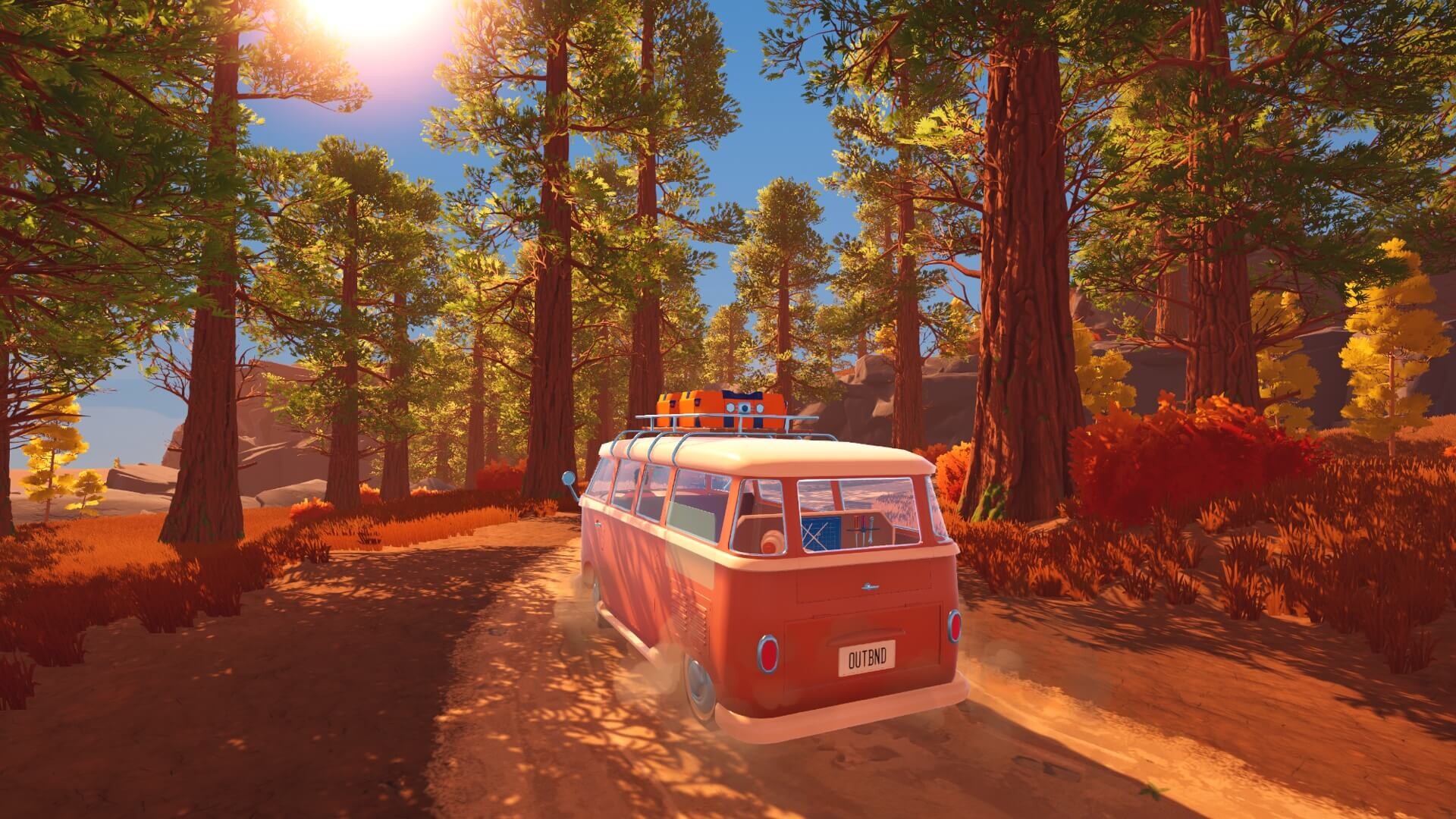
The Outdoors is the starting biome and the first region every player encounters. It has been playable since the closed alpha in April 2025 and is the setting for the free Steam demo. The terrain consists of lush forests, wide-open plains dotted with wheat fields, and gently rolling mountains that frame the horizon. The level design feels natural and hand-crafted, with branching paths and hidden areas that reward curiosity.
Several major landmarks are scattered throughout The Outdoors. The Fire Lookout sits at an elevated point and offers a sweeping view of the surrounding landscape. The Tree Hut is tucked among the forest canopy. Sunbeam Acres Farm occupies a stretch of fertile land where crops and pastures are visible. Lilly's Windmill stands on the plains, its blades turning in the wind. Each of these landmarks is a point of interest where players can discover blueprints and story details.
The biome also contains 23 Signal Towers, tall structures that players can climb or interact with to download new blueprints for their workbench and build menu. These towers act as progression markers, guiding players through the region while unlocking new crafting options.
For energy generation, The Outdoors is versatile. Open plains with unobstructed sky are well suited for solar panels. Higher elevations and ridgelines provide consistent wind for turbines. The forests supply plentiful lumber for the bio burner, making it a reliable backup during overcast conditions or at night.
The Coast
The Coast is the second biome, added in the October 2025 beta build (v0.7.6) and first revealed during the Gamescom Xbox show. It introduces a dramatically different environment compared to The Outdoors, combining tropical shores with rugged coastal geography.
The terrain transitions from sandy beaches lined with palm trees to rocky cliffs overlooking the sea. Just inland from the shore, forests of gigantic redwood trees tower above the undergrowth, creating a striking contrast between the open coastline and the dense woodland. The scent of fresh fruit and salt air welcomes players as they enter the region.
The most prominent landmark is an old lighthouse perched atop the coastal cliffs. It is a focus for navigation and is visible from a considerable distance. Beach coves, tidal rock formations, and winding coastal roads give the area a distinct sense of place that sets it apart from the inland regions of The Outdoors.
The Coast provides strong conditions for water-based energy generation. Rivers and streams flowing toward the shore support hydro generators, while the persistent sea breeze makes wind turbines highly effective along the cliffs and open headlands. Solar panels also perform well on the sunny beaches, though coastal weather can be unpredictable, with sudden rain and cloud cover reducing solar output.
The Canyons
The Canyons is the third biome and the point where the game leans from gentle survival into deeper crafting. Its terrain is dry and rocky, full of narrow corridors, mesas, and the ruins of old infrastructure, matching the arid landscapes hinted at in early promotional material. It is the main source of Clay, which feeds pottery and casing recipes; a post-launch patch doubled the clay gathered from each deposit to ease the early pottery bottleneck. The region also yields crops such as corn and wild tomatoes along with heavier minerals and ores used in mid-game upgrades.
The Mountains
The Mountains is the highest and most remote biome, a late-game destination of rocky peaks and thin, snowy terrain. It carries a shorter resource list than the lower regions, but it is the only place to gather the rarest top-tier minerals and holds the densest sources of the strongest metals, making it the goal for players building the most advanced equipment and van upgrades.
Biome-Specific Resources
Each biome contains resources that are unique or more abundant in that region. This design ensures that no single area provides everything needed for full progression, making the act of driving to new biomes a gameplay necessity rather than an optional detour.
In The Outdoors, players find plentiful wood from the dense forests, along with berries, rocks, and metal scraps scattered across the plains. The Coast introduces tropical flora, redwood timber, and shoreline materials tied to its coastal environment. The Canyons supplies Clay, corn, wild tomatoes, and a range of mid-game minerals and ores from its dry rock formations. The Mountains, the late-game region, holds the rarest top-tier minerals and the strongest metals. As players unlock new crafting recipes from Signal Towers and landmarks, they discover that certain recipes require materials found only in specific biomes, creating a natural incentive to travel.
Energy Conditions by Biome
The energy system is one of the central ongoing challenges in Outbound, and biome choice plays a major role in determining which energy strategy works best.
Energy Source | Best Biome Conditions | Considerations |
|---|---|---|
Solar Panels | Open plains with clear sky (The Outdoors), sunny beaches (The Coast) | Produces no energy at night or during storms; coastal weather can reduce output |
Wind Turbines | Exposed ridgelines and elevated terrain (The Outdoors), coastal cliffs and headlands (The Coast) | Generates power day and night; wind conditions vary by biome location and weather |
Hydro Generators | Rivers and streams (both biomes), shoreline areas (The Coast) | Steady output as long as the van is parked near flowing water; restricts parking choices |
Forested areas with plentiful lumber (The Outdoors) | Consumes wood as fuel; useful as backup during night and storms; requires regular resupply |
Environmental variety ensures that different regions reward different energy strategies, creating natural incentives to adapt the camper van's configuration as players traverse the map.
Weather Variation
Each biome has its own weather patterns that affect gameplay, atmosphere, and energy production. The Outdoors experiences a temperate cycle of clear skies, overcast periods, and rain. The Coast tends toward more unpredictable conditions, with sudden rain, sea fog, and gusty winds that shift throughout the day.
Weather directly impacts energy output. Solar panels produce less during overcast or rainy periods, making it important to have backup sources like wind turbines or a bio burner when traveling through regions prone to cloud cover. Wind turbines benefit from stormy conditions and the persistent coastal breeze. Players who plan their energy setup around the weather patterns of each biome will have a smoother journey.
Seamless World Design
One of Outbound's defining features is its seamless open world. There are no loading screens, fast travel menus, or hard borders between biomes. Players simply drive their camper van from one region to the next, watching the terrain, vegetation, and atmosphere gradually shift as they cross into new territory. This design reinforces the road-trip fantasy at the heart of the game and keeps exploration feeling continuous and uninterrupted.
The transitions between biomes are gradual rather than abrupt. Forests thin out as the terrain slopes toward the coast, trees shift from deciduous to redwood, and the ground changes from grass and dirt to sand and rock. The ambient soundscape adjusts as well, with birdsong giving way to crashing waves and seagull calls.
Map Discovery
The in-game map starts mostly blank and reveals itself as players explore. Driving through new areas uncovers the terrain, landmarks, roads, and resource locations on the map. Signal Towers also contribute to map revelation: interacting with a tower reveals a portion of the surrounding area. This fog-of-war approach encourages organic exploration rather than following waypoints, rewarding players who venture off the beaten path.
Tips for Biome Travel
Before leaving a biome, stock up on its unique resources. Materials that are common in one region may be scarce or unavailable in the next.
Diversify your energy setup. Relying on a single source leaves you vulnerable when conditions change between biomes.
Visit Signal Towers in each biome to unlock region-specific blueprints and reveal more of the map.
Check the weather before a long drive. Stormy conditions reduce solar output but boost wind generation.
Explore thoroughly. Branching paths and hidden areas often contain valuable resources, story details, and blueprints that are easy to miss if you stick to the main roads.