

Overview
The Crimson Desert is one of the five major regions of Pywel, and the one that gives the game its name. It is a vast, unforgiving expanse of crimson sands stretching across the southern portion of the continent. The official description says the region demands "strength, cunning, and an iron will. Only the most resilient can endure the desert's merciless trials."
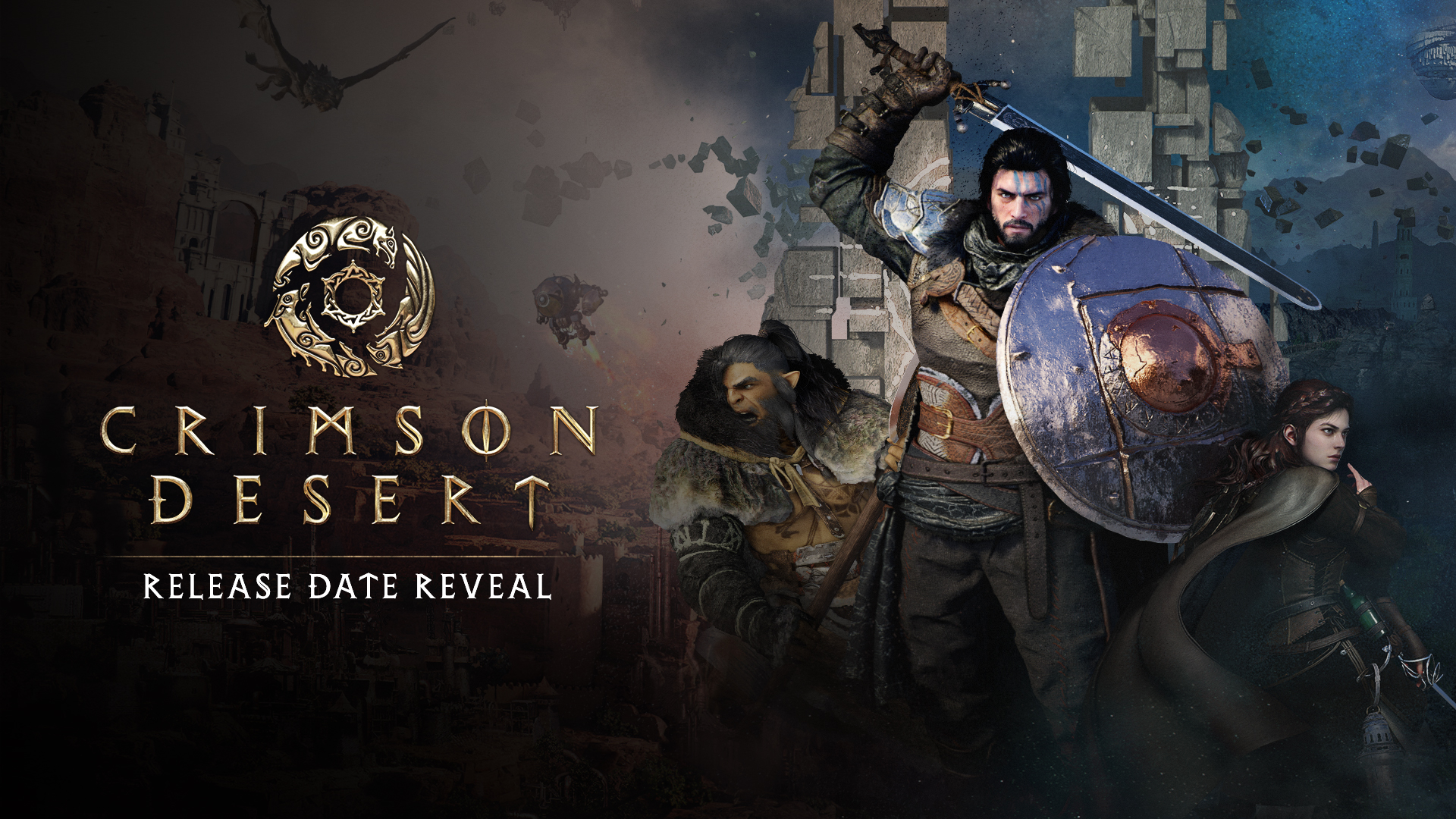
The region's red-orange sand and towering rock formations create a stark contrast to frozen areas like Kweiden or the green highlands of Pailune. Gameplay footage has shown a temperature gauge in the HUD reaching 50°C during desert travel.
The Crimson Desert is one of five major regions across Pywel. For an overview of all regions and how they connect, see the Pywel article.
Geography and Climate
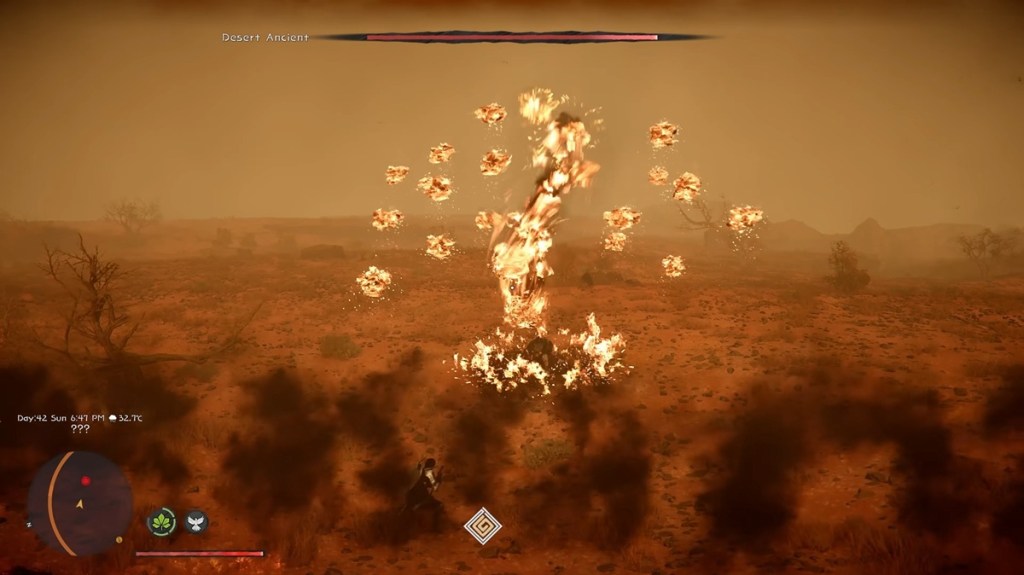
The desert is defined by extreme heat during the day and cooler temperatures at night. Gameplay UI shows an on-screen temperature indicator, and at least one preview demo displayed 50°C as the ambient temperature. Pearl Abyss has confirmed that environmental hazards affect gameplay across different biomes, and the temperature system is visibly tracked in the HUD.
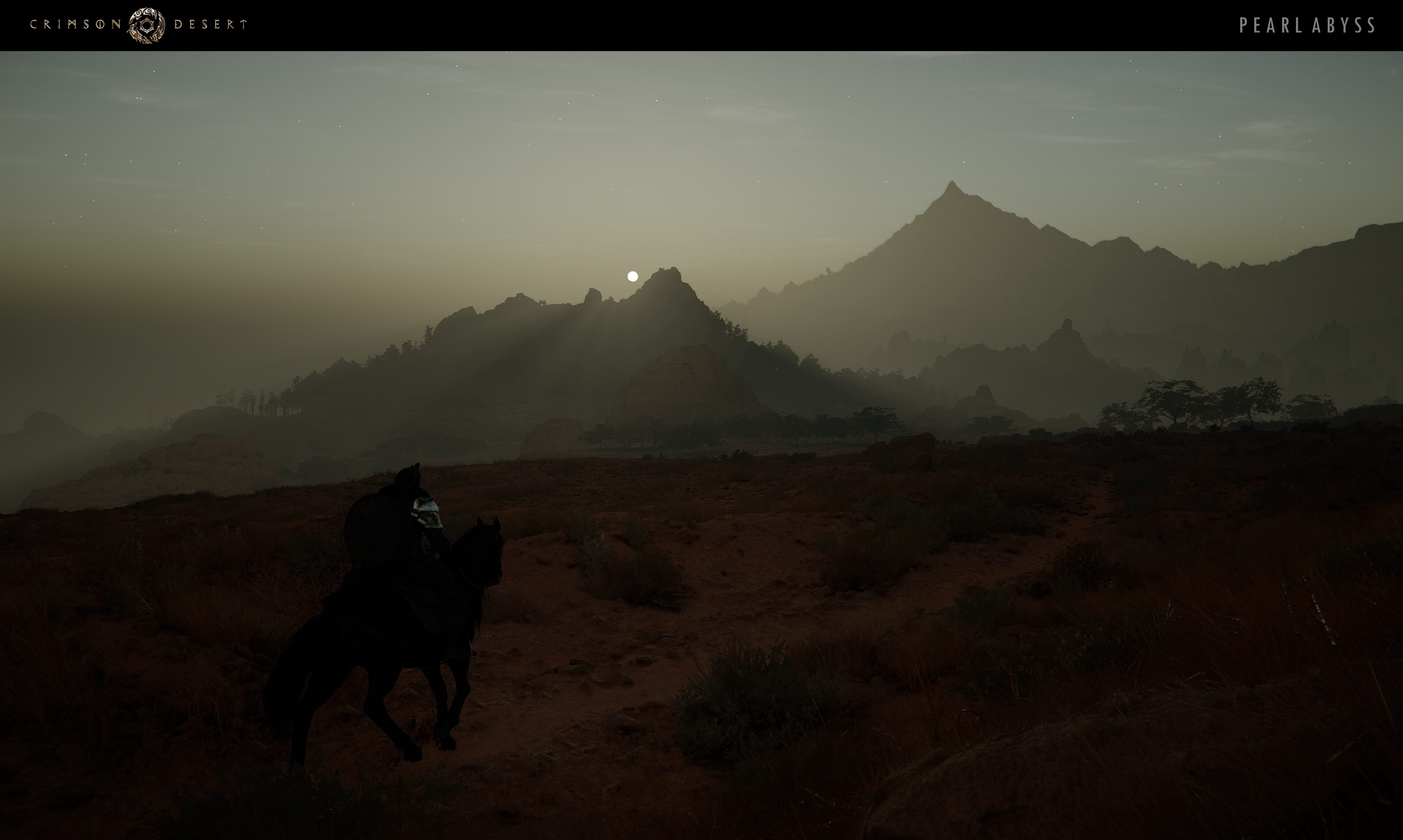
The terrain includes towering sand dunes, exposed rock formations, ridgelines, and deep canyons. Dust storms and heat haze have appeared in trailers. The deeper canyon areas contain cave systems that offer respite from the heat and hide exploration rewards.
Ancient Ruins
Scattered ruins suggest the desert was not always an uninhabited wasteland. The official description says the region contains "ancient ruins buried beneath the dunes, and secrets that predate recorded history." These ruins are among the oldest structures on Pywel, hinting at a civilization that existed long before the current kingdoms.
Ancient mechanisms and puzzle-like challenges have been shown in coverage of ruins throughout Pywel. The desert ruins likely follow the same design: exploration rewards, Abyss Fragments, hidden gear, and lore entries. See Secrets & Easter Eggs for hidden content mechanics.
The Desert Cult
Among the factions in the desert is a cult that worships an ancient god. This group represents one of the major threats in Pywel. Details on the cult are limited, but previews have identified it as one of the groups Kliff encounters while traveling through the region. Whether they are hostile, neutral, or quest-givers depends on the player's actions.
The cult's connection to the ancient ruins and the pre-historical civilization buried under the sands has been implied but not confirmed. Their worship may be tied to the same forces driving the Abyss imbalance that threatens Pywel.
Wildlife and Mounts
The desert has its own fauna. Marketing Director Will Powers confirmed the raptor mount by name: "It's called a raptor, the dinosaur in the desert." The phrasing ties raptors specifically to this region. These are fast mounts suited to desert terrain.
Other desert creatures include scorpion-like enemies and sand-burrowing predators shown in gameplay trailers. The region's hostile wildlife adds to the survival challenge alongside the heat and bandits. Boss encounters in the desert area have not been individually confirmed, but the diversity of terrain (canyons, ruins, cave systems) suggests boss arenas exist here. See Boss Battles for the full boss list.
Environmental Mechanics
Crimson Desert's BlackSpace Engine supports realistic weather effects and dynamic environments. The weather system calculates conditions based on weather patterns, temperature, elevation, wind, and precipitation in real time. In the desert, this produces several gameplay-relevant effects.
Mechanic | Description |
|---|---|
Temperature Tracking | Visible HUD gauge. The 50°C reading seen in demos suggests temperature affects gameplay, though the specific penalties have not been confirmed. |
Dust Storms | Reduced visibility and potential gameplay effects. Shown in multiple trailers. Dynamic weather can also affect cutscenes and boss battles. |
Day-Night Cycles | Extreme heat during the day, cooler at night. NPC schedules and enemy behavior may differ between day and night. |
Bandit ambushes, wildlife encounters, and faction skirmishes occur without warning throughout the desert. |
Exploration
The desert rewards exploration. Hidden caves, buried ruins, and out-of-the-way oases contain gear, Abyss Fragments, and crafting materials. The extreme size of the region means much of it sits off the main quest path. Will Powers said the world is at least twice Skyrim's size and larger than Red Dead Redemption 2's map, and the desert makes up a large portion of that. See Map Size & Open World for more details.
There are no region-locked or level-locked areas: the entire world is open from the start, though enemy difficulty scales by location. Key exploration mechanics that apply to the desert: Abyss Fragments can be located by reflecting light off your sword to narrow down their location. Treasure maps found in crypts lead to hidden rewards. Boarded-up entrances to caves and fireplaces conceal hidden chests.
Gold Mines
The Crimson Desert region is rich in mineral deposits, and several gold mines can be found scattered across its terrain. Mining is one of the primary gathering activities available in the desert, and gold ore is among the most valuable resources players can collect. To reveal gold ore deposit locations on the map, players can complete the Gold Vein Research project at the palace of Urdavah, which costs 130 Silver and takes eight hours to finish.
Gold Mine | Location | Notes |
|---|---|---|
Along cliff faces in the western Crimson Desert | Ore deposits appear as craggy, gray rocks that shine under light along the cliffsides. Accessible with basic pickaxe, tools. | |
Mountain passes in the central Crimson Desert | Located in elevated terrain between canyon systems. Higher ore density than other mines, but surrounded by hostile wildlife and bandits. | |
Near the oasis lakes in the southern Crimson Desert | Positioned near one of the desert's oasis settlements. Convenient access to merchants for selling ore and purchasing supplies. | |
At the base of towering sand formations in the eastern Crimson Desert | The most remote of the four mines. Contains higher concentrations of gold ore but requires navigating through bandit territory to reach. |
Gold ore can be smelted into Gold Bars using the alchemical formula found in the Spire of Insight south of Pororin Village in Hernand. Players with the Force Current ability (unlocked in Kliff's skill tree below Force Palm) can channel energy through their grapple to break ore deposits instantly instead of using a pickaxe, which speeds up mining considerably.
The desert's mineral wealth is one reason many factions and bandit groups fight for control of the region. Merchants who trade in gold ore operate out of the oasis settlements, and players can earn substantial income by establishing supply routes between mines and trading posts. See Pywel for more on the continent's regions and their resources.
Connection to the Story
The Crimson Desert is not the starting area. Kliff and the Greymanes come from Pailune, and the early game focuses on Hernand and surrounding regions. But the desert becomes important as the story expands across Pywel. Its lawless nature, the presence of the cult, and the ancient ruins containing pre-historical secrets all tie into the larger conflict involving the Abyss and the threat to the continent.
Locations and Points of Interest
Sub-Regions
The Crimson Desert region is divided into several named sub-regions, each with distinct terrain and points of interest. The region contains 13 Abyss Nexus fast travel points spread across these areas.
Sub-Region | Description | Notable Features |
|---|---|---|
The largest named sub-region, located in the far northeast. Contains the region's two primary settlements. | Tommaso, Urdavah, three Abyss Nexus points surrounding Tommaso | |
A desolate stretch of open desert with four fast travel points. Named for the ancient ruins and relics found scattered among the dunes. | Four Abyss Nexus points, ancient ruins, relic sites | |
Trader's Expanse | A corridor of trade routes running through the desert. Merchant caravans and trading posts can be found along its paths. | Propeller SpearSealed Abyss Artifact, trading posts |
Outlaw Canyon | A rocky canyon system that is a haven for bandits and outlaws. Hostile factions control many of the narrow passes. | Bandit camps, one Abyss Nexus point |
Crimson Desert South | The southern stretches of the desert that serve as the transition zone from the Hernand and Demeniss regions. This is typically the first part of the desert that players encounter. | Two Abyss Nexus points, entry from Hernand |
Varnia Territory | The northern reaches of the desert, centered around the holy city of Varnia at the very edge of the map. | Varnia town, Toll of Varnia bell, Royal Trading Post |
Key Locations
Desert oases serve as the main points of civilization. These are small communities built around water sources, functioning as trading posts and rest stops. Merchants, quest givers, and faction representatives can be found here.
The oases are not large cities. They are more like frontier outposts. Some are controlled by bandit groups or local warlords, and their allegiance can shift depending on player actions and the faction reputation system. Liberating settlements from hostile factions results in residents returning, structures being rebuilt, new vendors appearing, and trade routes unlocking.
The desert is home to a handful of settlements that serve as supply points, quest hubs, and centers of commerce. These communities are built around water sources and offer a reprieve from the harsh conditions.
Location | Type | Description |
|---|---|---|
Town | The largest town in Tashkalp. A rough settlement where "fists are closer than the law." Known for Desert Melon crops, gambling tables for Duo and Five-Card at 300 Silver per game, and The Bonepit gladiatorial arena. | |
Holy City | A holy city in the northern Crimson Desert that is a religious and trade hub. The people of Varnia worship the deity Atima. Home to the Whitesand Retreat, a philosophical debate hall, and the Varnia Royal Trading Post. | |
Arcosa | Town | A town overflowing with water and resources. Protected by four watchtowers against bandit attacks, making it one of the more defensible settlements in the desert. |
Palace / Research Hub | An archway city and palace in Tashkalp that functions as a pilgrimage gateway. has a research institute accessible via elevator shaft, with projects focused on desert-specific advancements. Requires 3x Bloodstone to unlock the project tree. | |
Rest Stops | Small communities built around water sources, functioning as trading posts and rest stops. Some are controlled by bandit groups or local warlords. |
Landmarks and Points of Interest
Beyond its settlements, the Crimson Desert is dotted with ancient structures, puzzles, and natural landmarks worth exploring.
Landmark | Type | Details |
|---|---|---|
Spire / Puzzle | An ancient tower located in the desert that is visited during Chapter 9. Contains mirror-and-beam puzzles where the player pushes square-shaped plinths with mirrors to direct light beams at red crystals. | |
Sanctum Challenge | A spiritual site located northeast of Drywind Valley in the borderlands between Demeniss and the Crimson Desert. Cleansing this sanctum requires finding two Fusion Reactor Cores and attaching them to the generator. | |
Bell Tower | A bell tower near Tommaso. Ringing this bell reveals the surrounding map in the Tashkalp area, clearing the fog of war. | |
Bell Tower | A bell tower in the far north of the desert near Varnia. Ringing it reveals the northern Crimson Desert on the world map. | |
Arena | A gladiatorial arena in Tommaso where the player can fight Muskan, the seemingly undefeated warrior. The arena is a sunken fighting pit surrounded by cheering spectators. | |
Monastery | A remote monastery in the desert that Kliff visits during Chapter 9 after answering an unknown calling. This is where the path to the Sage of the Desert begins. | |
Temple | An ancient desert temple featured in the "Six Pensive Statues and the Evil Spirit" questline during Chapter 9. Contains statue repair puzzles and temple guardian encounters. |
Sealed Abyss Artifacts
Several Sealed Abyss Artifacts can be found hidden throughout the Crimson Desert region. These powerful items are concealed at specific landmarks and require exploration to uncover.
Location | |
|---|---|
Slam Master | Near the Varnia Royal Trading Post |
Sinking Fort | On a rock altar north of Tommaso |
In the Trader's Expanse | |
Hidden Banner Pike | Along the roadside heading toward Varnia |
In a wooden shrine on the side of the road north of Arcosa |
Factions
The Crimson Desert has no central government. Multiple bandit groups and outlaw factions compete for control of territory and trade routes. This lawlessness is what gives the region its reputation. Merchants travel with armed escorts, and lone travelers risk ambush.
Home to "desperate outlaws" according to the official description. The absence of organized law enforcement creates a frontier atmosphere where might makes right and alliances shift constantly. The desert's lawless environment ties into the game's crime system, where aggressive actions toward NPCs or factions have consequences including bounties and hostility from certain groups.
The Crimson Desert region is home to a mix of peaceful organizations and hostile bandit clans. The faction reputation system governs how these groups interact with the player.
Peaceful Factions
Faction | Description |
|---|---|
An enlightened preacher and legendary figure who has lived for centuries. Central to the Chapter 9 storyline. | |
A trade organization dealing in exotic goods across the desert routes. | |
A philosophical debate hall located in Varnia where scholars and thinkers gather. | |
A group conducting ecological studies in the desert environment. |
Hostile Factions
The lawless nature of the Crimson Desert means bandit clans roam freely. These factions will attack players on sight.
Faction | Description |
|---|---|
Goblin-led raiders who mount wolves for rapid desert ambushes. | |
Dwarf riders who use iguanas as mounts for hit-and-run desert attacks. | |
The most vicious bandit tribe in the desert, known for constructing war machines. | |
Masked plunderers who claim to fight under the banner of liberation. | |
Boar-riding nomads originally from Kharonso who raid desert caravans. | |
A hostile faction that worships an ancient god. One of the four factions that start at Hostile or War reputation status. |
Main Story Quests
The Crimson Desert region is the primary setting for Chapter 9: The Sage of the Desert, one of the longest chapters in the game with six story arcs and 19 quests. The chapter follows Kliff as he answers an unknown calling that leads him deep into the desert.
Quest Arc | Key Quests | Description |
|---|---|---|
Kliff receives a mysterious summons and travels to the Cloister of Enlightenment, a remote desert monastery. | ||
Shattered Ties | Events force Kliff to confront difficult truths about his past and connections. | |
A trial of endurance in the desert. Involves traversing harsh terrain and completing the Spire of the Sun puzzle. | ||
Six Pensive Statues and the Evil Spirit | An extended questline involving Jijeong Temple, repairing pensive statues, and confronting guardians. | |
Veiled Witch | Three sub-quests | Kliff faces the Black Witch, a magic-heavy opponent who uses darkness and pursuit abilities. |
Enlightenment | The Sage of the Desert and three sub-quests | The climax of the chapter, where Kliff meets the legendary Sage and receives revelations about the Abyss, his connection to it, and the larger threat facing Pywel. |
Bosses
The Crimson Desert region features several boss encounters, both as part of the main story and as optional challenges.
Location | Type | Notes | |
|---|---|---|---|
Optional | The undefeated warrior of The Bonepit. A purely unarmed combat encounter in a gladiatorial arena. Premier Observation Learning target for unarmed combat techniques. | ||
Veiled Witch quest arc | Story | A magic-heavy boss fought during Chapter 9. Uses darkness-based attacks and pursuit abilities. | |
Jijeong Temple Guardians | Story | Encountered during the "Six Pensive Statues" questline in Chapter 9. Guardian enemies that protect the temple. |
Resources and Gathering
The desert offers a distinct set of resources compared to greener regions. Gathering in the desert follows the same manual-action system used elsewhere in Pywel, but the types of materials available differ.
Resource | Category | Details |
|---|---|---|
Crop / Food | ||
Ores and Minerals | The desert contains ore deposits including Copper, Iron, and Silver Ore. Urdavah's Gold Vein Research project can reveal gold ore locations on the map. | |
Desert Herbs | Herbs found in the desert serve as ingredients for elixirs. Each plant offers a particular stat boost that influences the potion's effects. | |
Catalyst | A common catalyst used in alchemy. Required (3x) to unlock Urdavah's research project tree. | |
Animal Materials | Hunting / Skinning | Desert wildlife can be hunted for hides, bones, and other crafting materials used in leather armor and cloak production. |
Research at Urdavah
The Urdavah research institute is unique to the Crimson Desert region. Located at the bottom of an elevator shaft in the palace, the lead researcher offers a full tree of research projects focused on desert-specific advancements. Bring 3x Bloodstone to unlock the project tree. Notable research projects include:
Gold Vein Research: Reveals gold ore deposit locations on the world map, making it much easier to farm Gold Ore and Gold Bars
Wind-Powered Equipment: Unlocks desert-adapted gear and crafting recipes
Energy Amplification: Enhances character abilities for desert conditions
Fast Travel Points
The Crimson Desert region has 13 Abyss Nexus fast travel points, making it the single largest region for fast travel coverage. These stone plates on the ground activate when the player steps on them. Some are easy to spot along main roads, while others require exploration off the beaten path.
Fast Travel Point | Sub-Region |
|---|---|
Crimson Desert South 1 | Crimson Desert South |
Crimson Desert South 2 | Crimson Desert South |
Tashkalp Inner Town | |
Tashkalp 1 | |
Tashkalp 2 | |
Tashkalp 3 | |
Forebearer's Barrens | |
Forebearer's Barrens | |
Forebearer's Barrens | |
Forebearer's Barrens | |
Outlaw Canyon | Outlaw Canyon |
Trader's Expanse | Trader's Expanse |
Varnia Town | Varnia Territory |
Map Revelation
Like all regions in Pywel, the Crimson Desert is initially covered by fog of war. The most efficient way to reveal the map is by ringing the bell towers in each area. The Crimson Desert has two bells:
Toll of Tommaso: Located near Tommaso in Tashkalp. Ringing this bell reveals the central and southern portions of the desert.
Toll of Varnia: Located in the far north near Varnia. Ringing it reveals the northern Crimson Desert.
These bells are part of the Toll of Pywel quest, which tasks the player with finding and ringing all bells across the continent to fully reveal the world map.
Getting to the Crimson Desert
The Crimson Desert lies far to the northeast of Hernand. Most players first enter the region during Chapter 9 of the main story, but it is accessible earlier through free exploration. To reach the desert from Hernand, travel northeast along the main roads. The journey is long, so bring a mount and stock up on supplies before departing.
Once inside the desert, Tommaso is located just below where "Tashkalp" is written on the world map. Varnia sits even further north, at the very edge of the map. Follow the road leading northeast out of Tommaso to eventually reach Varnia.
Tips for Surviving the Desert
The Crimson Desert is one of the most dangerous regions in Pywel. The combination of harsh environmental conditions, hostile factions, and limited supply points means preparation is essential.
Stock healing items before entering. The desert has fewer merchants than Hernand. Carry at least 100 Grilled Meat or similar healing food. Cooking at bonfires along the way helps maintain supplies.
Watch the temperature gauge. The HUD displays an on-screen temperature indicator. Daytime temperatures can reach 50 degrees Celsius. Staying in shaded areas, caves, or canyon overhangs provides relief from the heat.
Brew elixirs. Use alchemy to craft elixirs that provide combat buffs. Desert herbs gathered in the region serve as key ingredients. Catalysts like Bloodstone and Silver Ore are needed for brewing.
Activate fast travel points early. With 13 Abyss Nexus points spread across the desert, activating them as you explore saves significant backtracking time. Use the sword's Guiding Light feature to detect nearby nexus plates.
Ring the bells. Ringing the Toll of Tommaso and Toll of Varnia clears the fog of war, revealing the entire region on the world map. This makes navigation and finding points of interest much easier.
Bring a mount. The desert is vast. Traveling on foot takes a very long time. A well-maintained mount is essential for efficient traversal between settlements and quest objectives.
Explore caves and canyons. The deeper canyon areas and cave systems offer respite from the heat and often hide exploration rewards, lore entries, and Abyss fragments.
Be ready for ambushes. The desert's hostile factions (Sandfang Marauders, Goldenscale Bandits, The Helms, and others) patrol trade routes and canyon passes. Keep weapons and gear upgraded before venturing deep into bandit territory.
See Also
World Map
The Crimson Desert
Tashkalp
Tommaso
Urdavah
Desert Oases
Chapter 9: The Sage of the Desert Walkthrough
Fast Travel
Sealed Abyss Artifacts
Faction Reputation