
Overview
The continent of Pywel is home to 110 named factions recorded in the in-game Knowledge Library. These factions range from powerful noble houses and military organizations to mercenary bands, outlaw groups, merchant guilds, academic institutions, and religious orders. Each faction controls territory, offers quests, and reacts to the player's actions across the open world.
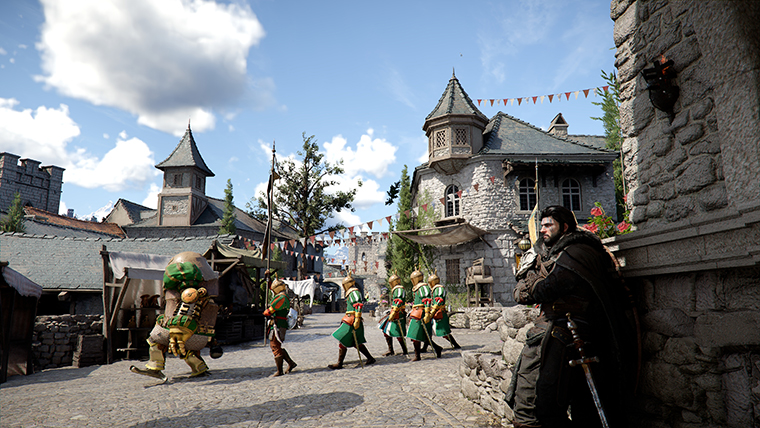
Pearl Abyss has described the faction system as comparable to the side content in The Witcher 3: factions serve as significant actors in the world and provide substantial quest content for players to engage with. While factions shape which areas are accessible, which NPCs are friendly, and what services are available, they do not alter the main story or its ending. The developer stated: "They're not like the factions seen in, say, Fallout. Whether as allies or potential enemies, neither will affect the main story or ending."
Factions in Crimson Desert are classified into four types: Core factions that play a central role in the story and world, Hostile factions that oppose the player or other groups, Religious organizations devoted to faith and spirituality, and Other factions covering merchants, tribes, and miscellaneous groups. They are spread across the five main regions of Pywel: Hernand, Pailune, Demeniss, Delesyia, and the Crimson Desert. The player interacts with factions through quests, the Contribution system, and the liberation mechanic that allows occupied settlements to be freed from hostile control.

Core Factions (19)
Icon | Name | Region | Type |
|---|---|---|---|
|
| ||
- | Core | ||
| Core | ||
| Core | ||
| Core | ||
| Core | ||
| Core | ||
| Core | ||
| Core | ||
| Core | ||
| Core | ||
| Core | ||
| Core | ||
| Core | ||
| Core | ||
| Core | ||
| Core | ||
| Core | ||
| Core |

 Core
Core









Hostile Factions (21)
Icon | Name | Region | Type |
|---|---|---|---|
|
| ||
| Hostile | ||
| Hostile | ||
- | Hostile | ||
- | Hostile | ||
| Hostile | ||
- | Hostile | ||
- | Hostile | ||
| Hostile | ||
- | Hostile | ||
| Hostile | ||
| Hostile | ||
- | Hostile | ||
| Hostile | ||
| Hostile | ||
- | Hostile | ||
| Hostile | ||
| Hostile | ||
| Hostile | ||
| Hostile | ||
| Hostile |

 Hostile








Religious Factions (4)
Icon | Name | Region | Type |
|---|---|---|---|
|
| ||
| Religious | ||
| Religious | ||
| Religious |

 Religious

Other Factions (32)
Icon | Name | Region | Type |
|---|---|---|---|
|
| ||
| Other | ||
| Other | ||
| Other | ||
| Other | ||
| Other | ||
| Other | ||
| Other | ||
| Other | ||
| Other | ||
| Other | ||
| Other | ||
| Other | ||
| Other | ||
| Other | ||
| Other | ||
| Other | ||
| Other | ||
| Other | ||
| Other | ||
| Other | ||
| Other | ||
| Other | ||
| Other | ||
| Other | ||
| Other | ||
| Other | ||
| Other | ||
| Other | ||
| Other | ||
| Other | ||
| Other |

 Other
Other






















Other Known Factions
The following factions are also known to exist in Crimson Desert but are not yet catalogued in the main faction database.
Name | Region |
|---|---|
Unknown | |
Unknown | |
Faction Mechanics
Faction Standing and Reputation
Each faction has a standing that reflects the player's relationship with it. Standing progresses from hostile (War) through Neutral and eventually to Alliance. Completing quests, assisting faction members, and performing positive actions for a group increases standing. Criminal behavior and hostile acts decrease it.
Reaching Alliance status with a faction unlocks several benefits. Allied faction troops may appear to assist the player during ambushes in the open world. New vendors become available, additional quests open up, and previously restricted resource nodes become accessible.
State | Effect |
|---|---|
At War | Hostile. The faction's forces attack on sight. Resources in their territory are contested or blockaded. |
Neutral | The faction tolerates the player's presence. Trade and movement through their territory is possible without conflict. |
Alliance | Friendly. The faction provides support, access to unique vendors, assistance during battles, and resource nodes in their territory. |
These states shift based on liberating territory, completing quests, making dialogue choices, and engaging in combat. Improving relations with one faction may damage relations with their rivals.
Contribution System
The Contribution system is directly tied to faction reputation. Each region tracks a Contribution metric (such as "Hernandian Contribution") that rises or falls based on the player's actions. Positive actions like completing quests, paying alms, and helping NPCs increase Contribution. Criminal activities reduce it, with penalties ranging from -5 for minor offenses to -30 for serious crimes.
Low Contribution in a region can restrict NPC interactions and limit access to certain towns or services. Accumulating criminal offenses triggers bounties that make guards hostile. Wanted status persists until the player is arrested or clears the bounty through the Law System.
Liberation System
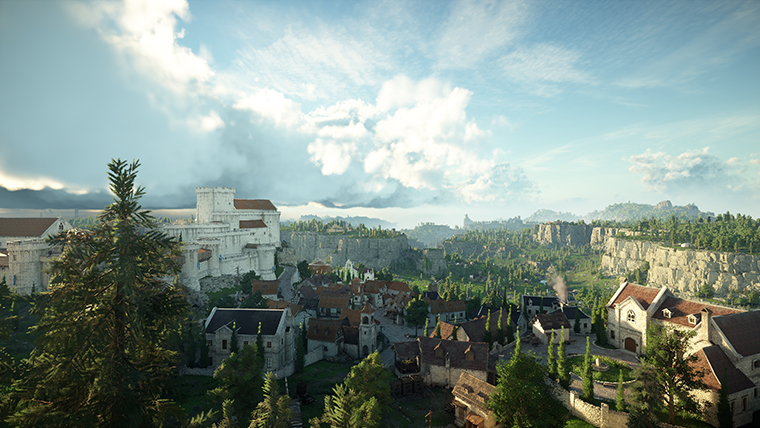
Throughout the open world, hostile factions occupy settlements, outposts, and strongholds. The player can liberate these locations by defeating the occupying forces and their leaders. Successfully liberating an area causes visible changes: residents return, structures are rebuilt, new vendors set up shop, and materials for rebuilding Pailune become available.

Faction Blockades
Hostile factions restrict access to certain parts of the map through blockades. The HUD shows indicators such as "Blockaded" alongside the name of the controlling faction. These blockades must be cleared through combat to gain access to the blocked region and its resources.
Dispatch System
From the Greymane Camp, players can send comrades to blockaded locations to reduce enemy occupants while the player is in a different region. This system allows players to weaken hostile positions before engaging them directly. See Dispatch Missions for more details.
Faction Quests
Each faction provides its own set of side quests that appear throughout the game. Faction quests are non-missable and can be revisited across chapters. The table below summarizes the confirmed faction quest chains.
Faction | Quest Chain | Notable Quests |
|---|---|---|
Record of the Greymanes, The Greymanes' New Fangs, Strongbox with Wheels, Brightening the Spirits, Chance to Make a Fortune | ||
Embers of Return, Reuniting with Comrades, For a Better Tomorrow | ||
Bounties targeting Jeffrey, Simon de Montfort, Alessio, Blix, Bianca, Salvatore, Warren, and Billy | ||
Estate Questline | ||
Guild Quests | ||
Forest Quests | Trembling Woods, Pororin Research Institute |
Races and Factions
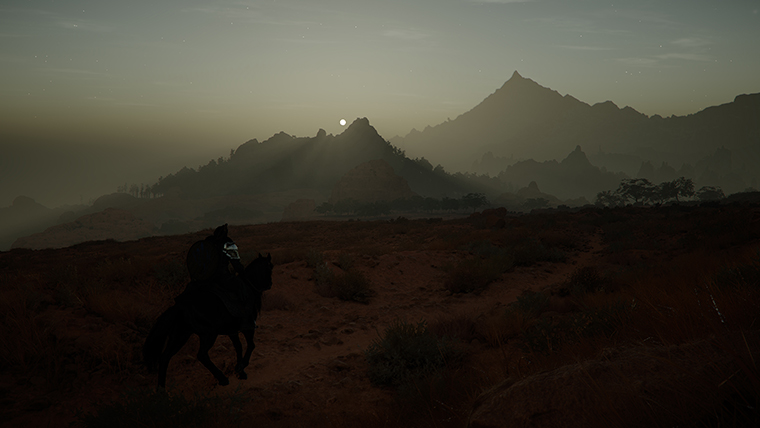
The factions of Pywel reflect the diversity of the continent's inhabitants. Multiple sentient species coexist across the world, and many factions are organized along racial lines.
Race | Associated Factions |
|---|---|
Humans | Noble houses (Celeste, Serkis, Lanford, Grace, Roberts, Felix, Alfonso), the Greymanes, the Black Bears, the Bleed Bandits, most hostile factions |
Goblins | |
Trolls |
Regional Factions
Pywel is divided into five main regions, each containing its own collection of factions. Minor houses serve as lords over various areas within each region, providing governance and protection. The in-game Knowledge Library tracks 573 individual territories across these regions.
Alignment Consequences
Faction alignment has real consequences beyond combat:
Effect | Description |
|---|---|
Opening Paths | Allied factions grant access to their territory, vendors, resources, and encampments. |
Closing Paths | Aligning with one faction can close off paths and encampments controlled by rival factions. |
Vendor Access | Faction-aligned vendors sell unique items and equipment. Losing faction favor means losing access to those vendors. |
Resource Nodes | Allied territory provides better resource access. Hostile territory has blockaded resource deposits. |
World Changes | Which houses or factions the player aligns with can change the physical appearance of the world, according to Pearl Abyss. |
The Faction Map
The world map includes a faction overlay showing which factions control which territories. Enemy-controlled areas are highlighted, and blockaded zones are marked with icons such as "Blockaded, The Wolf Trackers" indicating restricted areas gated by story progression or faction status. As the player liberates territory and shifts faction alignments, the map updates in real time to reflect the changing balance of power across Pywel.
The Abyss Threat
Beyond mortal factions, the Abyss is an existential threat that affects all factions. As the corruption spreads, it creates supernatural hazards that no single faction can handle alone. Various forces throughout the continent seek Abyss power for their own purposes, adding another layer of conflict beyond the territorial disputes between houses and guilds.
Tips
Check the Knowledge Library regularly to track which of the 110 factions you have discovered.
Improve Contribution in the Hernand region early on, as many faction quest chains unlock based on your standing.
Liberating occupied settlements provides materials for rebuilding Pailune, which in turn opens new faction interactions.
Use the Dispatch system from the Greymane Camp to weaken hostile faction blockades before engaging them in person.
Faction quests are non-missable, so there is no pressure to complete them in a specific order. They remain available across all chapters.
Improving relations with one faction may damage your standing with a rival faction, so consider your alliances carefully.