
Loading...
Bosses
March 19, 2026 at 10:38 PM
Created comprehensive bosses article by merging "boss-battles" and "world-bosses"
Crimson Desert features 76 bosses spread across the continent of Pywel. The majority of these bosses are optional encounters that players can discover while exploring the open world. A smaller number are "crit path" story bosses required to progress the main narrative. Pearl Abyss has not published the exact split between optional and required bosses, but previews confirm that most can be tackled in any order, skipped entirely, or revisited later with better equipment.
There are no difficulty settings. Pearl Abyss designed a single intended difficulty level. If a boss proves too challenging, players can leave, explore elsewhere, upgrade their weapons and gear, complete side quests for additional experience, and return when better prepared.
The following bosses have been shown in gameplay demos, trailers, or official previews. This is not a complete list of all 76 bosses.
Boss | Location | Key Mechanics |
|---|---|---|
Coastal area | Puzzle boss; mount and climb its back to destroy crystal formations exposing weak points. Shadow of the Colossus-style encounter. | |
Ruins | Fallen king with sword and shield; Celtic armor aesthetic; 3 HP bars with distinct phase transitions. | |
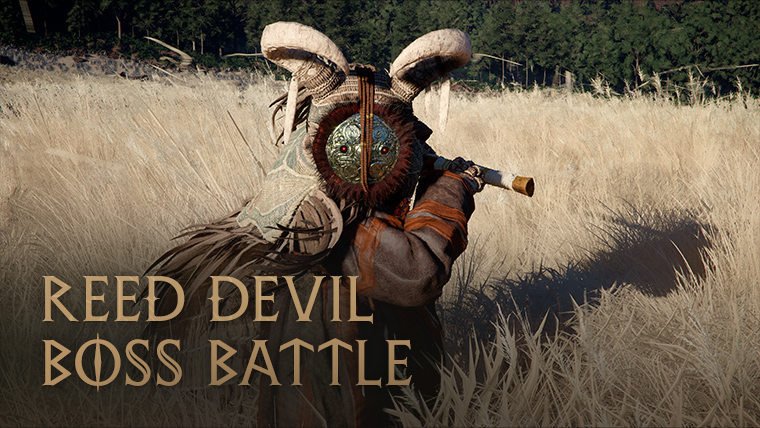
Frozen Soul Mountain, Hernand | Fast iaijutsu swordsman who hides in surrounding reed fields. Summons wicker totems in phase 2. | |
The Smoking Lands | Two-phase witch boss with crow and shadow minions; summons Earthen Warriors (ceramic automatons). Revealed at G-STAR 2024. | |
White Mountains | Mountain spirit ape with antlers; summons blizzards and hail; 3 phases; players can climb its back to attack weak points. | |
Gunman with double-barreled shotgun and smoke grenades. Quick evasion tactics and ranged attacks. | ||
Not confirmed | Giant gorilla relying on brute strength. Chest beats, ground slams, and rampaging attacks. Can be mounted on its back. | |
Calphade Castle | Traitor officer with heavy mace and shield. Destructible pillars can be collapsed onto him. Story boss in the Calphade questline. | |
Hernand town square | Duelist encountered in the Hernand region. | |
Undefeated warrior of The Bonepit arena. | ||
Not confirmed | Summoned by a character named Rakkash. | |
Not confirmed | Massive mechanical dragon with dragon's breath attacks. | |
Prologue | Leader of the Black Bears. Appears as a boss in the opening prologue. Single red HP bar. |
All major bosses use a multi-phase health bar system, typically with two or three phases. Each phase is color-coded and introduces new attack patterns and behaviors.
Phase | Color | Behavior |
|---|---|---|
Phase 1 | Blue | Initial phase with standard attack patterns. The boss establishes its core moveset and the player learns its tells. |
Phase 2 | Green | Cutscene triggers between phases. Boss gains new abilities, faster attack speed, and more aggressive behavior. Health resets. |
Phase 3 | Red | Final phase. Boss enters a berserker or rage state with enhanced speed and damage. The last 25% of health may trigger additional desperation attacks. |
Bosses do not follow fixed patterns throughout the fight. Attack patterns, speeds, and abilities shift between phases, requiring players to adapt rather than memorize a single rotation. Pearl Abyss has emphasized that over-committing to offense early in a fight is a common mistake.
Boss encounters incorporate several mechanics beyond standard combat.
Guard System: Some bosses have a Guard bar that must be depleted before they become vulnerable to damage. Once the Guard is broken, the boss staggers and a damage window opens. The parry system is the primary way to deplete Guard.
Weakness Exploitation: Every boss has exploitable weaknesses beyond direct combat. At Summer Game Fest 2025, a boss could be defeated by hoisting pillars and slamming them on its head using the spirit focus ability. Context about weaknesses can be learned through story progression, exploration, or experimentation.
Climbing and Mounting: Bosses like White Horn and Queen Stoneback Crab can be physically mounted and climbed. Players attack specific weak points while holding on with one hand and striking with the other.
Arena Interaction: Boss arenas include destructible and interactive elements. Pillars can be collapsed onto staggered bosses, and environmental hazards can be used to deal significant damage.
Defeating bosses yields several types of rewards.
Reward | Description |
|---|---|
Signature Equipment | Dropped gear carries the boss's signature abilities and unique stat bonuses. Can be crafted into custom weapons. |
Abyss Artifacts | Used to unlock and upgrade skills on the character skill tree. |
Unique materials used for equipment crafting at blacksmiths. | |
Character Progression | Defeating bosses advances overall character progression and may unlock new abilities or story content. |
World bosses are scattered across Pywel's five regions. The open world is fully accessible from the start with no level-gated areas, though enemy difficulty scales by location. Bosses can be encountered while exploring caves, ruins, mountain peaks, forests, and other remote locations. Some bosses are tied to faction quests or specific side quest chains, while others can be stumbled upon during free exploration.
The Knowledge System tracks discoveries including boss encounters. Players who explore thoroughly and investigate hidden locations will find more optional bosses than those who follow the main story path alone. Will Powers noted that after completing the main campaign, he had "barely scratched the surface" of the game's optional content, having spent approximately 50 hours on side content.
The 76 boss count was confirmed through the game's Knowledge System, which tracks 2,921 total discoverable entries across multiple categories. Bosses are one distinct category alongside other tracked content.
Knowledge Category | Entries |
|---|---|
Territories | 573 |
People | 467 |
Adventures | 430 |
Creatures | 401 |
Bosses | 76 |
Total | 2,921+ |
The distinction between the 401 creatures and 76 bosses suggests that bosses are tracked as a separate category from standard enemies. Standard creatures include wildlife, hostile mobs, and faction soldiers encountered during normal exploration, while bosses are the named, unique encounters with dedicated HP bars, cutscene introductions, and Signature Ability drops.
Crimson Desert's 76 bosses place it close to Black Myth: Wukong's boss count, which was one of the most boss-dense action RPGs in recent years. Community discussion has raised the question of how many of the 76 are truly unique encounters versus "boss versions of normal enemies" (scaled-up versions of standard creature types with a boss HP bar). Based on pre-release coverage, the revealed bosses show significant variety: human duellists (Matthias, Staglord), massive creatures (White Horn, Queen Stoneback Crab), mechanical constructs (Golden Star), supernatural entities (Hexe Marie), and organized faction leaders (Myurdin, Cassius Morten). This range suggests Pearl Abyss has invested in diverse boss design rather than padding the count with reskins.
The following bosses have been confirmed through official trailers, gameplay demos, and hands-on preview events.
Boss | Type | Location | Key Mechanic |
|---|---|---|---|
Giant Crustacean | Coastal Region | Shadow-of-the-Colossus-style climbing; destroy silvery weak patches on her shell | |
Mountain Spirit | Pailune (White Mountains) | Three-phase fight in a whirling snowstorm; ape-fist ground pounds and antler charges | |
Branchmaster | Forest Region | Summoned through a Rakkash encounter; nature-themed attacks | |
Giant Beast | Hernand Castle | Massive gorilla-like creature; raw physical power and ground-shaking attacks | |
Mechanical Dragon | Fire attacks and tornadoes; vulnerable to electrical damage; aerial pursuit phase on dragon mount | ||
Drake | Shivering Pass | Ice pillar destruction mechanic; climbing and mounted attack phases |
Boss | Type | Location | Key Mechanic |
|---|---|---|---|
Fallen King | Pailune (Snowy Ruins) | Heavy sword attacks with three health bars; parry-focused encounter | |
Witch | Crow magic, minion summoning (Urn Soldiers/Swordsmen), two-phase fight; flees after defeat | ||
Masked Fighter | Fast Iaijutsu-style attacks in a wheat field; protective totems must be destroyed | ||
Cursed Warrior | Fortress Siege | Dual-threat: cursed shield spawns an independent spectral knight; surrounding soldiers add pressure | |
Merchant Guild Leader | Abyss Artifact grants extreme speed; magical weapon waves punish passive play | ||
Warrior Duelist | Hernand Town Square | Disciplined swordplay duel in an urban arena | |
Traitor Knight | Final boss of the Calphade siege chapter; fought amid large-scale battlefield chaos | ||
Gunman | Quick gunman with double-barreled weapon and smoke grenades | ||
Brawler | Eight-foot powerhouse with lightning-fast fists; unarmed fighting style | ||
Black Bear Leader | Leader of the Black Bears; primary antagonist boss encounter |
Boss encounters in Crimson Desert share several recurring design elements while keeping each fight mechanically distinct.
Multi-Phase Fights: Most bosses transition through multiple phases as their health depletes, introducing new attack patterns and escalating the challenge. Phase transitions are often marked by visual changes or arena shifts.
Environmental Interaction: Many fights incorporate the surrounding terrain. Players can use environmental combat tactics, grapple onto structures, and leverage the arena layout for tactical advantages.
Climbing: Larger creature bosses like the Queen Stoneback Crab and Frost Drake feature climbing mechanics where players scale the boss's body to reach weak points, similar to Shadow of the Colossus.
Aerial Combat: The Golden Star encounter transitions into aerial pursuit on the player's dragon mount, chasing the mechanical dragon through the sky.
Minion Summoning: Bosses like Hexe Marie summon waves of minions that must be dealt with alongside the main boss, requiring players to manage multiple threats simultaneously.
Defensive Totems: The Reed Devil deploys protective totems that shield the boss, forcing players to destroy them before dealing direct damage.
Dual-Threat Bosses: Fontaine's cursed shield spawns an independent spectral knight that attacks separately from Fontaine himself, creating a fight against two combatants at once.
Defeating a boss provides several types of rewards that directly affect character progression and build options.
Boss Equipment: Each boss drops exclusive gear imbued with their signature abilities. Equipping a boss's outfit or weapon grants access to their signature skill, fundamentally changing the player's combat options.
Abyss Fragments: Major bosses award Abyss Fragments that can be invested into core stat upgrades (health, stamina) or used to unlock and enhance skills.
Crafting Materials: Boss-specific materials can be used at the blacksmith to upgrade weapons and armor sets with unique properties.
Knowledge Entries: Defeating a boss unlocks detailed entries in the Knowledge System, providing lore context and combat data for future encounters.
General tips for approaching boss encounters in Crimson Desert can be found in the Boss Strategies article. Key principles include mastering the dodge, block, and parry system, managing stamina effectively, learning to read attack telegraphs, and bringing appropriate elemental effects to exploit boss weaknesses. Each individual boss article contains detailed encounter-specific strategy tips.