

Overview
Live Mode is the core life simulation gameplay mode in Paralives. It is the counterpart to Build Mode, shifting the focus from construction and decoration to guiding Parafolk through their daily lives. In Live Mode, players manage their characters' needs, develop relationships, pursue careers, explore the town, and watch their stories unfold. Basic gameplay consists of monitoring the needs of all Paras in the active household, guiding their everyday life, and enjoying various activities and hobbies.
On November 25, 2025, Community Manager Rina hosted a 48-minute livestream that gave the public its first extended look at Live Mode gameplay. The stream was pre-recorded and unedited to show the current state of the game transparently, with multiple team members present in the chat to answer questions. This stream came shortly after the announcement that Early Access would be delayed from December 2025 to May 25, 2026, due to feedback from playtesters identifying impactful bugs and a lack of activities in the town.
Time System
Live Mode uses a compressed time scale where roughly one in-game minute passes per real-time second. Players can control the pace of the simulation with several speed settings:
Speed | Description |
|---|---|
Pause | Time is frozen. Players can still issue commands and queue actions. |
Normal (1x) | Standard speed. Approximately one in-game minute per real-time second. |
Fast (2x) | Double speed. Useful for waiting through short activities. |
Very Fast (3x) | Triple speed. Helpful for passing time overnight or during work hours. |
There is currently no ultra-speed option beyond 3x, even when Paras are sleeping. The developers may add additional speed tiers in future updates.
Needs System
Rather than displaying traditional need bars, Paralives uses a dynamic thought list that shows the current thoughts and wants of each Parafolk. Needs that are fully satisfied do not appear in the interface; only needs that require attention and current wants are displayed. This design choice keeps the UI clean and focuses player attention on what matters in the moment.
Parafolk have six core needs:
Need | Description |
|---|---|
Hunger | Depletes over the course of the day with three meal periods. Satisfied by cooking at home or buying food at venues. |
Sleep | Drains throughout the day and has one sleep period. Restored by sleeping in a bed. |
Bathroom | Builds up gradually and must be relieved by using a toilet. |
Hygiene | Decreases over time and is restored by showering, bathing, or handwashing. |
Fun | A contextual need that surfaces when a Para has been doing a single activity for too long. Satisfied by switching to a more stimulating activity. Some personality types keep the Fun thought active more often than others. |
Me Time | Surfaces when a Para has spent too much continuous time around other Parafolk or in busy public spaces. Satisfied by spending time alone. More introverted Paras feel the pull of Me Time sooner than outgoing Paras. |
Needs drain at different speeds depending on what the Para is doing. The hunger need, for example, follows a schedule: around 5 PM a thought like "I'm starting to get a bit hungry" appears, by 7 PM it becomes "I'm hungry," and by 9 PM it escalates to "I'm STARVING!" This time-based escalation gives players a natural sense of urgency without requiring constant micromanagement.
For the full breakdown of each Need, including the contextual behavior of Fun and Me Time and the cartridge-based display model, see the Needs System article.
Wants
In addition to needs, Parafolk have wants, which are small objectives that appear dynamically in the thought list. Different wants are generated based on a character's personality, Vibe, current emotions, and surroundings. Fulfilling wants contributes to a Para's overall satisfaction and can unlock new interactions or story moments.
Autonomy System
One of the defining features of Live Mode is the autonomy system. Parafolk can decide to perform interactions on their own without player input. Autonomous actions are context-aware and personality-driven, meaning each character behaves differently based on their individual traits and preferences.
Examples of autonomous behavior include:
Going to work at the scheduled time
Using the toilet when the bathroom need is pressing
Tidying up the house if the Para has neat tendencies
Playing music if the Para is a skilled musician
Finding furniture and objects around the home to interact with
Brushing teeth and washing hands (for Paras with the neat lifestyle option)
Players can toggle the autonomy system off entirely in the options menu if they prefer to control every single interaction their Parafolk perform. Lifestyle options such as vegetarianism, sleep style, and cleaning habits also influence what a Para will choose to do autonomously.
Together Cards and Social Interactions
Social gameplay in Paralives revolves around the Together Card system. When two or more Parafolk spend time together, a Together Bar gradually fills up over approximately twenty in-game minutes of progress. Each time the bar fills, the player is presented with a choice of three Together Cards that can steer the conversation and relationship in different directions.
Together Cards are not simple conversation options. They represent forks in the conversation that carry consequences. Cards are context-dependent, taking into account what the Paras are currently doing, who they are with, where they are, what objects are nearby, and more. This means the same two Paras will receive different card options at a park versus at a dinner table.
Card Colors and Vibes
Each Together Card is color-coded to indicate its mood or Vibe:
Color | Vibe |
|---|---|
White | Standard or neutral interaction |
Green | Friendship interaction; builds friendly bonds |
Pink | Romance or flirty interaction |
Dark Blue | Skills and hobbies interaction; shared interests |
Red | Mean or hostile interaction; can damage the relationship |
Dark Red | Discomfort interaction; awkwardness or social tension |
Many Together Cards display additional information to help players make informed choices. This can include an icon showing what Vibe the card relies on, the type of perk obtained (such as improving a Relationship label), and the percentage chance of success. Certain actions come with success percentages, and after choosing a card a meter appears showing the result and how it progressed the Together Bar and the overall relationship.
Together Card Variants
Together Cards can have variants that allow players to deliver the same type of interaction in different ways. For example, a compliment can be delivered sincerely, flirtatiously, or ironically. These variants allow players to fine-tune how their Paras express themselves and can swing relationships in specific directions depending on the delivery.
Relationship Labels
Paralives uses a Relationship Label system rather than a single friendship or romance bar. A Para can hold several types of bonds with another character simultaneously. For instance, one Para might be both a "Friend" and a "Sister" to another, with both labels able to coexist and evolve separately.
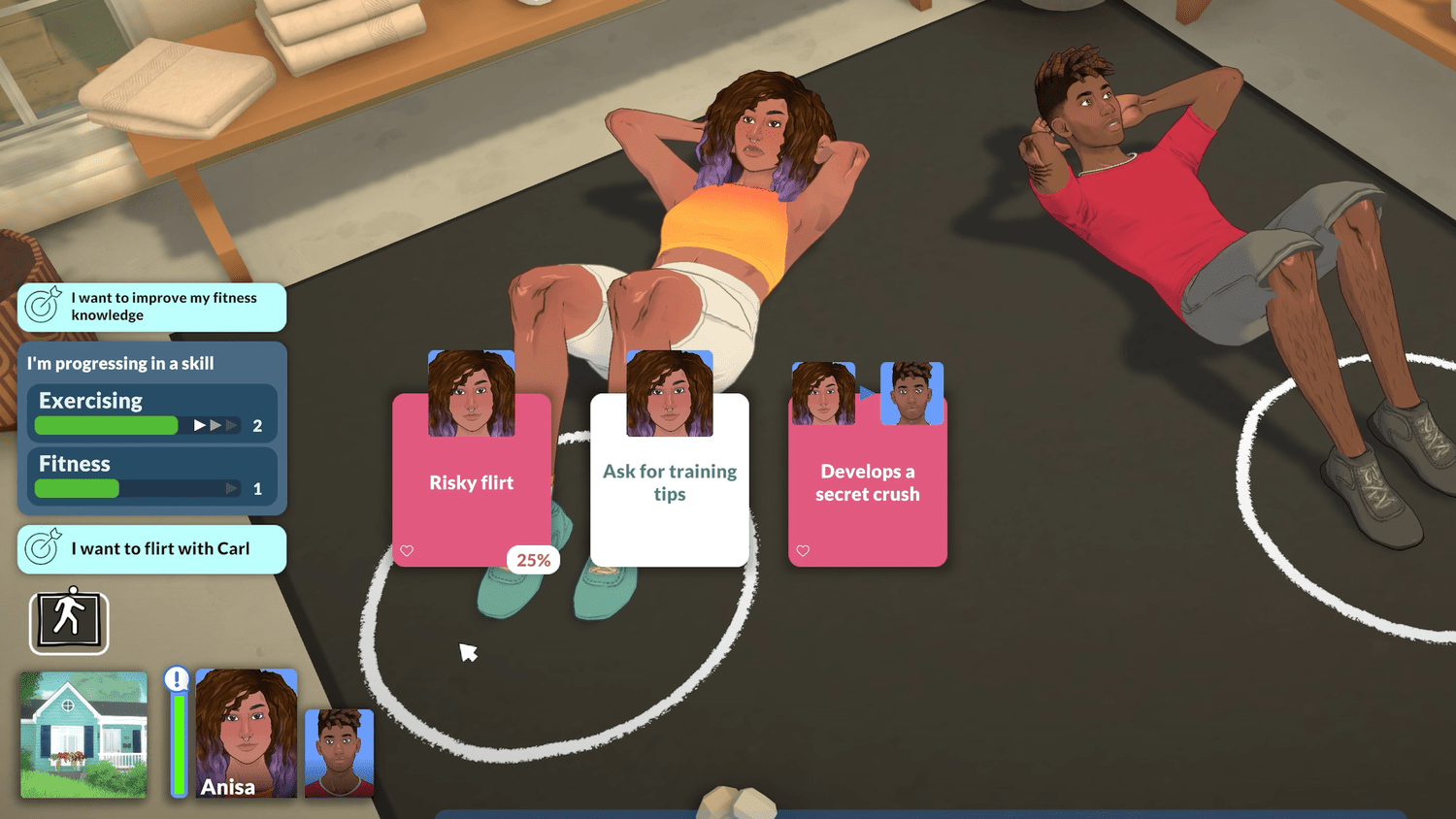
Relationship labels are easy to unlock initially (meeting someone for the first time will likely lead to the "Friend" label) but must be leveled up over time to unlock perks and bonuses. Together Cards regularly help with strengthening Relationship labels when interacting with another Para.
Group Activities
Paras can also do activities as a group. Players can highlight all the Paras they would like to include in a conversation and assign them an activity. The group will walk to the chosen area together, continue chatting during the activity, and take turns performing single-Para activities when needed.
Emotions
Paralives has an emotion system that reacts to a Para's needs, surroundings, traits, and personality. Emotions appear as small icons next to the Para's portrait and directly affect interactions, skill learning, work performance, and the wants that show up during the day. Emotions are not selected manually by the player; only interactions and everyday events can trigger them.
Jobs and Careers
The career system in Paralives offers a wide range of job options organized by category. Each job comes with a daily salary, a rank, a schedule, and a workplace. The career categories available include:
Category | Examples |
|---|---|
Software Development | Programmer, software engineer, and related tech roles |
Art | Painter, sculptor, and other creative positions |
Service | Customer-facing and hospitality roles |
Music | Musician, composer, and performance roles |
Education | Teacher, professor, and tutoring positions |
Management | Supervisory and administrative roles |
Maintenance | Repair, cleaning, and upkeep positions |
Healthcare | Nurse, doctor, and medical support roles |
Science | Researcher, lab technician, and scientific positions |
Fitness | Trainer, gym staff, and athletic roles |
Food | Chef, baker, barista, and culinary roles |
Careers in Paralives are non-linear. A nurse will not automatically be promoted to a doctor; instead, the nurse improves relevant skills (such as social skills for patient interaction) and becomes a more highly qualified nurse with a better salary. Most Paras start at Rank 1, though some careers go as high as Rank 30.
A performance system evaluates each workday based on factors like the Para's mood while at work, their relationships with coworkers and managers, and other contextual elements.
Cooking and Food
Cooking is one of the primary ways Paras satisfy their hunger need. The available recipes depend on a Para's cooking skill level. At the lowest levels, Paras can only prepare simple items like microwaved hot dogs and frozen pizzas. As their skill improves, they unlock more complex and rewarding recipes. Paras spawn with a random starter list of recipes and can discover new ones as they practice cooking or explore the town.
For Paras who do not enjoy cooking, a quick walk to a nearby cafe or restaurant lets them buy food for dine-in or takeout.
There is currently no ingredient system in Paralives. Players do not purchase individual fruits or vegetables; instead, cooking uses the recipes that a Para knows. Meals can be eaten with other Parafolk, turning mealtime into a social occasion that fills the Together Bar and generates Together Cards. Younger Parafolk can only cook when supervised by an older Para. This reflects the dangers of using kitchen tools and stoves.
Food left on the counter will spoil over time. During the November 2025 livestream, a frozen pizza cooked the night before was shown spoiling when left on the counter by the following afternoon. This spoilage mechanic encourages players to manage leftover food rather than leaving prepared dishes sitting out indefinitely.
For a broader look at cooking's role in the gameplay loop, see the Hobbies article.
Town Exploration and Venues
Live Mode has a town with multiple commercial lots and venues that Paras can visit. While the world is not a fully open world in the traditional sense, transitions between locations happen with minimal loading. When a Para wants to visit a new building, clicking on the building and selecting "Visit Building" loads the interior quickly without a full loading screen.
Confirmed venues in the Early Access build include:
Venue | Type | Description |
|---|---|---|
Bloom | Flower Shop | Sells potted plants, including a free daily plant. |
Chez Maurice | Restaurant | A breakfast and lunch spot where Paras can dine in. |
Creme | Cafe | Coffee shop offering snacks and drinks. |
Headlines | Hair Salon | A barber shop and hair salon for makeovers. |
L'Armoire | Clothing Store | A fashion outlet for purchasing new outfits. |
Market Antiques | Furniture Store | Sells antique and vintage furniture items. |
Premium Gym | Gym | A fitness center for workouts and exercise activities. |
The Story Nook | Bookstore / Cafe | Sells books, has a cafe for snacks, and includes a playroom for children. |
These venues are not rabbit holes; players can enter and interact with the interiors. Paras working at these locations can be visited during their shifts.
School
Child, Preteen, and Teenager Parafolk attend school, which the game treats as an occupation on the same level as adult careers. Students must achieve good or decent grades. School operates as a rabbit hole: the student leaves the lot for the duration of the school day. Students can also hold part-time jobs as long as the job schedule does not conflict with school hours.
Hobbies and Leisure
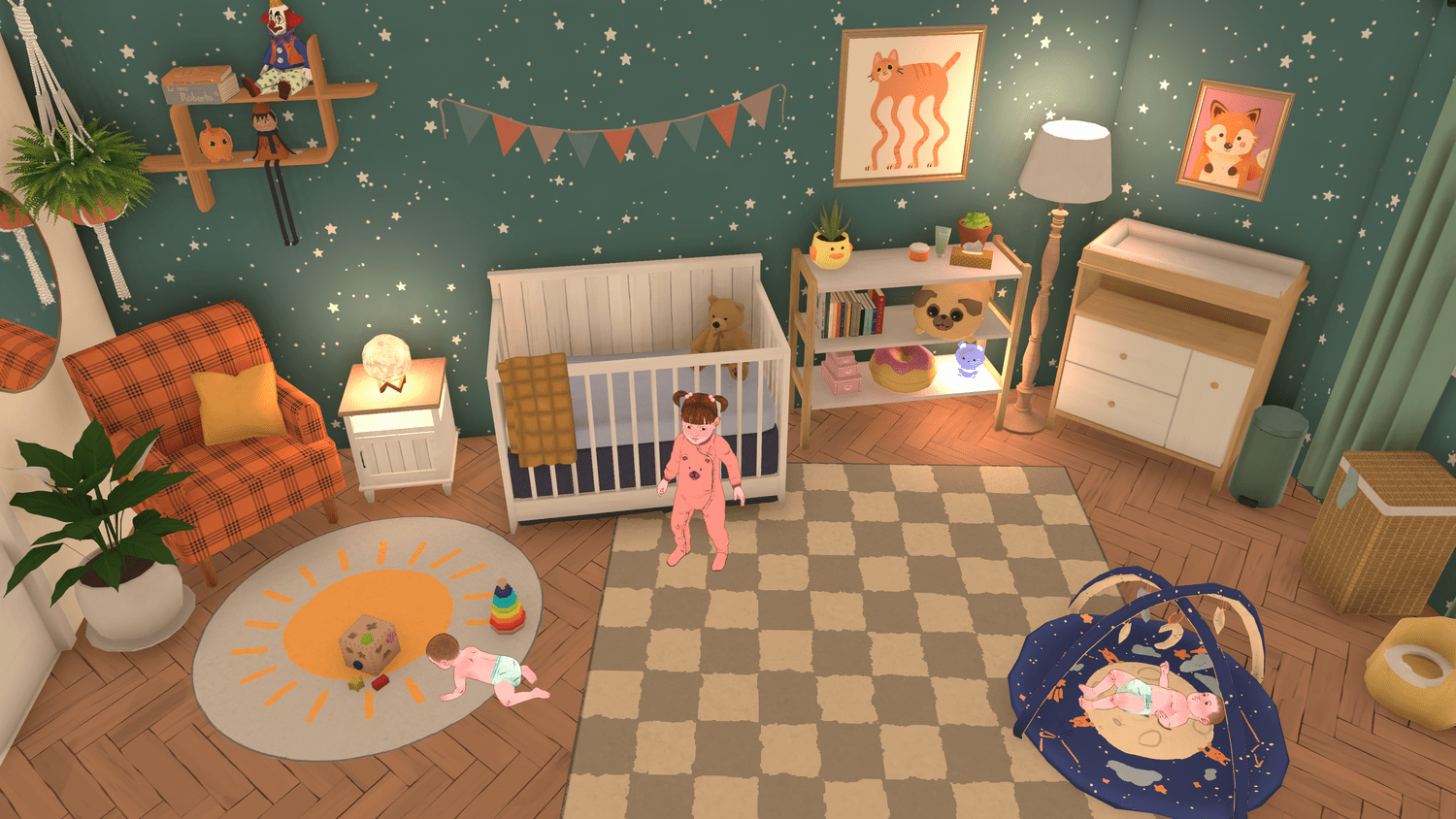
Beyond careers and needs management, Live Mode offers a range of leisure activities. Parafolk can play piano and guitar (with more instruments planned), exercise at Premium Gym or jog through the town, paint at an easel, play video games on computers or phones, listen to the radio, watch television, read The New Paper, and browse the internet and social media. Toddlers and children have age-specific activities such as hopscotch, sandcastle building, playing with toys and plushies, drawing, and reading picture books. Gardening and fishing are planned as free post-launch updates. For the full details on how activities build Skills and Knowledge, see the dedicated article.
Internet and Television
Phones and computers give Paras an internet layer used for everyday tasks. The most practical use is the in-game job board: a Para can browse job listings on a phone or computer, with each posting showing its rank, daily salary, workplace, and required skills, then apply directly. This is one of the two main ways Paras find work in Careers. The studio has also confirmed that ordering and delivery services through these devices are planned to expand alongside new retail venues during the Early Access period.
Televisions are an in-build leisure object. A Para can watch television at home as a way to relax and pass time, and like other entertainment activities it contributes to a Para's sense of fun. Browsing social media on a phone and playing video games on computers or phones round out the connected-device activities available in the current build. For how these activities fit the wider leisure loop, see Hobbies.
Town Districts
The town is divided into four distinct districts, each with its own character, architecture, and atmosphere. Players can explore all districts freely as part of the open world.
District | Character | Notable Features |
|---|---|---|
Old Town | Densely populated, European-inspired area with stone townhouses | Small castle from the city's founding; inspired by Quebec's history |
Industrial | Factories and brick houses from the industrial era | Edwards & Co. Factory; some buildings renovated into modern lofts |
Mountain | Separated from town by a massive chasm | Three hiking trails; rest stop with binoculars at peak; scenic views |
Countryside | Large lots with abundant empty space | Ideal for rural living and large custom builds |
For more details, see the dedicated Town Districts article.
The New Paper
Paralives includes a newspaper system called The New Paper. It delivers daily town updates to the player's household, providing a narrative thread that connects gameplay events to the broader town.
Daily updates: The newspaper arrives each day with fresh content about what is happening in town.
Opportunities: Job listings, events, and other opportunities may appear in the paper.
Resident quotes: Quotes from townspeople and comments from Mayor Gloomberg add flavor and personality.
Archives: Previous editions of the newspaper are saved, allowing players to look back at past events.
Townie Requests
Townies post short daily tasks called Townie Requests, picked up from request boards in town or directly from residents marked with a yellow exclamation point. Requirements are visible before accepting, active requests are tracked in the Goals screen, and a completed request is turned in by talking to the requester and choosing the red Together Card that mentions it. Rewards include Paradimes and friendship with the requester. Board locations, rotation timing, and patch history are covered in the dedicated Townie Requests article.
Transportation
At Early Access launch, the primary form of public transportation is the bus system. Bus stops are scattered around the town, and each trip costs 3 Paradimes. When a Parafolk takes the bus, a fade-to-black transition occurs rather than an animated bus ride. The bus line is designated PL130.
Cars, bikes, boats, and houseboats are not available at launch but are confirmed for free updates during the Early Access period.
Currency
The in-game currency is called Paradimes, represented by the $ symbol. Parafolk earn Paradimes through their careers and spend them on food, transportation, shopping, gym memberships, and household bills. For more details, see the Economy and Bills article.
Inventory
Each household has an inventory in Live Mode, opened from an open-box icon, where items a Para owns can be stored away rather than left out on the lot. Purchased goods and discovered Collectibles can both be kept in this storage, letting players hold onto objects without cluttering the home or placing every item in Build Mode.
Items bought while out in town, such as plants from the florist or pieces from the furniture and antiques shop, move through the inventory before being placed in the house. Food is handled separately under its own spoilage rules rather than sitting safely in storage, so a cooked meal left on a counter will still go bad over time. For where these items are purchased, see Shopping.
Collectibles
Collectible items spawn randomly around the town during gameplay. When a Parafolk discovers a collectible, the player can choose to keep it as a decorative object in their home or donate it to the museum in exchange for rewards. The specific types of collectibles and museum rewards have not yet been fully detailed.
Photo Mode
Paralives includes a Photo Mode that freezes time and gives the player full control over camera positioning, character poses, lighting, and visual effects. Filters such as black and white, sepia, depth of field, bloom, and stickers are available. Photo Mode is non-destructive; everything returns to its original state when the player exits.
What the November 2025 Livestream Showed
The 48-minute stream on November 25, 2025 provided a comprehensive look at many of Live Mode's systems in action. Key demonstrations included:
Parafolk waking up, eating breakfast, and autonomously preparing for work
The dynamic thought list displaying needs and wants in real time
Cooking at various skill levels, from simple microwave meals to more advanced dishes
Walking to town venues and purchasing food at cafes
The Together Card system during conversations between two Paras
Relationship development through card choices and group activities
Emotion icons appearing and influencing available interactions
The time system running at 1x, 2x, and 3x speeds
Town exploration with seamless building entry (no loading screens)
The stream was well-received by the community despite the accompanying delay announcement. Many players appreciated the transparency of showing unedited gameplay and noted that the core systems appeared solid, even if additional polish and content were needed before launch.
Storytellers, Story Cards, and Narrative Settings
Live Mode in the town of Melino is shaped by a layer of narrative tools shown in the launch gameplay reveal. When a household begins, the player picks a Storyteller that frames the tone and difficulty of the run. During play, each in-game day ends with a choice between three Story Cards when a Parafolk goes to sleep; the chosen card sets a narrative outcome for the following day.
A set of menu options further tunes the simulation, including the real-time pregnancy rate, labor duration, the Careers strike threshold, and whether Paras automatically handle Needs System actions such as eating or using the restroom while at work. These tools are distinct from Together Cards, which steer individual conversations rather than the day-to-day arc. See Storytellers and Story Cards for the full detail.
The May 19, 2026 launch trailer confirmed several small Live Mode details. Parafolk can hold conversations uninterrupted while multitasking, so a Para can keep chatting with a friend while cooking or working at a hobby. The launch town of Melino includes in-universe leisure activities such as Malimalo, a tabletop board game Paras can sit down to play together. Public transit at Bus Stops lets Paras travel between districts without driving, a Day-1 transport option that pairs with the rabbit-hole work system.
Patch 0.1.8 Update (August 24, 2026)
Patch 0.1.8, released August 24, 2026, restored the ability to turn on televisions and radios, an interaction that had stopped working over the preceding few patches. Using it now opens the device to a random channel or station. The patch also optimized how Parafolk animations are loaded, how the daily newspaper is generated, and how buildings fade out when they block the camera, all intended to reduce lag spikes during play. A household that lost every one of its Paras now correctly vacates its home, closing a regression introduced in Patch 0.1.7.