

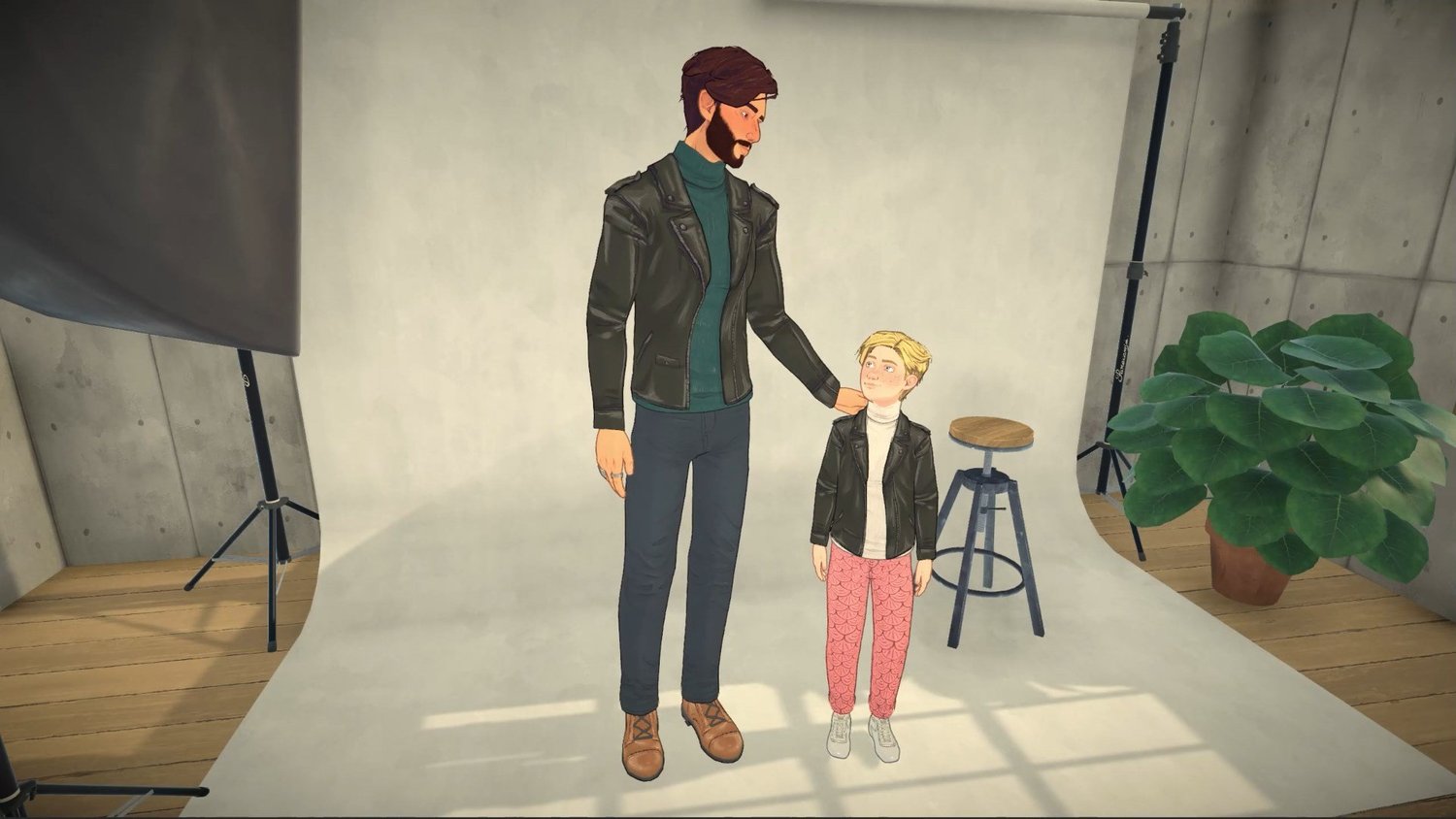
Parafolk (also called Paras) are the characters in Paralives. They are the people who inhabit the game world, living in homes that the player builds and interacting with each other and the open-world town. Players create Parafolk in the Paramaker and then manage their lives in Live Mode. Parafolk have their own AI-driven autonomy, needs, emotions, personality traits, relationships, skills, and careers.
Autonomy
Parafolk are designed to function on their own without constant player direction. The game's AI system gives characters the ability to make autonomous decisions based on their current needs, emotions, personality, and environment. A Parafolk who is hungry will seek out food on their own. One who needs the bathroom will go use it. They will head to work when it is time, handle basic housekeeping tasks, and initiate social interactions with other characters.
Players can still direct Parafolk by queuing actions and interactions, but the autonomous behavior means that characters feel alive and self-motivated even when the player is not actively managing them. The development team has stated that the autonomy system has been built with multiple rules so that characters behave in ways that feel natural and believable.
Needs
Parafolk have six core needs: Hunger, Sleep, Bathroom, Hygiene, Fun, and Me Time. These needs must be addressed to keep a Parafolk functioning well.
How Needs Are Displayed
Rather than showing a traditional row of static bars, Paralives uses a dynamic thought-based interface. The game displays a list of the Parafolk's current thoughts. Needs that are fully satisfied do not appear in this list at all. As a need becomes more pressing, it appears as a thought and takes up more space in the interface, visually indicating urgency.
For example, the Bathroom need does not appear when it is fully met. When it becomes moderately pressing, the thought "I'll need to use the bathroom soon" appears. As it becomes more critical, the thought changes to "I need to use the bathroom" and takes up more visual space. This system keeps the interface clean and focuses the player's attention on what actually requires action.
Need Schedules
Some needs operate on schedules rather than depleting at a constant rate. Hunger has three scheduled periods per day (corresponding to mealtimes), and the Sleep need has one nightly period. This approach is intended to feel more natural than a constantly ticking-down meter.
Need Details
Need | Description | How to Address |
|---|---|---|
Hunger | Represents the need for food. Operates on a three-period daily schedule. | Cooking meals, ordering food, eating snacks |
Sleep | Represents tiredness and the need for rest. Operates on a nightly schedule. | Sleeping in bed, napping |
Bathroom | Represents the need to use the toilet. | Using the toilet |
Hygiene | Represents cleanliness. | Showering, bathing |
Fun | Contextual need that surfaces when a Parafolk has been doing the same activity too long and becomes bored. | Switching to a different stimulating activity |
Me Time | Surfaces when a Parafolk has had too much continuous time around others. Restored by spending time alone. | Time alone at home, on a quiet bench, or away from social activity |
Emotions
Emotions in Paralives represent a Parafolk's current state of mind. Unlike personality traits, emotions cannot be selected manually by the player. They are triggered by interactions, events, and the Parafolk's circumstances. A Parafolk might feel happy after a successful social interaction, stressed after burning food, or sad after a relationship conflict.
Emotions have meaningful gameplay effects. They can change what Wants are available, modify certain Needs, affect the success rate of actions, influence work performance, speed up or slow down skill learning, and alter the quality of social interactions. A Parafolk's Vibe personality trait also conditions which emotions they are more likely to feel.
Wants
Wants are small, context-dependent objectives that appear based on a Parafolk's current emotional state and situation. The player chooses which Wants to pursue from a list of suggestions. Completing Wants earns Personality Points, which can be spent to upgrade and evolve a Parafolk's personality over time.
The Wants system gives players short-term goals to work toward while managing their Parafolk. Because Wants are context-dependent, they change based on what the character is doing and feeling, keeping the gameplay loop varied and responsive to the current situation.
Personality System
A Parafolk's personality is defined by several interconnected components that are initially set in the Paramaker and then evolve through gameplay:
Vibes
Vibes are core personality traits that determine a Parafolk's general outlook on life. Each Vibe comes with its own perks and affects gameplay in multiple ways: it conditions which Emotions the character tends to feel, increases the chance of certain Together Cards appearing, and influences how Skills and Relationships progress.
The confirmed Vibe options include Overjoyed, Gloomy, Energetic, Serious, and Jester, with additional Vibes planned for the Early Access launch (8 total confirmed). During gameplay, Parafolk can unlock additional Vibes by spending Personality Points, allowing their personality to grow and specialize over their lifetime.
Talents
Talents are linked to skill categories. Any Parafolk can work on any skill in the game, but a Parafolk who has a Talent in a specific skill category receives perks that help them progress faster and perform better in associated skills. Talents provide a sense of natural aptitude without locking characters out of any skill.
Social Perks
Each Parafolk can have a Social Perk that defines what they are naturally good at in social situations. Social Perks provide advantages during specific types of social interactions, making certain conversation paths and relationship developments come more easily.
Lifestyles
Lifestyle options include preferences such as vegetarianism, sleep style (early bird vs. night owl), and cleaning habits. These choices influence daily routines and behaviors, adding variety to how different Parafolk live their lives.
Personality Points and Evolution
As Parafolk complete Wants, they earn Personality Points. When enough points are accumulated, the player can choose to level up the Parafolk's personality. Leveling up allows the player to evolve Talents, Perks, and Vibes, choosing new specializations or unlocking additional traits. This means personalities in Paralives are not static; they grow and change over the course of a Parafolk's life.
Relationships
Relationships in Paralives develop through time spent together and are defined by unlockable labels. Rather than a simple friendship/romance binary, the system supports a variety of relationship types that emerge organically from gameplay.
How Relationships Develop
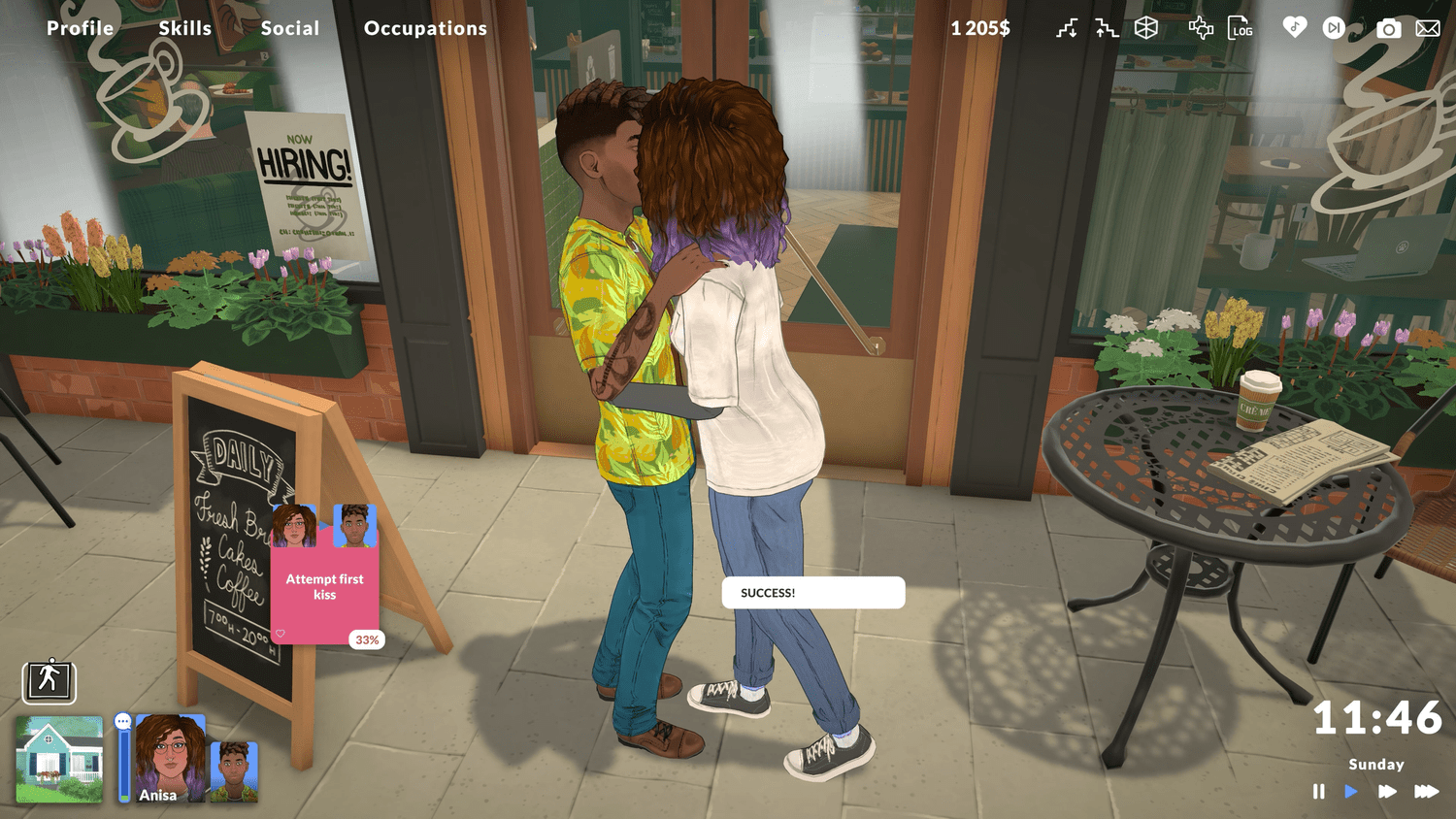
To develop a relationship, characters spend time doing activities together. During this time, their relationship slowly evolves. The game is designed so that relationship progression happens over multiple in-game days. Rushing from first meeting to marriage in a single afternoon is much more difficult in Paralives than in many other life sims. Characters will stay together and continue interacting as a group naturally, rather than requiring the player to constantly queue new interactions to keep a conversation going.
Relationship Labels
As a relationship develops, new labels can be unlocked and added. Labels describe the nature of the relationship, and multiple labels can coexist. For example, two Parafolk might have both a "friend" label and a "fitness buddy" label. Romantic relationships, family bonds, and other relationship types are all represented through this label system. The game supports same-gender relationships and queer families as a natural part of the simulation.
Together Cards
Together Cards are a key mechanic for relationship development. When two Parafolk spend time together, a Together Bar fills up over approximately twenty in-game minutes of progress. When the bar is full, the player can click it to receive a choice of three Together Cards.
Together Cards are context-dependent events that appear as forks in the conversation. They are not conversation options that the player initiates but rather natural developments that arise from the ongoing interaction. Each card presents a different direction the relationship could take, with consequences that affect how the relationship evolves. The cards that appear are influenced by the Parafolk's Vibes, current emotions, and existing relationship status.
For example, during a conversation between two characters who have just met, the Together Cards might offer choices that lead toward friendship, rivalry, or romantic interest. The player's choice shapes the trajectory of the relationship going forward.
Skills
Parafolk can learn and develop various skills during gameplay. Skills are picked up by performing related actions or using specific objects. For example, playing the piano builds the Piano skill, and cooking meals builds the Cooking skill.
Confirmed Skills
Piano
Fitness
Cooking
Painting
Gardening
Programming
Graphic Design
Additional skills are expected to be added throughout the Early Access period. Skills affect job performance and daily life, and they are influenced by the Parafolk's Talent personality component. A Parafolk with a relevant Talent will progress faster in the associated skill category.
Lifestage Differences
Not all skills are available to all lifestages. The ability to learn a new skill and reach high levels changes depending on the Parafolk's age. Toddlers have more limited skill options than adults, especially for physical abilities like Fitness. Some skills, such as Cooking, can only be practiced by younger Parafolk under adult supervision. This reflects the dangers of using kitchen tools and stoves.
Careers
Parafolk can find jobs and pursue careers with flexible progression paths. When it is time to go to work, the Parafolk leaves the lot and is away for the duration of their shift (a rabbit-hole mechanic, meaning work happens off-screen). Skills can be useful for career progression, and job performance is affected by the Parafolk's emotional state and needs satisfaction.
Parafolk also need to pay bills, providing a financial motivation to maintain employment. Career details and the number of available career paths at Early Access launch have not been fully detailed, but the system is confirmed as a core feature.
The Open-World Town
Parafolk live in an open-world town with no loading screens between lots. The town is designed for walking-speed travel, with most destinations reachable within 30 to 60 in-game minutes on foot. The town is divided into districts, including Old Town, a densely populated, European-inspired area with townhouses made of stone and a small castle dating back to the town's founding.
Parafolk can visit shops, restaurants, museums, and other public venues throughout the town. They interact with NPC Parafolk (called Townies) who occupy other residential lots and go about their own daily routines. The open-world design means that Parafolk encounter each other naturally as they move through the town, rather than only interacting on designated community lots.
Pregnancy and Children
Some Parafolk can become pregnant after getting intimate with another Para, depending on their respective gender options. In the Paramaker, an optional system allows players to configure custom gender features for each character, including whether they are able to get pregnant. This means pregnancy is not tied to any preset gender; players have full control over which Parafolk can carry children.
Births in the Early Access version are simplified and do not require medical intervention. A birth leads to the arrival of a new Baby, who immediately enters the Baby lifestage. For more details on this process, see the Pregnancy and Birth article.
Genetics and Inheritance
When two Parafolk have a child, the offspring's physical appearance is determined by the genetics system. Slider-based facial features are purely random, with a 50% chance of inheriting from each biological parent. Height follows categories (short, medium, or tall), where a child randomly inherits one parent's category and receives a randomized height within that range. Hair texture uses a gene system with four alleles (straight, wavy, curly, and coily), where coily is the most dominant and straight the most recessive. Hair color, skin color, and eye color follow dominant and recessive gene patterns that can skip generations, allowing a grandparent's eye color to reappear in later offspring.
Baby Parafolk are born without any personality-related characteristics. Their Vibes, Lifestyles, Talents, and Social Perks develop entirely over time through gameplay rather than being inherited from parents.
Lifestages
Parafolk progress through eight lifestages during their lives: Baby, Toddler, Child, Preteen, Teenager, Young Adult, Adult, and Elder. Each lifestage has its own perks and gameplay mechanics. Children, Preteens, and Teenagers attend school, which functions as an occupation alongside adult careers. Students can also hold part-time jobs as long as the schedules do not conflict with school.
Genetics
Parafolk pass on physical traits to their children through a genetics system. When two Parafolk have a child, the offspring's appearance is influenced by both parents' features, creating natural family resemblances. The details of how specific traits are inherited (dominant vs. recessive, blending vs. discrete) are part of the simulation's depth.
Premade Residents
Paralives ships with a cast of premade Parafolk for players who want to jump straight into Live Mode without building characters from scratch. The Early Access build includes 49 premade households totaling 106 characters. Of these, 27 households are placed on lots in the pre-made town of Melino, while eight more are saved as household-library templates that players can move in themselves. Eleven of the placed households have developer-written biographies and form the game’s founding cast; the rest have family ties and careers but no long-form backstory.
The table below lists the placed Melino households and their residents. Where we have dedicated pages, the resident name links to it; per-character stats, starting funds, ages, and exact traits are community-reported rather than first-party, so they are intentionally omitted here.
Household | Residents | Notes |
|---|---|---|
Gerard Preston, Pauline Beaumont, Zoé Preston-Beaumont, Adrien Preston-Beaumont | A picture-perfect family on the surface. Behind the white picket fence, Pauline is rigid, Gerard struggles with work-life balance, and Zoé is finding herself alongside her new baby. | |
Rebecca Wolf, Bianca Shah, Monica Aoki | Three adult friends sharing a home and trying to make ends meet, learning the ups and downs of life together. | |
Solene Darcier, Kian Cross | An opposites-attract couple. Solene leans toward cute aesthetics and baking, while Kian is into motorcycles and heavy metal. The richest premade household. | |
Sebastian is the new cook in town, working toward opening his own restaurant. He is often outdoors with his son Eli, gathering ingredients or hiking. | ||
Florence O’Reilly, Faye Orozco | A retired couple who have been together for decades and now want to spend their remaining years in peace. | |
Kareem Barnes | A laid-back young adult tour guide who loves cozy time indoors with a good book when he is not showing people around town. | |
Julien Gervais | A young-adult corporate perfectionist devoted to his job as a creative director, harboring a secret crush on his rival Samantha Stark. | |
Anisa Nasser | A bright, cheery young adult who works as a barista at the Creme cafe and brightens everyone’s day. | |
Lian Reed | A fitness trainer at the town gym. | |
Samantha Stark | A business entrepreneur who prides herself on a safe and productive workplace, and the focus of Julien Gervais’s unspoken crush. | |
Tyrie Strong | An arts lover who champions equality and acceptance, working as an engine programmer at a local studio. | |
Vaughan | Home of Maggie, the first Parafolk ever revealed, an astronomer with a cheerful outlook. | |
Gibbs | Armin Lim, Jonathan Gibbs, Sasha Lim-Gibbs | A family household that includes Sasha, the game’s Baby-lifestage example. |
Camara | Marvin Camara, Émilia Camara, Jada Camara, Danah Camara, Tina Camara | A five-member household; Marvin works as a store manager. |
Chen | Jun Chen, Sharon Chen, Johan Chen, Anne Chen | A four-member family household. |
Cooper | Jason Cooper, Sofia Hernandez | Jason works as a personal trainer. |
De Belcourt | Paul De Belcourt, Laura De Belcourt, Vincent De Belcourt, Juliette De Belcourt | A four-member family household. |
Harper | Kate Harper, Camille Harper | A two-member household. |
Kim | Su-Jin Kim, Heyon Kim | A two-member household. |
Lange | Derek Lange | A single-resident household. |
Lavigne | Sarah Lavigne, Orion Lavigne | A two-member household. |
Moreau | Rose Moreau, Antoine Dubois | A couple household. |
Patel | Asha Patel, Rahul Patel | Asha is a hospital cleaner and Rahul a museum curator. |
Pelletier | Roger Pelletier, Nataliya Pelletier, Noa Pelletier | Roger works as a restaurant manager. |
Stanton | Marcus Stanton, Cindy Stanton, Jake Stanton, Justine Stanton | A four-member family; Marcus is a security guard and Cindy a nurse. |
Vargas | Dario Vargas, Paloma Vargas, Nayla Vargas | A three-member family household. |
Emma Wake | A retired officer who serves as the town’s lighthouse keeper. |
Several of these residents have their own articles: Maggie of the Vaughan household, Sebastian and Eli of the Marquez household, and Sasha of the Gibbs household. The town’s civic leader, Mayor Gloomberg, is a named figure rather than a playable household. For the story hooks behind the eleven biographied families, see Lore and World-Building.
Personality
Every Parafolk is defined by a combination of Stats and Personality Points. Stats track measurable aspects of a character, while Personality Points are earned by completing Wants and spent to evolve a Parafolk’s Vibes, Talents, and Social Perks over their lifetime, as described in the Personality System section above.
Parafolk also carry Lifestyles, a set of everyday habits that shape their routines. Confirmed Lifestyle preferences include cleaning habits (how tidy or messy a character is), sleeping habits (early bird versus night owl), and whether a Parafolk is vegetarian. These habits give each resident a distinct daily rhythm even before the player intervenes.
Patch 0.1.6 Changes (July 16, 2026)
Personality level 12 is the ceiling. A Para at level 12 shows a color change on the level indicator and stops gaining personality experience.
Paras now appear correctly in mirror reflections, which had previously rendered empty.
Each household is now audible in the tutorial train, so the Parli voices on the opening ride change with the household.
Paras unload properly from Melino once they reach a town exit point, and children no longer gain wrinkles when ageing up from toddler.
A newly created Para is now removed from the save file if the player quits without saving after creating them.