

Overview
The economy system in Paralives is built around a currency called Paradimes, represented by the dollar sign ($). Paradimes are used for all financial transactions in the game, from purchasing furniture in Build Mode to paying recurring household bills. The billing system is designed to add a layer of financial management to Live Mode gameplay, where players must balance their household's income against ongoing costs.
Weekly Bills
Bills arrive every week in Paralives. Each bill is a combined total that includes lot taxes and utility rates for electricity and water. The exact amount a household owes depends on two main factors: the size of the lot and the amount of utilities consumed during the billing period.
Bill Component | Description |
|---|---|
Lot Taxes | A fixed tax based on the size and value of the lot. Larger, more valuable properties incur higher weekly taxes. |
Electricity | Charged based on usage. The more electrical appliances and lighting a household uses, the higher the electricity portion of the bill. |
Water | Charged based on usage. Showers, sinks, dishwashers, and other water-consuming objects contribute to the water bill. |
This usage-based model means that a large household running many appliances will pay significantly more than a single Parafolk living in a small home. Players who want to keep costs down can be strategic about which objects they place and how frequently their Parafolk use resource-intensive items.
Consequences of Unpaid Bills
If a household does not pay its electricity bill, the city will cut access to electricity until the bill is settled. This means all electrical appliances, lights, and powered objects in the home will stop functioning until the outstanding balance is paid. This creates meaningful gameplay consequences for financial mismanagement and encourages players to keep their household finances in order.
Eco-Friendly Options
Paralives encourages sustainable living through in-game objects that generate their own electricity. Investing in renewable energy sources reduces the electricity portion of weekly bills, sometimes significantly.
Object | Effect |
|---|---|
Solar Panels | Generate electricity from sunlight. Reduce the household's electricity bill by offsetting grid consumption. |
Windmills | Generate electricity from wind. Provide an alternative renewable energy source to further reduce utility costs. |
Using renewable energy in Paralives means a household will spend fewer Paradimes on bills. Households that invest heavily in energy-generating objects can dramatically cut their utility expenses, making renewable energy a worthwhile long-term investment despite the upfront cost of purchasing these items in Build Mode.
Financial Assistance
The billing system includes support mechanisms to help households that are struggling financially. One confirmed form of assistance is unemployment support, which provides a small amount of money to families that are looking for work. This prevents households from becoming completely destitute while a Parafolk searches for a new career.
Child support is another form of assistance available in the game. Households that include children receive a weekly stipend to help cover the additional expenses of raising a family. For example, a character named Sebastian receives 100 Paradimes each week to help with the costs of taking care of a child named Eli. This system is designed to make larger families more financially viable without trivializing the challenge of managing a household budget.
Earning Paradimes
The primary way Parafolk earn Paradimes is through their careers. Each job provides a daily salary that is deposited after each completed shift. Salary varies by position and rank. For example, an Office Administrator at Rank 31 earns 1,375 Paradimes per day. Parafolk can also choose to work overtime through a perk system; one confirmed overtime option doubles the take-home pay by adding 250 Paradimes per day in exchange for extending the shift by three hours.
Households with children receive a child support stipend of 100 Paradimes per week to help cover the additional expenses of raising a family. This system replaces punitive mechanics found in other life simulation games and makes it more viable to manage larger families. Unemployment support is also available, providing a small amount of money to families where no Parafolk currently has a job.
Shopping and Spending
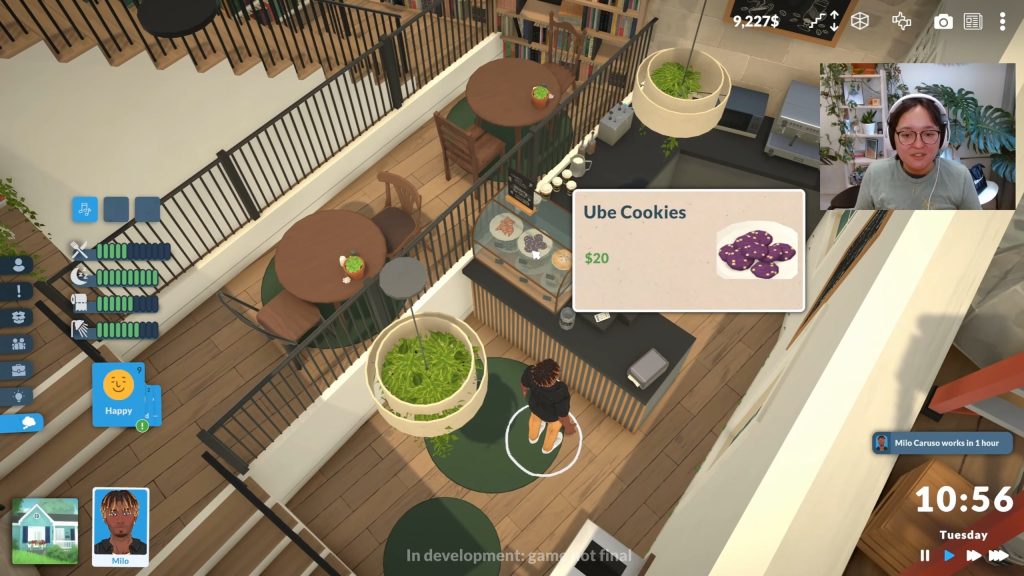
Beyond bills, Parafolk spend Paradimes at commercial venues across the open-world town. A few documented examples:
Public transportation via the PL130 bus costs 3 paradimes per trip. The bus is the only confirmed paid transport at launch; cars, bikes, and boats arrive as free updates during Early Access.
An outfit purchased at L'Armoire, the clothing store in Old Town, costs around 50 paradimes for a complete documented example.
Restaurant meals, gym memberships at Premium Gym, and furniture from Market Antiques add to weekly spend; exact prices vary by venue.
Discount system: Shops feature a discount mechanic on certain items. Discounts apply at the basic shops around town and can be combined with promotions in the Live Mode shopping flow. The full pricing model is documented under Roadmap and Planned Features and on the Town Venues page.
Managing the balance between career income, weekly bills, and daily venue spending is a core part of the Live Mode experience. See the Careers article for income figures.
Planned and Proposed Features
The developers have discussed several additional features related to the economy that are planned or under consideration for future updates:
Feature | Status | Description |
|---|---|---|
Off the Grid Lots | Planned | Special lot types that do not consume any electricity or water from the city grid. Households on these lots would rely entirely on self-generated resources. |
Tax Adjustments | Proposed | Tax rates that could affect town-level features such as festivals and public events. Higher taxes might fund more community activities. |
Power Outages | Discussed | Storms and other events could cause temporary power outages, forcing households to cope without electricity until service is restored. |
Water Production | Discussed | The developers have hinted at a possible item that could provide water, similar to how solar panels and windmills provide electricity. |
Modding
Electricity and water prices are moddable values within the modding system. This means modders can adjust the base rates for utilities, making bills higher or lower depending on the desired difficulty level. Custom mods could create scenarios where utilities are free, extremely expensive, or tied to additional gameplay systems not present in the base game.
Patch 0.1.4 Bill Fixes (June 18, 2026)
Patch 0.1.4 addressed an inflated water-bill bug: flushing toilets no longer uses too much water, which had been raising household costs on the weekly bank statement. The studio noted that other issues relating to water bills were still being investigated.
Patch 0.1.5 Bill Fixes (July 2, 2026)
Patch 0.1.5, released on July 2, 2026, fixed the renewable-energy discount. Water recyclers, wind turbines, and solar panels placed on a household terrain now reduce that household bills as intended.