

Overview
The autonomy system in Paralives determines how Parafolk behave when not receiving direct instructions from the player. Rather than standing idle or performing random actions, Parafolk make intelligent decisions about what to do based on their individual personality, skills, needs, and surroundings. The system is designed to make characters feel like they have genuine agency, choosing activities that reflect who they are as individuals.
The autonomy system is divided into four distinct types: Idle Autonomy, Forced Autonomy, Chained Autonomy, and Town Autonomy. Each type handles a different category of autonomous behavior, from everyday leisure choices to urgent need fulfillment to NPC crowd management. Together, these systems create a world that feels alive and responsive, even when the player is focused on controlling a single character.
Idle Autonomy
Idle Autonomy is the most commonly observed type. It activates when a Parafolk has nothing planned in their interaction queue for a short period, typically around 5 to 10 in-game minutes. Once triggered, the system selects an appropriate action for the character to perform based on the current context.
The selection process follows a specific sequence. First, the system scans the surroundings for objects that are available and accessible, filtering out anything behind blocked paths or already in use by another character. If the Parafolk has an urgent need (such as low hunger or bladder), the system prioritizes an action that fulfills it. If all needs are in a healthy range, the system moves on to scoring potential actions based on the character's identity.
Action scoring takes into account the Parafolk's Talent traits, current skill levels, and personality traits. A musically talented Parafolk with high piano skills, for instance, is significantly more likely to choose to play the piano. To keep behavior feeling natural and not perfectly predictable, a small amount of randomness is introduced: the game selects one of the top three scored actions rather than always picking the single highest-scoring option.
There is also a diminishing-returns mechanism. If a Parafolk has already performed a particular activity extensively that day, the score for that action decreases. This prevents characters from obsessively repeating the same task and encourages variety in their daily routines. A skilled musician might play the piano in the morning but choose to read or cook in the evening instead.
Forced Autonomy
Forced Autonomy covers situations where the game interrupts or cancels a Parafolk's current actions because something more important demands attention. This type of autonomy overrides whatever the character is currently doing, whether it was player-directed or the result of Idle Autonomy.
Common triggers for Forced Autonomy include:
Going to work: When it is time for a Parafolk's shift to start, the game will interrupt their current activity and send them to their workplace.
Urgent needs: If a critical need (such as bladder or energy) drops to a dangerously low level, Forced Autonomy takes over to prevent negative consequences.
Social boundaries: A Parafolk might leave a group activity or refuse to participate if they do not know the other participants well enough.
Sleep: When exhaustion reaches a critical point, the Parafolk will stop what they are doing and go to bed.
Forced Autonomy ensures that essential life events and obligations are not missed, even if the player is busy directing another character or has forgotten about an upcoming commitment.
Chained Autonomy
Chained Autonomy handles automatic follow-up actions that logically follow from a previous interaction. Instead of requiring the player to manually queue every small step of a routine, the system recognizes natural sequences of behavior and chains them together.
The most commonly cited example is a neat Parafolk automatically washing their hands after using the toilet. The player does not need to direct this; the system recognizes that the Parafolk's personality includes a tidiness trait and chains the handwashing action onto the end of the bathroom interaction. Similarly, neat Parafolk will prioritize teeth brushing whenever appropriate.
Chained Autonomy is personality-driven, meaning different Parafolk will chain different follow-up actions based on their traits. A messy Parafolk, for instance, would not automatically wash their hands after using the bathroom. This adds a layer of characterization to everyday routines and makes each Parafolk feel distinct in how they handle mundane tasks.
Town Autonomy
Town Autonomy manages all non-player characters (NPCs) across the open world. While the player focuses on their household, the rest of the town's population needs to behave believably. Town Autonomy handles this by placing NPCs in logical or interesting spots around town throughout the day.
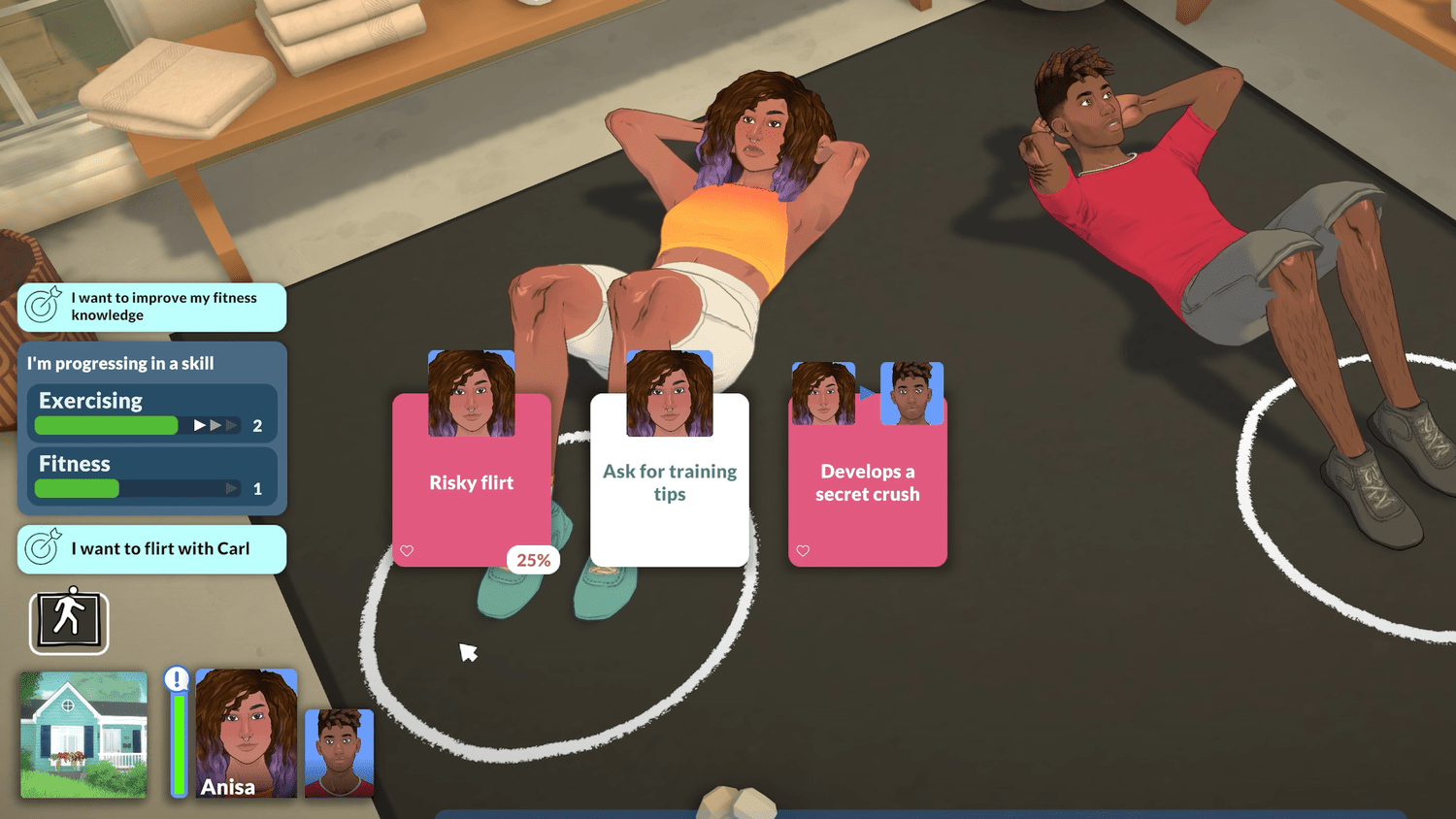
This means that when a player's Parafolk visits a commercial lot, park, or other public space, they will find other characters already there engaging in contextually appropriate activities. NPCs at a cafe might be eating, characters at the gym might be exercising, and people in the park might be relaxing or socializing. Town Autonomy keeps the world feeling populated and active rather than empty and static.
Toggle Controls
Players have fine-grained control over the autonomy system. Autonomy can be toggled on or off for the currently selected Parafolk and for other characters in the household separately. This allows a range of playstyles:
Players who want full control can turn off autonomy for all household members and manually direct every interaction.
Players who prefer a more hands-off approach can leave autonomy on for the entire household and watch their Parafolk live their lives.
A common middle ground is to turn off autonomy for the actively selected Parafolk while leaving it on for the rest of the household, so other family members manage themselves while the player focuses on one character.
The toggle system ensures that the autonomy feature enhances gameplay for all types of players rather than forcing a single approach to character management.
Comparison with Other Life Simulations
The Paralives autonomy system addresses a common criticism of other life simulation games. In some competing titles, characters tend to gravitate toward the same handful of activities when left to their own devices, regardless of their individual traits or developed skills. A character with maxed-out painting skill might spend their free time playing video games instead of painting, which breaks immersion.
Paralives tackles this by tying autonomous behavior directly to each character's identity. Skilled musicians play instruments, neat characters keep things tidy, creative Parafolk engage in artistic activities, and social characters seek out conversations. The randomness element (picking from the top three actions rather than always the single best) prevents behavior from feeling robotic while still keeping it consistent with the character's personality.
The system was first publicly demonstrated in August 2023 through a short publicly released video showing a Parafolk autonomously using the bathroom. The full details of the four autonomy types were revealed in a developer post by Alex Masse and further covered during the November 2025 gameplay stream.