
Progression in Gothic 1 Remake is trainer-driven. The Hero begins untrained, and Alkimia Interactive has stated that the remake's skill system remains close to the 2001 original. Stats and combat skills go up only when a qualified trainer teaches the Hero.
How Progression Works
Kill and quest for experience. Combat, hunting, and quest completion generate experience. Each level grants 10 Learning Points, which the Hero can spend with trainers.
Trainers convert experience to power. Raw experience does not directly raise stats. The Hero has to spend time with a trainer who teaches the specific improvement.
Camp choice shapes access. Which camp the Hero joins determines which trainers are friendly, and therefore which skills are easier or harder to reach.
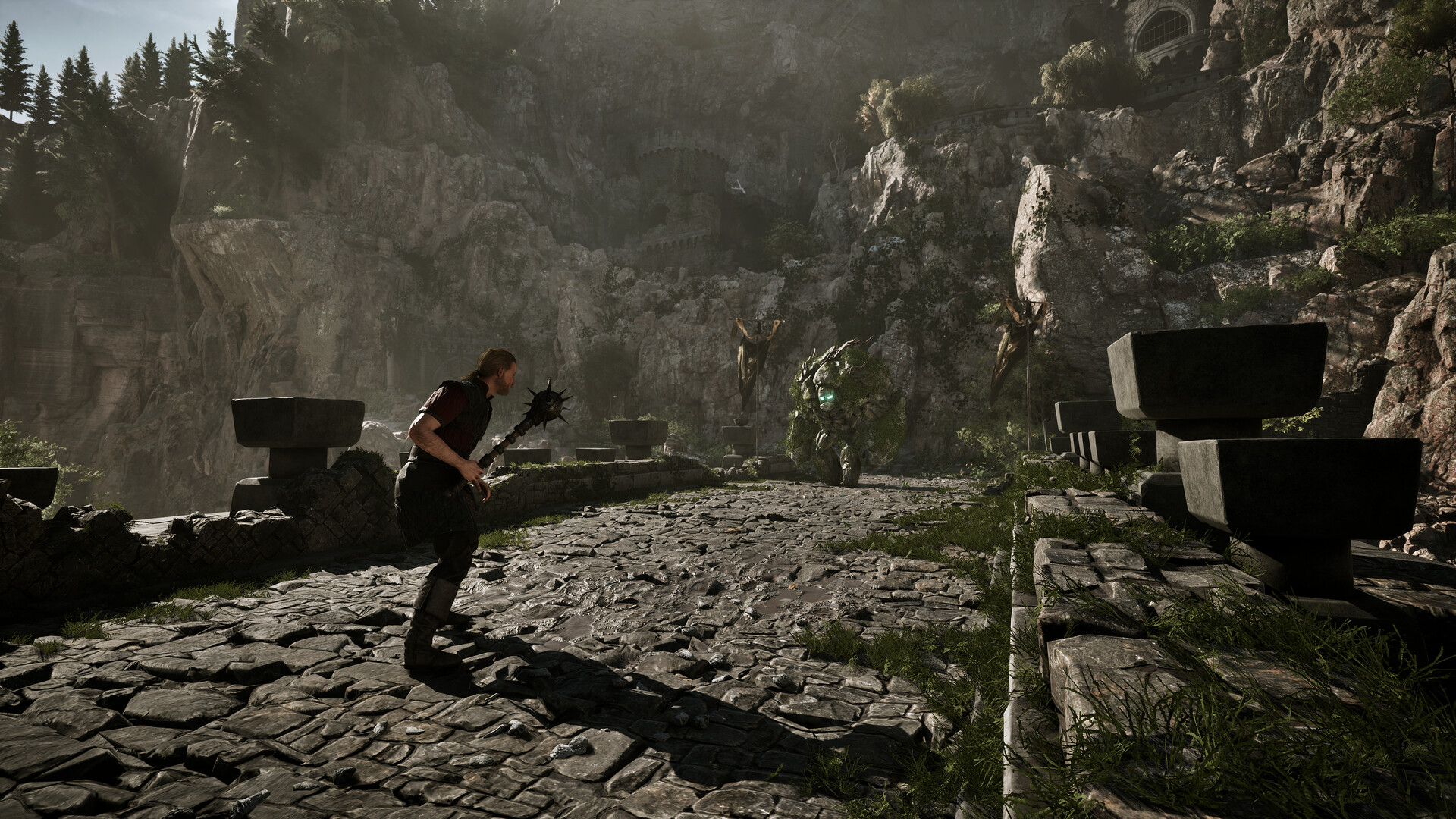
Weapon Skill Tiers
Each weapon type has three trainer-taught tiers in the remake: Beginner, Trained, and Skilled. Progressing through the tiers visibly changes the Hero's stance, speeds up attacks, and unlocks longer combo chains. See Combat System for the tier-by-tier breakdown.
Skill Matters, but Player Skill Matters More
Alkimia has publicly stated that a sufficiently skilled player can complete the entire game at level one. That is possible because the combat system rewards reading enemy telegraphs, positioning, and parry timing over raw stats. A low-level Hero with a good read on enemy patterns can out-play a higher-level Hero who only pushes buttons. Two specific systems back this up:
Headshots are critical hits regardless of skill. Bow and crossbow users get full critical-hit damage on headshots from Beginner tier onward, so careful aim beats raw bow stats.
Parry and dodge work without training. The parry and dodge buttons are available from the start. Training tightens their timing windows and adds cancel options, but the baseline defensive loop is immediately available.
Patch 1.0.4 (July 31, 2026) fixed two experience inconsistencies: finishing enemies with magic or the interaction button now awards experience the same as other kills, and killing downed enemies with arrows or spells now yields experience.
Non-Combat Skills
Lockpicking. Confirmed preserved, but Alkimia has stated the mechanic will be "presented differently" in the remake than in the 2001 original, using a layered-pin mini-game.
Forging. The weaponsmithing system has been expanded for the remake. See Forging and Arrows.
Cooking. The food and cooking systems are also expanded compared to 2001, with more ingredients and recipes.
Magic. Requires focus on a mage path through one of the camps. See Magic and Runes.
Orcish Language. A full language learn-over-time progression that unlocks new dialogue and quest paths with Orc NPCs. See Orcish Language.
No Free Ride
Gothic is designed so that raw grinding without a trainer does not pay off. The Hero can accumulate experience for days and stay weak until he finds the right teacher. That constraint is what forces exploration and camp-politics engagement.
Max Level and Leveling
There is no hard level cap. The Nameless Hero keeps gaining experience and levels as long as there are enemies to kill and quests to finish, so your ceiling is really how much content you clear. A completed campaign typically lands an end-game build somewhere around level 30 to 35.
Because every point still has to be spent through a trainer, the practical limit is how much ore and experience you bank, not an arbitrary cap. Focus early levels on Strength or Mana and one weapon line rather than spreading thin.
Early training costs
Learning Points and ore pay for different parts of training. Check the teacher's dialogue before spending: a weapon upgrade, an attribute increase, and a utility lesson are separate purchases.
Lesson | Teacher | Cost |
|---|---|---|
One-handed first upgrade | Scatty or Cord | 10 Learning Points and 50 ore |
One-handed second upgrade | Scatty or Cord | 20 Learning Points and 200 ore |
Two-handed first upgrade | 30 Learning Points | |
Two-handed second upgrade | 40 Learning Points | |
Acrobatics | Buster in the New Camp | 10 Learning Points and 60 ore |
Climbing | Swamp Camp climbing trainer | 5 Learning Points |
Novice Magician | Torrez after The Price of Magic | 5 Learning Points |
Acrobatics adds a dodge roll and halves fall damage. Climbing opens routes marked with a Climb Wall prompt. Novice Magician allows basic rune use before committing to a mage faction.
Hunting lessons
Skill | Teacher or requirement | Cost or reward |
|---|---|---|
Take Skull Armor | Bring Bestiary of Khorinis I to Cavalorn and answer his questions correctly | Free hunting lesson; find the book in Jan's hut or buy it from Fisk for 5 ore |
Remove Teeth | Drax or Aidan | 1 Learning Point and 175 ore |
Remove Fur | Drax or Aidan | 1 Learning Point and 250 ore |
Remove Claws | Drax or Aidan | 1 Learning Point and 150 ore |
Removing fur supplies Wolf's Skin for the Scavenger saddle. Hunting lessons add usable trophies to creature loot, but learning a lesson does not make the creature itself easier to defeat.
Experience from Escorts
An escort can earn you experience while your guide deals with wildlife on the route. Baal Parvez and Mordrag are useful early examples. Ordinary guards killing nearby creatures generally do not grant the same experience, so their protection is a way to survive rather than a dependable training method.
Wildlife can return as time passes, and encounters also change as the story advances. Clear a route when you can handle it, but keep quests and trainer access as the basis of progression rather than relying on an exact respawn timer.