

Gothic 1 Remake’s combat is a modernised take on the original Gothic’s deliberate, tactical style. Alkimia Interactive has stated the system is based on the 2001 reference rather than the 2019 playable teaser, which used a different approach that was later dropped. Melee, ranged, and magic are all first-class combat pillars. A combat-changes development post in November 2025 documented a major rebalance, with shortened buildup animations, weapon-type-specific specials, and accessibility options for combo timing.
No Stamina Bar
The remake deliberately omits a stamina or endurance meter. The combat designers describe fights as "windows of opportunity and positioning": pressure comes from enemy telegraphs, recovery frames, and spacing rather than from a resource gauge. A skilled player can complete the game at level one, because the system rewards read-and-react play over raw stats.
No Archetypes
There is no class selection at the start of the game. The Hero spends experience points on Trainers who teach weapon skills, magic circles, and utility knowledge. Build identity is defined entirely by which trainers the Hero pursues, which camp admits them, and which runes and scrolls they collect. In theory, the Hero can attack a teacher before taking a single lesson; the game does not gate the option, it only makes it extremely hard.
Weapon Skill Tiers
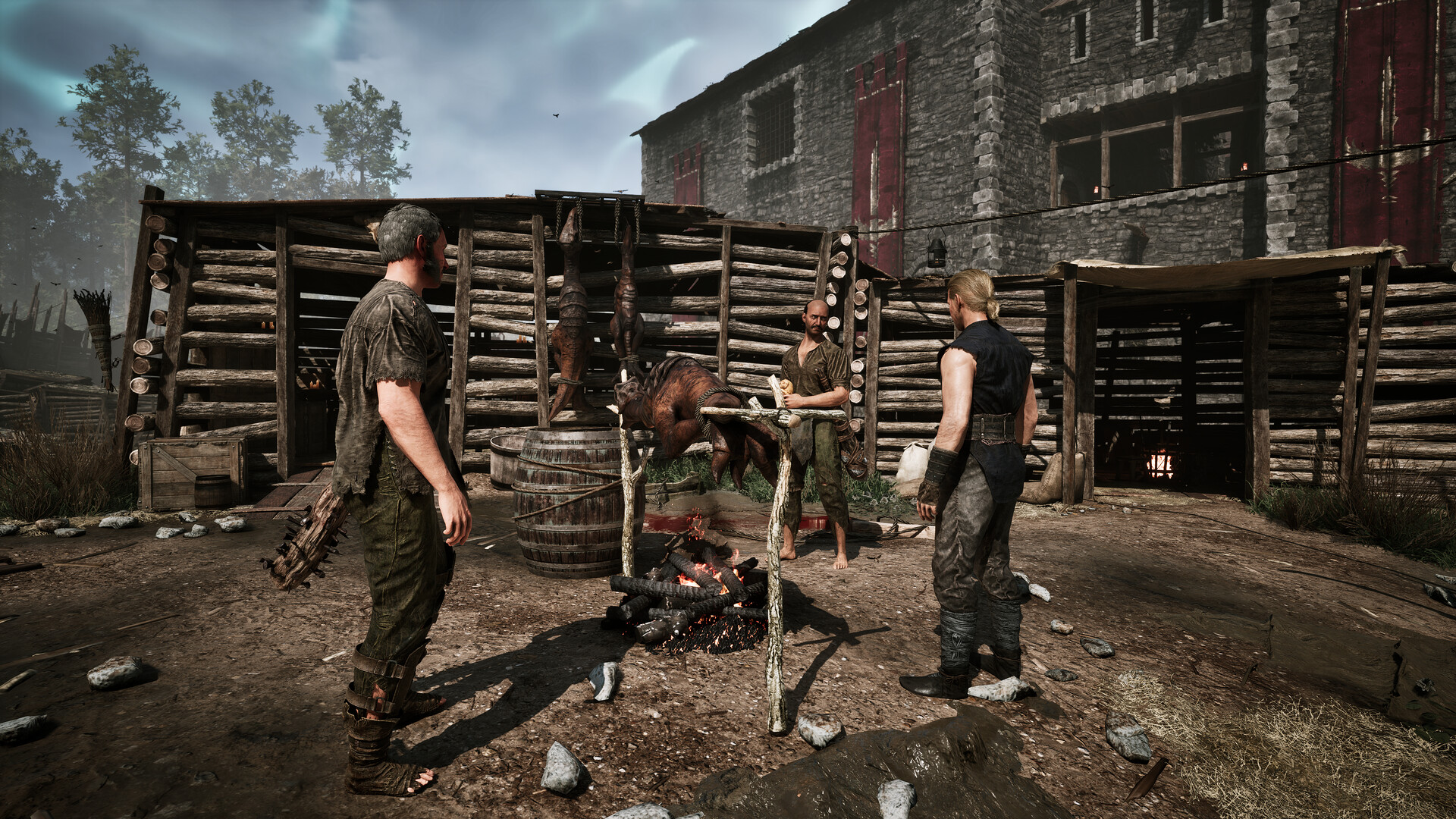
Each weapon type (sword, two-handed weapon, Bow, crossbow) has three trainer-taught skill tiers. Progressing up each tier changes the Hero’s visible stance, speeds up attacks, and unlocks longer combo chains.
Tier | What changes |
|---|---|
Beginner | Default stance and animations; short, single-press attacks; no combos yet. A newly arrived Hero visibly struggles with a one-handed sword and holds it with both hands. |
Trained | Tighter posture, faster buildup and recovery; longer combo chains unlock; dodge and block can interrupt animations. |
Skilled | Full combat posture with the sword held close to the body; fastest attack speeds; longest combos; best access to finisher animations. |
November 2025 Rebalance
A combat-changes development post in November 2025 outlined the rebalance heading into the launch build. The reshape was framed as a response to roughly 15,000 player surveys collected after the prologue demo plus hands-on impressions from the 2025 trade-fair circuit. The post made clear the system is still based on the original Gothic feel rather than a modern action-RPG framework; the changes are about tightness and readability, not philosophy.
- Shortened buildup animations. The wind-up phase before each attack lands is shorter, so attacks feel responsive without losing the deliberate timing the original is known for.
- No more movement-to-attack stop. The animation transition from moving to attacking no longer halts the Hero for a frame, which removes the small "stuck" feeling earlier builds had.
- Attack-direction choice. The player can now choose the direction of the next attack rather than relying entirely on stance and target position. Combined with the lock-on camera, this gives more deliberate hit placement.
- Weapon-type-specific specials. A sword does not feel like a club. Each close-combat weapon type has its own look, recovery, and signature animation, including dedicated specials at higher mastery.
- Mastery-driven animations. The animation set and the abilities available evolve as the Hero’s weapon mastery climbs. The earliest swings look untrained; the Skilled tier looks like a professional.
- Accessibility combo toggle. An option to loosen or remove the strict combo-timing requirement. With the option on, manual cadence is forgiven so chains can land more easily. See Languages and Accessibility for the full accessibility list.
Defensive Flow
- Lock-on camera. A proper lock-on keeps enemies framed during melee. Early pre-release builds lacked it; the release build commits to it.
- Parry and riposte. A well-timed block triggers a parry with a dedicated riposte animation.
- Directional dodge. Dodge back or sideways. At Trained or Skilled tiers, dodge can interrupt an in-progress attack buildup or recovery.
- Finishers. Combo chains can end in dedicated finisher animations capable of knocking enemies down. Enemies can similarly knock the Hero down with their own finishers.
Movement Rules
- The Hero cannot sprint or jump with a weapon drawn. Combat is committed: switching to a weapon means committing to the combat state until the weapon is sheathed.
- Combos do not auto-chain. Each follow-up attack in a combo requires the correct attack-button press at the correct moment. Mistimed or mis-pressed inputs drop the chain back to a single-hit attack, unless the accessibility combo toggle is on.
Ranged Combat
Ranged combat uses Bow and crossbow, both of which require their own trainer progression. Headshots register as critical hits regardless of the Hero’s bow skill, so positioning and aim matter even before the skill investment. The bow can be drawn to full extension for maximum damage at range. See Forging and Arrows for arrow types and ammunition crafting.
Magic
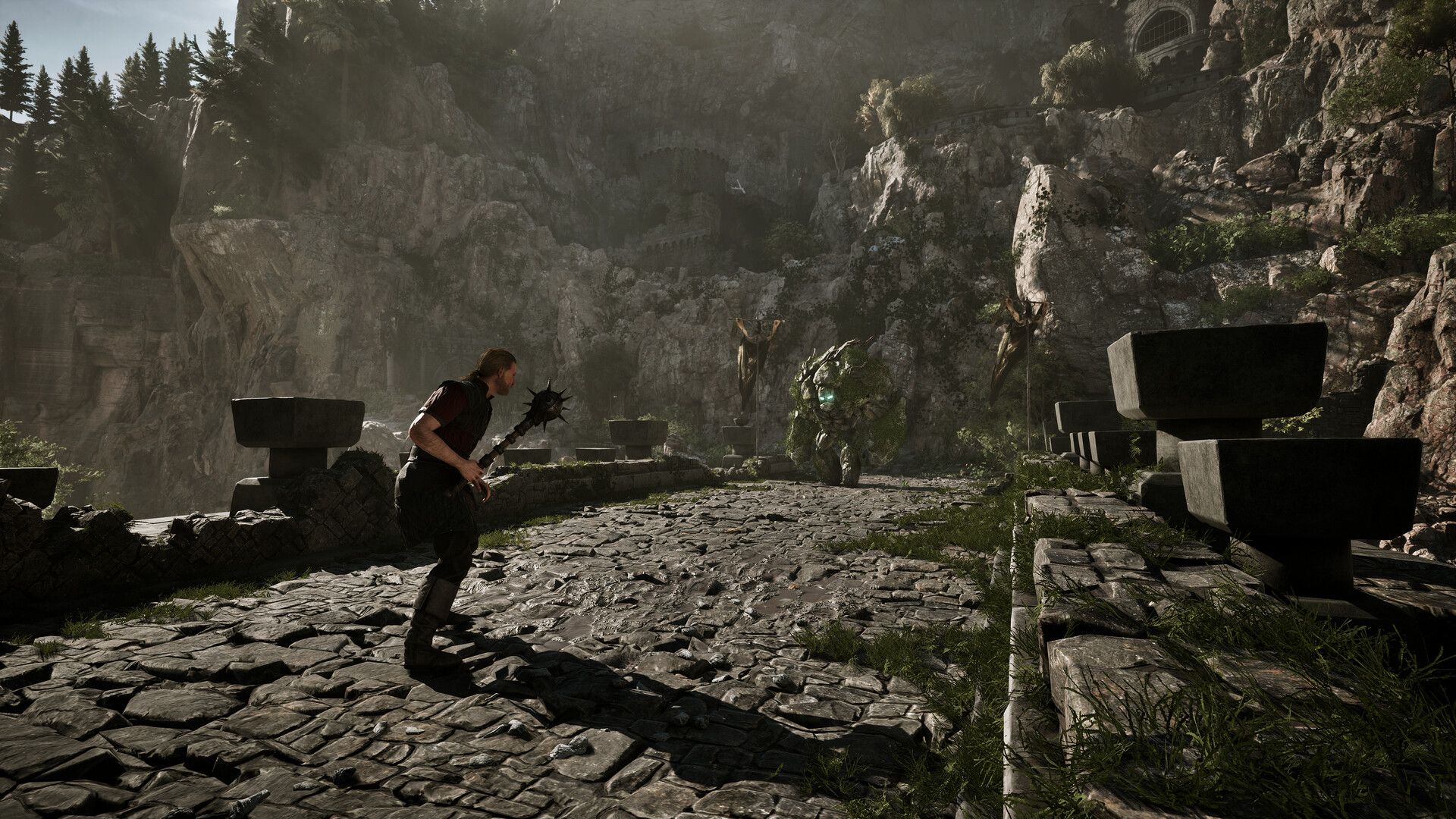
Magic is handled through runes and scrolls. See Magic and Runes for the full breakdown of the circle-of-magic ladder and scroll usage. Spell effects include damage, telekinesis, mind control, sleep, fear, protection, and healing. Several spells interact with the environment:
- Rain dampens fire. Fire spells land softer during rain.
- Freezing amplifies blunt damage. Frozen enemies take more damage from blunt weapons and finishers.
- Skeleton and minion summons. Necromantic spells call minions that fight alongside the Hero.
- Transformation spells. The Hero can turn into a wolf, lurker, or harpy for movement and stealth, trading combat options for traversal.
Armour Philosophy
The remake preserves the original’s No Shields, No Helmets philosophy. Shields are not a player-equippable item and the Hero cannot equip helmets, although some NPCs are modelled with them.
Torch Handling
A Flaming Torch is a held light source rather than an attached accessory. It cannot be sheathed; performing most actions drops it, and the torch must burn out on the ground before it can be picked back up.
Post-Demo Combat Tuning
After the Nyras Prologue Demo went public in early 2025, the studio collected roughly 15,000 player feedback surveys and used them to tune combat pacing. The PC demo was re-patched ahead of the console release with faster combat animations and improved hit registration. The November 2025 development post is the most recent public statement of the system going into the launch build.
Final Combat Showcase
The final development diary on the combat system, published shortly before launch, ran roughly seventeen minutes of gameplay and restated the combat pillars: refined melee, magic, and enemy encounters that keep the brutal, deliberate feel of the original. The studio framed melee weapons as distinct categories, each with its own swing weight and tactical pacing, naming swords, axes, maces, and spears. In this framing the rigid one-handed versus two-handed split from the original game gives way to weapon families that the Hero masters through use, so the same investment that smooths a sword's swing also unlocks new combos for it.
Healing is split into two channels. Food restores health gradually out of combat, while potions deliver an instant heal during an active fight, so stocking both matters before a hard encounter. The reworked enemy AI leans on this: creatures of different species can form collaborative hunting packs and show clear warning states before they commit to an attack, so reading telegraphs and managing spacing against a group is the core survival skill rather than trading blows. Magic is organised into three schools, with runes that can freeze a target or summon skeletal minions mid-battle.
See Also
Experience and Skills for stat progression. Magic and Runes for the magic ladder. Forging and Arrows for ranged ammunition. Trainers for the trainer roster. Languages and Accessibility for accessibility options.
Difficulty Settings
You pick a difficulty when you start a new game, and it cannot be changed afterward. Optional modifiers let you tune the combat flow or raise the stakes with permadeath.
Difficulty | Effect |
|---|---|
Novice | Enemies are weaker ; Traders offer better deals ; Gain experience faster |
Gothic | Balanced Gothic experience ; Moderate challenge ; Fair progression rate |
Hard | Enemies are tougher ; Traders are less generous ; Experience gain is slower |
Custom | Customize individual difficulty aspects for combat, resources, and progression |
Optional Modifiers
Modifier | Effect |
|---|---|
Close Combat Flow Helper | If activated, it's not required to use the correct follow-up attack; instead, the combat flow continues with any attack used. However this doesn't trigger an actual combo. This option is not recommended for hardcore players. Available in all Difficulties |
Permadeath | When enabled, character death is permanent and cannot be reversed. Your progress will be lost upon death, requiring a complete restart of your journey. Not available in Novice |