Loading...
Loading...
Critical Reception
March 24, 2026 at 03:56 AM
March 24 update: Add Intel Arc GPU support reversal to Post-Launch Response
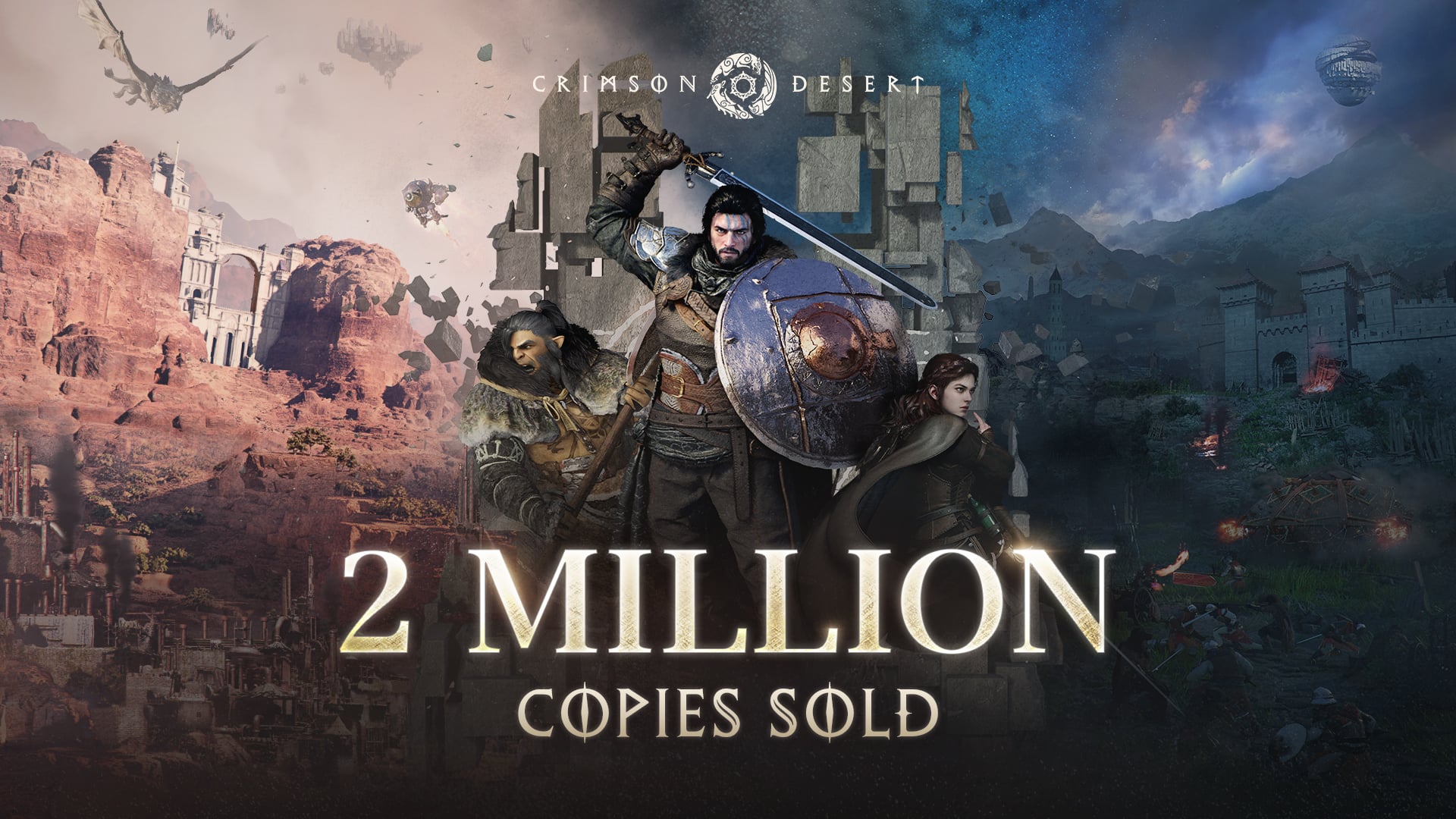
Crimson Desert, developed by Pearl Abyss using its proprietary BlackSpace Engine, launched on March 19, 2026 to a polarized critical reception. The game debuted with a Metacritic aggregate score of 78 out of 100 based on 93 critic reviews, placing it in the "Generally Favorable" category. On OpenCritic, the game earned a top critic average of 79 out of 100, ranking in the 79th percentile of all scored games, with a "Strong" rating and 79% of critics recommending it. Despite divisive critical sentiment, the game was a major commercial success, selling over 2 million copies within its first 24 hours across all platforms.
The gap between the highest and lowest review scores was one of the widest of any major 2026 release. Some outlets awarded perfect 10/10 scores for the game's combat depth and open-world ambition, while others handed out scores as low as 4.5/10, citing clunky controls, an opaque UI, and a narrative that failed to match the scope of the world. The review spread prompted significant debate among players, industry observers, and investors alike, with Pearl Abyss stock dropping nearly 30% on the day the review embargo lifted.
Platform | Score | Details |
|---|---|---|
Metacritic (PC) | 78 / 100 | 93 critic reviews (72% positive, 27% mixed, 1% negative) |
OpenCritic | 79 / 100 | 79th percentile; "Strong" rating; 79% of critics recommend |
Steam (User) | Mostly Positive | Approximately 73% positive across 12,000+ reviews (improved from "Mixed" at launch) |
The following table lists review scores from a cross-section of outlets, ranging from enthusiastic to critical. Scores are normalized to their original scale. All launch reviews were based on the PC version, as no PlayStation 5 or Xbox Series X|S review codes were provided to outlets before release.
Publication | Score | Summary / Quote |
|---|---|---|
Gameliner | 10 / 10 | Perfect score |
The Outerhaven | 10 / 10 | Perfect score |
Forbes | 9.5 / 10 | "The answer, for me, is unequivocally yes." Paul Tassi praised the unprecedented scale and said he was "never bored" across 100+ hours. |
DualShockers | 9.5 / 10 | Praised seamless exploration and unparalleled world detail |
GamingTrend | 9.5 / 10 | Called it a standout action RPG experience |
ComicBook | 9 / 10 | Highlighted the combat and world as exceptional |
Hardcore Gamer | 9 / 10 | Strong praise for boss encounters and exploration |
Steam Deck HQ | 9 / 10 | Ran well on Steam Deck with solid performance |
MMORPG.com | 8.5 / 10 | "Beautiful and brutal from start to finish." |
Destructoid | 8.5 / 10 | "Vast, violent, and impossible to put down." |
GamesRadar+ | 8 / 10 | "Take time to leave the beaten path and you'll find a game that's far better as a sandbox than as a story." |
GameRant | 8 / 10 | Noted foundational potential with room for polish |
PC Gamer | 80 / 100 | "Vast and obtuse in a way that will frustrate some and exhilarate others." |
Hobby Consolas | 80 / 100 | Praised scope and visual ambition |
TheGamer | 4 / 5 | "A Deeply Flawed Diamond." 150-hour review praised combat and world but cited accumulated frustrations over dozens of hours. |
Tom's Guide | 4 / 5 | Positive overall despite control and UI issues |
Screen Rant | 70 / 100 | "Crimson Desert may be the victim of its own ambition." |
Game Informer | 7 / 10 | "Open-world overload." Identified systems that need streamlining. |
GameSpot | 7 / 10 | "Spectacular open world and thrilling combat." Criticized inventory management as "frustrating and intrusive." |
CG Magazine | 7 / 10 | Good foundation with notable rough edges |
IGN | 6 / 10 | "The highs have been very high, and the lows have been very low." Review in progress after 110+ hours; Travis Northup had not finished the game at time of embargo. |
PC Games N | 6 / 10 | "A beautiful, shallow world." |
Eurogamer | 3 / 5 | Technically proficient combat but "fatally undercooked characters" and story |
VG247 | 3 / 5 | Mixed on storytelling and system clarity |
Critical Hits | 4.5 / 10 | Among the lowest scores in the review spread |
Reviewers consistently praised several aspects of Crimson Desert across the critical spectrum:
Visual Fidelity: The BlackSpace Engine was widely lauded for delivering jaw-dropping graphics, detailed environments, and cinematic presentation that set a new benchmark for open-world games. Multiple outlets described Pywel as one of the most visually striking game worlds to date. NotebookCheck called the visuals "a technical tour de force," and many reviewers singled out the physics system and environmental detail as best-in-class.
Combat System: The kinetic, action-driven combat was highlighted as the game's strongest feature. Many reviewers praised the variety of weapon types, the boss fight design, and the Watch and Learn skill acquisition mechanic. Forbes called the combat "spectacular," and multiple outlets compared it favorably to top action RPGs in the genre. Destructoid described the combat as making the game "impossible to put down."
World Design and Exploration: The massive open world of Pywel was praised for its scale, visual diversity, and density of secrets. Traversal mechanics including horse riding, climbing, and Force Palm mobility were seen as engaging. GamesRadar advised players to "leave the beaten path" to find the best content, and multiple critics noted that the map rivals or exceeds the size of other major open-world titles.
Boss Encounters: The challenging, multi-phase boss fights were a highlight for many critics, with several calling them among the best in the genre. Boss variety and the spectacle of encounters like dragon fights received consistent mention. Hardcore Gamer gave a 9/10 in part because of these encounters.
Sandbox Freedom: Several reviewers praised the sheer volume of activities and systems available, including crafting, gathering, housing, fishing, and various minigames. Forbes noted that the game "really is that big and really does play that well." The breadth of content was often cited as a major value proposition for the $69.99 base price.
The areas most frequently criticized include:
Controls: This was the single most cited complaint across both critic and player reviews. Multiple outlets described the controls as clunky, unresponsive, or unintuitive, particularly on keyboard and mouse. The interact button and jump button sharing the same input caused frequent accidental actions. Nearly every action required either a double-tap or multi-second button hold, and sprinting was bound to the Shift key as a toggle requiring repeated tapping rather than a simple hold. Healing items were mapped to the F3 key, requiring players to reach across the keyboard during combat. At launch, there was no option to fully remap controls, and core keybindings were locked. Several reviewers recommended playing with a controller for a smoother experience. Kotaku noted that the controls were "the one thing" all Steam reviewers agreed on regardless of their overall score.
Narrative: The main story following Kliff and the Greymanes was described by several critics as hollow or underdeveloped. Eurogamer cited "fatally undercooked characters," and multiple reviewers noted a disconnect between the narrative ambition and the execution. PC Games N described the world as "beautiful" but "shallow." GamesRadar explicitly stated the game was "far better as a sandbox than as a story."
UI and Menus: The user interface was widely criticized for being unintuitive and overwhelming. Inventory management, menu navigation, and on-screen button prompts were singled out. GameSpot specifically called out the inventory system as "frustrating and intrusive." The game's restrictive inventory did not allow players to store unused items, forcing constant management.
Accessibility and Clarity: PC Gamer described the game as "dense and cryptic," requiring significant effort to understand its systems. The lack of clear tutorials for many mechanics was a common thread. Before launch, Pearl Abyss had already simplified one puzzle after reviewers repeatedly got stuck on it. The game's complexity was seen as either a strength or a flaw depending on the reviewer, contributing directly to the wide score spread.
Quest Design: Repetitive quest structures and fetch quests were noted as a weakness, particularly in side content. Game Informer described the game as "open-world overload" and called for system streamlining. Several outlets felt the mandatory main quests did not play to the game's strengths as a sandbox.
Technical Issues: Some reviewers reported performance issues, bugs, and stability problems at launch. Intel Arc GPUs were entirely unsupported at release, a decision that was not disclosed on the game's store pages until just days before launch. Pearl Abyss initially directed affected Intel Arc users to "refer to the refund policy." Intel publicly responded that it had reached out to Pearl Abyss "many times" over several years, providing "early hardware, drivers, and engineering resources" across multiple GPU generations including Alchemist, Battlemage, Meteor Lake, and Lunar Lake. The lack of support affected millions of users with Intel integrated and discrete graphics. Many other technical issues were addressed by the day-one patch.
Steam user reviews opened at a "Mixed" rating, with nearly 5,000 negative reviews posted in the first 12 hours of availability. The overall positive percentage sat at approximately 58% when including all languages, though English-language reviews trended higher at around 66-67% positive. Common player complaints mirrored critic concerns around controls, UI friction, and lack of tutorials. The shared interact/jump button mapping was one of the most cited frustrations.
The game peaked at 239,045 concurrent players on Steam within hours of launch, placing it among the top 3 most-played games on the platform at the time and making it the third-largest launch among 2026 newcomers on Steam.
Many positive reviews praised the combat depth, world design, boss encounters, and overall value proposition. Several players compared the learning curve favorably to titles like Elden Ring, arguing that the initial difficulty gave way to a deeply rewarding experience once the controls clicked. A common theme among positive reviews was that the game "grew on you" significantly after the first 10 to 15 hours.
The game's Steam rating improved steadily over its first week. By approximately three days after launch, reviews had climbed from "Mixed" (58% positive) to "Mostly Positive" (approximately 73% positive across 12,000+ reviews), suggesting that players who stuck with the game past the initial learning curve found substantially more to enjoy. This upward trajectory aligned with the common reviewer observation that Crimson Desert rewards patience and exploration.
Despite mixed reviews, Crimson Desert was a significant commercial hit:
Over 2 million copies sold within the first 24 hours (approximately 16 hours by some reports) across PC (Steam, Epic Games Store), PlayStation 5, and Xbox Series X|S.
239,045 peak concurrent players on Steam at launch, placing it among the highest single-day peaks for a paid game in 2026.
The game debuted as the #1 top-selling title on Steam, with over 3 million wishlists recorded on Steam alone before launch. An estimated 400,000 pre-orders on Steam generated over $20 million in revenue before the game even launched.
It ranked #4 in the US PlayStation Store by dollar sales, behind only MLB The Show 26, NBA 2K26, and Fortnite.
The game launched simultaneously on PC, PlayStation 5, and Xbox Series X|S at a $69.99 base price, with a Deluxe Edition available at $79.99.
Pearl Abyss's stock price plummeted by nearly 30% (from approximately 65,600 KRW to 46,000 KRW per share) within hours of the review embargo lifting on March 19. The decline wiped out over one billion dollars in market value in a single trading session.
Pearl Abyss stock had surged roughly 53% between late December 2025 and late January 2026 after the company announced the game had gone gold, eventually reaching an all-time high of 68,500 KRW on March 16, just three days before launch. Institutional investors had effectively priced in "Game of the Year" caliber scores of 90 or higher, so the actual critical consensus of 78 triggered an aggressive sell-off despite the game's record commercial performance.
The stock market reaction highlighted a disconnect between commercial success and critical aggregation. While 2 million copies sold in 24 hours represented one of the strongest launches in the action RPG genre, investors had been pricing in critical acclaim that did not materialize to the degree expected. Market analysts noted that a Metacritic score of 78 is still a "Generally Favorable" rating, and that the sell-off was disproportionate to the actual review consensus. The incident sparked broader industry discussion about investor expectations around Metacritic scores and their relationship to actual commercial viability.
Pearl Abyss responded to the reception by pledging to "listen closely to the wide range of feedback shared by the community and work to make improvements quickly." The day-one patch (Version 1.00.02) addressed several widely criticized issues:
A new tutorial quest at the start of Chapter 3 to teach players about Abyss Gears.
A fast-forward mechanic for recently viewed cutscenes, addressing pacing complaints.
Boss balance adjustments, including removing the bear's instant-kill damage and adjusting the Tenebrum fight so dying no longer forces replaying the preceding puzzle section.
A new finishing blow for Kliff, plus new follow-up skills for Damiane and Oongka.
Skill menu organization improvements and Housing mode usability fixes.
When first asked about the control complaints, Pearl Abyss marketing director Will Powers responded on X (formerly Twitter) by saying "Think of it like riding a bike, it comes naturally after you learn it. Just takes a minute." This statement generated immediate backlash, with many players and commentators viewing it as dismissive of legitimate accessibility concerns. Others pointed out that the "riding a bike" analogy typically refers to returning to a familiar skill, not struggling to learn unintuitive controls from scratch.
Two days after launch, on March 21, Pearl Abyss issued a formal apology for the control issues, specifically apologizing "for not providing keyboard and mouse players with a satisfactory gameplay experience." The team confirmed they were "currently preparing a patch" to address control discomfort and indicated they were actively tracking feedback across livestreams, community forums, and bug reports. No specific timeline for the patch was provided.
The studio has indicated that additional updates are planned, including a potential Photo Mode and New Game Plus. Pearl Abyss confirmed it is actively reviewing player concerns, though no detailed roadmap or update schedule has been publicly announced. The speed of the day-one hotfix and pre-launch puzzle simplification suggested the team is responsive to feedback, even as the community waited for the promised control overhaul.
The handling of Intel Arc GPU compatibility became one of the most visible post-launch controversies. At launch, Crimson Desert would not start at all on Intel Arc hardware, and Pearl Abyss's FAQ directed affected users to "refer to the refund policy of the platform where the game was purchased." Intel publicly revealed through Tom's Hardware that it had reached out to Pearl Abyss "many times" over several years, providing early hardware, drivers, and engineering resources across Alchemist, Battlemage, Meteor Lake, and Lunar Lake generations. Intel described itself as "hugely disappointed" by the situation.
The story generated widespread coverage from WCCFTech, Tom's Hardware, PC Gamer, Sportskeeda, and VideoCardz, with the gaming community criticizing Pearl Abyss for excluding an entire GPU vendor without disclosing the incompatibility on the Steam store page before launch. On March 23, four days after launch, Pearl Abyss reversed its position. The studio stated: "We are currently working on compatibility and optimization support so that Crimson Desert can also be enjoyed on Intel Arc GPU systems." Pearl Abyss apologized for the "confusion" caused by its earlier FAQ wording. As of March 24, the game can launch on Intel Arc GPUs, though with performance drops and stability issues while full optimization work continues. Intel confirmed it is "ready to assist" Pearl Abyss with the effort.
The divisive reception prompted a wave of harassment directed at critics who gave the game lower scores. Multiple gaming outlets reported that their reviewers received targeted abuse on social media. OpenCritic noted that some review scores were "deemed unacceptable by vocal segments of the gaming community, with reviewers harassed and websites disparaged." TheGamer published an editorial titled "Defending Crimson Desert's Metacritic Score Is The Last Hill You Should Be Dying On," arguing that attacking reviewers over review scores was counterproductive and that a 78 Metacritic score still represents a genuinely good game. The harassment drew parallels to similar incidents around other divisive launches in the gaming industry.
Crimson Desert's reception drew frequent comparisons to other ambitious but polarizing open-world launches. The combination of record-breaking first-day sales with mixed critical scores placed it in unusual company. The wide review score spread, with outlets awarding everything from 4.5/10 to 10/10, underscored fundamental disagreements about the game's design philosophy and the degree to which its complexity counted as a strength or a flaw.
The stock market crash following the review embargo became a story in itself, receiving coverage from mainstream financial outlets and prompting broader industry discussion about the outsized influence of Metacritic scores on investor behavior. Multiple analysts noted that Pearl Abyss's commercial results, with 2 million copies sold in under 24 hours, were exceptional by any measure, yet the stock continued to trade well below its pre-review levels in the days following launch.
The trajectory of Steam user reviews from "Mixed" to "Mostly Positive" within the first week became a notable data point in discussions about whether aggregate scores at launch accurately reflect a game's long-term reception. Several commentators argued that Crimson Desert's complexity and steep learning curve made it a poor fit for the time-pressured conditions of review embargoes, where critics had limited time to internalize its dense systems before filing scores.