

Overview
Pokemon Pokopia received widespread critical acclaim upon its release on March 5, 2026. The game holds an aggregate score of 89 based on over 100 professional reviews, making it the highest-rated Pokemon game ever on the platform. Critics praised the game's fresh take on the franchise, its relaxing gameplay loop, and the depth of its building and habitat systems.
Score
Pokopia's score of 89 is the highest critical aggregate of any Pokemon title to date. The score initially launched at 89, briefly dipped to 88 as additional reviews were added, and then settled at 89 as over 100 reviews were logged. Aggregate critical reception placed Pokopia at the top of the franchise's review history and among the highest-rated games released in 2026.
The game's user score sits at 8.7 based on over 1,000 user ratings. The user score sits in the upper tier of Pokemon franchise games, with the gap between critic and user scores remaining narrow. This reflects broad agreement that Pokopia delivers a high-quality experience.
Critical Praise
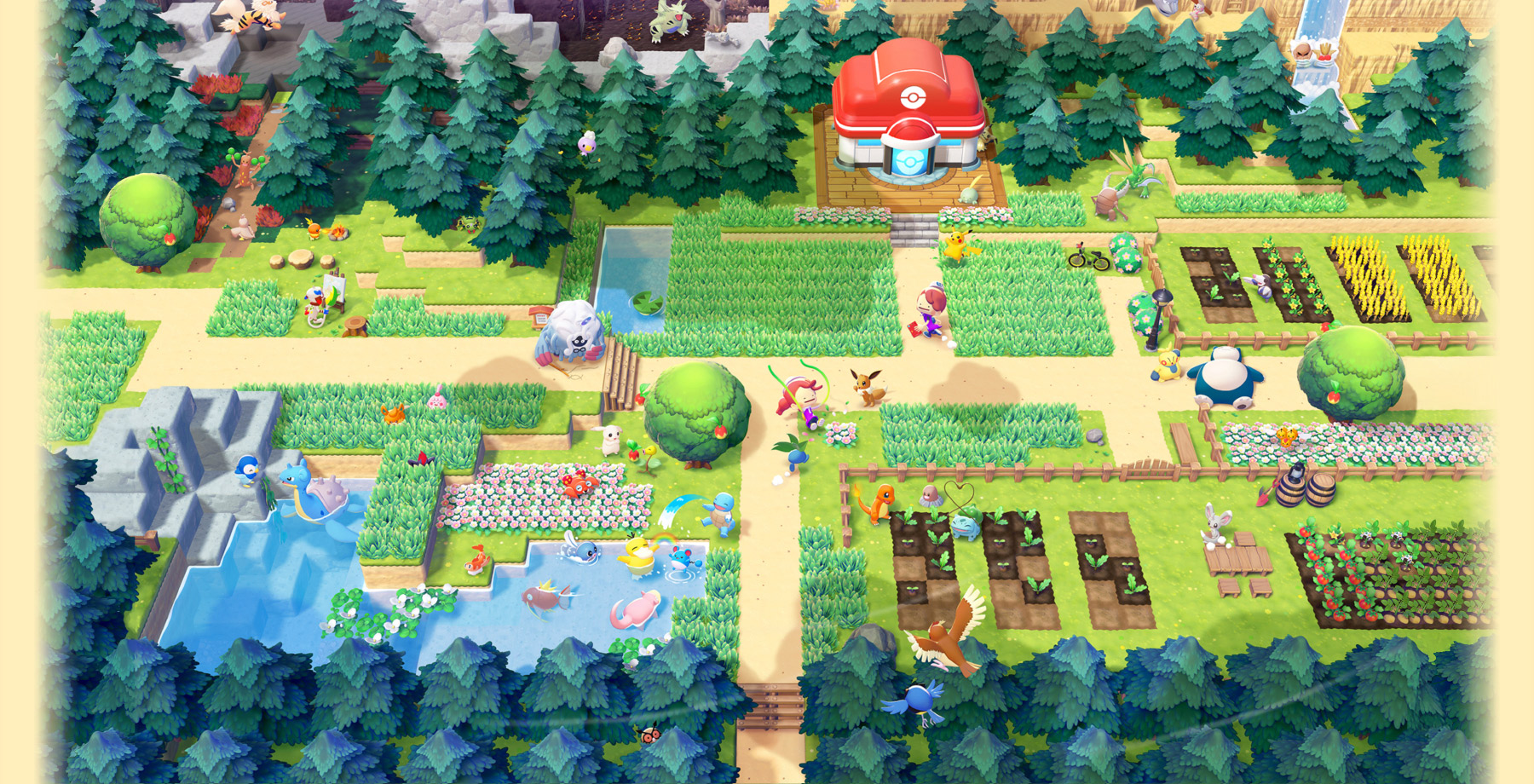
Reviewers consistently highlighted several strengths. The building system was described as surprisingly deep for a Pokemon title, with comparisons to Dragon Quest Builders and Animal Crossing. The Ditto transformation mechanic received praise as an inventive replacement for traditional Pokemon abilities. Many reviewers noted the game's relaxing atmosphere and called it one of the most relaxing Pokemon experiences in recent memory.
The game's connection to the original Kanto region also resonated with reviewers. The post-apocalyptic setting gave familiar locations new context, and the lore scattered throughout the game was praised for adding emotional depth without overwhelming the cozy gameplay. Reviewers highlighted how the environmental storytelling turned a seemingly simple life sim into something with real narrative weight.
Common Criticisms
The most frequent criticism was the pace of the late game. Some reviewers felt that the building loop became repetitive after 20 to 30 hours, especially when grinding materials for large construction projects. The limited camera controls and occasional pathfinding issues for Pokemon NPCs were also noted.
Several reviewers mentioned that the game's real-time clock system, while charming, could frustrate players who wanted to progress quickly. Time-skipping by adjusting the Switch 2 system clock was noted as a common workaround. A small number of reviewers cited late-game repetition as the reason for lower scores.
Sales
Pokemon Pokopia sold 2.2 million units worldwide in its first four days on sale, according to an official Nintendo press release dated March 12, 2026. Of that total, 1 million units were sold in Japan alone. The figures include both digital and physical copies of the game.
The strong launch numbers contributed to an 18% rise in Nintendo's share price during the same week, as investors viewed Pokopia's success as a positive signal for the Nintendo Switch 2's commercial prospects. The game ranked as the fourth best-selling Switch 2 title at the time of its sales announcement.
Japan and International Breakdown
Japanese retail tracking for the week of March 2 to March 8, 2026 recorded 541,371 physical copies sold in Japan, placing Pokopia at number one on the Japanese software chart for the launch week. Given that Nintendo's official total for Japan was approximately 1 million units (physical and digital combined), the physical figure implies that roughly 459,000 copies were sold digitally in Japan during the same launch window. The near even split between physical and digital reflects the growing shift toward digital purchases on Nintendo platforms.
Outside Japan, the remaining 1.2 million units of the 2.2 million worldwide total were sold across North America, Europe, and other regions. No official region-by-region breakdown has been published beyond the Japan figure, but strong eShop chart performance in Western territories and rapid sellouts of physical stock at major retailers suggest that digital sales made up an even larger share of international numbers than in Japan.
UK Physical Sales
In the UK, Pokopia debuted at number two on the physical retail chart for the week ending March 7, 2026, behind Resident Evil Requiem. The game slipped to number four the following week. Multiple reports and other outlets indicated that the game was "seriously undersupplied" at retail in the UK, with physical copies selling below other recent major Pokemon launches despite strong digital demand. The supply constraints rather than lack of interest were widely cited as the reason for the modest physical chart performance.
Commercial Significance
These sales figures make Pokopia one of the strongest launches for a Pokemon spin-off title and put it on track to become one of the best-selling spin-offs in franchise history. The game's strong performance has fueled speculation about potential DLC expansions, with some fans pointing to in-game references (such as the Sevii Islands mention in Island Monthly) as hints of future content.
Significance
Pokopia represents a significant shift for the Pokemon franchise. As the first life simulation Pokemon game co-developed with Omega Force (known for Dynasty Warriors and Hyrule Warriors), it demonstrates Game Freak's willingness to experiment with the IP beyond traditional RPGs. The game's critical and commercial success may influence the direction of future Pokemon spin-offs.